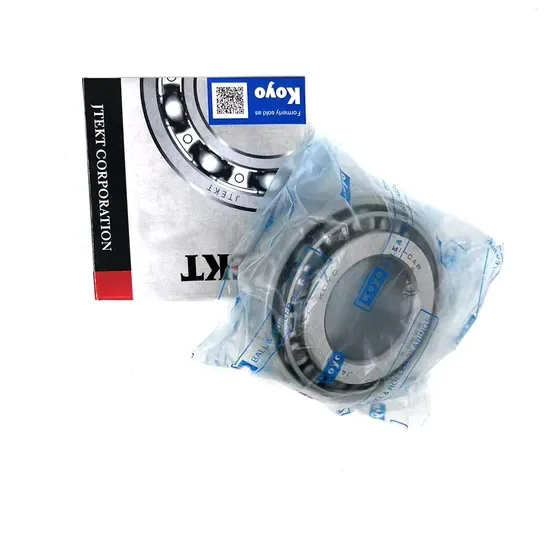
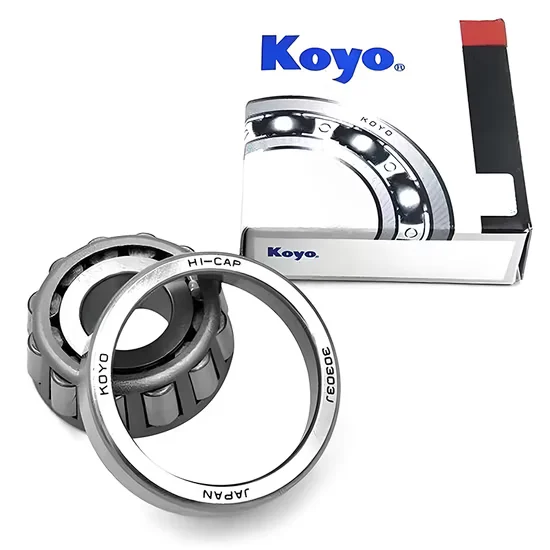
Most buyers assume a higher load rating guarantees longer service life, but the real killer in continuous operations is thermal expansion caused by mismatched internal clearance.
The definitive Koyo 6308ZZ specs include a 40mm bore, 90mm outer diameter, and 23mm width, with a dynamic load rating of 40.7kN and a grease-lubricated speed limit of 7700 rpm. However, these baseline dimensions only confirm suitability for medium-duty radial applications. Preventing premature failure requires matching C3 or C4 internal clearance to operating temperatures and selecting high-temperature grease to counteract heat buildup trapped by the double ZZ shields.
I still remember the humidity in São Paulo during that particular harvest season. The air was thick enough to taste, carrying fine silica dust from the fields. I had coordinated a shipment of standard deep groove ball bearings for a local agricultural assembler. On paper, the technical data sheets were perfect. The dimensions matched, the load ratings exceeded the requirements, and the brand reputation was solid. Yet, within three months, the maintenance team reported catastrophic seizures across multiple units. The issue was not the bearing quality itself, but the environment. The standard grease had broken down under the combined stress of high ambient heat and abrasive dust, while the standard C0 clearance allowed no room for thermal expansion. That loss taught me that verifying Koyo 6308ZZ specs is merely the starting point. The actual performance depends entirely on how well the internal configuration aligns with the specific site conditions.
Understanding these parameters is critical for distributors and MRO buyers who need to verify dimensional accuracy before committing to bulk orders. Let us break down why the numbers on the datasheet are only half the story.
What Are the Core Specs of Koyo 6308ZZ?
Baseline dimensions and load ratings provide the structural foundation, but they do not account for dynamic operational stresses.
When sourcing for resale or direct equipment replacement, the first step is always verifying the physical envelope. The Koyo 6308ZZ is a non-expanding, single-row deep groove ball bearing. Its geometry is standardized globally, which means compatibility with housing and shaft designs is generally consistent across major manufacturers. However, minor variations in tolerance classes can affect fitment in precision applications.
| Parameter | Specification | Note |
|---|---|---|
| Bore Diameter | 40 mm | Standard metric size |
| Outer Diameter | 90 mm | Fits standard housing bores |
| Width | 23 mm | Standard series width |
| Dynamic Load Rating (Cr) | 40.7 kN | Based on ISO standards |
| Static Load Rating (Cor) | 24 kN | For stationary or slow-moving loads |
| Limiting Speed (Grease) | 7700 rpm | Maximum safe operational speed |
| Shield Type | ZZ (Double Metal Shield) | Non-contact sealing |
These figures define the mechanical limits. The dynamic load rating of 40.7 kN indicates the bearing can withstand significant radial forces, making it ideal for electric motors, gearboxes, and conveyor systems. The static rating of 24 kN ensures stability during startup or when the machine is idle under load. However, relying solely on these numbers without considering the shielding mechanism leads to common procurement errors.
The ZZ designation refers to double metal shields. Unlike rubber seals, which create friction and generate heat, metal shields are non-contact. This allows for higher speed capabilities, up to 7700 rpm with grease lubrication. But this design choice introduces a vulnerability: while they effectively block large particulate matter, they are not hermetically sealed. In environments with fine dust or moisture, additional protection or frequent maintenance intervals may be necessary.
For wholesalers, having these exact parameters on hand allows for quick verification against customer drawings. It eliminates the guesswork when clients request equivalents from other brands, ensuring that the replacement part meets the original equipment manufacturer’s dimensional requirements.
How Do ZZ Shields Affect Performance in Harsh Environments?
Double shields block dust effectively, but they trap heat if the wrong grease is used, accelerating degradation rather than preventing it.
A common misconception among buyers is that ZZ shields make a bearing maintenance-free. In reality, the metal shields create a semi-enclosed cavity around the rolling elements. While this protects against external contaminants, it also restricts heat dissipation. If the bearing operates at high speeds or in high-temperature environments, the heat generated by friction cannot escape easily.
I recall a retrofit project for a heavy-load conveyor system in a mining operation. The engineering team specified standard Koyo 6308ZZ units with general-purpose lithium grease. Within weeks, the bearings began to show signs of overheating. The grease, unable to withstand the trapped heat, oxidized and lost its lubricating properties. The result was not just wear, but a complete breakdown of the lubricant film, leading to metal-to-metal contact.
The solution was not to switch to a different bearing type, but to match the lubrication to the shielding. High-temperature synthetic greases with excellent oxidation stability are essential when using ZZ shields in demanding applications. Additionally, the amount of grease filled during manufacturing matters. Over-greasing a shielded bearing increases churning resistance, which further raises temperatures.
| Environment Condition | Risk with Standard Grease | Recommended Adjustment |
|---|---|---|
| High Dust | Ingress of fine particles | Verify shield integrity; consider periodic regreasing if design allows |
| High Temperature | Grease oxidation and hardening | Use high-temp synthetic grease; monitor operating temp |
| High Speed | Heat buildup due to churning | Ensure correct grease fill quantity; use low-friction grease |
This experience highlights that the shield type is not just a protective feature but a thermal management constraint. Buyers must specify the operating environment when ordering. A distributor who simply ships the part based on the part number without asking about the application conditions is setting the client up for failure.
Understanding this interaction between shielding and lubrication is crucial for MRO buyers who deal with emergency replacements. Knowing that a ZZ shield requires specific grease compatibility can prevent repeat failures and reduce downtime.
Why Does Clearance Selection Matter More Than Raw Specs?
Matching C3 or C4 clearance to operating temperature prevents thermal jamming in continuous-duty cycles, whereas standard clearance often leads to seizure.
Internal clearance is the space between the rolling elements and the raceways. Standard clearance, often denoted as C0 or CN, is suitable for normal operating conditions where temperature differences between the inner and outer rings are minimal. However, in many industrial applications, the inner ring heats up more than the outer ring due to friction and heat transfer from the shaft. This causes the inner ring to expand radially, reducing the internal clearance.
If the initial clearance is too tight, this thermal expansion can eliminate the clearance entirely, leading to preload. Preload increases friction, which generates more heat, creating a vicious cycle that ends in seizure. This is precisely what happened in the agricultural scenario mentioned earlier. The standard clearance left no room for expansion in the hot Brazilian climate.
| Clearance Class | Typical Application | Thermal Expansion Tolerance |
|---|---|---|
| C2 (Tight) | Precision instruments, low noise | Low |
| C0/CN (Standard) | General industrial, normal temps | Moderate |
| C3 (Loose) | Electric motors, high temp diffs | High |
| C4 (Extra Loose) | Heavy machinery, very high temps | Very High |
Selecting the correct clearance class is a calculation based on expected operating temperatures. For most industrial motors and gearboxes, C3 clearance is the safer choice. It provides enough room for thermal expansion without compromising rigidity. In extreme cases, such as steel mills or cement plants, C4 clearance might be necessary.
When sourcing Koyo 6308ZZ specs for global projects, it is vital to confirm the required clearance class. Many suppliers default to C0 unless specified otherwise. This default assumption is a major source of premature bearing failure in harsh environments. Buyers should explicitly state the operating temperature range and load conditions to ensure the supplier provides the correct clearance variant.
This attention to detail separates a simple parts vendor from a technical partner. By understanding the implications of clearance selection, buyers can avoid costly downtime and extend the service life of their equipment.
How to Source Genuine Koyo 6308ZZ for Global Projects?
Traceability and mixed-brand consolidation ensure authentic parts and faster MRO turnaround, mitigating the risk of counterfeit components.
The global bearing market is flooded with counterfeit products that look identical to genuine items but lack the material quality and precision engineering. For distributors and MRO operators, verifying authenticity is a constant challenge. Counterfeit bearings often use inferior steel, leading to early fatigue failure, even if the dimensions are correct.
Sourcing from a supplier with established traceability protocols is the best defense. Genuine Koyo bearings come with specific marking codes and packaging features that can be verified. Additionally, reputable suppliers maintain documentation linking each batch to the manufacturer’s production records. This level of transparency is crucial for industries with strict quality compliance requirements, such as mining and energy.
Another advantage of working with a comprehensive supplier is the ability to consolidate orders. Instead of managing multiple vendors for different brands, buyers can source Koyo, SKF, NSK, and other premium brands from a single source. This simplifies logistics, reduces shipping costs, and ensures consistent quality across the entire inventory. For urgent MRO needs, having access to a large spot inventory of mixed brands allows for quicker resolution of breakdowns, minimizing production losses.
| Sourcing Factor | Risk with Unverified Suppliers | Benefit of Verified Partners |
|---|---|---|
| Authenticity | High risk of counterfeits | Full traceability documentation |
| Inventory | Limited stock, long lead times | Large spot inventory, fast dispatch |
| Technical Support | None or generic | Application-specific guidance |
| Logistics | Multiple shipments, higher cost | Consolidated shipping, lower cost |
In one instance, a European wind farm operator faced an urgent replacement need for a gearbox bearing. By leveraging a supplier with a broad inventory, they were able to source a compatible equivalent from a different premium brand within days, rather than waiting weeks for a specific OEM part. This flexibility is invaluable in keeping critical infrastructure running.
For buyers looking to optimize their supply chain, focusing on suppliers who offer both genuine product assurance and logistical flexibility is key. It transforms procurement from a transactional task into a strategic advantage.
Conclusion
Correctly interpreting Koyo 6308ZZ specs requires looking beyond dimensions to clearance and lubrication compatibility.
Success in bearing selection lies in matching the internal configuration to the specific environmental stresses. Prioritizing traceability and technical alignment ensures reliability and operational efficiency for global industrial projects.