Identical model numbers do not guarantee identical performance.
True Koyo UC equivalents demand exact dimensional and clearance matching, not just similar model numbers, to prevent seal failure. Relying solely on part number similarity without verifying internal radial clearance and seal tolerance leads to premature breakdowns in agricultural and conveyor applications.
I still remember the humidity in that workshop in Surabaya. The air smelled of burnt grease and panic. A client’s sugar cane crusher line had stopped cold because the insert bearings were leaking profusely. He had ordered what he thought were standard replacements for his Koyo units. The boxes looked right. The part numbers matched. But within weeks, the seals failed. The issue was not the brand name on the box, but the microscopic variance in internal clearance and seal fitment that only becomes apparent under heavy load and high vibration. That incident changed how I approach sourcing. It is not about finding a cheaper label; it is about finding a functional twin. For distributors and MRO buyers, understanding the technical nuances of Koyo UC inserts equivalents is the difference between a reliable supply chain and a recurring nightmare of downtime.
Navigating the market for Koyo UC inserts equivalents requires more than a catalog lookup. It demands a deep understanding of how different manufacturers interpret ISO standards and where their specific tolerances lie. When you are stocking shelves for regional resale or managing emergency repairs for heavy industry, the devil is in the details of the steel, the seal, and the space inside the raceway.
What Defines a True Koyo UC Equivalent?
Exact dimensional and clearance matching is mandatory for any viable alternative.
Many buyers assume that if a bearing fits the shaft diameter and the housing bore, it is a suitable replacement. This is a dangerous oversimplification. A true equivalent must match not only the external dimensions (d, D, B) but also the internal geometry that dictates how the bearing handles load and heat. The outer diameter might be within tolerance, but if the inner ring width or the locking mechanism differs by fractions of a millimeter, the set screw may not engage properly, leading to creep and eventual failure.
The most critical factor often overlooked is radial clearance. Koyo UC series bearings typically come with standard clearance, but applications vary. In high-temperature environments like mining conveyors, a standard clearance bearing will expand and seize. A true equivalent must offer the same range of clearance options, such as C3 or C4, to accommodate thermal expansion. Without this match, the bearing will fail regardless of the brand’s reputation.
Another defining feature is the sealing system. Koyo uses specific rubber compounds and labyrinth designs to keep contaminants out. An equivalent must provide comparable protection against dust, moisture, and agricultural chemicals. If the seal lip pressure is too high, it generates heat; if too low, it lets grit in. Finding a supplier who understands these nuances is essential. We maintain a comprehensive inventory of genuine multi-brand UC inserts, allowing us to cross-reference not just by number, but by specification. This ensures that when you request a Koyo UC inserts equivalent, you receive a component that performs identically in your specific application.
How Do Koyo UC Alternatives Compare in Specs?
A side-by-side spec comparison reveals why some alternatives fail while others succeed.
To make an informed decision, buyers need to look beyond the price tag. The following matrix compares key attributes of top-tier alternatives available in the global market. Note that these comparisons are based on general industry standards and typical product offerings from premium global brands like SKF, NSK, and NTN, as well as reliable domestic lines.
| Feature | Koyo Original | Premium Global Alternatives (e.g., SKF, NSK) | Reliable Domestic Lines |
|---|---|---|---|
| Dimensional Tolerance | ISO Class 0 | ISO Class 0 / P6 | ISO Class 0 / Standard |
| Radial Clearance Options | Standard, C3, C4 | Standard, C3, C4, Custom | Standard, C3 |
| Seal Type | Rubber Labyrinth, Metal Shield | Rubber Labyrinth, Felt, Metal | Rubber Single Lip, Basic |
| Material Quality | High-Carbon Chromium Steel | Vacuum Degassed Steel | Standard Bearing Steel |
| Traceability | Full Batch Documentation | Full Batch Documentation | Limited / Sample-Level |
| Suitability for Heavy Load | Robust | Robust | Moderate |
This table highlights that while premium global alternatives often match Koyo in terms of precision and clearance options, reliable domestic lines may offer a cost-effective solution for less demanding applications. However, the lack of C4 clearance options in some domestic lines can be a dealbreaker for high-heat zones.
Consider a case from a cement plant in Southeast Asia. They switched to a lower-cost alternative for their conveyor idlers. The dimensions were correct, but the seal design was basic single-lip rubber. In the dusty environment, fine particulate matter bypassed the seal, abrading the raceways. The bearings failed in months instead of years. When they switched back to a Koyo UC inserts equivalent with a labyrinth seal and proper C3 clearance, the service life extended noticeably. This demonstrates that the “equivalent” status is not binary; it is contextual.
Our role as a Koyo UC inserts equivalents wholesale supplier involves helping clients navigate these trade-offs. We do not just ship boxes; we provide technical datasheets and cross-reference consultation. By consolidating mixed-brand packages, we allow buyers to test alternatives in non-critical positions before committing to full-scale substitution. This approach minimizes risk while optimizing cost.
Which Equivalent Fits Your Specific Machinery?
Selection depends on the operational environment, not just the part number.
Not all machinery operates under the same conditions. Agricultural equipment faces mud, crop residue, and intermittent heavy loads. Mining conveyors deal with constant vibration, high temperatures,*equivalent requires matching the bearing’s capabilities to these specific stressors.
For agricultural machinery, the primary enemy is contamination. Seals are the first line of defense. Look for equivalents with robust rubber labyrinth seals that can handle washdowns and exposure to fertilizers. A farmer in Vietnam once reported frequent failures in his rice transplanter. The issue was not the bearing itself, but the seal’s inability to handle the specific chemical mix used in the field. Switching to an equivalent with enhanced chemical resistance solved the problem.
In contrast, heavy industrial applications like mining crushers prioritize load capacity and thermal stability. Here, radial clearance is king. Standard clearance bearings will overheat and seize under heavy loads. Equivalents must offer C3 or C4 clearance to allow for thermal expansion. A steel mill operator in the Middle East faced repeated shutdowns due to seized bearings in their roller tables. The root cause was using standard clearance bearings in a high-heat zone. Upgrading to C4 clearance equivalents eliminated the issue.
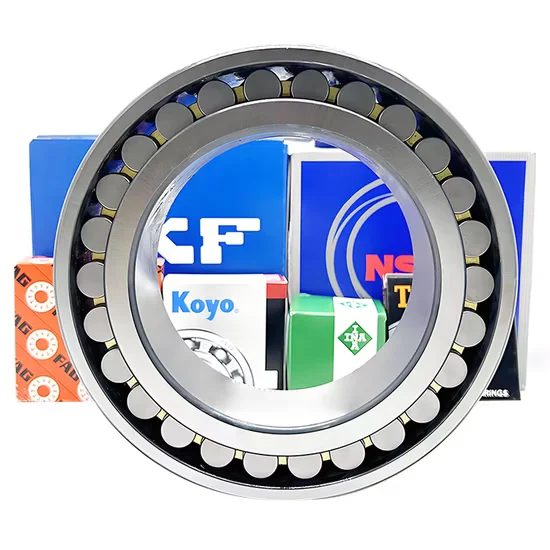
When sourcing these specialized equivalents, it is crucial to work with a supplier who understands these distinctions. We stock a wide range of insert bearings from brands like FAG, INA, and TIMKEN, each with unique strengths. Our technical team helps you select the right equivalent based on your specific machinery requirements. Whether you need high-precision bearings for machine tools or rugged units for off-road machinery, we provide the right solution.
How to Avoid Premature Failure with Alternatives?
Focus on seal tolerance and installation practices to ensure longevity.
Even the best Koyo UC inserts equivalent will fail if installed incorrectly or if the seal tolerance is ignored. Installation errors are a leading cause of premature bearing failure. Misalignment, improper seating, and incorrect torque on set screws can damage the bearing before it even starts running.
One common mistake is forcing the bearing onto the shaft. This can damage the internal raceways and alter the clearance. Always use proper tools and follow the manufacturer’s installation guidelines. Another critical aspect is the seal. If the seal is damaged during installation, it will leak. Inspect the seal carefully before mounting. Ensure that the shaft surface is clean and free of burrs that could tear the seal lip.
Furthermore, consider the operating environment. If the application involves high vibration, ensure that the locking mechanism is secure. Some equivalents use set screws, while others use eccentric locks. Choose the type that best suits your maintenance capabilities and operational conditions.
Regular inspection is also key. Monitor the bearing for signs of overheating, noise, or leakage. Early detection of issues can prevent catastrophic failure. Keep a record of maintenance activities and bearing performance. This data can help you refine your selection of equivalents over time.
As a Koyo UC inserts equivalents wholesale supplier, we provide more than just products. We offer after-sales technical support for failure analysis and application guidance. Our team can help you troubleshoot issues and optimize your maintenance procedures. By combining high-quality equivalents with proper installation and maintenance, you can achieve reliable performance and minimize downtime.
Conclusion
Precision matching prevents costly downtime.
Finding the right Koyo UC inserts equivalents is not about finding the cheapest option. It is about finding the right technical match for your specific application. By focusing on dimensional accuracy, radial clearance, and seal quality, you can ensure reliable performance. Partner with a supplier who offers genuine multi-brand inventory and technical expertise to support your sourcing needs.