Low price often means high risk.
Sourcing genuine Koyo large size bearings requires verifying original traceability documents and implementing mixed-container quality control to avoid catastrophic failures caused by cheap refurbished units. Without factory-level documentation, buyers cannot distinguish between new OEM stock and reconditioned parts that look identical on the surface but lack the internal metallurgical integrity for heavy loads.
I remember standing in a dusty workshop in Dongguan, turning bearing rings on a lathe before I moved into international trade. The smell of cutting oil and steel dust is distinct. Later, when I started handling export orders, a client from a Nigerian mining operation called me in a panic. He had bypassed our quote to save money with a cheaper supplier. The Koyo large size bearings he received looked perfect in their boxes. But within two weeks, the cage of a spherical roller bearing in his primary crusher fractured. The entire production line stopped. The cost of downtime far exceeded the savings he thought he made. That incident reinforced a hard truth: in heavy industry, you are not buying metal; you are buying stability.
The market is flooded with repackaged goods. To secure your supply chain, you must look beyond the part number. You need a partner who understands that Koyo large size bearings are critical components where failure is not an option. This guide breaks down how to verify authenticity, compare technical specs, and structure your procurement to ensure every unit meets OEM standards.
How to Identify Genuine KOYO Large Size Bearings?
Packaging and markings are the first line of defense, but documentation is the proof.
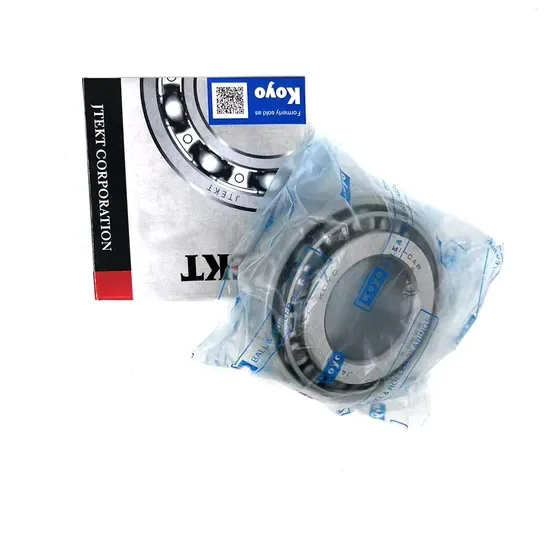
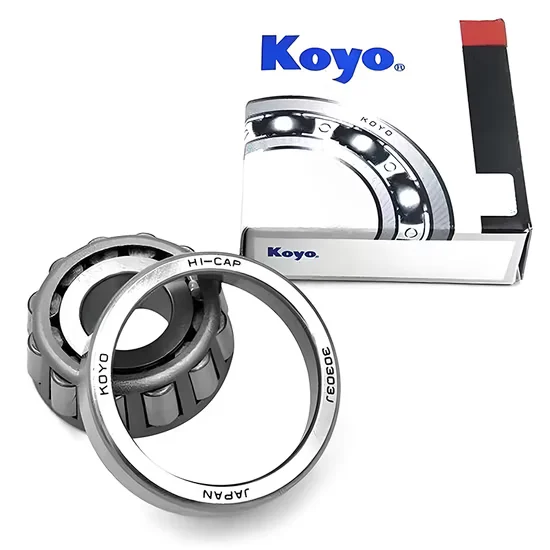
Counterfeiters have become sophisticated. They can replicate the laser etching on the outer ring and even mimic the color of the official box. However, they rarely forge the complete chain of custody. When you source Koyo large size bearings, ask for the original certificate of conformity and the batch-specific traceability code. These documents link the physical item to the manufacturer’s production records.
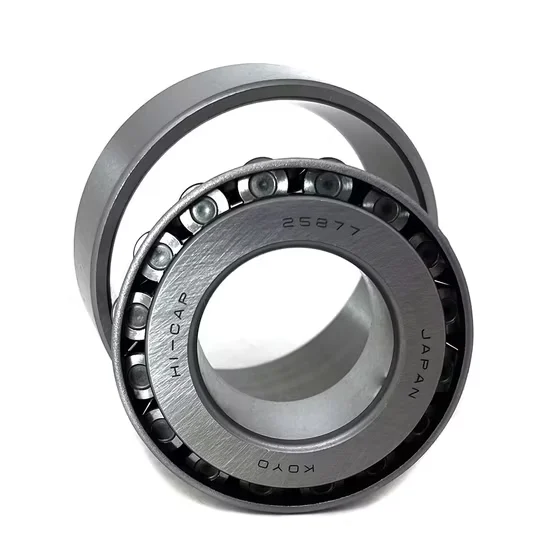
A common mistake is relying solely on visual inspection. A refurbished bearing can be cleaned, repainted, and relabeled. The difference lies in the microscopic details. Genuine units have consistent font depth in their markings and precise alignment of the logo. More importantly, the internal clearance and surface finish meet strict tolerance classes. Without access to precision measuring tools, buyers should rely on the supplier’s ability to provide verifiable paperwork.
| Verification Point | Genuine OEM Stock | Refurbished/Counterfeit |
|---|---|---|
| Traceability Docs | Full batch-level certification | None or generic invoice |
| Packaging Quality | High-grade cardboard, clear printing | Flimsy material, blurred text |
| Marking Consistency | Uniform depth and spacing | Irregular or too deep/shallow |
| Surface Finish | Smooth, uniform grind marks | Polished over defects or uneven |
In one case, a European distributor received a container of Koyo large size bearings that seemed fine until they checked the batch numbers against the provided certificates. The numbers did not match any records in the global database. The supplier had mixed new units with old stock to fill the order. By insisting on pre-shipment verification of these documents, you filter out bad actors early. We maintain a strict protocol where every Koyo large size bearings shipment is cross-referenced with factory docs before it leaves our warehouse. This ensures that what you see on paper is exactly what arrives at your port.
What Are the Key Specs for KOYO Spherical Roller Bearings?
Load ratings and cage materials determine lifespan under stress.
When selecting Koyo large size bearings for heavy equipment, the dynamic load rating is just the starting point. The internal design, particularly the cage type and material, plays a crucial role in performance under misalignment and heavy shock loads. Spherical roller bearings are designed to accommodate angular misalignment, but not all cages handle this equally. Steel cages are robust for high-speed applications, while brass cages offer better resistance to vibration in slower, heavier setups.
Buyers often overlook internal clearance. Standard clearance may not suffice for applications with significant thermal expansion. Choosing the wrong clearance class can lead to premature seizure. It is essential to match the bearing specification to the operating environment. For instance, a cement plant kiln requires different clearance than a mining conveyor pulley.
| Specification Factor | Heavy-Duty Mining | General Industrial |
|---|---|---|
| Cage Material | Steel or Solid Brass | Stamped Steel |
| Internal Clearance | C3 or C4 (Higher) | C2 or Normal |
| Lubrication | High-viscosity, EP additives | Standard mineral oil |
| Sealing Type | Robust labyrinth or contact seals | Open or light shielding |
A client in the Middle East once reported frequent failures in their crusher bearings. Upon review, we found they were using standard clearance bearings in an environment with high ambient heat and heavy loads. Switching to Koyo large size bearings with C3 clearance and a solid brass cage resolved the issue. The brass cage absorbed vibrations better, and the extra clearance prevented thermal binding. Understanding these nuances helps you avoid over-specifying or under-specifying your orders. Our technical team reviews each inquiry to ensure the selected Koyo large size bearings match the actual working conditions, not just the catalog minimums.
Why Do Refurbished Large Bearings Fail in Mining?
Material fatigue and hidden cracks cause sudden catastrophic failure.
Refurbished bearings are a ticking time bomb in critical applications. The process of refurbishing involves grinding down races and replacing rolling elements. However, the base metal has already undergone stress cycles. Micro-cracks formed during previous service remain hidden beneath the new surface. When these Koyo large size bearings are put back under heavy load, these cracks propagate rapidly, leading to cage fracture or race spalling.
The Nigerian mining case I mentioned earlier is a classic example. The bearing looked new, but the internal steel had lost its toughness. The cage shattered because the rollers were no longer perfectly spherical due to uneven wear in the previous life. This caused uneven load distribution, concentrating stress on one side of the cage until it snapped. The resulting debris destroyed the housing and shaft, turning a simple bearing replacement into a major repair job.
Many buyers think they are getting a deal by purchasing “new old stock” or refurbished units at a discount. In reality, they are inheriting someone else’s wear history. The cost of a genuine Koyo large size bearings is insignificant compared to the cost of replacing a crushed shaft or halting production for days. We strictly avoid mixing refurbished units with new inventory. Every Koyo large size bearings we supply is brand new, ensuring that the metallurgical properties are intact and ready for full design life.
How to Optimize Mixed-Container Sourcing Costs?
Consolidation reduces shipping costs without compromising quality control.
For regional distributors, ordering full containers of a single SKU is often impractical. Demand varies across different machine types and maintenance schedules. Mixed-container consolidation allows you to combine various sizes and types of Koyo large size bearings in one shipment. This approach lowers freight costs per unit and reduces inventory holding costs. However, it introduces complexity in quality control.
The key is rigorous inspection before packing. Each item must be verified against its part number and batch documentation. Random sampling is not enough when dealing with high-value items. We implement a 100% check for critical dimensions and marking accuracy for every unit in a mixed container. This ensures that a small order of large bearings does not get swapped or damaged by heavier items in the same box.
A dealer in Southeast Asia used to order separate LCL shipments for different Koyo large size bearings sizes, paying high freight rates and dealing with multiple customs clearances. By switching to a consolidated container model, they reduced their logistics overhead significantly. They could stock a broader range of SKUs, improving their service level to local end-users. The transparency of our process allowed them to trust the mix, knowing that every box contained genuine, documented products. This flexibility is essential for MRO operators who need to keep diverse equipment running without tying up capital in slow-moving stock.
Conclusion
Authenticity is the foundation of reliability.
Sourcing Koyo large size bearings is not just about finding the lowest price. It is about securing a supply chain that guarantees performance under extreme conditions. By focusing on traceability, understanding technical specifications, and avoiding refurbished traps, you protect your operations from costly failures. Whether you are a distributor managing inventory or an operator keeping machines running, the right partner makes all the difference. Choose suppliers who prioritize documentation and quality control, ensuring that every Koyo large size bearings you install delivers the expected lifespan and stability.