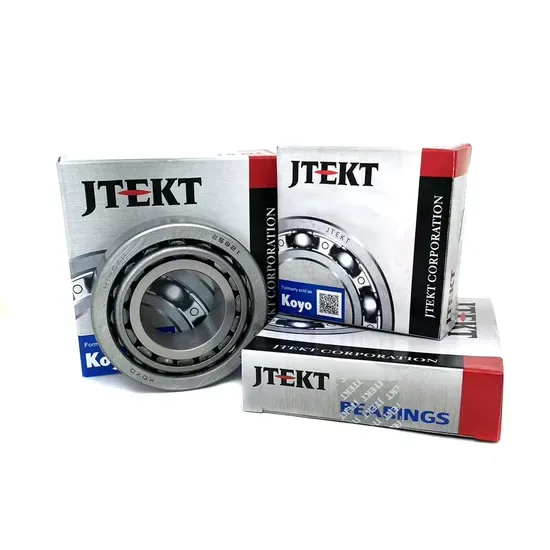
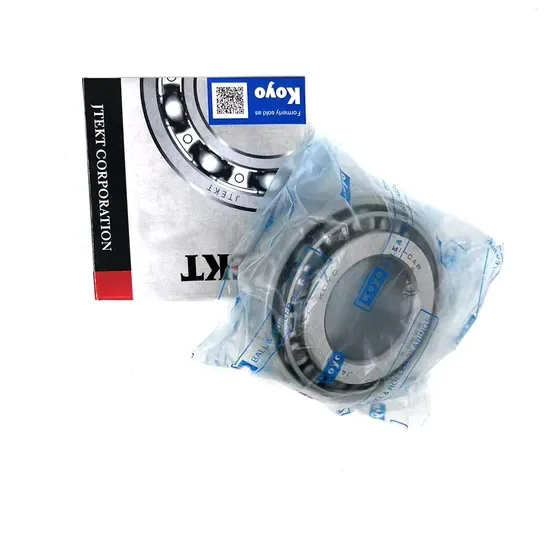
Matching the model number does not guarantee a fit.
To verify compatibility, you must cross-reference the specific bore diameter (d), outer diameter (D), width (B), and assembly width (T) against the official Koyo tapered bearing dimension table, while strictly checking width tolerances and chamfer dimensions to prevent axial interference and seal failure.
I learned this the hard way in Ha Tinh. I was sourcing for a mining crusher overhaul and relied solely on the part number printed on the box. The supplier sent what they claimed was the correct match. It fit the shaft, but the width tolerance was off by a fraction of a millimeter. Within days, the bearing overheated and seized, stopping the entire production line. That mid-six-figure loss taught me that the Koyo tapered bearing dimension table is not just a reference; it is a critical safety document.
Many buyers assume that if the model number matches, the part will work. This is a dangerous misconception. In heavy machinery, even minor deviations in dimensional parameters can lead to catastrophic failures. Understanding how to read the Koyo tapered bearing size chart is essential for MRO managers and OEM purchasers who need to ensure precise part compatibility and avoid costly downtime.
How to Read the Koyo Tapered Bearing Dimension Table?
The first step in avoiding installation errors is mastering the core parameters listed in the Koyo tapered bearing dimension table. These are not arbitrary numbers; they define the physical envelope of the bearing and its interaction with the housing and shaft.
The primary dimensions you must verify are:
- d (Bore Diameter): The inner diameter that fits onto the shaft.
- D (Outer Diameter): The outer diameter that fits into the housing.
- B (Cone Width): The width of the inner ring (cone).
- T (Assembly Width): The total width of the bearing assembly when the cone and cup are mounted together.
Misinterpreting B and T is a common error. B refers only to the inner ring, while T includes both the inner and outer rings. Using B instead of T for axial space calculations will result in insufficient clearance, causing the bearing to bind during thermal expansion.
When sourcing from a Koyo tapered bearing dimension table wholesale supplier, always request the full dimensional data sheet. Do not rely on simplified listings that may omit the assembly width. A complete check ensures that the bearing will seat correctly without forcing the components, which can damage the rolling elements before the machine even starts.
Why Do Width Tolerances Matter More Than Model Numbers?
Micro-deviations in width directly impact axial clearance and thermal expansion in heavy loads. While the model number identifies the general design, it does not specify the precision class of the individual batch. This is where the KOYO bearing dimensions and tolerances become critical.
Standard bearings typically fall into Normal tolerance classes, but high-precision applications may require P6 or P5 classes. A Normal class bearing might have a wider tolerance range for width than a P6 class. If you replace a P6 bearing with a Normal class one without checking the actual measured width, the axial preload may be incorrect. This can lead to rapid overheating and premature failure, as seen in my early experience with the crusher.
| Precision Class | Typical Application | Width Tolerance Characteristic | Suitability for Heavy Load |
|---|---|---|---|
| Normal | General Machinery | Standard Range | Moderate |
| P6 | Gearboxes, Motors | Tighter Control | High |
| P5 | Precision Spindles | Very Tight Control | Critical |
Buyers often focus on load ratings, assuming a higher rating means better performance. However, if the width tolerance is too loose, the bearing may shift axially under load, causing uneven stress distribution. This is why verifying the actual dimensions against the Koyo tapered bearing size chart is more important than just matching the model number. A reliable supplier will provide traceability documents that confirm the tolerance class of the supplied parts.
How to Verify Chamfers and Seating Dimensions for Perfect Fit?
Checking r and r1 values ensures proper shaft/housing seating and prevents seal damage. Chamfers are the rounded corners at the edges of the bearing rings. They allow the bearing to sit flush against the shoulder of the shaft or housing without interference.
If the chamfer dimension is too small, the bearing may not seat fully, leaving a gap that allows contamination to enter. If it is too large, it may interfere with the sealing mechanism or the adjacent component. This is a frequent cause of early seal failures in gearboxes and pumps.
In a recent case, a European wind farm operator faced repeated seal leaks in their gearbox assemblies. The issue was not the seal itself, but the chamfer dimensions of the replacement bearings, which did not match the original design specs. By cross-referencing the Koyo cone bearing cross-reference data with the original equipment manufacturer’s drawings, we identified the mismatch and sourced the correct parts with verified chamfer dimensions.
When reviewing the Koyo tapered bearing dimension table, pay close attention to the minimum chamfer dimensions. Ensure that the shaft and housing shoulders have corresponding relief grooves or chamfers that accommodate these values. This simple check can prevent significant maintenance issues and extend the service life of the bearing.
What Are the Standard Tolerance Classes for Koyo Tapered Bearings?
Understanding Normal vs. P6/P5 classes helps select the right precision for specific machinery. The tolerance class defines the allowable deviation from the nominal dimensions. For most industrial applications, Normal class is sufficient. However, for high-speed or high-precision applications, such as machine tools or aerospace components, higher precision classes like P6 or P5 are required.
Selecting the wrong tolerance class can lead to excessive vibration, noise, and reduced bearing life. For example, using a Normal class bearing in a high-speed spindle may result in unacceptable runout, affecting the quality of the machined product. Conversely, using a P5 class bearing in a low-speed, heavy-load application may be an unnecessary expense without providing significant benefits.
| Factor | Normal Class | P6 Class | P5 Class |
|---|---|---|---|
| Dimensional Accuracy | Standard | High | Very High |
| Runout Control | Basic | Improved | Precise |
| Cost Implication | Low | Moderate | High |
| Typical Use Case | Conveyors, Agri | Gearboxes, Pumps | Spindles, Precision |
When sourcing from a Koyo tapered bearing dimension table wholesale supplier, clarify the required tolerance class for your application. Provide the technical specifications to the supplier to ensure they source the correct precision level. This avoids the risk of receiving parts that do not meet the operational requirements of your machinery.
Conclusion
Precision prevents downtime.
Accurately interpreting the Koyo tapered bearing dimension table is essential for ensuring compatibility and reliability in heavy machinery. By focusing on width tolerances, chamfer dimensions, and precision classes, you can avoid common installation errors and extend the life of your equipment. Always verify dimensions against official data and choose suppliers who provide transparent, traceable documentation.