Most bearing failures are not caused by poor manufacturing quality.
The primary cause of premature failure in Koyo tapered roller bearings is improper installation, specifically incorrect clearance adjustment and contamination during mounting. Ensuring precise end-play settings and maintaining a clean environment during assembly are more critical than the brand specification itself for heavy machinery operating in dusty mining and cement plant environments.
I still recall the heat and dust of a cement plant crusher site where a batch of components failed within months. The client was ready to cancel contracts, blaming the product quality. However, upon tearing down the housings, the evidence pointed elsewhere. The inner rings showed signs of abrasive wear consistent with dust ingress, and the rolling elements exhibited spalling patterns typical of excessive preload. The root cause was not the bearing itself, but the method used to install it. Technicians had ignored proper clearance protocols and allowed contaminants into the grease during assembly. This experience reinforced that supplying genuine parts is only half the solution; guiding correct mounting practices is equally vital to preventing catastrophic downtime.
Understanding these field realities helps maintenance teams avoid costly errors. The following guide details the critical steps for installing these components correctly, ensuring they perform as designed in harsh industrial conditions.
Why Do Koyo Tapered Roller Bearings Fail Prematurely in the Field?
Installation errors account for the majority of early-life failures, not manufacturing defects.
In heavy industries like mining and construction, equipment operates under extreme loads and contaminated environments. When a Koyo tapered roller bearing fails prematurely, the immediate assumption is often a material defect. However, industry data suggests that a significant portion of these failures stems from how the bearing was mounted and maintained.
Two primary issues dominate field failures: improper clearance adjustment and contamination. Tapered roller bearings require precise axial clearance to function correctly. If the clearance is too tight, the bearing generates excessive heat, leading to thermal expansion and eventual seizure. If too loose, vibration increases, causing fatigue damage to the raceways. Another common issue is contamination. Dust and debris entering the bearing during installation act as abrasives, accelerating wear on the rollers and cages.
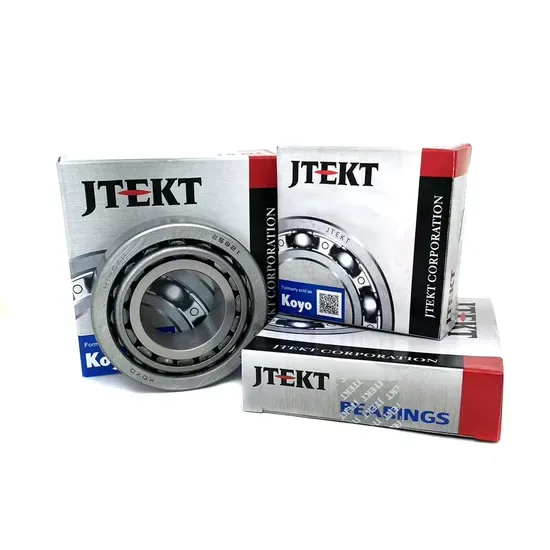
A case from a mining site illustrates this clearly. Equipment experienced frequent breakdowns due to contaminated grease. Investigation revealed that technicians were packing bearings in open, dusty areas without proper protection. The ingress of particulate matter led to abrasive wear, doubling the maintenance frequency compared to sites with strict cleanliness protocols. Recognizing these risks is the first step toward improving reliability. As a Koyo tapered roller bearings wholesale supplier for sale, we emphasize that authentic products must be paired with correct handling procedures to achieve their full service life potential.
Step 1: Pre-Installation Preparation & Contamination Control
Cleanliness is the most critical factor in preventing abrasive wear during installation.
Before any component touches the shaft or housing, the workspace must be prepared. In harsh environments like cement plants or open-pit mines, ambient dust is a constant threat. Installing a precision component in such conditions without protection guarantees premature failure.
Start by cleaning the shaft and housing thoroughly. Remove all old grease, rust, and burrs. Any imperfection on the seating surface can distort the bearing ring, leading to uneven load distribution. Use a lint-free cloth and a suitable solvent to ensure surfaces are dry and clean. Inspect the shaft and housing for dimensional accuracy and geometric tolerances. Damaged seats should be repaired before proceeding.
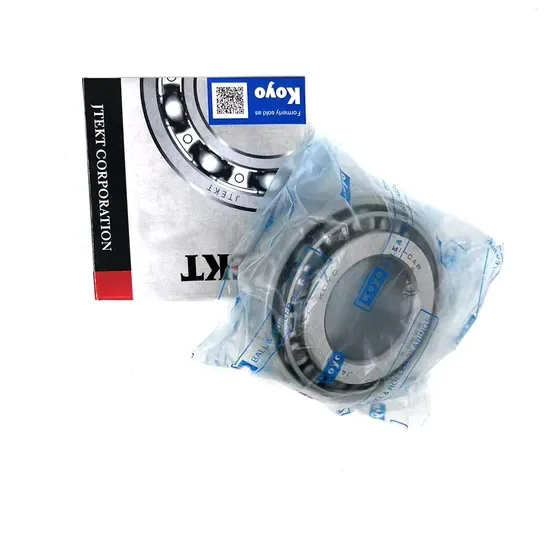
Prepare the lubrication area separately. If possible, set up a temporary clean zone using plastic sheeting or a portable tent to shield the work area from windblown dust. Keep new bearings in their original packaging until the moment of installation. Opening the package early exposes the components to airborne contaminants. Have all necessary tools ready, including induction heaters, torque wrenches, and dial indicators, to minimize the time the bearing is exposed to the environment.
Proper preparation reduces the risk of introducing foreign particles that can cause microscopic damage to the raceways. This step is often overlooked in urgent repair scenarios, but skipping it compromises the entire assembly.
Step 2: Mounting Techniques & Thermal Expansion
Use controlled heating methods to expand the inner ring for a safe press fit.
Mounting tapered roller bearings requires care to avoid damaging the internal components. Never apply direct hammer blows to the bearing rings or rolling elements. Instead, use an induction heater or oil bath to expand the inner ring. This allows the bearing to slide onto the shaft with minimal force, preserving the integrity of the cage and rollers.
When using an induction heater, monitor the temperature closely. Excessive heat can alter the metallurgical structure of the steel, reducing hardness and load capacity. Follow the manufacturer’s guidelines for maximum heating temperatures to avoid tempering the material. Typically, the inner ring should be heated just enough to provide a slight clearance over the shaft shoulder.
Once heated, slide the bearing onto the shaft quickly and firmly against the shoulder. Hold it in place until it cools and shrinks tightly onto the shaft. Ensure the bearing is seated squarely. Misalignment during mounting can create internal stresses that lead to early fatigue. For larger bearings, mechanical presses may be used, but always apply force evenly through a sleeve that contacts only the inner ring.
Correct mounting ensures the bearing sits properly on the shaft, providing a stable foundation for subsequent clearance adjustments.
Step 3: Critical Clearance Adjustment & Shimming
Precise end-play setting prevents overheating and extends service life significantly.
Adjusting the axial clearance is the most technical aspect of installing tapered roller bearings. Unlike radial bearings, tapered designs require specific axial play to accommodate thermal expansion and load variations. Incorrect adjustment is a leading cause of failure in heavy machinery.
Use a dial indicator to measure the end-play. Mount the indicator securely to the housing and position the tip against the shaft end. Move the shaft axially back and forth to determine the total movement. Compare this measurement with the recommended clearance values provided in the equipment manual. If the clearance is too small, add shims between the bearing cup and the housing cap. If too large, reduce the shim thickness.
Tighten the housing bolts gradually and evenly, rechecking the clearance after each step. Uneven tightening can distort the housing, affecting the bearing geometry. Once the correct clearance is achieved, secure the locking mechanism. Proper shimming ensures that the bearing operates with optimal film thickness, reducing friction and heat generation.
This meticulous process ensures the bearing can handle dynamic loads without excessive stress, directly impacting its operational lifespan.
Step 4: Lubrication & Seal Integrity
Avoid over-greasing to prevent seal degradation and heat buildup.
Lubrication protects the bearing from wear and corrosion, but more is not always better. Over-greasing tapered roller bearings in dusty environments can trap heat and cause seals to fail. When seals degrade, contaminants enter the bearing, leading to rapid deterioration.
Select a grease compatible with the operating temperature and load conditions. For high-load applications in mining or cement plants, use a lithium-complex or polyurea-based grease with good extreme-pressure additives. Fill the bearing cavity approximately thirty to fifty percent full, allowing space for grease circulation and expansion. Inject grease slowly through the fitting while rotating the bearing to distribute it evenly.
Inspect seals for damage before final assembly. Replace any worn or cracked seals immediately. Ensure the seal lip faces the correct direction to retain grease and exclude contaminants. Proper seal integrity is crucial for maintaining a clean internal environment, especially in sites with high levels of dust and moisture.
Balanced lubrication and robust sealing work together to protect the bearing from external threats and internal friction.
Conclusion
Correct installation practices are essential for maximizing bearing performance.
Premature failure of Koyo tapered roller bearings is largely preventable through careful attention to cleanliness, mounting techniques, clearance adjustment, and lubrication. By focusing on these critical steps, maintenance teams can significantly extend equipment uptime and reduce costly repairs. Authentic components combined with proper handling ensure reliable operation in even the harshest industrial environments. As a trusted Koyo tapered roller bearings wholesale supplier for sale, we support our clients with genuine products and technical guidance to help them achieve optimal results in their operations.