Oversizing a thrust bearing does not increase safety; it accelerates failure.
Selecting the correct Koyo thrust bearing requires matching exact axial load capacities to application dynamics and verifying supply chain traceability to prevent catastrophic equipment failure. For heavy-duty industrial applications, the choice between ball and roller types dictates service life, while authentic sourcing prevents premature cage disintegration under high axial stress.
I still remember the silence in the control room of a mining operation in Linyi. It was not the quiet of efficiency, but the hollow stop of a primary crusher shaft that had seized overnight. The culprit was a batch of thrust bearings I had sourced years ago, prioritizing margin over verification. The cages had shattered because the load type was mismatched with the bearing design. That downtime cost far more than the savings on the parts. Since then, my approach to sourcing has shifted from price hunting to technical forensic analysis. When dealing with axial loads, there is no room for approximation.
Understanding the mechanical distinction between these components is the first step in avoiding costly replacements. The following guide breaks down the selection criteria and sourcing protocols necessary for reliable procurement.
Koyo Ball vs. Roller: Which Fits Your Axial Load?
The decision between ball and roller types is not about preference; it is about load magnitude and shock resistance.
Thrust ball bearings are designed for moderate axial loads and higher speeds, while thrust roller bearings handle heavy axial loads and shock conditions. Confusing the two leads to immediate structural failure. A thrust ball bearing subjected to heavy shock loads will experience rapid raceway indentation, whereas a thrust roller bearing in a high-speed, low-load application may suffer from skidding and excessive heat generation.
To clarify the operational boundaries, consider the following functional comparison. Note that specific load ratings vary by series and size, so always consult the official technical catalog for precise Ca (dynamic axial load rating) values.
| Feature | Koyo Thrust Ball Bearings | Koyo Thrust Roller Bearings |
|---|---|---|
| Load Capacity | Moderate axial load | Heavy axial load |
| Shock Resistance | Low | High |
| Speed Limitation | Higher limiting speed | Lower limiting speed |
| Cage Material | Often steel or brass | Typically machined brass or steel |
| Primary Application | Pumps, machine tools, automotive clutches | Mining crushers, steel mill rollers, heavy gearboxes |
| Misalignment Tolerance | Zero (requires precise alignment) | Low (requires precise alignment) |
A European gearbox OEM once attempted to substitute a thrust ball unit with a roller type to “be safe” during a redesign. The result was not increased durability, but severe overheating. The roller elements could not maintain proper kinematic motion at the operating speed, leading to cage wear and eventual seizure. This highlights that oversizing or changing types without recalculating kinematic constraints is a critical error.
When evaluating Koyo thrust bearings, the key is to match the bearing type to the dominant load characteristic. If the application involves intermittent heavy shocks, such as in a rock crusher, a roller type is mandatory. If the load is constant and moderate, such as in a vertical pump, a ball type offers better efficiency and speed capability.
Critical Selection Parameters: Avoiding the “Oversizing” Trap
Exact matching of dynamic and static load ratings outperforms arbitrary upsizing.
Many buyers assume that selecting a bearing with a significantly higher load rating provides a safety margin. In thrust applications, this is a dangerous misconception. Oversized thrust bearings often operate below their minimum load requirement, causing the rolling elements to slide rather than roll. This skidding action generates friction heat and wears down the cage and raceways prematurely.
The selection process must focus on three core parameters: dynamic axial load rating (Ca), static axial load rating (C0a), and limiting speed (nG). The dynamic rating determines fatigue life under rotating conditions, while the static rating ensures the bearing can withstand peak loads without permanent deformation when stationary.
Consider the case of a steel mill MRO team that replaced a failed thrust bearing with a larger unit from a different brand. The new bearing failed within weeks. The investigation revealed that the larger bearing’s cage was not designed for the specific centrifugal forces at the operating speed, leading to cage fragmentation. The original Koyo unit had been correctly sized for the load and speed, but the replacement ignored the speed limitation.
Cage material is another hidden variable. Price gaps in thrust bearings often reflect the quality of the cage material. High-quality machined brass cages offer better guidance and heat dissipation compared to stamped steel cages in heavy-duty applications. Choosing a bearing based solely on outer dimensions without verifying cage design and material specifications is a common procurement error.
To avoid these pitfalls, always verify the limiting speed against the application’s operational RPM. If the operating speed approaches the limiting speed, consider lubrication enhancements or alternative bearing arrangements. Never assume that a physically larger bearing is a direct upgrade.
Sourcing Genuine Koyo: Traceability & Quality Control
Counterfeit thrust bearings often fail at the cage, not the races, making visual inspection insufficient.
The market for Koyo thrust bearings is flooded with counterfeits that look identical to genuine products but use inferior steel and poorly machined cages. These fakes may pass initial dimensional checks but fail catastrophically under load. The only way to ensure authenticity is through rigorous supply chain traceability.
Genuine Koyo products come with specific packaging features, including holographic labels and batch codes that can be verified with the manufacturer. However, relying on packaging alone is risky, as counterfeiters also replicate these elements. The most reliable method is to source from distributors who provide full documentation trails, including mill certificates and origin proofs.
A Middle East distributor once received a mixed container of bearings, some of which were suspected fakes. Upon inspection, the suspect units had slight variations in the laser etching depth and the cage surface finish. While these differences seem minor, they indicate different manufacturing processes. The genuine Koyo thrust bearings had consistent, high-precision machining marks, while the fakes showed tooling inconsistencies.
When procuring Koyo thrust bearings, request documentation that links the batch number to the production facility. Verify that the supplier has a direct relationship with authorized channels. If a price seems too good to be true, it likely reflects compromised material quality, particularly in the cage and rolling element steel.
Traceability is not just about avoiding fakes; it is about ensuring consistency. In critical applications, even minor variations in steel purity can affect fatigue life. Sourcing from a partner who prioritizes documentation over low-ball pricing protects your equipment and your reputation.
Global Supply & Consolidation: Optimizing MRO and OEM Procurement
Mixed-brand consolidation reduces logistics costs without compromising authenticity.
For MRO managers and OEMs, procuring bearings from multiple brands often leads to fragmented shipments and high logistics overhead. Consolidating orders into single containers allows for better cost management and streamlined customs clearance. However, this strategy requires a supplier with deep inventory across multiple premium brands.
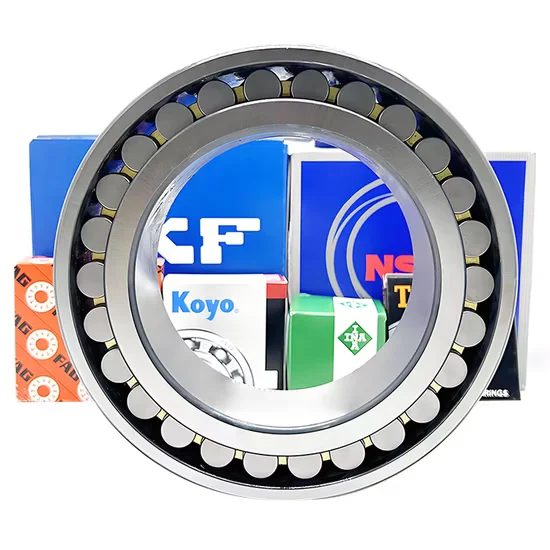
Our approach involves maintaining a broad stock of genuine bearings, including SKF, FAG, NSK, and Koyo, allowing for flexible mixed-container loading. This service is particularly valuable for regional distributors who need to replenish diverse SKUs without committing to full container loads of a single brand.
A Latin American mining operator faced frequent downtime due to delayed spare parts. By switching to a consolidated sourcing model, they reduced lead times significantly. Instead of waiting for separate shipments from different brand distributors, they received a single container with all required thrust bearings and other components. This consolidation did not compromise authenticity, as each item was sourced through verified channels with full traceability.
Flexibility in MOQ is also crucial. Emergency maintenance often requires single-unit orders, while project builds need bulk quantities. A capable supplier should accommodate both, providing technical support for model selection and cross-brand equivalent consultation when original parts are obsolete or unavailable.
When evaluating suppliers, look for those who offer technical datasheets and cross-reference services. This support helps local teams make informed decisions and promotes the correct application of bearings in the field. The goal is to create a resilient supply chain that supports both routine maintenance and emergency response.
Conclusion
Precision in selection and verification in sourcing are non-negotiable for thrust bearing reliability.
Choosing the right Koyo thrust bearing involves understanding the specific axial load demands and avoiding the trap of oversizing. Authenticity must be verified through traceable documentation, not just packaging. By partnering with suppliers who offer consolidated, genuine inventory, industrial operators can ensure equipment longevity and operational continuity.