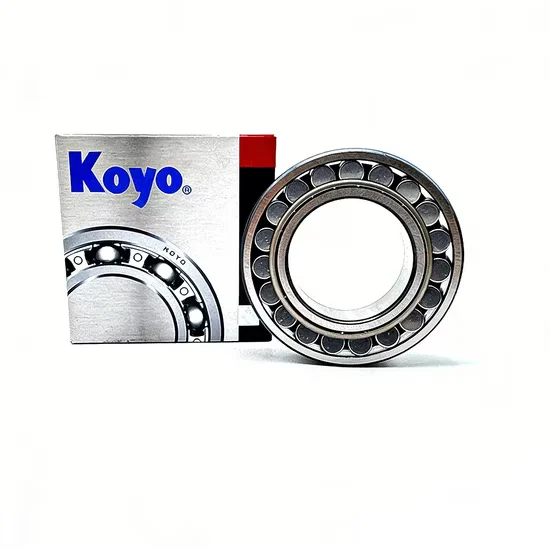
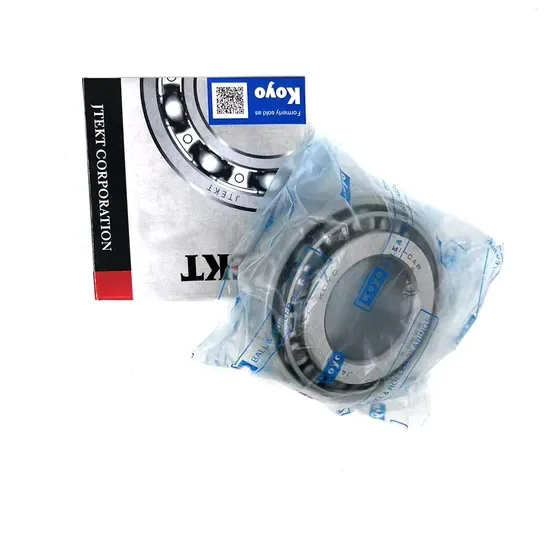
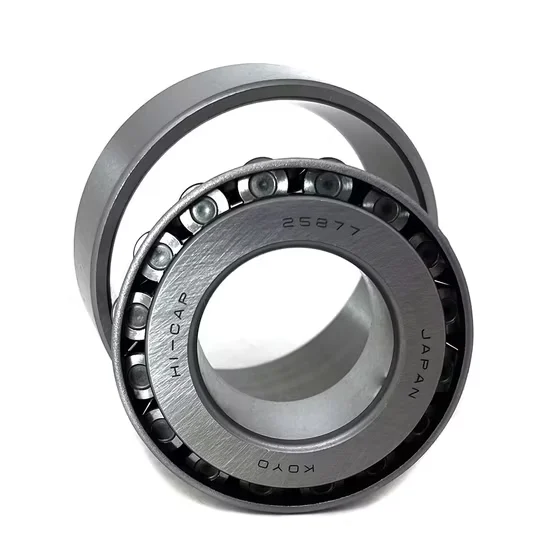
A counterfeit premium bearing fails faster than a genuine standard brand.
Choosing between Koyo and FAG spherical bearings depends on specific heavy-duty applications, but authentic sourcing and correct clearance selection are the ultimate deciders for equipment lifespan. For regional distributors and MRO buyers, the decision is not merely about brand prestige but about verifying cage materials, internal clearance classes, and supply chain traceability to avoid catastrophic downtime in mining and heavy equipment operations.
I still remember the dust choking the air at a Nigerian quarry, where a vibrating screen had seized up just weeks after a major overhaul. The maintenance team had swapped out the original units with what they believed were cost-effective replacements. Under the heavy shock loads typical of aggregate processing, the cage fractured, sending metal shards through the housing. Later, when they switched to a well-known German brand to solve the issue, they encountered a different failure mode: rapid seizure due to refurbished internals sold as new. These experiences in the field highlight that the technical specifications of Koyo vs FAG spherical bearings are only half the battle; the integrity of the supply chain is the other.
Understanding these dynamics requires looking beyond the catalog ratings. It demands a practical assessment of how these components behave under stress and how to secure genuine units for bulk projects.
What are the core structural differences between Koyo and FAG spherical bearings?
Cage design and roller profile dictate performance under misalignment.
While both brands manufacture high-quality spherical roller bearings capable of accommodating angular misalignment, their engineering approaches to cage materials and roller geometry differ. These structural nuances become critical when selecting components for high-vibration environments.
| Feature | Koyo Spherical Roller Bearings | FAG Spherical Roller Bearings |
|---|---|---|
| Cage Material Options | Standard steel, Brass (common in larger sizes) | Machined brass, Polyamide (PA66) in specific series |
| Roller Profile | Symmetrical barrel shape | Optimized asymmetrical or symmetrical profiles depending on series |
| Internal Clearance | Standard C3, C4 available | Standard C3, C4, C5 available |
| Lubrication Grooves | Standard outer ring grooves | Often includes advanced lubrication distribution features |
Koyo bearings often utilize robust steel cages in standard series, which provide excellent strength for general heavy-duty applications. In contrast, FAG frequently employs machined brass cages in their larger spherical roller bearings, offering superior guidance and resistance to wear under high-speed or high-temperature conditions.
The roller profile also plays a significant role. FAG’s optimized profiles are designed to reduce edge stresses, which can extend service life in applications with slight misalignment. Koyo’s symmetrical designs provide balanced load distribution, making them a reliable choice for standard industrial setups. When comparing Koyo vs FAG spherical bearings, it is essential to match the cage material to the operating environment. For instance, brass cages are preferred in high-temperature scenarios where steel might suffer from thermal expansion issues, while polyamide cages offer weight reduction and better lubrication retention in specific moderate-load applications.
Selecting the wrong cage type can lead to premature failure. A steel cage in a high-temperature kiln application may deform, while a polyamide cage in a heavy-shock mining crusher might crack under impact. Therefore, the structural difference is not just a matter of preference but a functional requirement based on the specific operational stresses.
How do Koyo and FAG perform under heavy shock loads in mining?
Material strength and shock resistance determine survival in harsh environments.
Mining equipment, such as crushers and vibrating screens, subjects bearings to extreme shock loads and continuous vibration. In these conditions, the fatigue resistance of the bearing steel and the robustness of the cage become paramount. Both Koyo and FAG use high-purity bearing steel, but their heat treatment processes and quality control standards ensure different levels of consistency.
In a case involving a Middle East steel plant, the replacement of spherical bearings in a conveyor drive unit was critical. The initial choice was driven by availability, but the subsequent failure analysis revealed that the bearing had not been selected with the appropriate internal clearance for the high-shock environment. The standard clearance allowed excessive internal movement, leading to cage fracture. Switching to a bearing with C4 clearance resolved the issue, highlighting the importance of matching clearance to load conditions.
When evaluating Koyo vs FAG spherical bearings for mining, consider the following:
- Shock Load Capacity: Both brands offer high dynamic load ratings, but FAG’s optimized roller profiles may provide slightly better stress distribution under extreme misalignment caused by shaft deflection.
- Cage Robustness: For heavy shock loads, machined brass cages are generally more resistant to fracture than stamped steel cages. Verify the cage type in the specific part number.
- Sealing Effectiveness: Mining environments are contaminated with dust and moisture. Both brands offer sealed variants, but the effectiveness of the seal design varies by series. Ensure the selected model has adequate protection for the specific contaminant level.
The key is not just the brand but the specific series and configuration. A standard Koyo bearing might outperform a mismatched FAG unit if the former is correctly specified for the shock load. Conversely, a properly selected FAG bearing with a brass cage and C4 clearance can withstand conditions that would destroy a standard unit. The performance under shock loads is a function of correct specification rather than brand superiority alone.
Why do premium bearings fail early in harsh environments?
Counterfeit risks and improper clearance selection are the primary causes.
It is a common misconception that premium brands always last longer. In reality, a fake premium bearing fails faster than a genuine standard brand. The market is flooded with counterfeit products that mimic the packaging and appearance of reputable brands but lack the metallurgical quality and precision manufacturing.
A European wind farm operator once reported a series of premature failures in gearbox bearings. Upon inspection, it was discovered that the bearings were refurbished units repackaged as new. The internal surfaces showed signs of previous wear, and the lubricant was degraded. This led to rapid seizure and significant downtime, costing far more than the initial savings from purchasing cheaper, non-genuine parts.
Improper clearance selection is another major factor. Most think standard clearance fits all; reality: wrong clearance in high-shock mining causes immediate cage failure. In high-temperature or heavy-load applications, standard clearance (C2 or Normal) is insufficient. The internal expansion of the bearing components reduces the effective clearance, leading to preloading and overheating. Selecting C3 or C4 clearance is essential to accommodate thermal expansion and maintain proper operation.
When sourcing Koyo vs FAG spherical bearings, verify the authenticity through traceability documentation. Genuine products come with batch numbers and certificates of conformity that can be verified with the manufacturer. Avoid suppliers who cannot provide this documentation or who offer prices significantly below market value, as these are red flags for counterfeit or refurbished goods.
The risk of counterfeit goods is particularly high in emerging markets where price sensitivity is high. Distributors must prioritize suppliers who offer full traceability and can provide technical support to ensure the correct clearance and cage type are selected for the application. This approach minimizes the risk of premature failure and ensures the longevity of the equipment.
How to source genuine Koyo and FAG bearings for mixed projects?
Traceability and flexible MOQ are key to reliable procurement.
For regional distributors and MRO buyers, sourcing genuine bearings for mixed projects requires a supplier who can provide both Koyo and FAG products with complete traceability. The ability to consolidate orders from multiple brands into a single shipment reduces logistics costs and simplifies inventory management.
A professional global full-range bearing supplier can offer genuine products from mainstream international brands, including SKF, FAG, INA, NSK, NTN, TIMKEN, KOYO, NACHI, and IKO. Such suppliers maintain massive spot inventories covering thousands of standard and special part numbers, enabling fast lead times for urgent maintenance requirements.
When evaluating a supplier for Koyo vs FAG spherical bearings, consider the following criteria:
- Traceability Documentation: Ensure the supplier provides original manufacturer certificates and batch numbers for all products.
- Flexible MOQ: Look for suppliers who can handle both single-unit emergency orders and full container consolidations. This flexibility is crucial for MRO operations where downtime is costly.
- Technical Support: Choose a supplier who offers cross-brand equivalent model consultation. This service helps in selecting the right bearing when the original brand is unavailable or when cost optimization is needed without compromising performance.
- Global Shipping Consolidation: A supplier with experience in global shipping can consolidate orders from different brands, reducing freight costs and customs complexities.
By partnering with a supplier who prioritizes authenticity and technical expertise, buyers can mitigate the risks associated with counterfeit products and improper selection. This ensures that the bearings purchased are genuine and suitable for the intended application, thereby maximizing equipment lifespan and minimizing unplanned downtime.
Conclusion
Authenticity and correct specification outweigh brand prestige.
The choice between Koyo and FAG spherical bearings is not a binary decision but a nuanced evaluation of application requirements, cage materials, and internal clearance. For heavy-duty mining and industrial applications, the risk of counterfeit products and improper selection poses a greater threat than any inherent difference in brand quality. By prioritizing traceable sourcing and technical verification, buyers can ensure reliable performance and extended service life for their equipment.