Buying the cheaper brand does not save money if the part fails in three months.
The choice between Koyo and NTN industrial bearings is not about finding a universally superior brand, but about matching specific series strengths to your heavy-duty application while ensuring absolute traceability. For global MRO buyers and distributors, verifying authenticity through official documentation is as critical as selecting the correct load rating, as counterfeit or mixed-batch components cause catastrophic downtime in harsh environments like mining quarries and steel mills.
Having stood in the dust-choked air of a quarry outside Riyadh, watching a site manager curse at a seized tapered roller bearing, I learned that technical specifications mean little without supply chain integrity. The bearing had failed in less than a quarter of its expected life. A close inspection revealed inconsistent wear patterns on the outer ring, and a check of the batch codes showed it was part of a mixed lot lacking original traceability documents. In regions with strict regulatory oversight, such as the Middle East, missing these papers can halt entire construction projects. This experience highlights that sourcing Koyo vs NTN industrial bearings requires a dual focus: technical suitability for extreme conditions and rigorous verification of origin.
How Do Load Capacity and Speed Limits Dictate Your Brand Choice?
Neither brand dominates every metric; specific series excel in distinct operational niches.
When comparing Koyo vs NTN industrial bearings, buyers often assume one brand offers higher dynamic load ratings across the board. However, engineering catalogs reveal that performance varies significantly by series and design philosophy. NTN often emphasizes high-load capacity in their spherical roller bearings, utilizing optimized internal geometry to distribute stress more evenly under heavy shock loads. Conversely, Koyo (JTEKT) frequently focuses on high-speed stability and precision in their angular contact and deep-groove ball bearing lines, leveraging advanced heat treatment processes to maintain dimensional stability at elevated rotational speeds.
| Feature | NTN Typical Strength | Koyo Typical Strength | Verification Method |
|---|---|---|---|
| Heavy Shock Loads | Robust cage design in spherical rollers | Standard cage options | Check cage material code |
| High-Speed Stability | Standard precision grades | Enhanced precision options | Verify P4/P5 class marking |
| Heat Treatment | Carburizing for surface hardness | Through-hardening consistency | Request mill certificate |
| Seal Technology | Labyrinth seals for dust exclusion | Contact seals for grease retention | Inspect seal type suffix |
A European wind farm operator once switched from one brand to another for their gearbox main shafts, expecting a direct performance boost. Instead, they encountered premature fatigue because the new bearings had different internal clearance classes suited for higher speeds, not the slow, heavy oscillating loads of their pitch systems. This mismatch led to a noticeable increase in maintenance frequency. Understanding these nuances prevents costly errors. When evaluating Koyo vs NTN industrial bearings, always cross-reference the specific series designation with your equipment’s operating manual rather than relying on general brand reputation.
Why Do Harsh Environments Demand Specific Brand Series?
Dust, heat, and moisture do not affect all bearing types equally.
In industries like mining, cement production, and steel manufacturing, bearings face relentless assault from particulate contamination and extreme temperatures. A standard deep-groove ball bearing might suffice in a clean factory floor, but it will fail rapidly in a dusty quarry. Here, the selection between Koyo vs NTN industrial bearings hinges on their specialized solutions for harsh environments. NTN offers specific series with enhanced sealing technologies designed to exclude fine dust particles, which are the primary cause of abrasive wear. Koyo provides robust options with specialized heat-resistant cages and lubricants capable of withstanding the high thermal loads found in continuous casting machines.
Consider a case from a Southeast Asian palm oil processing plant. The high humidity and organic acids in the environment caused rapid corrosion in standard bearings. The maintenance team initially tried switching brands without changing the specification, resulting in similar failure rates. Only after selecting bearings with stainless steel components and specialized corrosion-resistant seals did the service life extend meaningfully. This illustrates that the brand name is secondary to the specific material and sealing technology chosen for the environment.
When sourcing Koyo vs NTN industrial bearings for such applications, request detailed data sheets on seal effectiveness and material composition. Do not accept generic “heavy-duty” labels. Verify if the bearing uses standard chrome steel or specialized alloys. Ask for documentation on the lubricant’s temperature range and compatibility with existing systems. These details determine whether a bearing will survive a single season or last for years.
How Do Unverified Alternatives Increase Total Lifecycle Costs?
Lower upfront procurement costs often mask exponentially higher downtime expenses.
Many buyers attempt to reduce immediate expenditure by purchasing unverified or gray-market bearings. While the initial price tag may be lower, the total cost of ownership skyrockets due to unplanned downtime, emergency shipping fees, and collateral damage to machinery. A mid-six-figure loss in production output can result from a single bearing failure in a critical crusher or conveyor system. This risk is amplified when the parts lack proper traceability. Counterfeit bearings often use inferior steel with higher inclusion densities, leading to premature spalling and catastrophic seizure.
A Latin American mining company once sourced a large batch of tapered roller bearings from a non-authorized supplier to cut costs. Within months, multiple units failed, causing extended stoppages. An investigation revealed that the bearings were refurbished units repackaged as new, with microscopic cracks already present in the races. The cost of replacing the damaged shafts and lost production far exceeded the savings from the initial purchase. This scenario underscores why verifying the supply chain is non-negotiable.
When comparing Koyo vs NTN industrial bearings, ensure your supplier provides full traceability. This includes original packaging, batch numbers that match the manufacturer’s records, and mill certificates confirming material quality. Avoid suppliers who cannot provide these documents or who offer prices significantly below market average without clear justification. Authenticity guarantees that you are receiving the engineered performance you paid for, protecting your operation from hidden risks.
What Are the Critical Steps for Verifying Authenticity and Traceability?
Visual inspection alone is insufficient; document verification is mandatory.
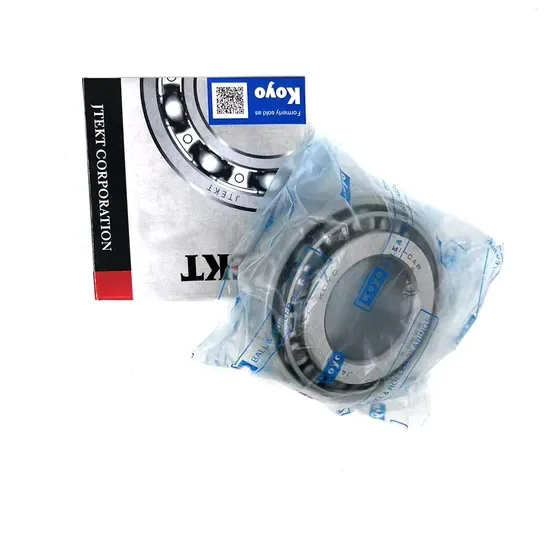
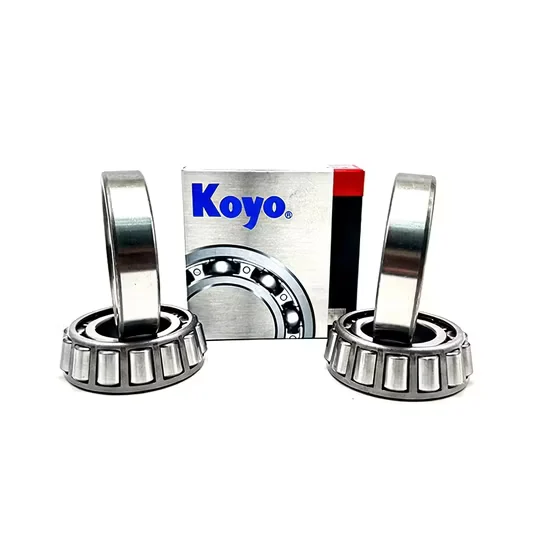
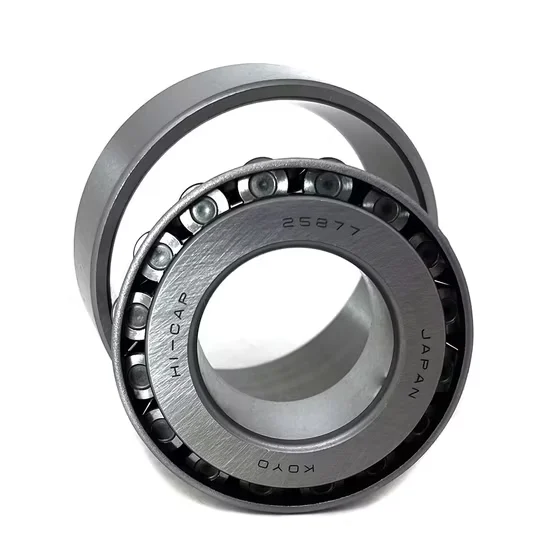
Verifying the authenticity of Koyo vs NTN industrial bearings requires a systematic approach beyond checking the logo on the box. Counterfeiters have become sophisticated, replicating packaging and even laser markings. Therefore, buyers must rely on a multi-layered verification process. First, inspect the packaging for print quality, spelling errors, and security features such as holograms or QR codes that link to the manufacturer’s database. Second, examine the bearing itself for consistent laser marking, smooth finish, and precise dimensions. Any roughness or misalignment suggests poor manufacturing quality.
Third, and most importantly, demand complete traceability documentation. This includes the original invoice from an authorized distributor, the manufacturer’s certificate of conformity, and material test reports. These documents should contain batch numbers that correspond to the markings on the bearing and its packaging. If a supplier cannot provide these papers, or if the numbers do not match, reject the shipment immediately. In strict regional projects, customs authorities may also require these documents to clear goods, and missing paperwork can lead to significant delays.
A buyer in Central Asia once faced a month-long delay because their supplier failed to provide the original mill certificates for a container load of bearings. The local authorities held the shipment, halting construction progress. This incident highlights that traceability is not just a quality issue but a logistical necessity. When sourcing Koyo vs NTN industrial bearings, treat documentation as part of the product. Ensure your supplier has a proven track record of providing complete, verifiable records for every shipment.
Conclusion
Selecting the right bearing requires balancing technical specs with supply chain integrity.
Choosing between Koyo vs NTN industrial bearings depends on your specific heavy-duty application, but verifying authenticity remains paramount. Prioritize suppliers who offer full traceability and genuine products to avoid the hidden costs of counterfeits. Reliable sourcing ensures operational continuity and protects your investment in critical machinery.