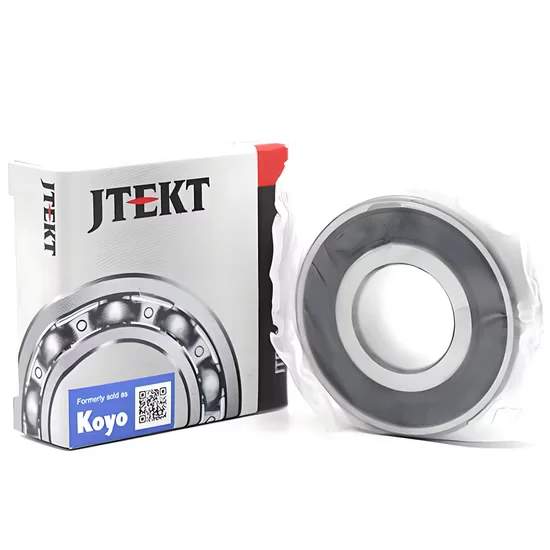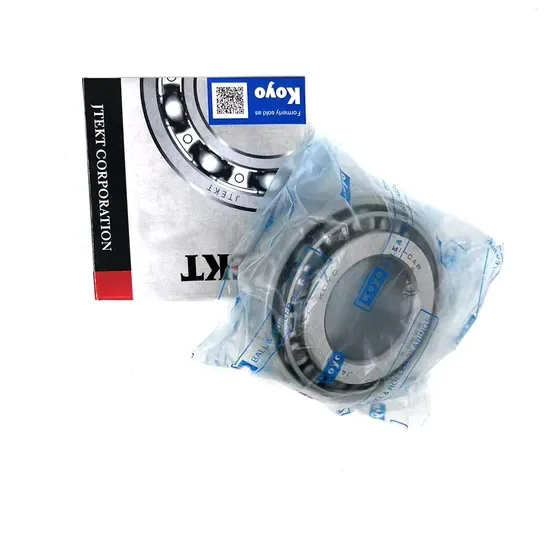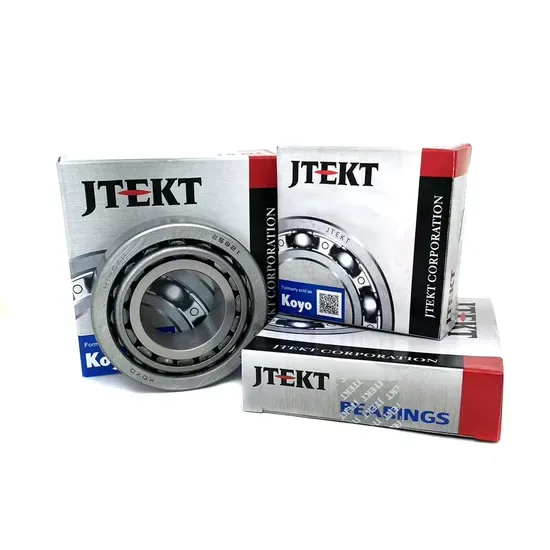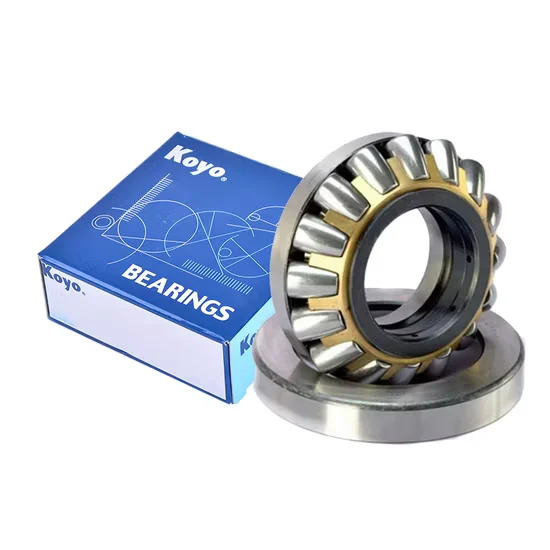


Authenticity Via QR — Every BDL 51100 thrust ball bearing shipment includes scannable QR codes linked to the manufacturer's official verification app for instant batch validation.
Technical Specifications
| Parameter | Value |
|---|---|
| Designation | 51100, 51200, 51300, 51400, 52200, 53200, 53300 |
| Product Type | Thrust Ball Bearing |
| Bore Diameter (d) | 65 mm |
| Outside Diameter (D) | 100 mm |
| Width (T) | 47 mm |
| Precision Class | P0, P6, P5, P4, P2 |
| Vibration Level | Z1V1, Z2V2, Z3V3 |
| Lubrication | Grease or Oil |
| Aligning | Non-Aligning Bearing |
| Separated | Separated |
| Number of Rows | Single |
| Load Direction | Thrust |
| Material | Bearing Steel |
| Contact Angle | 0° |
| Certification | ISO9001:2008 |
| Origin | China |
Application Suitability
| Industry | Typical Applications |
|---|---|
| Automobile | Transmission thrust washers and clutch release mechanisms |
| Rolling Mill | Screw-down systems and vertical roll neck supports |
| Mine | Heavy-duty vibrating screen shafts and crusher main shafts |
| Metallurgy | Continuous casting machine withdrawal rolls and ladle turrets |
Why Vibration Ratings Dictate Survival in BDL 51100 thrust ball bearing Assemblies
High-frequency axial shocks rapidly degrade standard cages unless vibration-controlled variants are explicitly specified during procurement.
In heavy metallurgy and mining equipment, axial load fluctuations are rarely uniform or predictable. When sourcing thrust bearings for vibrating screens or rolling mill screw-downs, overlooking the Z-level vibration classification often leads to premature cage fatigue and unexpected line stoppages. I learned this the hard way while outfitting vertical motors in Vietnam; swapping a brass cage for a pressed steel variant without checking the suffix caused a catastrophic cage fracture under high-frequency vibration, halting the entire production line for days. Specifying the correct Z1V1 to Z3V3 rating ensures the internal geometry withstands these specific dynamic shocks without structural compromise.
Matching Precision Grades to Axial Load Demands
Selecting the right BDL 51100 thrust ball bearing requires carefully aligning the P0-P2 precision spectrum with your specific operational tolerances and equipment requirements. For general automotive clutch applications, standard P0 or P6 grades provide adequate axial play control and reliable performance. However, when integrating these components into high-speed rolling mill gearboxes or precision machine tool rotary tables, upgrading to P4 or P2 ensures minimal axial runout. This microscopic accuracy directly translates to smoother operation, reduced thermal generation, and significantly extended service intervals across the entire drivetrain, preventing costly secondary damage to adjacent precision components.
Managing Thermal Expansion and Lubrication Boundaries
Thrust ball bearings operate under intense axial compression, generating significant internal friction heat during continuous operation. In continuous casting or rolling mill environments, elevated ambient temperatures compound this thermal load, making the choice between grease and oil lubrication absolutely critical. Grease offers excellent sealing against metallurgical dust but can rapidly degrade if thermal limits are exceeded, whereas oil circulation provides superior cooling for high-speed setups. Furthermore, the non-aligning, separated design demands perfectly square mounting surfaces; any misalignment introduces uneven stress concentrations that accelerate raceway spalling and drastically reduce the calculated service life.
Decoding the Separated Single-Row Architecture
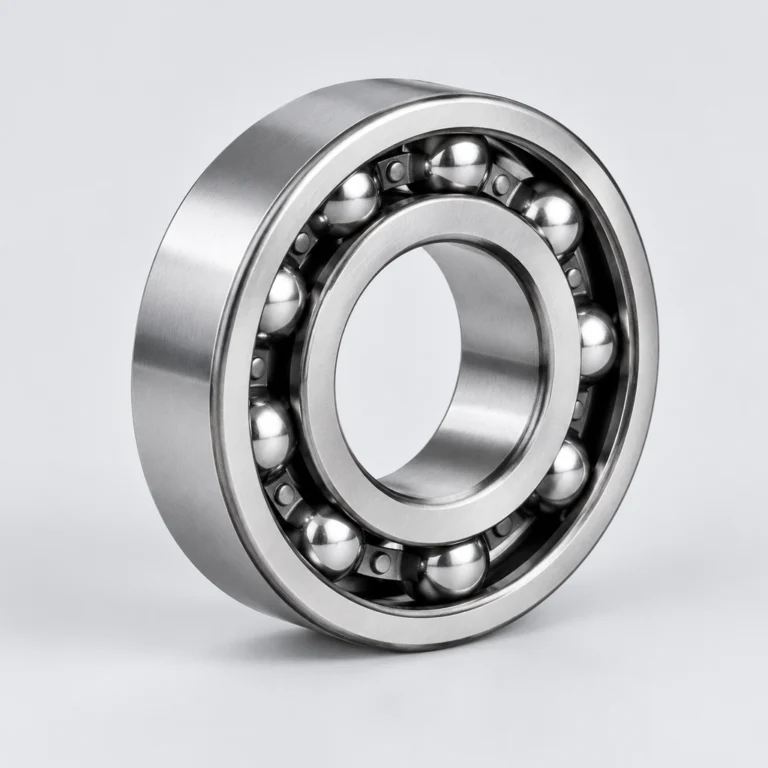
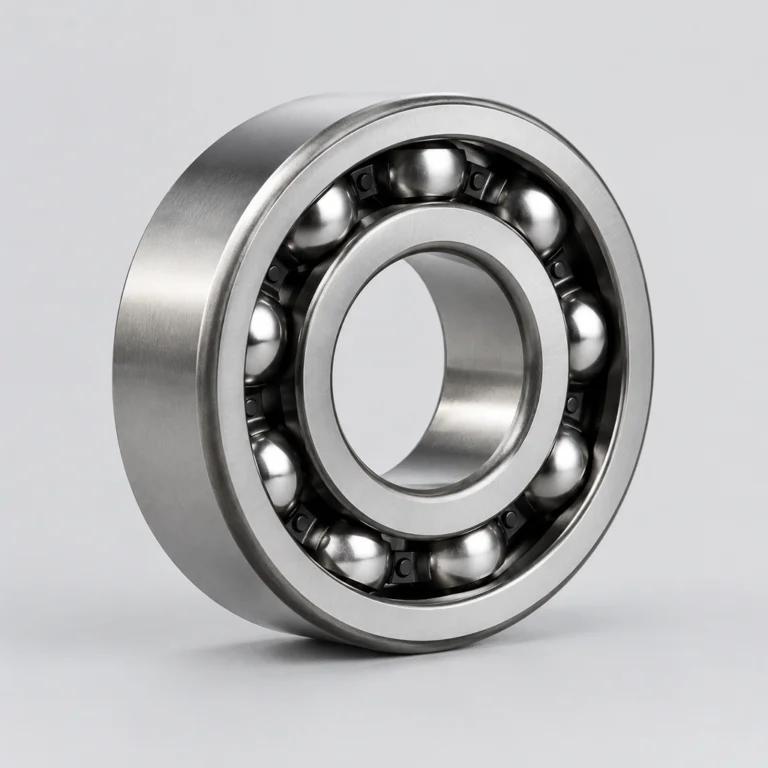
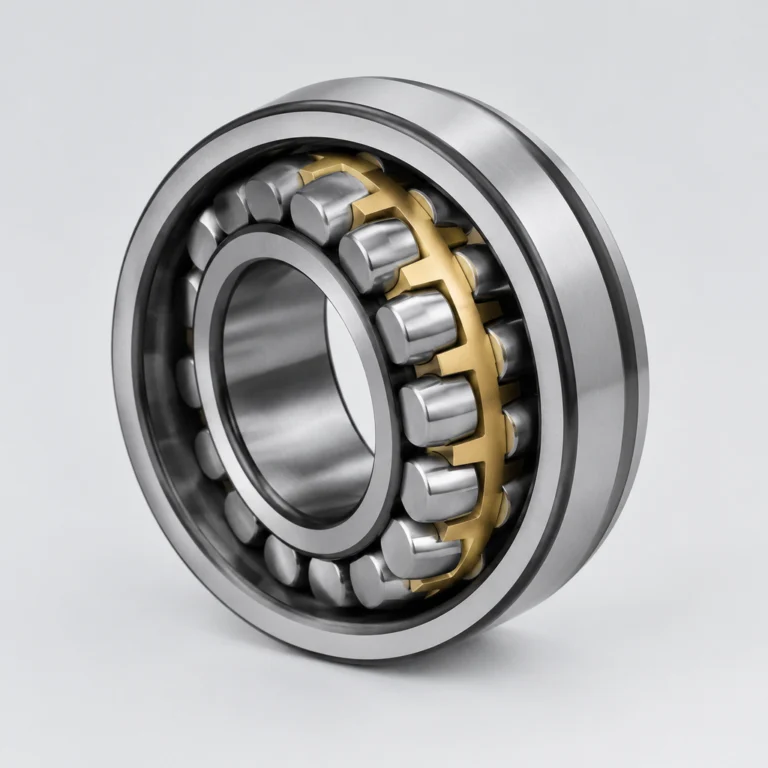
The defining characteristic of the 51100, 51200, and 51300 series is their separated single-row structure, comprising a shaft washer, a housing washer, and a dedicated ball-and-cage assembly. This modular architecture drastically simplifies installation and dismantling in confined spaces, such as vertical motor housings or crane slewing mechanisms, where clearance is severely restricted. The 0° contact angle confirms pure axial load capacity, meaning any incidental radial loads must be absorbed by accompanying radial bearings to prevent structural damage. Because these bearings lack self-aligning capabilities, the machining tolerance of the adjacent housing shoulders becomes paramount to prevent edge loading on the 65x100x47 mm envelope dimensions.
The Cascading Impact of Cage Material Mismatches
Ignoring the cage material and vibration rating during cross-referencing triggers a severe chain reaction of mechanical failures across the assembly. A pressed steel cage subjected to high-frequency axial vibrations will experience accelerated work-hardening and eventual brittle fracture, releasing metallic debris into the lubricant. This contamination rapidly destroys the raceway finish, leading to unplanned downtime and catastrophic damage to adjacent gears or shafts. Adhering to ISO 281 lifecycle calculations requires accurate input of the actual cage design and operating vibration levels, not just the basic boundary dimensions, to ensure reliable long-term performance.
Engineering Verification Beyond Basic Part Numbers
Sourcing the 52200 or 53200 double-direction variants requires strict verification of the intermediate shaft washer dimensions, a detail frequently mismatched in generic supplier catalogs. Our technical team cross-references your exact OEM equipment drawings to ensure the selected BDL series matches the required axial clearance and cage material. We maintain massive spot inventory across the full 51100 to 53300 spectrum, allowing single-unit emergency dispatches or full-container consolidation for large projects. Every shipment includes complete batch traceability, ensuring the P-grade precision and Z-level vibration ratings on the physical product perfectly match your stringent procurement specifications without exception.
Documentation & Authenticity
- Scannable QR codes linking directly to the manufacturer's official verification portal for instant batch validation.
- Material certificates confirming the high-purity bearing steel composition used for the shaft and housing washers.
- Dimensional inspection reports verifying the 65x100x47 mm tolerances align strictly with the ordered P4 or P2 class.
- Vibration testing logs documenting the specific Z1V1, Z2V2, or Z3V3 compliance before packaging.
- Certificate of Conformity tied to the ISO9001:2008 quality management system of the production facility.
Storage, Handling & Mounting
- Store the separated washers and cage assemblies in original VCI packaging to prevent micro-corrosion on the precision-ground raceways.
- Use induction heating strictly for the shaft washer, avoiding direct flame application that could alter the bearing steel hardness.
- Ensure the housing shoulder runout is within the specified P-class tolerance before seating the housing washer to prevent axial misalignment.
- Apply the specified grease or oil immediately after unsealing, as the open design lacks integrated contamination barriers.
- Handle the ball-and-cage assembly with clean lint-free gloves to prevent skin acids from initiating localized corrosion on the rolling elements.
Preparing Your Technical Data for Selection
To ensure the selected thrust bearing withstands your specific operational stresses, please provide the exact axial load magnitude, operating speed, and thermal environment. If replacing an existing unit, share the OEM equipment model number and the exact boundary dimensions of the housing bore and shaft diameter. This data allows our engineering team to calculate the required dynamic load rating, verify the optimal lubrication method, and confirm the correct precision and vibration class for your application, ensuring maximum reliability.
Frequently Asked Questions
Q: What is the difference in axial load capacity between 51100 single-direction and 52200 double-direction thrust ball bearings?
A: The 51100 series handles axial loads in one direction, utilizing a single shaft washer and housing washer. In contrast, the 52200 double-direction variants feature a central shaft washer with two ball-and-cage assemblies, allowing them to manage reversing axial loads. Selecting between them depends entirely on whether your application experiences unidirectional thrust or bidirectional axial shifts during operation.
Q: What are the specific tolerance differences between P4 and P2 precision grades in rolling mill applications?
A: P2 precision offers significantly tighter dimensional and running accuracy tolerances compared to P4, minimizing axial runout to microscopic levels. In rolling mill screw-down systems or high-speed gearboxes, this extreme precision prevents uneven load distribution across the rolling elements. Specifying P2 ensures smoother rotation, reduces vibration generation, and extends the operational lifespan of the entire thrust bearing assembly under heavy continuous axial compression.
Q: How do Z1V1 and Z3V3 vibration standards affect noise control in high-speed operating equipment?
A: The Z-level vibration classification measures the amplitude of structural vibrations generated during rotation. Z3V3 represents the strictest control, ensuring exceptionally smooth raceway finishes and highly balanced cage assemblies. For high-speed automotive transmissions or precision machine tools, specifying Z3V3 drastically reduces operational noise and prevents high-frequency resonance, whereas Z1V1 is generally sufficient for lower-speed, heavy-load metallurgical applications where acoustic emissions are less critical.
Q: What are the selection boundaries for grease versus oil lubrication under different metallurgical operating temperatures?
A: Grease is preferred for moderate speeds and environments heavily contaminated with metallurgical dust, as it acts as a physical seal. However, if the continuous casting or rolling mill application generates extreme friction heat exceeding standard grease thermal limits, oil circulation becomes mandatory. Oil provides superior cooling and flushes away wear debris, ensuring the separated thrust bearing components maintain a stable hydrodynamic film under intense thermal loads.
Q: How does the separated design influence the assembly sequence for vertical motor applications?
A: The separated architecture allows the shaft washer, housing washer, and ball-and-cage assembly to be mounted independently. In vertical motor configurations, the shaft washer is typically pressed onto the rotor shaft first, followed by the cage assembly. Finally, the housing washer is seated into the end shield. This modularity simplifies installation in confined spaces and allows for precise axial clearance adjustments before final housing closure.