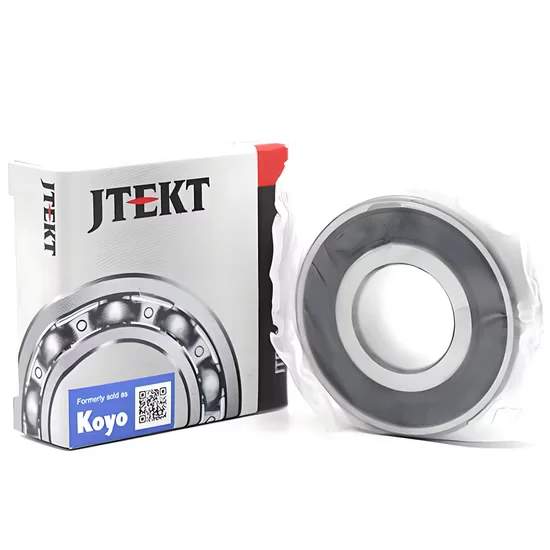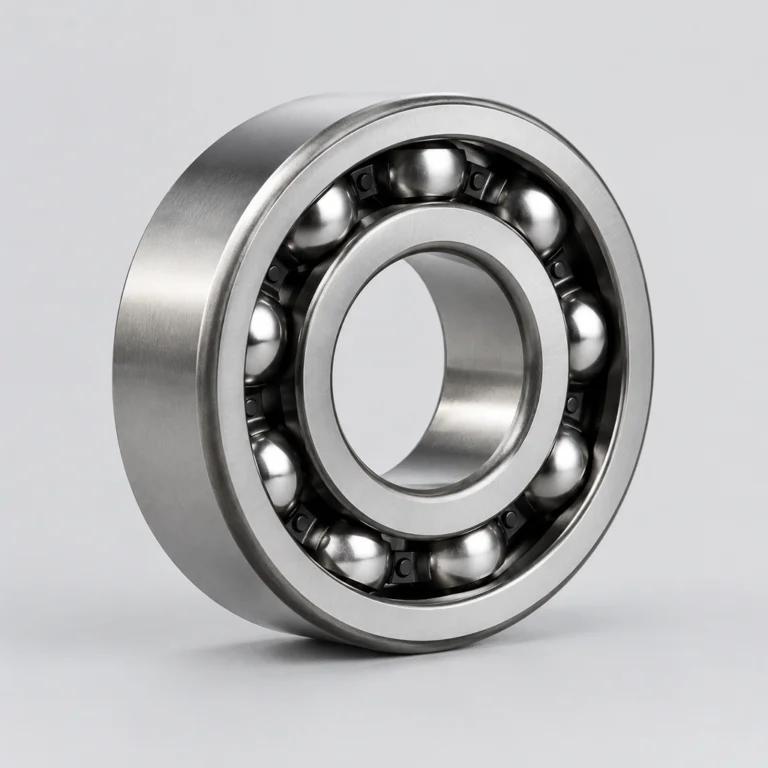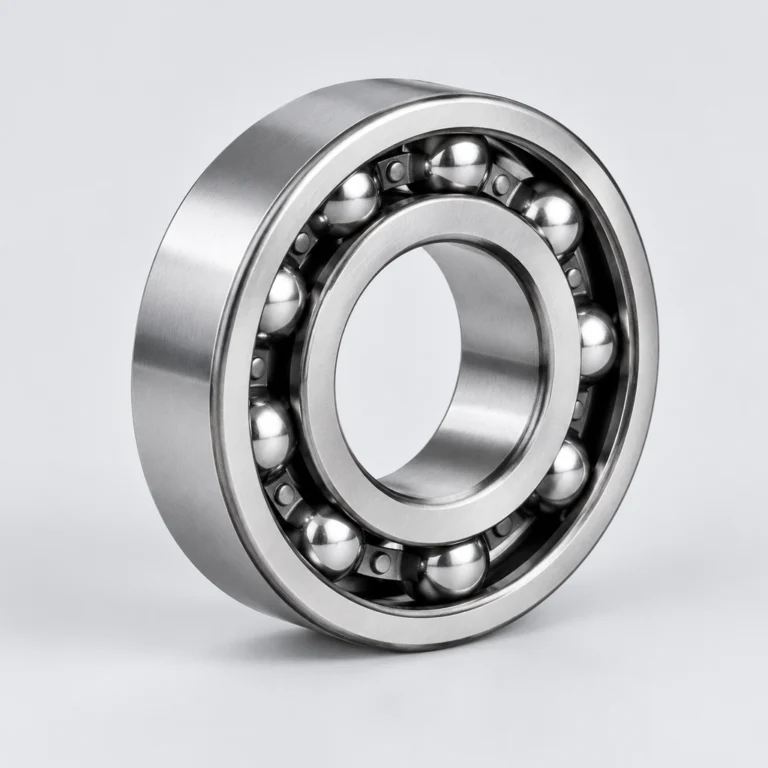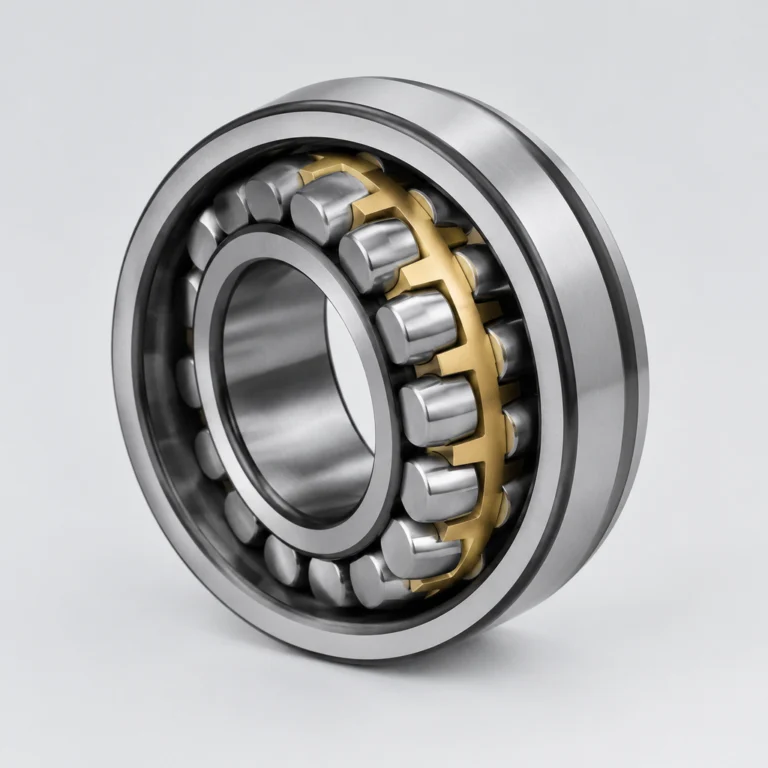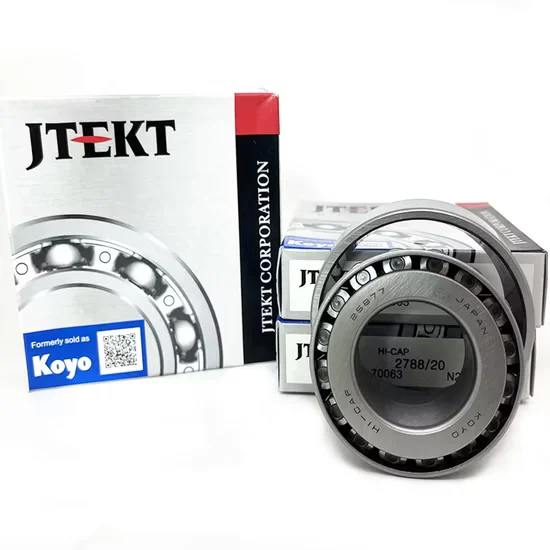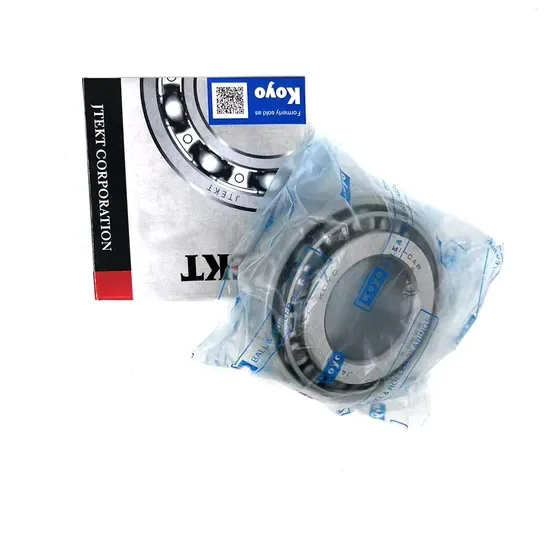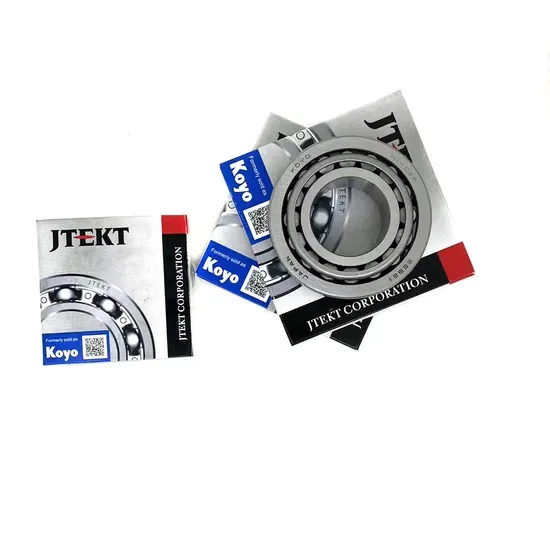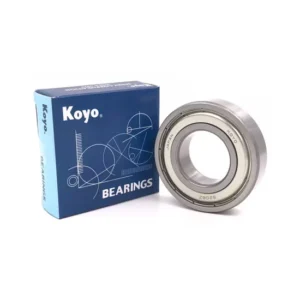
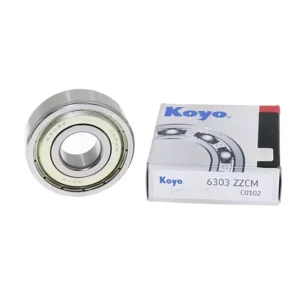
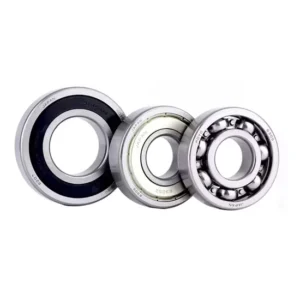


Unified Sourcing Across Brands — Consolidate your BDL 63/32 deep groove ball bearing orders with mixed-brand packages without coordinating multiple suppliers, simplifying your global MRO procurement process.
Technical Specifications
| Parameter | Value |
|---|---|
| Designation | 63/32 |
| Bearing Type | Deep Groove Ball Bearing |
| Seal or Shield Type | Open, Zz, 2RS |
| Lubrication | Grease or Oil |
| Precision Class | P0, P6, P5, P4 |
| Vibration Level | Z1V1, Z2V2, Z3V3 |
| Number of Rows | Single |
| Material | Bearing Steel |
| Contact Angle | 0° |
| Origin | China |
Note: Zz, 2RS, and DDU suffixes mentioned in the title are unverified and require manufacturer catalog confirmation.
Application Suitability
| Industry | Typical Applications |
|---|---|
| Electric Motors | Rotor shaft support, cooling fan assemblies |
| Pumps | Impeller shaft bearings, centrifugal pump housings |
| Gearboxes | High-speed input shafts, intermediate gear supports |
| Conveyors | Drive roller journals, idler pulley shafts |
| Household Appliances | Washing machine drum supports, compressor motors |
Why Dust Ingress Destroys the BDL 63/32 Deep Groove Ball Bearing Before Fatigue Sets In
Microscopic particulate contamination accelerates raceway wear far faster than cyclic radial loading.
Early in my failure analysis career, I watched an entire batch of electric motors seize because standard shielded bearings allowed metallic dust to penetrate the rotor cavity. Sourcing the correct sealing configuration for your BDL 63/32 deep groove ball bearing prevents these catastrophic lockups, which account for a significant share of premature failures in dusty environments. Procurement engineers often overlook the microscopic gaps in non-contact shields, leading to repeated equipment breakdowns and frustrated maintenance teams.
Aligning Seal Configurations with Motor and Pump Environments
When specifying a BDL 63/32 deep groove ball bearing for electric motors or pumps, matching the seal type to the contamination level is critical. Our engineering team cross-references your operating environment to recommend the optimal shield or contact seal, ensuring reliable radial load support without excessive friction heat. We evaluate the specific particulate size and moisture presence in your facility to prevent premature grease degradation.
Managing Radial Loads and Contamination in Rotating Equipment
Electric motors and pumps subject deep groove ball bearings to continuous radial loads while exposing them to airborne particulates or moisture. High rotational speeds demand low-friction seals to prevent grease degradation, whereas harsh environments require durable contact seals to block ingress. Selecting the appropriate precision class and vibration rating ensures smooth operation and minimizes acoustic noise in sensitive appliances. Proper alignment during installation further prevents uneven load distribution across the single-row ball complement.
Decoding Precision, Vibration, and Material Options
The available precision classes from P0 to P4 dictate the running accuracy and acoustic performance of the bearing, with higher grades essential for high-speed motor spindles. Vibration ratings like Z1V1 to Z3V3 directly correlate with operational smoothness, making Z3V3 ideal for noise-sensitive household appliances. While standard bearing steel provides excellent fatigue resistance, alternative materials such as stainless steel or ceramic variants are available for applications requiring enhanced corrosion resistance or electrical insulation. Understanding these material options ensures long-term reliability in aggressive chemical or high-humidity environments.
The Financial Impact of Incorrect Seal and Clearance Selection
Specifying an open bearing in a dusty pump housing inevitably leads to abrasive wear and unplanned downtime. Conversely, using high-friction contact seals in high-speed electric motors generates excessive heat, degrading the lubricant and causing premature seizure. These misalignments result in catastrophic damage to adjacent components and warranty voidance, emphasizing the need for rigorous application matching. Ignoring internal clearance requirements during thermal expansion can also cause the bearing to bind under operating temperatures.
Securing Authentic Bearings with Verified Traceability
Sourcing genuine components is critical, as counterfeit bearings often fail under standard radial loads. We provide complete traceability documentation for every BDL 63/32 deep groove ball bearing, ensuring you receive authentic products with verified material properties. Our flexible consolidation services allow you to mix this model with other sizes in a single shipment, while our technical team verifies seal suffixes against official catalogs to prevent misapplication. This rigorous validation process protects your critical machinery from unexpected failures caused by substandard metallurgy.
Documentation & Authenticity
- Certificate of Conformity verifying the BDL origin and manufacturing batch.
- Original factory batch traceability records linking the bearing to its production run.
- Material inspection reports confirming the bearing steel composition and hardness.
- Dimensional and running accuracy inspection reports validating the selected P-class tolerance.
Storage, Handling & Mounting
- Keep the original packaging sealed until mounting to protect the bearing steel from ambient humidity.
- Store in a temperature-controlled, dark environment to prevent grease degradation inside the sealed variants.
- Use clean gloves during handling to avoid transferring corrosive salts to the precision-ground raceways.
- For sealed configurations, do not wash or re-lubricate, as the factory grease fill is optimized for the bearing's lifespan.
- Apply induction heating for inner ring mounting to avoid damaging the single-row cage assembly.
Preparing Your Technical Parameters for Selection
To ensure optimal performance, please share your specific radial and axial loads, operating speeds, and ambient temperatures for L10 life calculation. Providing the OEM equipment model number allows our engineering team to perform precise cross-reference verification. Detailing the environmental exposure, such as dust or moisture levels, helps us finalize the correct seal and clearance configuration for your application.
Frequently Asked Questions
Q: How do I choose between Zz, 2RS, and open configurations for my electric motor?
A: Open bearings suit clean, oil-lubricated environments, while Zz shields offer low-friction dust protection for high-speed motors. The 2RS contact seals provide superior moisture and fine particle exclusion but generate slightly more friction heat. Evaluating your specific contamination level ensures the optimal balance between protection and rotational speed.
Q: What are the practical differences between P0, P6, P5, and P4 precision classes?
A: P0 is the standard class suitable for general industrial pumps and conveyors. P6 and P5 offer tighter dimensional tolerances for smoother operation in standard electric motors. P4 provides ultra-precise running accuracy and minimal vibration, which is strictly necessary for high-speed spindles and noise-sensitive household appliance compressors.
Q: How can I verify the authenticity and traceability of the supplied bearings?
A: Every shipment includes a Certificate of Conformity and original factory batch traceability records. We also provide material and dimensional inspection reports that validate the bearing steel composition and precision class. This comprehensive documentation ensures full transparency and protects your equipment from the risks associated with counterfeit components.
Q: How do I interpret vibration ratings like Z1V1 and Z3V3 for noise-sensitive equipment?
A: These ratings indicate the bearing's acoustic and vibration performance levels, with Z3V3 representing the strictest limits for low-noise operation. Selecting Z3V3 is crucial for household appliances and precision electric motors where operational quietness is paramount, whereas Z1V1 is generally sufficient for heavy-duty industrial gearboxes and conveyors.