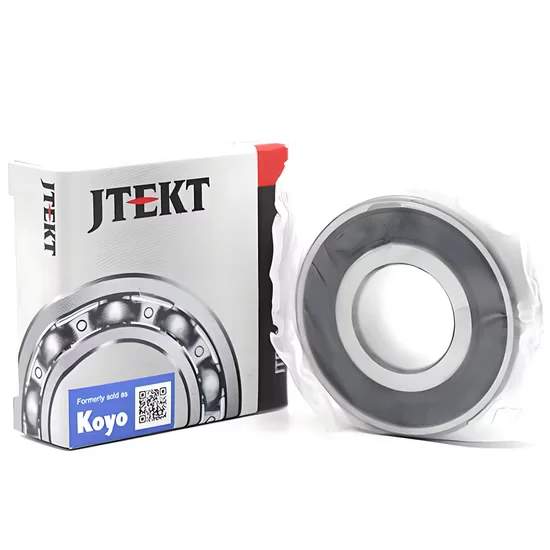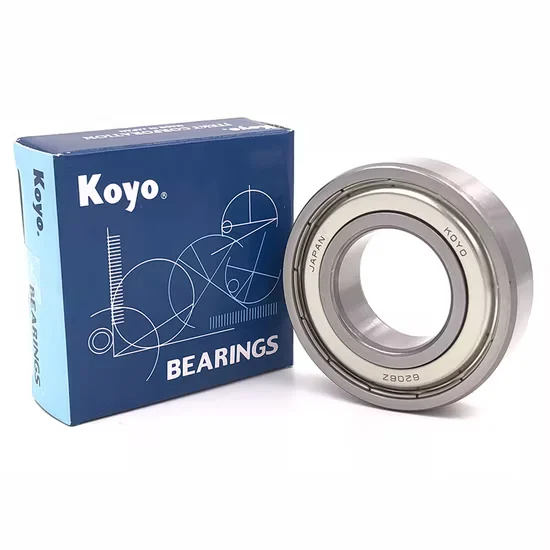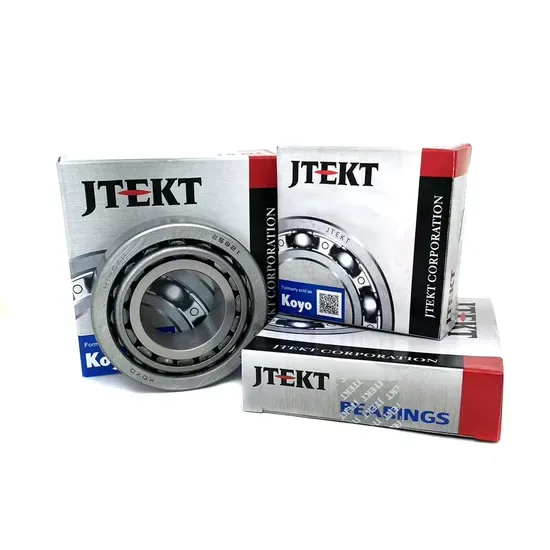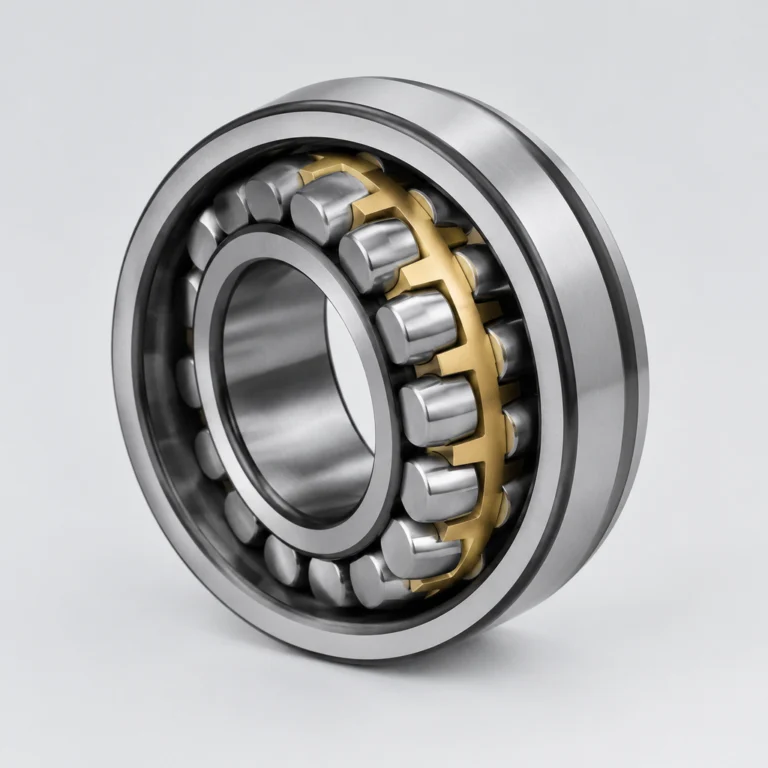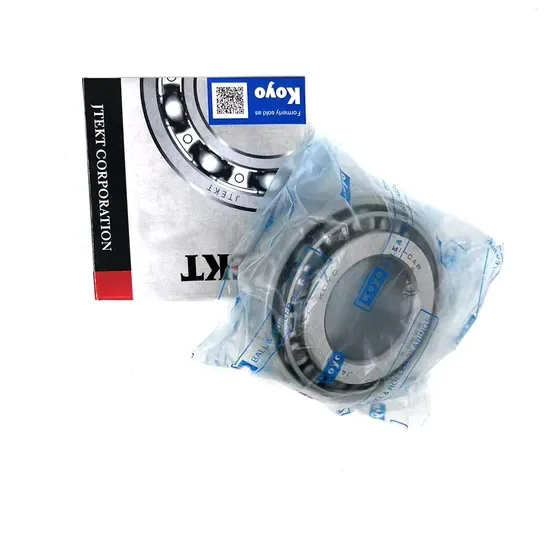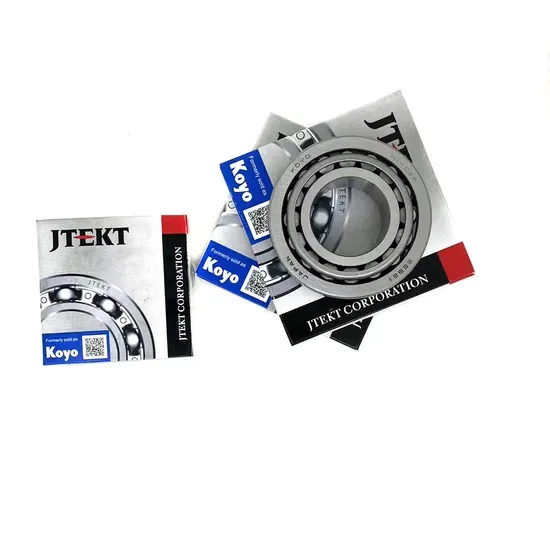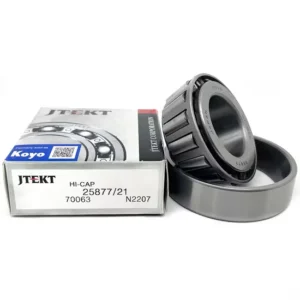
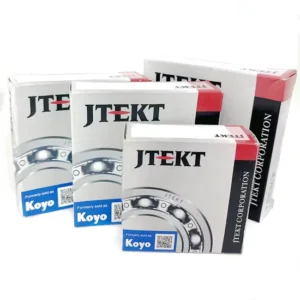
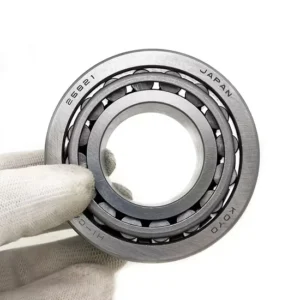
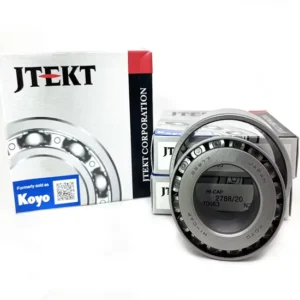

Original Batch Traceability — Every Koyo 30309 27709k 30310 30311 30312 tapered roller bearing shipped includes manufacturer lot codes for full lifecycle verification.
Technical Specifications
| Parameter | Value |
|---|---|
| Designation | 30309 27709k 30310 30311 30312 |
| Bearing Type | Tapered Roller Bearing |
| Number of Rows | Single, Double, Four |
| Material | Bearing Steel |
| Precision Rating | P0, P6, P5, P4, P2 |
| Load Direction | Radial Bearing |
| Origin | China |
Note: The 'k' suffix in 27709k remains unverified and requires manufacturer catalog confirmation prior to final selection.
Application Suitability
| Industry | Typical Applications |
|---|---|
| Heavy Equipment | Main drive shafts in heavy-duty gearboxes |
| Automotive | Load-bearing wheel hubs and truck axles |
| Marine | Propulsion marine drives and industrial machine transmissions |
Why Heavy Gearboxes Seize When Suffix Details Are Ignored for the Koyo 30309 27709k 30310 30311 30312 tapered roller bearing
Missing a single clearance or suffix code turns a robust tapered roller set into a catastrophic friction point under heavy radial loads.
Sourcing mixed-brand packages for urgent maintenance often leads to overlooking critical suffix variations. I once specified standard units for a heavy reducer without verifying the exact internal clearance suffix, resulting in complete seizure within days of operation. That costly failure reinforced why cross-referencing exact part numbers is non-negotiable for high-load applications. When procurement teams focus solely on the base designation, they inadvertently ignore the thermal expansion characteristics dictated by the internal geometry. In heavy industrial gearboxes, the difference between a standard clearance and a specialized heavy-load variant dictates whether the rolling elements maintain a protective oil film or grind directly against the raceway. This microscopic oversight cascades into massive mechanical failures, destroying shafts and housings.
Matching Tapered Roller Geometry to Extreme Gearbox Torque
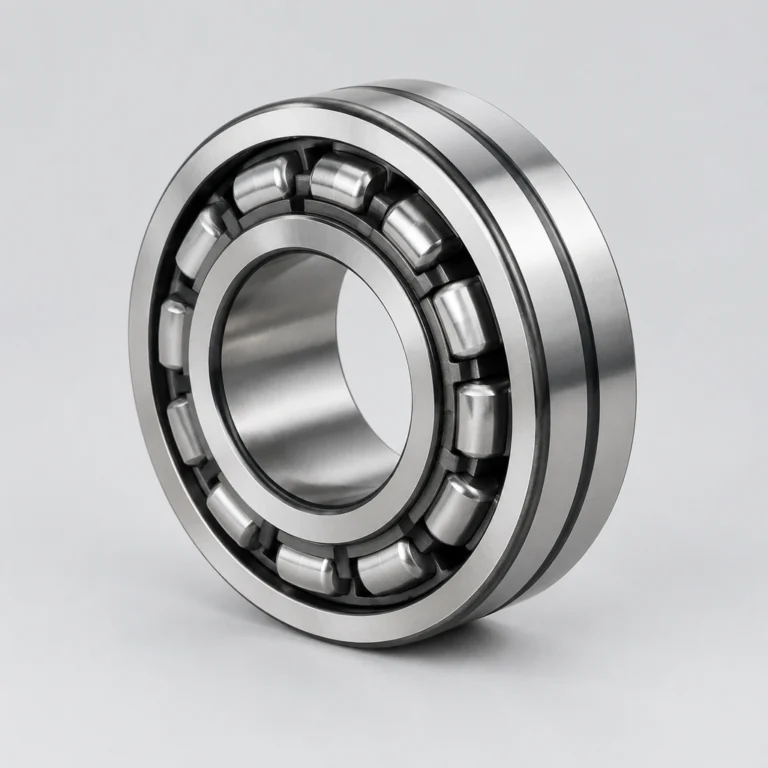
The Koyo 30309 27709k 30310 30311 30312 tapered roller bearing series handles combined radial and axial forces typical in industrial gearboxes. By supplying genuine units with complete traceability, we ensure the metallurgical integrity required for continuous heavy-equipment MRO replacement. Proper selection prevents premature wear in truck axles and machine transmissions. The conical design inherently distributes stress across a wider contact area, which is essential when torque spikes occur during startup or sudden load reversals. Engineers must carefully evaluate the contact angle and roller profile to ensure the bearing can absorb these transient shock loads without suffering from edge stress or premature fatigue spalling.
Navigating Shock Loads and Thermal Expansion in Drive Systems
Heavy-duty gearboxes subject bearings to severe shock loads and fluctuating temperatures that alter internal clearance. Adequate lubrication is critical to prevent metal-to-metal contact, while the correct row configuration—single, double, or four—must align with the specific axial thrust direction. Contaminant ingress from industrial environments further demands strict attention to seal interfaces and housing tolerances. As the gearbox operates, friction and ambient heat cause the shaft and housing to expand at different rates. If the initial clearance is not correctly specified to compensate for this thermal growth, the bearing will become preloaded beyond its design limits, generating excessive heat and accelerating lubricant degradation. Monitoring oil viscosity and establishing strict relubrication intervals are therefore just as critical as the initial mechanical selection.
Decoding Precision Ratings and Row Configurations
Available in P0, P6, P5, P4, and P2 precision ratings, these units accommodate varying operational accuracy requirements from general manufacturing to high-speed marine drives. The bearing steel construction ensures high load capacity, while options for single, double, and four-row arrangements allow engineers to match specific machinery designs. Selecting the appropriate precision class directly influences rotational accuracy and vibration levels during continuous operation. Higher precision grades feature tightly controlled dimensional tolerances and superior surface finishes on the rollers and raceways, which minimizes friction and heat generation. For applications where gear meshing accuracy is paramount, such as in precision reducers or robotics, upgrading to a P4 or P2 class ensures smooth power transmission and significantly reduces operational noise.
The Cascading Financial Impact of Incorrect Bearing Selection
Installing an incorrectly specified unit leads to unplanned downtime and catastrophic damage to adjacent gearbox components. Premature failure often voids equipment warranties and triggers expensive emergency shipping for replacement parts. Following ISO 15243 frameworks for failure analysis reveals that dimensional mismatches significantly accelerate fatigue spalling. Beyond the immediate cost of the replacement part, the secondary damage to shafts, seals, and gear teeth can multiply the repair bill exponentially. Production halts caused by unexpected mechanical breakdowns result in missed delivery deadlines and severe contractual penalties, making the initial savings from choosing an unverified or incorrectly specified component completely irrelevant in the broader operational context.
Securing Authentic Components Through Rigorous Verification
We provide genuine original bearings with complete traceability documentation, eliminating the risk of counterfeit parts in critical drive systems. Our cross-brand equivalent model consultation ensures accurate replacements when transitioning between standard and specialized part numbers. Massive spot inventory covering thousands of standard sizes allows for flexible MOQ, supporting everything from single-unit emergency spares to full container consolidation shipments. Furthermore, our technical team assists in verifying complex cross-references, ensuring that when a specific legacy part number is obsolete, the proposed alternative matches the exact load-carrying capacity and dimensional envelope required by your original equipment manufacturer. This comprehensive sourcing strategy guarantees that your maintenance schedule remains uninterrupted, regardless of global supply chain fluctuations.
Documentation & Authenticity
- Certificate of Conformity validating the genuine Koyo origin for each heavy-duty gearbox shipment.
- Original batch traceability codes linking the specific 30309 unit to its manufacturing date.
- Material inspection reports confirming bearing steel composition for high-load industrial applications.
- Dimensional and running accuracy inspection reports verifying P0 to P2 precision tolerances before dispatch.
Storage, Handling & Mounting
- Store the single, double, or four-row arrangements in original packaging to prevent humidity-induced corrosion on the bearing steel races.
- Use clean gloves when handling P4 and P2 precision rated units to avoid microscopic debris contaminating the rolling elements.
- Apply induction heating for mounting large outer rings, ensuring uniform thermal expansion without damaging the precision ground surfaces.
- Maintain strict lubrication intervals based on the specific gearbox operating temperature to preserve the internal clearance class.
Engineering Data Required for Accurate Technical Review
To ensure optimal performance, please share your specific radial and axial load profiles, operating speeds, and thermal conditions for L10 life calculations. Providing the exact OEM equipment number allows our engineering team to perform precise cross-reference verification. Detailing the installation space constraints helps us recommend the most suitable row configuration and precision rating for your application. Additionally, information regarding the lubrication method—whether oil bath, splash, or forced circulation—and the expected operating environment will help us advise on the optimal internal clearance class and surface treatment options to maximize service life.
Frequently Asked Questions
Q: How do I verify the authenticity of these tapered roller bearings?
A: Authenticity is confirmed through complete traceability documentation, including original batch codes and manufacturer certificates. We also support verification via official brand applications or QR codes, ensuring every unit meets ISO-compliant quality assurance standards before integration into your heavy-duty gearboxes.
Q: What precautions are needed when replacing older models with the standard series?
A: When cross-referencing older models, it is crucial to verify dimensional compatibility and internal clearance requirements. Certain legacy part numbers require explicit manufacturer catalog confirmation to ensure the replacement unit handles the exact combined loads of your specific industrial machinery without unexpected friction.
Q: How should I select the appropriate precision rating for my gearbox?
A: Selection depends on the required rotational accuracy and vibration limits of your equipment. While P0 and P6 suit general heavy-duty applications, high-speed marine drives or precision machine tools often demand P4 or P2 ratings to maintain strict tolerances under continuous operational stress.
Q: What are the differences between single, double, and four-row arrangements?
A: Single-row units handle combined loads in one direction and require pairing for axial thrust in both directions. Double and four-row configurations are pre-adjusted to manage heavy bidirectional axial loads and radial forces simultaneously, making them ideal for compact, high-capacity heavy-equipment gearboxes.