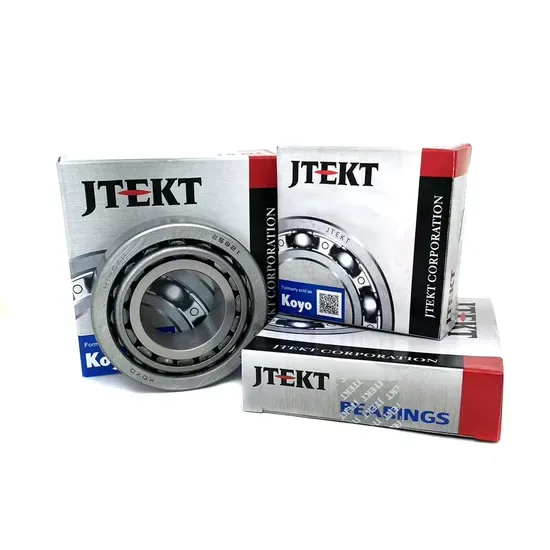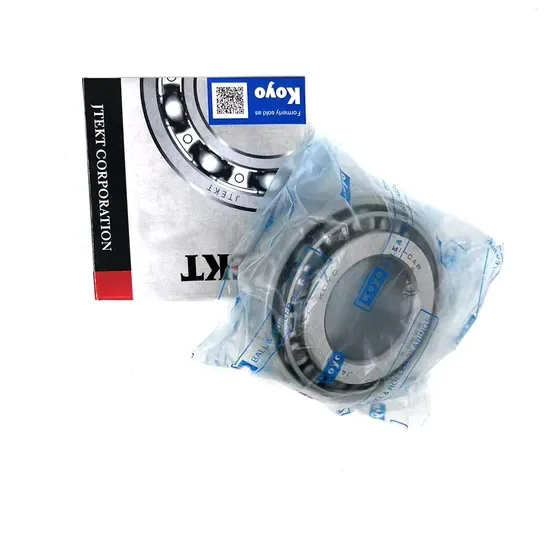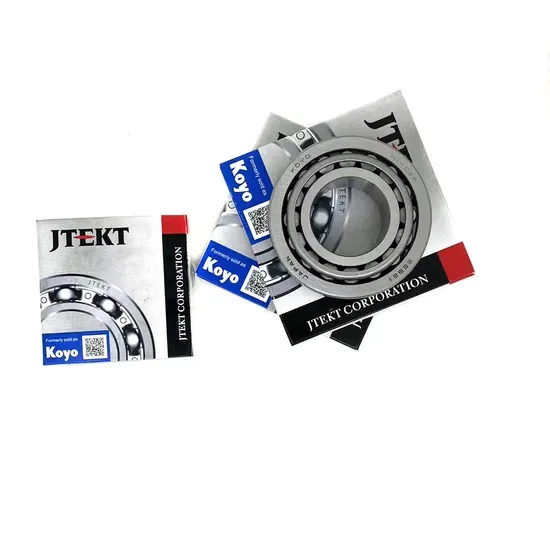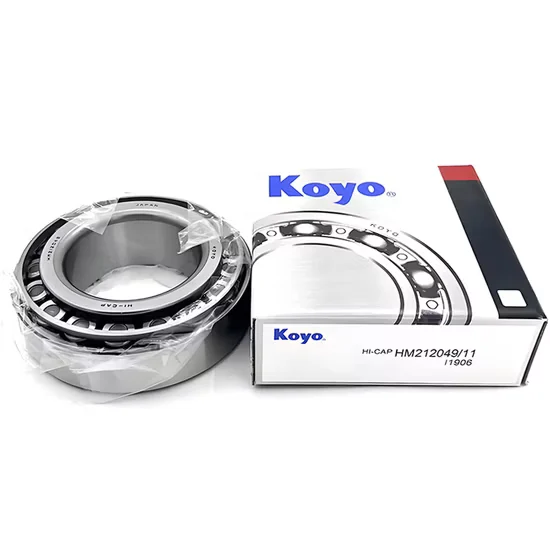


Official App QR Verification — Every KOYO 30312 unit ships with scannable holographic labels linked directly to the manufacturer's authentication database.
Technical Specifications
| Parameter | Value |
|---|---|
| Designation | KOYO 30312 |
| Bearing Type | Tapered Roller Bearing |
| Bore Diameter (d) | 60 mm |
| Outside Diameter (D) | 130 mm |
| Width (T) | 31 mm |
| Lubrication | Grease or Oil |
| Precision Rating | P0, P6, P5, P4, P2 |
| Vibration Level | Z1V1, Z2V2, Z3V3 |
| Origin | Japan |
| HS Code | 8482200000 |
Application Suitability
| Industry | Typical Applications |
|---|---|
| Automotive | Wheel hub assemblies and steering knuckles |
| Commercial Vehicles | Heavy-duty truck axles and differential carriers |
| Industrial Machinery | Reduction gearboxes and power transmission shafts |
| Marine Engineering | Propulsion drives and winch mechanisms |
Why Dust Ingestion Destroys the KOYO 30312 Tapered Roller Bearing in Heavy Machinery
Mismatched cage materials and inadequate sealing allow abrasive particles to accelerate wear far beyond calculated fatigue limits.
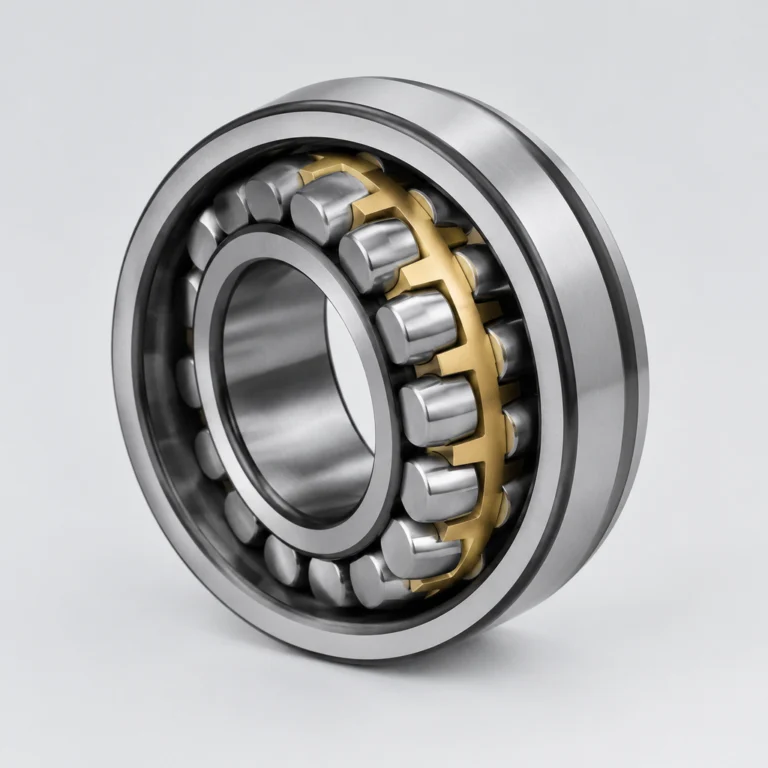
During my early years conducting failure analysis in Indonesia, I dismantled a palm oil press where a standard stamped steel cage fractured prematurely. The abrasive dust environment demanded a machined brass cage, but the wrong component was installed, causing a catastrophic line stoppage. Selecting the correct internal geometry and cage material for a KOYO 30312 tapered roller bearing prevents these costly misalignments. Procurement teams often overlook how environmental factors dictate internal component selection, leading to severe operational disruptions.
Aligning Internal Geometry with Operational Loads
The conical rolling elements distribute combined radial and axial forces efficiently across the raceways. When specifying a KOYO 30312 tapered roller bearing for industrial gearboxes, engineers must evaluate the thrust-to-radial load ratio to ensure optimal contact stress distribution. Our technical team cross-references operational parameters with manufacturer catalogs to guarantee the selected configuration matches the exact mechanical demands of your drivetrain, preventing localized stress concentrations that accelerate fatigue.
Navigating Contamination and Thermal Expansion in Drivetrains
Heavy-duty truck axles and marine drives operate under severe thermal gradients and high contamination risks. Elevated temperatures alter internal clearance, while ingress of moisture or particulates degrades the lubricant film thickness. Choosing between grease and oil lubrication depends heavily on the operating speed and cooling requirements of the housing. Proper sealing arrangements and selecting the appropriate vibration class, such as Z3V3, minimize noise and prevent early surface fatigue. Ignoring these environmental variables inevitably compromises the structural integrity of the assembly.
Decoding Precision and Vibration Tolerances
This designation represents a standard metric series unit without specialized internal suffixes, relying on its base geometry for load capacity. The availability of precision ratings from P0 up to P2 allows buyers to match the rotational accuracy requirements of their specific application, where higher classes reduce runout in high-speed gearboxes. Similarly, vibration levels ranging from Z1V1 to Z3V3 dictate the dynamic smoothness, with stricter limits essential for minimizing resonance in automotive wheel hubs. Selecting the right tolerance band ensures the component performs reliably without over-engineering the procurement cost, balancing operational longevity with budget constraints.
The Operational Toll of Incorrect Component Selection
Installing a unit with insufficient precision or the wrong clearance class leads to uneven load distribution and localized stress concentrations. This inevitably results in unplanned downtime, premature spalling, and catastrophic damage to adjacent gearbox shafts. According to industry failure analysis frameworks, a significant share of premature failures stems from application mismatches rather than manufacturing defects. Procuring the exact specification avoids voiding equipment warranties and eliminates the hidden expenses of emergency replacements, safeguarding overall plant productivity.
Securing Authentic Components Through Rigorous Verification
Counterfeit parts pose a severe risk to heavy machinery, which is why we source exclusively from authorized channels to guarantee genuine Japanese origin. Our inventory covers multiple precision and vibration classes, allowing flexible consolidation for mixed-requirement projects without delaying your maintenance schedule. We provide complete batch traceability documentation, ensuring every unit meets ISO-compliant quality assurance standards. Furthermore, our engineering support helps buyers handle cross-brand equivalent model consultations when original equipment specifications require alternative sourcing, ensuring continuity in your supply chain.
Documentation & Authenticity
- Certificate of Conformity verifying Japanese manufacturing origin and HS Code 8482200000 compliance.
- Original factory batch traceability records linking the specific production run to quality control logs.
- Official app QR hologram authentication to instantly verify the genuineness of each unit.
- Material and dimensional inspection reports confirming the selected P-class precision tolerances.
- Vibration test certificates validating the Z1V1 to Z3V3 performance grading before dispatch.
Storage, Handling & Mounting
- Retain the original VCI packaging until installation to protect the 60 mm bore from ambient humidity and corrosion.
- Store in a climate-controlled environment to prevent thermal shock that could alter the precise P-class dimensional tolerances.
- Use induction heaters for mounting, ensuring even thermal expansion across the 130 mm outer ring without damaging the raceway.
- Apply clean gloves during handling to prevent skin acids from compromising the factory-applied rust preventative coating.
- Follow manufacturer torque specifications for the shaft nut to establish the correct internal clearance for tapered roller geometries.
Engineering Review for Optimal Drivetrain Integration
To ensure the selected KOYO 30312 tapered roller bearing configuration perfectly matches your mechanical requirements, please provide detailed operational parameters including radial and axial loads, rotational speeds, and operating temperatures. Sharing the original equipment manufacturer part numbers allows our technical team to perform accurate cross-reference verifications and L10 life recalculations. This data enables us to recommend the most suitable precision rating and lubrication strategy for your specific application environment.
Frequently Asked Questions
Q: How can I verify the authenticity of the purchased components?
A: Every genuine unit features a scannable holographic label linked to the manufacturer's official verification application. By scanning this QR code, buyers can instantly confirm the production batch, origin, and authenticity. We also supply original factory traceability documents and certificates of conformity to provide an additional layer of procurement security and quality assurance.
Q: What are the practical differences between the available precision ratings?
A: Precision ratings from P0 to P2 define the dimensional and running accuracy tolerances of the component. Standard P0 is suitable for general automotive and industrial applications, while tighter tolerances like P4 or P2 are necessary for high-speed gearboxes requiring minimal vibration and runout. Selecting the appropriate class prevents over-specification while ensuring reliable performance under specific operational demands.
Q: How do I choose between grease and oil lubrication for this application?
A: Grease lubrication is preferred for sealed environments with limited maintenance access, providing excellent contamination exclusion. Oil lubrication suits high-speed gearboxes where fluid flow assists in cooling and flushing wear debris. The final decision depends on operating speed, thermal loads, and housing design.
Q: What do the Z1V1 to Z3V3 vibration levels indicate for performance?
A: These designations classify dynamic vibration and noise emission characteristics during rotation. Z1V1 represents standard limits suitable for heavy-duty, low-speed applications like truck axles. Higher grades like Z3V3 enforce stricter manufacturing tolerances to minimize resonance, making them essential for precision automotive wheel hubs or high-speed reduction gearboxes where smooth operation is critical.
Q: How can I cross-reference this model with other premium brands?
A: While this metric designation follows standardized dimensional boundaries, internal geometry and cage designs may vary between manufacturers. Buyers can provide current equipment specifications or alternative part numbers to our engineering team. We will conduct a thorough technical comparison of load ratings and clearance classes to recommend a fully compatible equivalent that meets your operational requirements.