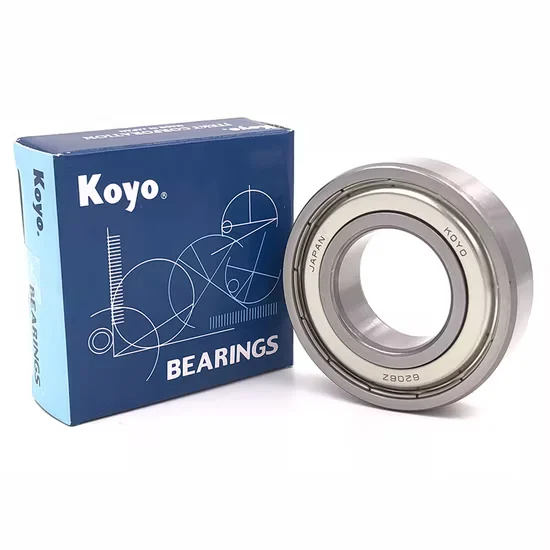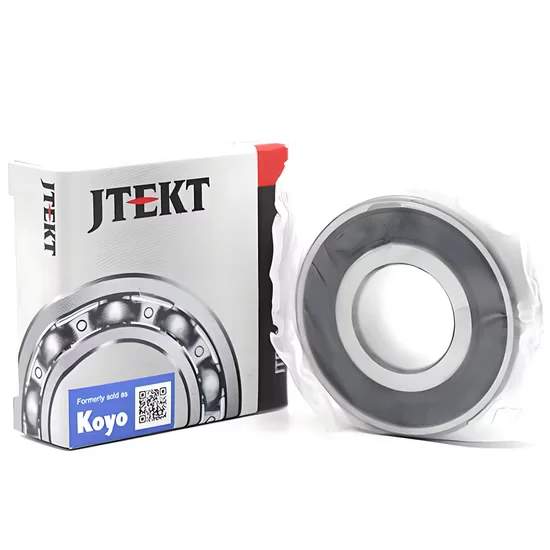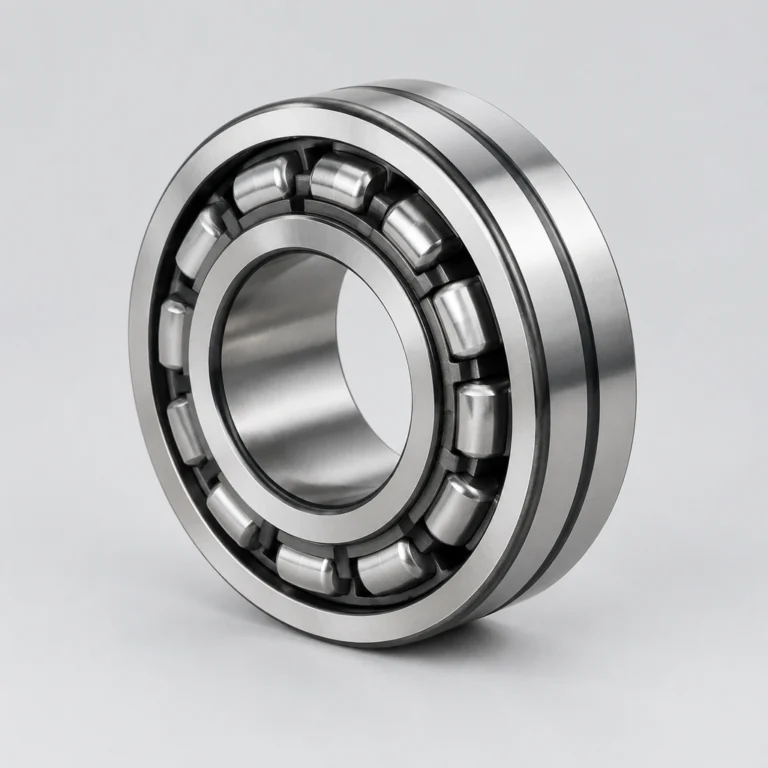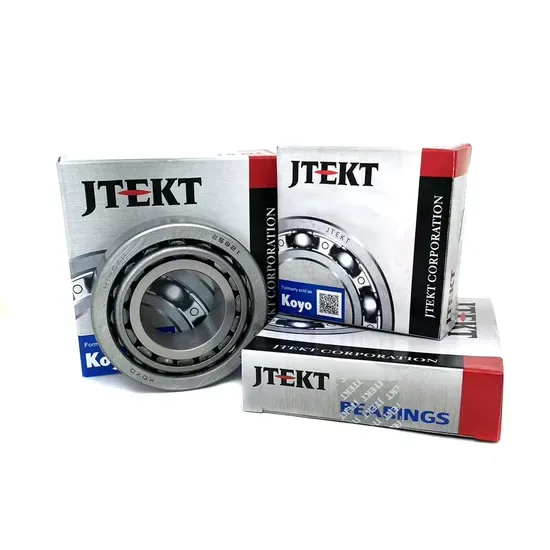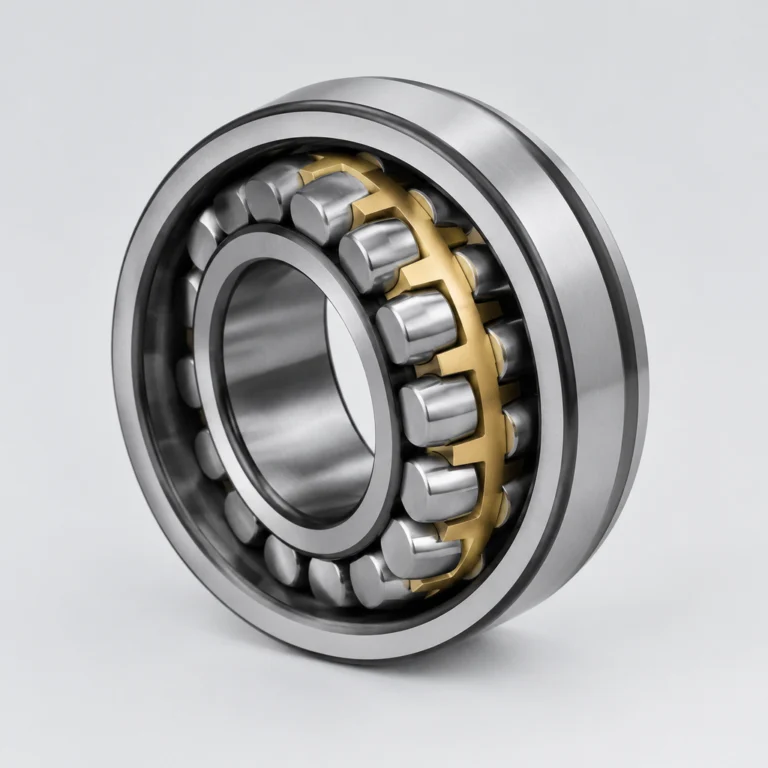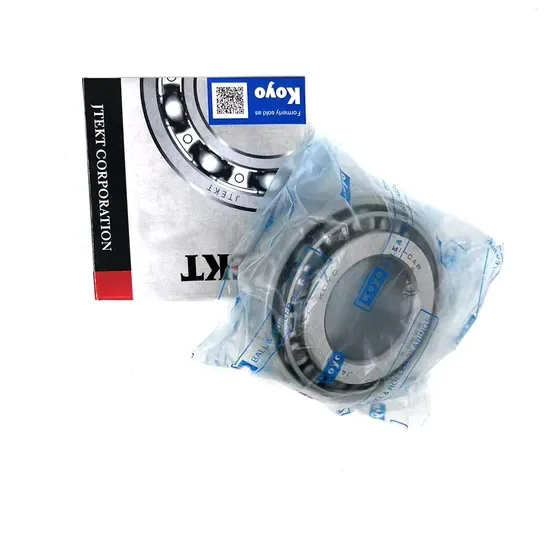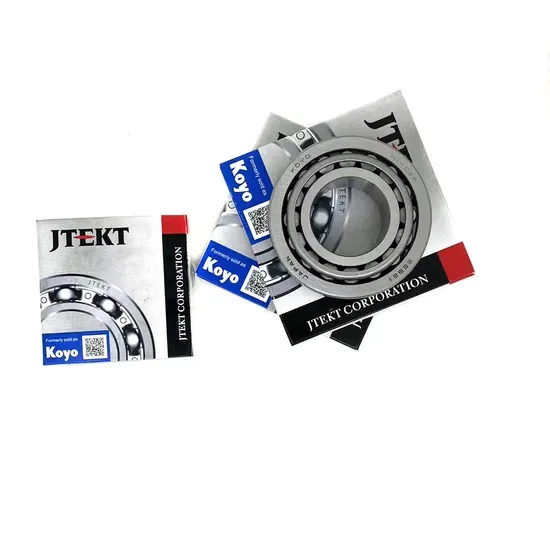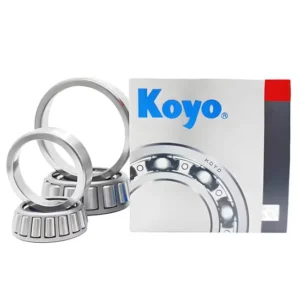
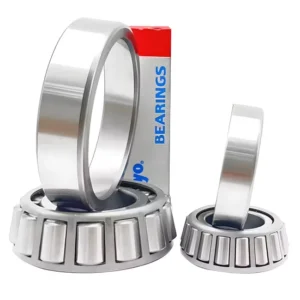


Official App Verification — Scan the QR code on the KOYO 32222 packaging using the manufacturer's official application to confirm batch authenticity before installation.
Technical Specifications
| Parameter | Value |
|---|---|
| Designation | KOYO 32222 |
| Bearing Type | Tapered Roller Bearing |
| Bore Diameter (d) | 110 mm |
| Outside Diameter (D) | 200 mm |
| Width (T) | 53 mm |
| Cage Material | Iron Cage / Brass Cage / Nylon Cage |
| Precision Class | P0 / P6 / P5 / P4 / P2 |
| Number of Rows | Single |
| Vibration Level | Z1V1 / Z2V2 / Z3V3 |
| Lubrication | Grease or Oil |
| Seal Type | Zz / 2RS / Open |
| Separated | Separated |
| Load Direction | Radial |
| Origin | Japan |
Application Suitability
| Industry | Typical Applications |
|---|---|
| Heavy Truck Drivetrains | Drive axles and differential assemblies |
| Commercial Vehicle Chassis | Wheel hub units and steering knuckles |
| Industrial Power Transmission | Heavy-duty gearboxes and reduction drives |
Why Standard Suffixes Cause Catastrophic Failures in the KOYO 32222 tapered roller bearing
Assuming a basic designation covers all heavy-duty requirements often leads to premature cage fracture under extreme axle loads.
During my early years analyzing bearing failures in Qingdao, I investigated a batch of heavy truck bridge bearings that shattered prematurely on the highway. The root cause was a critical cross-reference error where only the base number was matched, completely ignoring suffix variations that resulted in lightly constructed pressed steel cages being deployed in severe load conditions. The cages simply tore apart under the continuous shock loads of a fully laden commercial vehicle. This harsh reality highlights why verifying the exact internal design and material options is absolutely critical for drivetrain longevity and fleet safety.
Matching the KOYO 32222 tapered roller bearing to Axle Load Profiles
Heavy truck bridges and differential assemblies subject rotating components to intense shock loads, continuous radial stress, and significant axial thrust during cornering. The KOYO 32222 tapered roller bearing utilizes a single-row tapered configuration fundamentally engineered to handle these specific combined forces effectively by distributing the load across the angled raceways. Our extensive sourcing network ensures you receive the exact cage material and internal clearance variant required for your specific axle housing design. By meticulously matching these internal parameters, we prevent the devastating mismatch issues that frequently plague generic aftermarket replacements and lead to rapid field failures.
Managing Contamination and Thermal Stress in Drive Axles
Commercial vehicle axle environments are notoriously harsh, characterized by the constant ingress of road debris, moisture, and abrasive dust, which rapidly degrades lubrication and scores raceways. Selecting the appropriate seal or shield type from the available options is essential to retain the lubricant and aggressively exclude external contaminants from the rolling elements. Furthermore, the high friction generated during heavy hauling and sustained highway speeds elevates operating temperatures significantly. This thermal buildup makes the correct internal clearance selection absolutely vital to accommodate thermal expansion without causing excessive preload, which would otherwise accelerate fatigue and generate destructive heat.
Decoding the Internal Geometry and Material Options
The standard 32222 designation indicates a baseline tapered roller design, but the specific internal components dictate its real-world survival in heavy machinery. Cage material options range from standard pressed iron for moderate duties to machined brass for high-vibration environments, directly influencing roller guidance, friction reduction, and overall fatigue life. Precision classes and vibration levels can be explicitly specified to match the exact noise, smoothness, and load-carrying requirements of the final drive assembly. Understanding these selectable parameters ensures the component survives the specific dynamic stresses of your fleet, rather than failing prematurely due to an under-specified internal geometry.
The Hidden Financial Impact of Incorrect Component Selection
Deploying a lightly loaded or incorrectly caged variant in a heavy-haul application inevitably triggers unplanned downtime and catastrophic damage to the surrounding axle housing. When an under-specified cage fails, the rollers skew violently and score the raceways, leading to complete assembly seizure and potential wheel detachment. Such premature failures not only void warranty claims but also escalate repair costs far beyond the initial part price, requiring extensive machining and replacement of adjacent drivetrain components. Procurement decisions based solely on initial price rather than exact technical specification ultimately drain operational budgets.
Securing Authentic Replacements Through Verified Channels
Sourcing genuine components for critical safety applications requires much more than just matching a basic part number on a digital screen. We provide complete batch traceability for every single unit, ensuring the metallurgical integrity and heat treatment exactly match the manufacturer's original specifications. Our technical team rigorously cross-checks the 7522 alternative designation to verify dimensional, tolerance, and internal geometry alignment, eliminating the dangerous guesswork that causes field failures. Additionally, we consolidate mixed-brand and mixed-size orders, allowing maintenance facilities to fulfill entire fleet service schedules in a single, highly efficient consolidated shipment. We also offer flexible minimum order quantities, accommodating everything from single-unit emergency spare-part requests to full-container project deployments, ensuring your maintenance operations never stall due to supply chain rigidities.
Documentation & Authenticity
- Certificate of Conformity verifying the Japanese origin and manufacturing batch.
- Original traceability documentation linking the specific unit to the production facility.
- Official app QR verification support for immediate anti-counterfeit validation upon delivery.
- Dimensional inspection reports confirming the 110x200x53mm tolerances before dispatch.
Storage, Handling & Mounting
- Store the separated inner and outer rings in original packaging to prevent corrosion before assembly.
- Use clean gloves when handling the machined brass cage variants to avoid acidic skin contact.
- Adjust the axial clearance precisely during mounting to accommodate the thermal expansion of the heavy truck bridge.
- Apply the specified grease or oil lubrication immediately after unsealing to protect the open bearing surfaces.
Providing Operational Data for Technical Validation
To ensure the selected variant withstands your specific operating environment, please share the exact radial and axial load figures along with typical operating speeds and ambient temperature ranges. Supplying the original equipment manufacturer part numbers or detailed equipment schematics allows our engineering team to perform a rigorous cross-reference check against the 7522 designation and verify suffix compatibility. This comprehensive technical review guarantees the internal geometry, cage material, and clearance class perfectly align with your heavy-duty requirements, providing absolute confidence before the components are dispatched to your maintenance facility. By providing these detailed operational parameters, you enable our specialists to calculate the theoretical L10 life and recommend the optimal lubrication strategy, ensuring maximum uptime for your heavy commercial vehicles.
Frequently Asked Questions
Q: How can I verify the authenticity of the delivered components?
A: You can authenticate the units by scanning the QR code on the packaging using the manufacturer's official mobile application. We also supply original batch traceability documents and certificates of conformity that link the specific production run to the factory, ensuring complete transparency and protecting your fleet from counterfeit risks.
Q: What should I consider when cross-referencing the 7522 designation?
A: When using the 7522 alternative number, it is crucial to verify that the internal clearance, precision class, and cage material exactly match your original equipment specifications. A simple dimensional match is insufficient, as variations in these internal parameters can lead to premature failure under the severe shock loads typical of heavy truck axles.
Q: How do I choose the right cage material for heavy truck bridges?
A: For standard operations, pressed iron cages offer reliable performance, but machined brass cages are strongly recommended for high-vibration and heavy-load environments. Brass provides superior roller guidance and resistance to shock loads, significantly reducing the risk of cage fracture that often plagues incorrectly specified components in severe duty cycles.
Q: What is the proper way to adjust clearance during installation?
A: Since this is a separated design, the inner ring assembly and outer ring must be mounted independently. You must carefully adjust the axial clearance during the final assembly of the truck axle to account for thermal expansion under load, ensuring the rollers maintain optimal contact with the raceways without generating excessive friction.
Q: What are the recommended lubrication practices for these axle components?
A: Depending on the seal type selected, you must use the manufacturer-approved grease or oil to withstand the elevated temperatures of heavy-duty hauling. For open variants, establishing a strict relubrication interval is critical to flush out contaminants and maintain a protective film, directly extending the operational lifespan of the drivetrain assembly.