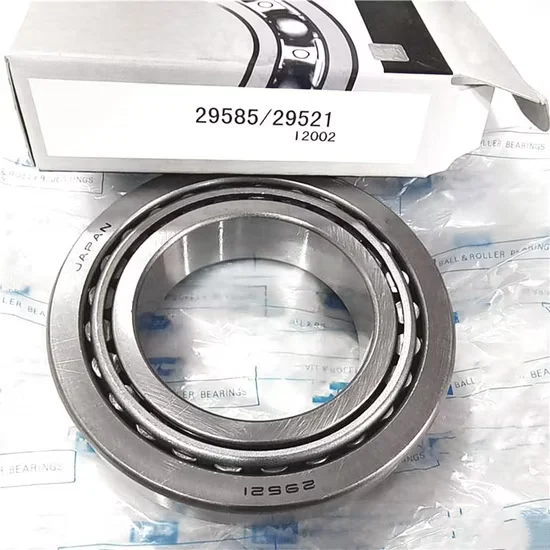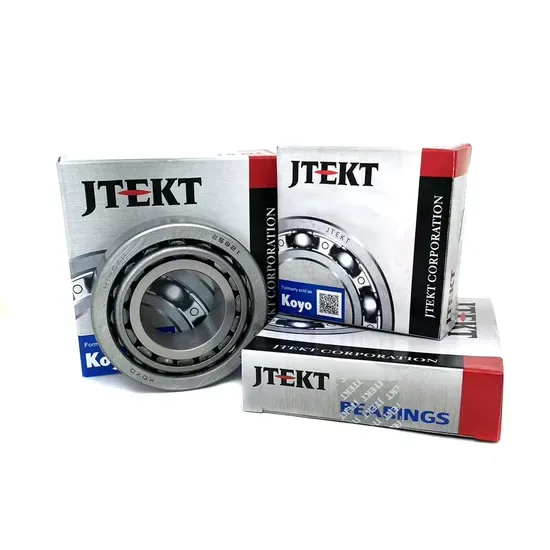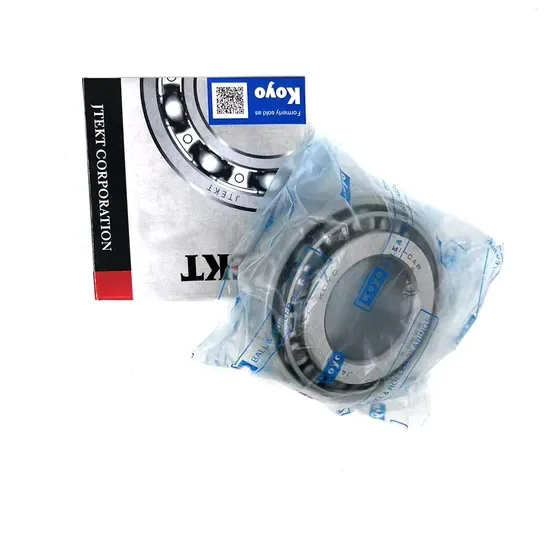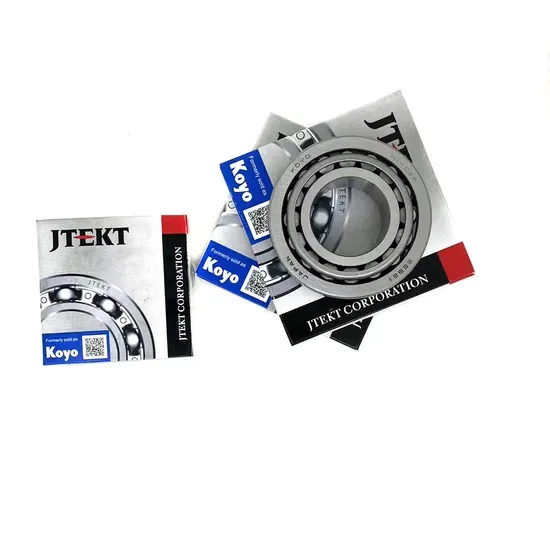


QR Code Verification — Every Koyo X&S 33210 32212 33012 33111 30213 33013 30310 33112 32 tapered roller bearing ships with a scannable label linking directly to the manufacturer's official authenticity database.
Technical Specifications
| Parameter | Value |
|---|---|
| Designation | 33210 32212 33012 33111 30213 33013 30310 33112 32 |
| Product Type | Tapered Roller Bearing |
| Load Direction | Combined radial and axial |
| Rolling Body | Roller Bearings |
| Specification | Standard size |
| Origin | Shandong, China |
| Certification | ISO9001, CE |
| HS Code | 8482500090 |
Application Suitability
| Industry | Typical Applications |
|---|---|
| Automotive & Heavy Transport | Wheel hub assemblies and truck axle differentials |
| Industrial Manufacturing | Heavy-duty gearboxes and power transmission units |
| Marine Engineering | Propulsion shafts and marine drive mechanisms |
| Maintenance & Repair | General machinery repair shop replacement inventories |
Why Ignoring Suffix Details Destroys Your Koyo X&S 33210 32212 33012 33111 30213 33013 30310 33112 32 tapered roller bearing
Thermal expansion miscalculations during assembly will seize even the most premium tapered roller bearings if internal clearance is not explicitly matched to the operating temperature.
Early in my procurement career, I sourced standard clearance units for a North American client without verifying the thermal growth of their specific housing. The resulting friction generated excessive heat, leading to catastrophic seizure within days of commissioning. That costly mistake shifted my entire approach to sourcing. Now, I scrutinize every cross-reference and suffix to ensure the exact fit for demanding industrial environments, knowing that a single missing letter in the designation can completely alter the internal geometry and operational lifespan of the assembly.
Aligning Standard Tapered Profiles with Heavy-Duty Demands
Selecting the right Koyo X&S 33210 32212 33012 33111 30213 33013 30310 33112 32 tapered roller bearing requires matching the roller profile to the specific combined load vectors of your machinery. Our engineering team provides cross-brand equivalent model consultation to ensure these standard-size units integrate flawlessly into existing gearboxes or axle housings. This precise alignment prevents uneven load distribution across the rolling elements, which is a common cause of localized spalling. By utilizing our extensive technical selection support, buyers can confidently manage complex replacement scenarios without compromising on load capacity or rotational stability.
Navigating Load Shocks and Thermal Shifts in Drive Systems
Tapered roller configurations routinely endure severe combined radial and axial loads, often accompanied by sudden shock impacts during equipment startup or directional reversal. As rotational speeds increase, the friction at the roller large-end guide flange generates localized heat, which directly impacts the internal clearance and demands careful lubrication management. Without adequate oil flow or grease retention to dissipate this heat, the raceway surfaces degrade rapidly. Furthermore, environmental contaminants in mining or construction sites necessitate reliable sealing solutions to protect the highly polished contact surfaces. Proper installation practices, including precise shaft interference fits, are equally critical to prevent the inner ring from creeping under heavy radial loads, while exposure to corrosive marine environments requires specialized material considerations to avoid surface degradation.
Decoding the Geometry and Material Options of Tapered Assemblies
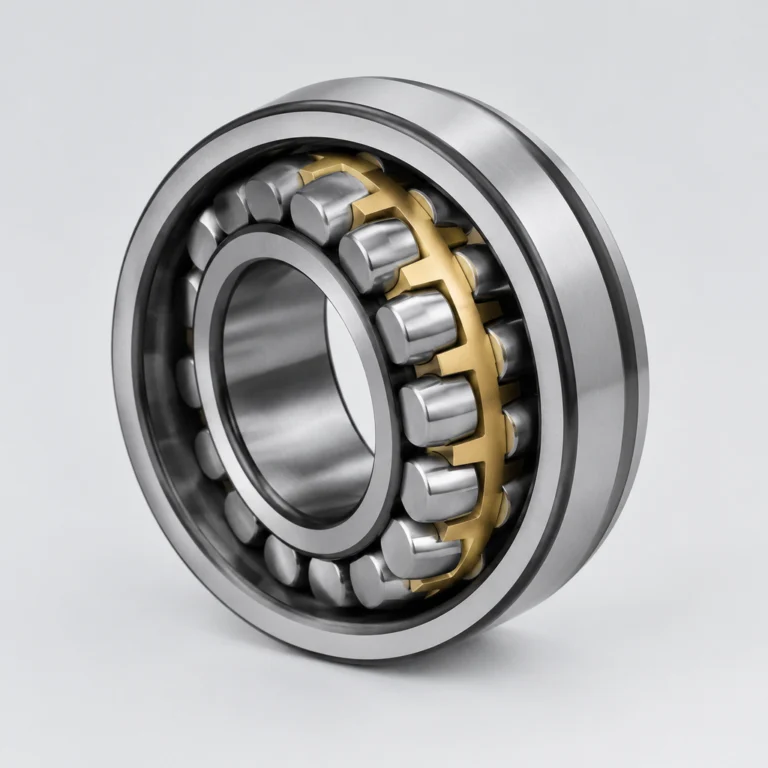
The fundamental geometry of these units relies on a conical cup and cone design, allowing them to support high axial thrust while managing radial forces. For the rolling elements and rings, standard high-carbon chromium bearing steel provides the necessary core hardness and fatigue resistance for general applications. In environments exposed to moisture or corrosive chemicals, martensitic stainless steel variants are available to prevent surface pitting. When operating at elevated temperatures beyond the thermal limit of standard bearing steel, specialized heat-stabilized treatments or ceramic rolling element options can be considered to maintain dimensional stability. The standard size specification ensures direct drop-in replacement, but verifying the exact cage design and roller contact angle is critical for optimizing the L10 life. Pressed steel cages offer low friction for high-speed applications, while machined brass cages provide superior durability under heavy shock loads and inadequate lubrication conditions.
The Operational Toll of Mismatched Bearing Clearances
Installing a bearing with incorrect internal clearance inevitably leads to unplanned downtime and premature failure. If the clearance is too tight, thermal expansion during operation eliminates the internal gap, causing excessive friction and eventual seizure. Conversely, excessive clearance results in roller skidding, uneven load sharing, and catastrophic damage to the raceways. Such failures not only void equipment warranties but also trigger costly secondary damage to adjacent shafts and housings. The financial impact extends far beyond the replacement part cost, encompassing lost production hours, emergency freight charges, and the labor required to dismantle heavily damaged assemblies.
Securing Traceable Inventory for Critical MRO Replacements
Sourcing genuine tapered roller bearings requires strict verification to avoid counterfeit products that lack proper metallurgical consistency. We supply original Koyo and X&S units with complete traceability documentation, ensuring every batch matches the official manufacturer's production facilities. When replacing legacy equipment, our technical selection support helps you cross-reference older part numbers to current designations, preventing the common mistake of ignoring subtle suffix changes that dictate internal clearance. Our massive spot inventory covers thousands of standard part numbers, enabling flexible MOQ from single-unit emergency spares to full container consolidation. Additionally, our competitive sourcing cost compared to direct official channels makes bulk project orders highly economical without sacrificing ISO-compliant quality assurance. We also coordinate global shipping consolidation and provide long-term after-sales technical support for failure analysis, ensuring your maintenance team has the guidance needed to maximize bearing service life.
Documentation & Authenticity
- Certificate of Conformity verifying ISO9001 compliance for the specific batch of tapered roller bearings.
- Original manufacturer batch traceability codes linking each unit to its production date and facility.
- Material inspection reports confirming the metallurgical grade of the cups, cones, and rollers.
- Dimensional and running accuracy inspection reports validating standard size tolerances before dispatch.
- Official QR code labels for immediate digital authentication of the Koyo and X&S products.
Storage, Handling & Mounting
- Store the standard size tapered units in their original vapor-phase inhibitor packaging to prevent raceway corrosion before installation.
- Maintain consistent warehouse temperatures to avoid condensation inside the bearing assemblies, which compromises the factory-applied rust preventative coating.
- Use induction heaters with precise temperature controls when mounting the inner cone onto the shaft to preserve the specified interference fit.
- Keep the cup and cone sets paired and sealed until the exact moment of assembly to prevent contamination of the roller profiles.
- Apply clean lint-free gloves when handling the highly polished roller surfaces to prevent acidic skin oils from initiating microscopic pitting.
Preparing Your Technical Parameters for Accurate Selection
To ensure precise model selection and L10 life calculation, please share your operational parameters including radial and axial load magnitudes, rotational speeds, and ambient temperatures. Providing the exact OEM equipment model numbers allows our engineering team to perform thorough cross-reference verification against official catalogs. Detail any specific environmental exposures, such as heavy dust or moisture, so we can recommend the appropriate sealing or material options for your application. Supplying these technical details upfront enables us to deliver a customized sourcing solution that perfectly aligns with your maintenance schedules and operational demands.
Frequently Asked Questions
Q: How can I verify the authenticity of the Koyo and X&S tapered roller bearings before installation?
A: Authenticity verification begins with inspecting the packaging for tamper-evident seals and scanning the official QR code label to access the manufacturer's database. We also provide a Certificate of Conformity and original batch traceability documentation for every shipment. Cross-referencing the physical markings on the bearing rings against the official catalog ensures the part number and suffix match your procurement order exactly.
Q: What cross-reference considerations are critical when replacing older tapered roller bearing models?
A: When replacing legacy models, simply matching the basic numeric designation is insufficient. You must verify the internal clearance suffix and precision class, as older equipment might have been designed with non-standard thermal expansion tolerances. Our technical team cross-references historical part numbers against current manufacturer catalogs to ensure the replacement unit maintains the correct load distribution and prevents premature failure due to clearance mismatch.
Q: How do I choose the right seal or shield type for these tapered roller bearing applications?
A: The choice between open, shielded, or sealed configurations depends entirely on the contamination level and lubrication method of your machinery. Open designs are ideal for gearboxes where the bearing is lubricated by the system's circulating oil, while sealed variants protect against external dust and moisture in wheel hub applications. Selecting the wrong seal type can lead to either lubricant starvation or excessive friction heat generation.
Q: What is the recommended lubrication approach for standard size tapered roller bearings in heavy-duty gearboxes?
A: In heavy-duty gearboxes, tapered roller bearings typically rely on the splash lubrication from the surrounding gear oil. It is crucial to ensure the oil level reaches the lower portion of the bearing to allow capillary action to* cage. If the application requires grease, selecting a high-temperature, extreme-pressure formulation with appropriate relubrication intervals prevents roller skidding and raceway wear.
Q: How should I interpret standard size specifications for direct machinery replacement?
A: Standard size specifications indicate that the bearing's bore, outside diameter, and width conform to international dimensional boundaries, allowing direct drop-in replacement without machining the housing or shaft. However, standard dimensions do not guarantee identical internal geometry or load ratings across different brands. Always verify the dynamic and static load ratings, as well as the internal contact angle, to ensure the replacement meets your specific operational demands.