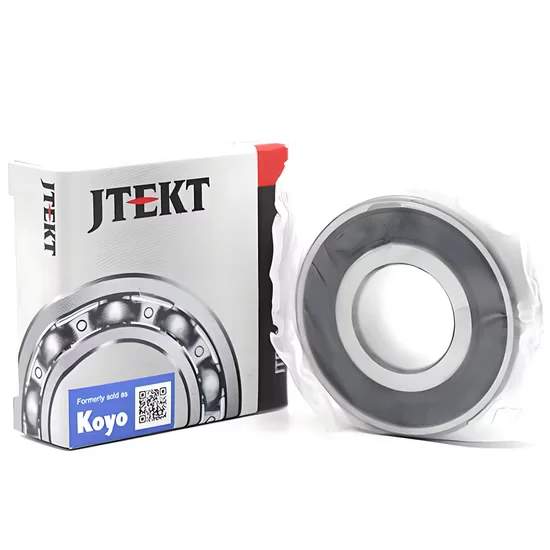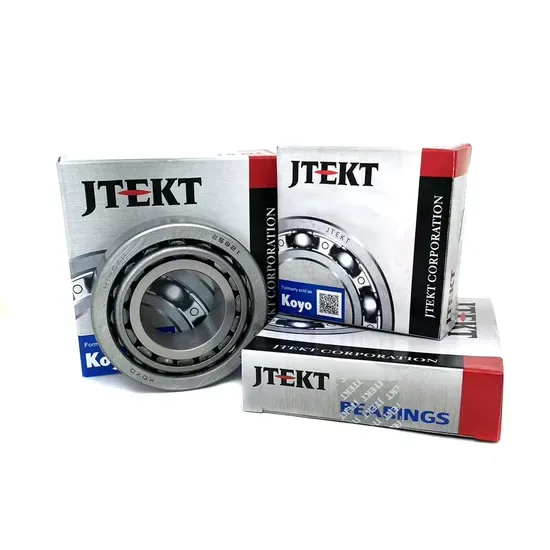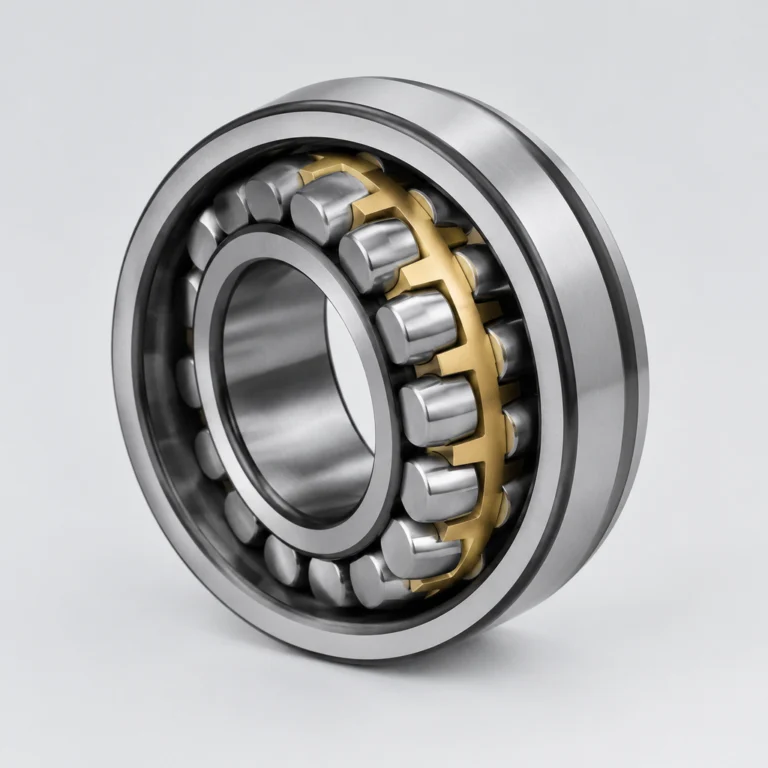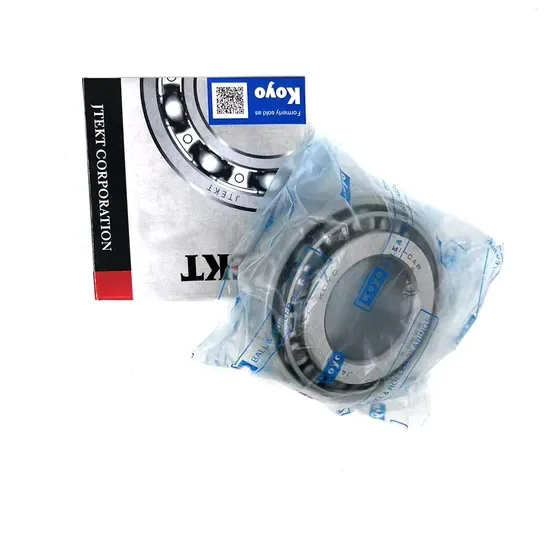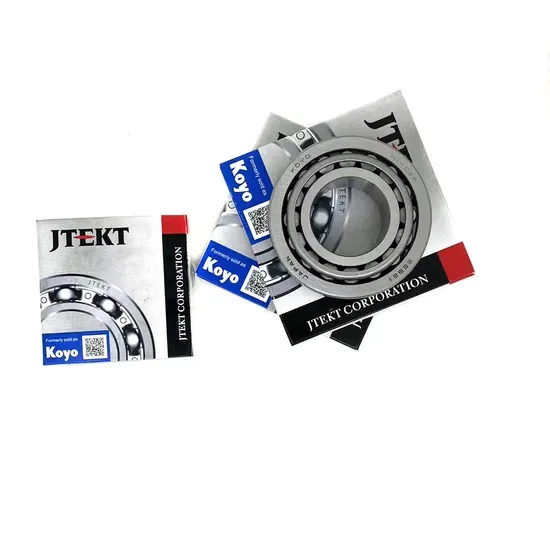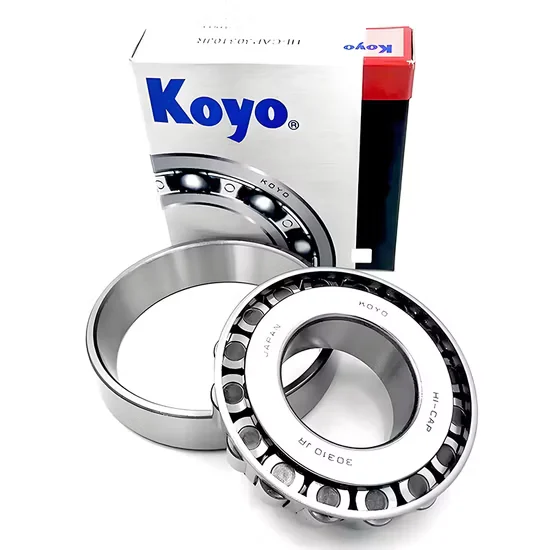
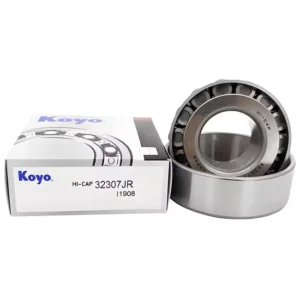
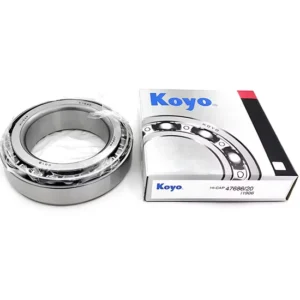
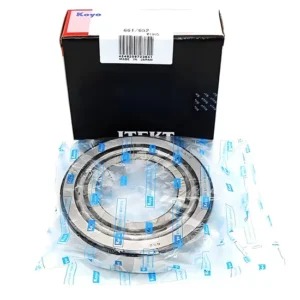
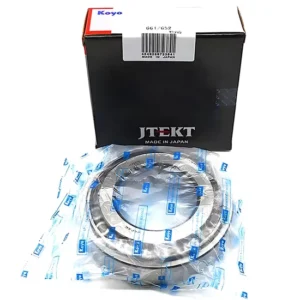
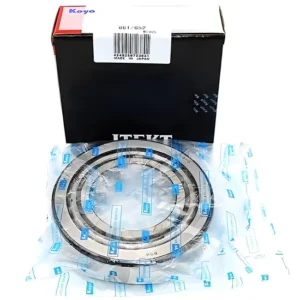
Authentic Japan Origin — Verify every unit directly through the manufacturer's official app QR code to ensure genuine metallurgical quality.
Technical Specifications
| Parameter | Value |
|---|---|
| Designation | KOYO 33206 |
| Bearing Type | Tapered Roller Bearing |
| Bore Diameter (d) | 30 mm |
| Outside Diameter (D) | 62 mm |
| Width (T) | 25 mm |
| Lubrication | Grease or Oil |
| Precision Class | P0, P6, P5, P4, P2 |
| Vibration Level | Z1V1, Z2V2, Z3V3 |
| Origin | Japan |
Application Suitability
| Industry | Typical Applications |
|---|---|
| Automotive | Wheel hubs and steering knuckles |
| Heavy Transport | Truck axles and differential assemblies |
| Industrial Manufacturing | Gearboxes and power transmission shafts |
| Marine | Propulsion drives and winch mechanisms |
Why the KOYO 33206 tapered roller bearing Fails in High-Heat Gearboxes
Thermal expansion quickly eliminates internal clearance when operating environments exceed standard design limits.
During my early years servicing mining fleets in Southeast Asia, a client requested standard truck axle bearings without specifying clearance. We shipped the default standard clearance variant. Under extreme ambient heat and heavy continuous loads, thermal expansion caused the rollers to bind, leading to catastrophic seizure. That incident fundamentally changed how I approach clearance selection, ensuring we always cross-check ambient temperatures against internal geometry before dispatch. When housing temperature rises significantly above shaft temperature, the outer ring expands more than the inner ring, reducing internal radial clearance. If initial clearance is minimal, this differential expansion forces rolling elements against raceways with immense pressure. The resulting friction generates more heat, creating a destructive feedback loop that rapidly degrades lubricant. Understanding this thermal dynamic is essential for preventing unexpected downtime.
Matching the KOYO 33206 tapered roller bearing to Drivetrain Loads
This component handles combined radial and axial forces typical in differential assemblies and industrial gearboxes. The tapered geometry ensures rollers are guided precisely by the flange, minimizing skidding under heavy thrust loads. Our engineering team reviews your specific load vectors to confirm whether the standard design suffices or if modified internal geometry is required. By analyzing the ratio of axial to radial load, we determine the optimal contact angle and roller profile needed to maximize fatigue life. In applications where shock loads are prevalent, the reinforced cage design prevents edge loading and subsequent spalling, ensuring reliable performance throughout the expected service interval.
Managing Thermal and Contamination Challenges in Heavy Machinery
In dusty mining environments or high-temperature processing plants, lubrication breakdown and particle ingress are primary failure drivers. Selecting between grease and oil lubrication depends heavily on operating speed and cooling requirements. While oil circulation dissipates heat effectively in high-speed gearboxes, grease provides a simpler sealing solution for wheel hubs. Proper seal selection and regular relubrication intervals are critical to prevent abrasive wear. When microscopic silica particles breach the seal, they act as grinding agents, accelerating surface fatigue. Furthermore, in high-humidity marine drives, moisture ingress can lead to hydrogen-induced cracking on highly stressed contact surfaces. Implementing robust sealing solutions mitigates these environmental threats, preserving structural integrity.
Decoding Precision and Vibration Tolerances for Optimal Performance
The available precision classes ranging from P0 up to P2 dictate the dimensional accuracy and running smoothness of the assembly. For standard automotive wheel hubs, P0 or P6 is generally adequate, whereas high-speed industrial gearboxes demand P5 or P4 to minimize vibration. Similarly, vibration levels from Z1V1 to Z3V3 reflect the strictness of the manufacturing process in controlling surface finish and roller profiling. Selecting a higher vibration class ensures quieter operation and reduces resonant fatigue risk. The geometric accuracy of rollers and raceways directly influences the elastohydrodynamic lubricant film stability. When surface deviations are minimized through higher precision grinding, the load distributes evenly across the entire contact area, preventing localized yielding and significantly extending operational lifespan.
The Financial Impact of Premature Seizure and Misalignment
Ignoring the thermal limits of standard clearance leads to unplanned downtime and expensive secondary damage to shafts and housings. When internal clearance is consumed by differential thermal expansion, resulting friction generates excessive heat, accelerating lubricant degradation. According to failure analysis frameworks, this localized overheating often culminates in roller smearing and cage destruction. Replacing a seized unit involves significant labor and lost production revenue. Furthermore, improper mounting practices, such as applying force through rolling elements or misaligning the housing, induce uneven load distribution. This misalignment causes edge stresses that far exceed the material's fatigue limit, leading to premature spalling. Investing time in proper installation training prevents these hidden costs, ensuring smooth machinery operation.
Securing Genuine Components for Critical Machinery Operations
Sourcing authentic components requires rigorous supply chain verification beyond simply matching a part number. We maintain complete batch traceability for every unit, ensuring metallurgical integrity matches the manufacturer's original specifications. Our inventory covers thousands of standard part numbers, allowing us to consolidate mixed-brand orders into single shipments. Furthermore, our technical team provides cross-brand equivalent model consultation, helping you identify suitable alternatives if lead times for specific Japanese origins are constrained. Through our extensive network, we secure genuine products directly from authorized channels, eliminating the risk of counterfeit parts. Each shipment undergoes stringent quality checks, verifying dimensions, packaging authenticity, and documentation completeness before leaving our facility, guaranteeing reliable maintenance supply.
Documentation & Authenticity
- Certificate of Conformity verifying Japan origin and 30x62x25 mm dimensional tolerances.
- Official app QR code authentication for every unit to guarantee genuine metallurgical quality.
- Material traceability documents linking the specific steel batch to the final P-class precision product.
- Vibration and noise test certificates matching the selected Z-class specification for gearbox smoothness.
- Original packaging inspection confirming the absence of counterfeit markings on the outer ring.
Storage, Handling & Mounting
- Store in original packaging to protect the precision-ground 30 mm bore from humidity and corrosion.
- Use clean gloves during handling to prevent sweat-induced surface degradation on the tapered rollers.
- Follow manufacturer guidelines for setting the correct axial clearance during mounting of the tapered assembly.
- Apply the recommended grease or oil immediately to the open bearing configuration before operation.
- Avoid using carbon steel tools directly on the P-class precision raceways to prevent surface scoring.
Preparing Your Technical Requirements for Engineering Review
To ensure optimal performance, please share your operational parameters including radial and axial loads, operating speeds, and ambient temperatures. Providing the OEM equipment number allows our engineers to perform a precise cross-reference and verify the required clearance class. This technical review guarantees the selected configuration aligns perfectly with your specific installation space and duty cycle. Additionally, detailing environmental conditions, such as exposure to corrosive chemicals or excessive dust, helps us recommend the most appropriate sealing and lubrication strategy. Our goal is to act as your technical partner, ensuring every component is engineered to withstand your exact operational challenges.
Frequently Asked Questions
Q: How can I verify the authenticity of the KOYO 33206 tapered roller bearing?
A: You can verify authenticity by scanning the QR code on the packaging using the manufacturer's official mobile application. Additionally, we provide a Certificate of Conformity and complete batch traceability documentation. Our team also cross-checks the physical markings and dimensional reports against the official catalog to ensure every unit is genuine.
Q: What do the different precision classes mean for this tapered roller bearing?
A: Precision classes from P0 to P2 define the dimensional accuracy and running tolerances of the bearing. Standard P0 is suitable for general automotive applications, while higher classes like P4 or P2 are essential for high-speed industrial gearboxes where minimal vibration and strict rotational accuracy are required to prevent premature fatigue.
Q: How do I select the appropriate vibration level for gearbox applications?
A: Vibration levels ranging from Z1V1 to Z3V3 indicate the strictness of noise and vibration control during manufacturing. For sensitive industrial gearboxes operating at higher speeds, selecting Z2V2 or Z3V3 ensures smoother operation, reduces acoustic noise, and minimizes the risk of resonant vibration that could degrade the lubricant film and damage the raceways.
Q: What are the best practices for setting clearance during installation?
A: Proper clearance setting is critical for tapered roller bearings to handle combined loads effectively. During installation, technicians must adjust the axial position of the shaft or housing to achieve the specified end-play. Too much clearance causes roller skidding, while too little leads to excessive friction and thermal seizure, especially in high-temperature environments.
Q: Is grease or oil lubrication recommended for this specific application?
A: The choice depends on your operating speed and cooling needs. Grease is ideal for automotive wheel hubs due to its simplicity and sealing properties. However, for high-speed industrial gearboxes where heat dissipation is critical, oil circulation or oil mist lubrication is recommended to maintain optimal operating temperatures and extend the service life.