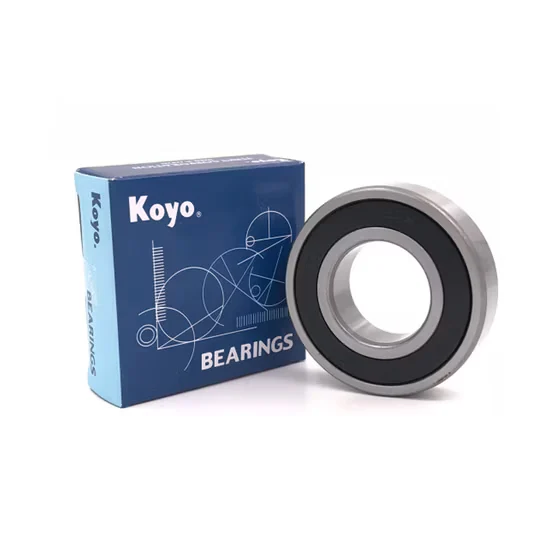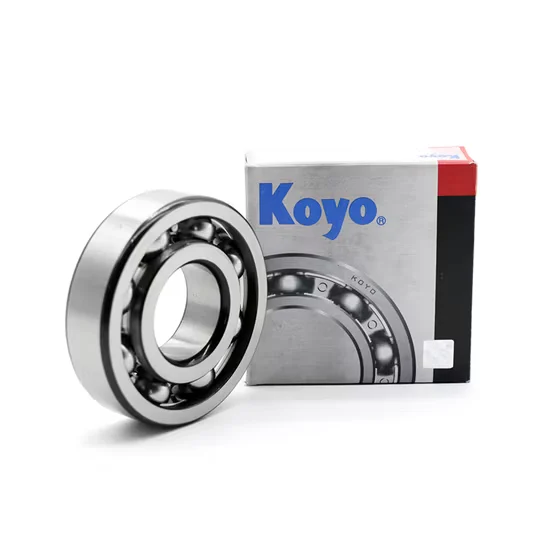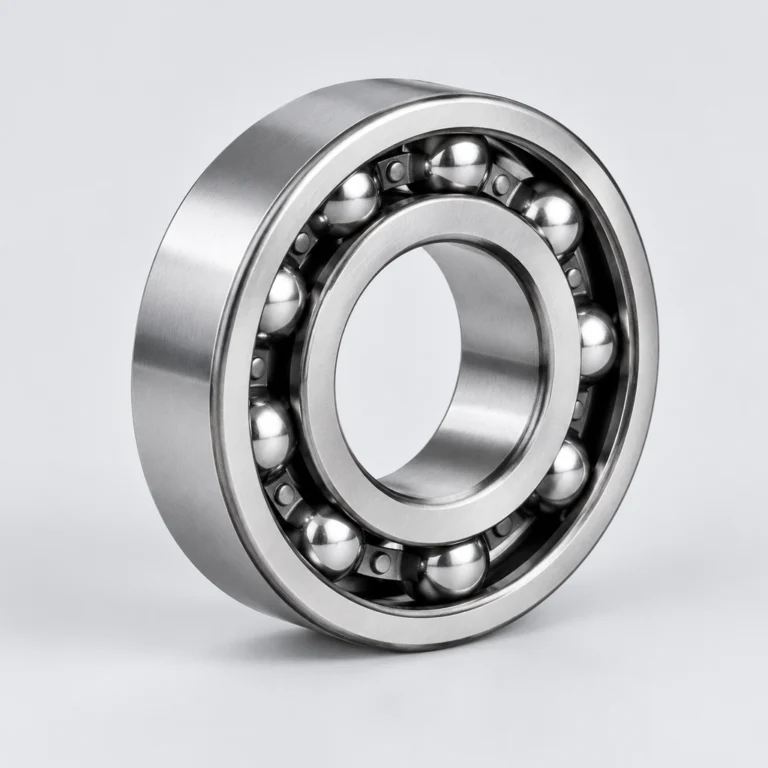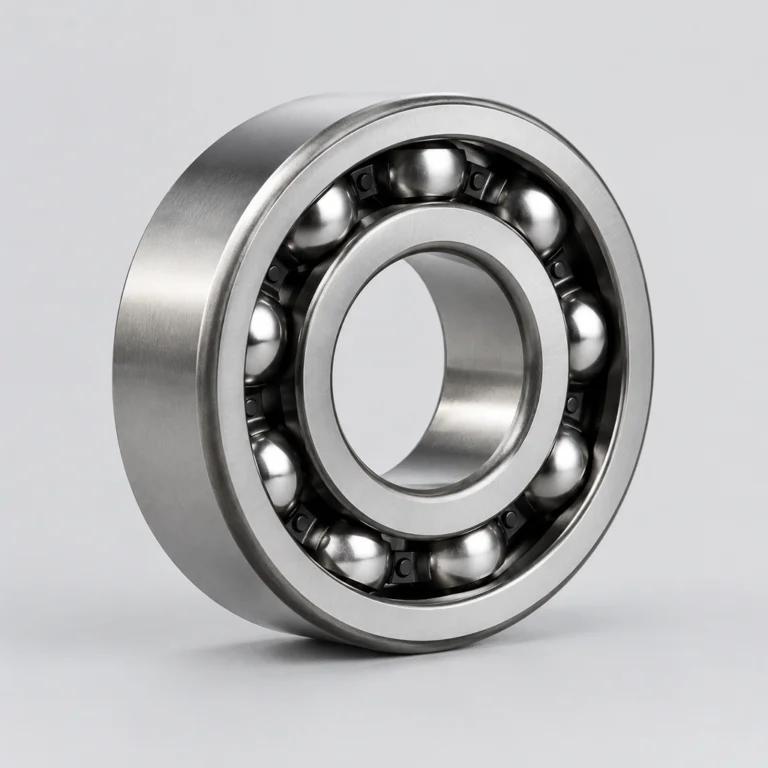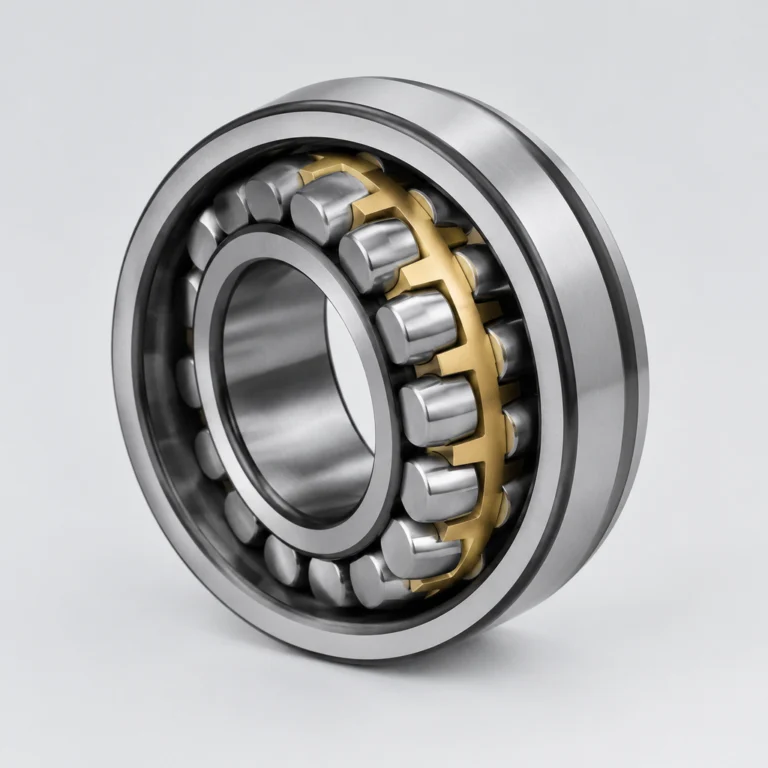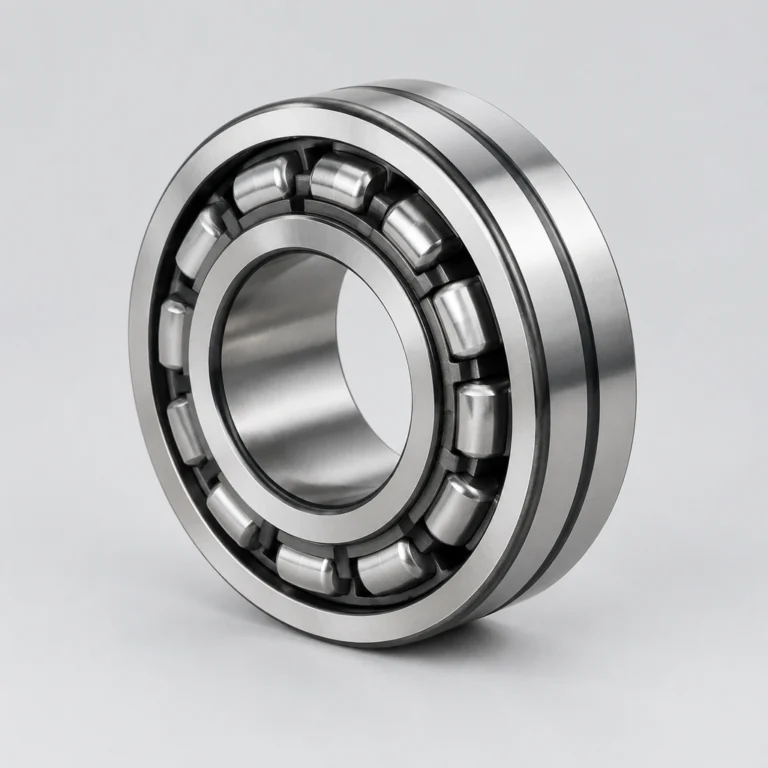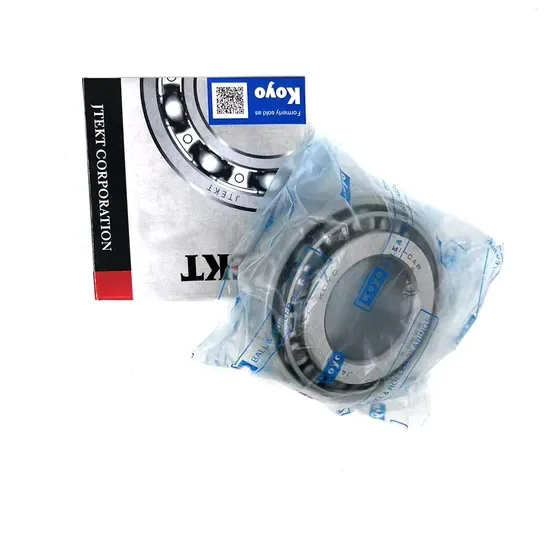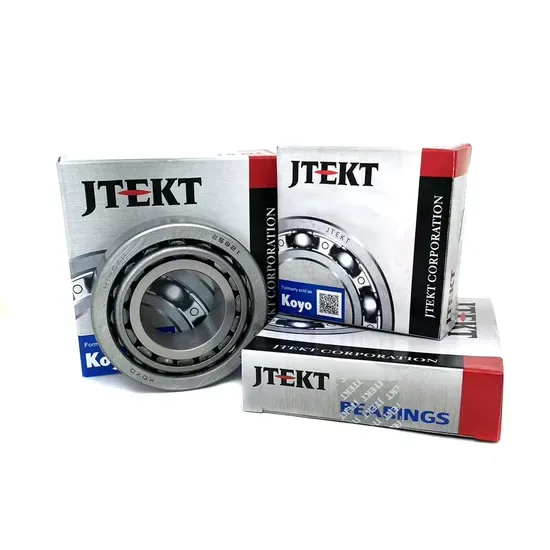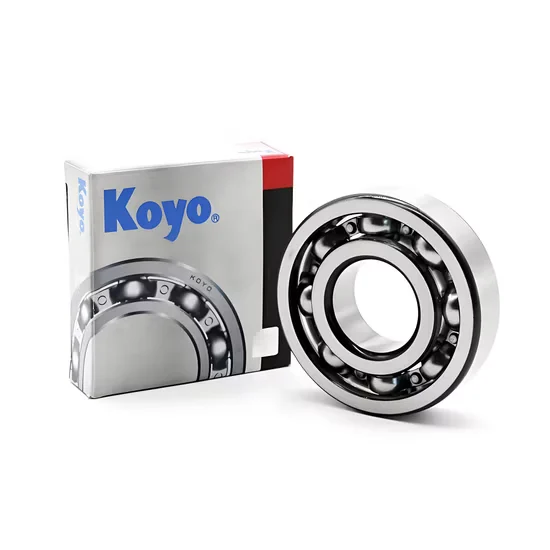
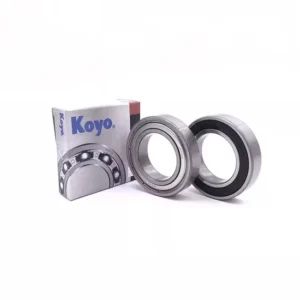
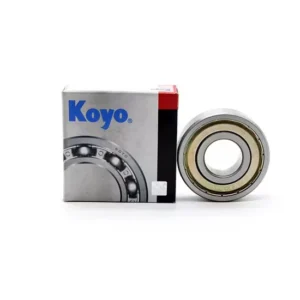
Original Batch Traceability — Every BDL/KOYO 6203 shipped includes manufacturer lot documentation to verify production origin and material heat numbers.
Technical Specifications
| Parameter | Value |
|---|---|
| Designation | BDL/KOYO 6203 |
| Bearing Type | Deep Groove Ball Bearing |
| Bore Diameter (d) | 17 mm |
| Outside Diameter (D) | 40 mm |
| Width (B) | 12 mm |
| Seal or Shield Type | Available in Open, ZZ, and 2RS configurations |
| Lubrication | Grease or Oil |
| Precision Class | P0, P6, P5, P4 options |
| Vibration Level | Z1V1, Z2V2, Z3V3 options |
| Arrangement | Non-Aligning Bearing |
| Separated | Unseparated |
| Number of Rows | Single |
| Load Direction | Radial Bearing |
| Material | Bearing Steel |
| Contact Angle | 0° |
| Origin | China |
Application Suitability
| Industry | Typical Applications |
|---|---|
| Electric Motors | Rotor shaft support and cooling fan assemblies |
| Pumps & Compressors | Impeller shaft radial support and drive couplings |
| Conveyors | Idler roller journals and drive pulley bearings |
| Gearboxes | High-speed input shafts and intermediate gear support |
| Household Appliances | Washing machine drum support and HVAC blower motors |
Why Standard Clearance Fails in High-Speed Motor Applications
Thermal expansion during continuous operation rapidly eliminates internal clearance if the wrong class is specified.
When specifying a BDL/KOYO 6203 deep groove ball bearing for continuous duty motors, relying solely on the base designation without verifying internal clearance leads to catastrophic field failures. I have analyzed numerous seized rotor shafts where standard clearance bearings were installed in high-temperature environments. The resulting thermal expansion completely eliminated the internal play, causing the rolling elements to skid, generating excessive frictional heat that further accelerated the thermal runaway loop. This ultimately forces the cage to collapse and welds the rolling elements to the raceway. Procurement teams often focus heavily on basic dimensional accuracy while entirely overlooking these critical internal geometry parameters, leading to repeated warranty claims and frustrated maintenance crews.
Matching the 17x40x12 mm Profile to Radial Load Demands
The compact 17x40x12 mm envelope of this BDL/KOYO 6203 deep groove ball bearing makes it exceptionally well-suited for space-constrained electric motor rotor shafts and centrifugal pump assemblies. Our global sourcing network ensures that whether you require a single emergency replacement to restart a critical production line or a full container consolidation for a comprehensive manufacturing facility upgrade, the exact dimensional tolerances are strictly maintained across every batch. This logistical flexibility allows maintenance managers to standardize their MRO inventory efficiently without ever compromising on radial load capacity, operational smoothness, or long-term reliability in demanding industrial environments.
Managing Contamination and Lubrication in Industrial Environments
Industrial gearboxes and material handling conveyors routinely expose radial bearings to significant particulate contamination, heavy shock loads, and fluctuating operational temperatures. Selecting the appropriate seal or shield configuration is absolutely critical to retaining essential grease reserves and excluding abrasive silica dust from the precision raceway. While open variants require dedicated external lubrication systems to maintain the oil film, shielded or contact-sealed options provide maintenance-free operation but inherently introduce slight frictional heat generation at higher rotational speeds. Properly aligning the relubrication interval with the specific operating temperature profile prevents premature grease degradation, base oil separation, and subsequent surface fatigue on the rolling contact areas.
Decoding Precision and Vibration Grades for Smooth Operation
The availability of P0 through P4 precision classes directly impacts the running accuracy, thermal generation, and noise signature of high-speed rotating equipment. For sensitive household appliances and commercial HVAC blowers, specifying a higher precision grade alongside a strict Z3V3 vibration level minimizes acoustic emissions and prevents destructive resonant frequencies from transferring into the surrounding structural housing. The single-row, non-aligning design inherently demands precise shaft and housing seat tolerances to avoid detrimental edge loading on the raceway shoulders during operation. Furthermore, the unseparated internal architecture ensures that the high-purity bearing steel rings and rolling elements maintain strict concentricity under dynamic radial loads. Choosing the correct vibration classification is just as vital as dimensional accuracy when optimizing for quiet, long-lasting motor performance and minimizing energy losses.
The Operational Impact of Overlooking Internal Geometry
Failing to accurately match the internal clearance and precision class to the actual thermal and load conditions consistently results in unplanned downtime and catastrophic damage to adjacent shaft components. According to the standardized failure mode classification per ISO 15243, excessive preload induced by thermal expansion often manifests as severe raceway smearing, microscopic spalling, and eventual cage failure. These premature mechanical failures not only void expensive equipment warranties but also force maintenance crews into highly costly emergency shutdowns during peak production cycles. Ultimately, the true operational cost of an incorrectly specified bearing far exceeds the minor initial procurement savings achieved by ignoring detailed technical parameters.
Securing Authentic Components with Verified Traceability
Sourcing genuine BDL/KOYO 6203 deep groove ball bearings requires strict supply chain verification to avoid counterfeit products that lack proper heat treatment and metallurgical consistency. We provide complete traceability documentation for every single shipment, ensuring the bearing steel chemistry and hardness profiles perfectly match the manufacturer's original engineering specifications. Our dedicated technical selection support helps plant engineers cross-reference equivalent models when specific seal or clearance variants face unexpected global supply constraints. With massive spot inventory covering thousands of standard and special part numbers, we effectively eliminate typical multi-week lead times for urgent MRO requirements. Additionally, our highly competitive sourcing cost compared to direct official channels allows facilities to maintain comprehensive spare part stockpiles without artificially inflating their annual maintenance budgets.
Documentation & Authenticity
- Certificate of Conformity verifying the specific P0 to P4 precision class of the supplied batch.
- Original material test reports confirming the chemical composition of the bearing steel rings.
- Dimensional inspection records validating the strict 17x40x12 mm tolerances before dispatch.
- Factory lot traceability documents linking the physical components to their original heat treatment cycles.
- Vibration testing certificates proving compliance with the requested Z1V1 through Z3V3 standards.
Storage, Handling & Mounting
- Store the open-type variants in climate-controlled environments to prevent moisture ingress before external lubrication is applied.
- Retain the original packaging for ZZ shielded units to protect the metal shields from physical deformation.
- Use induction heaters for mounting, ensuring the inner ring expands uniformly without damaging the P5 precision raceways.
- Avoid using carbon steel tools near the bearing steel surfaces to prevent cross-contamination and localized corrosion spots.
- Verify the specific clearance class marking on the outer ring before pressing the bearing into the motor housing.
Engineering Data Required for Technical Validation
To ensure optimal service life and prevent premature field failures, please share your specific radial and axial load profiles, operational speeds, and ambient temperature ranges. Providing the exact OEM equipment model numbers allows our specialized engineering team to perform accurate cross-reference verifications and calculate precise L10 fatigue life expectations. This detailed technical data enables us to recommend the most appropriate seal configuration, internal clearance class, and lubrication strategy configured specifically for your unique application environment.
Frequently Asked Questions
Q: How do I choose between Open, ZZ, and 2RS seal types for this application?
A1: Open variants are ideal for enclosed gearboxes with external oil circulation, allowing efficient heat dissipation. ZZ metal shields offer non-contact protection against large dust particles with minimal friction, suiting high-speed motors. Conversely, 2RS rubber contact seals provide superior moisture and fine particulate exclusion but generate slightly higher frictional heat, making them better for moderate-speed, high-contamination environments.
Q: What is the practical difference between P0, P6, P5, and P4 precision classes?
A2: P0 is the standard commercial grade suitable for general industrial machinery where extreme running accuracy is not critical. P6 and P5 grades offer tighter dimensional and running tolerances, reducing vibration in electric motors and pumps. P4 precision provides the highest accuracy for high-speed spindles and sensitive equipment, ensuring minimal radial runout and significantly quieter operation under continuous dynamic loads.
Q: How do Z1V1, Z2V2, and Z3V3 vibration levels affect motor performance?
A3: These classifications measure the acoustic and mechanical vibration generated during rotation. Z1V1 represents standard vibration limits for general industrial use. Z2V2 and Z3V3 indicate progressively stricter control over surface waviness and rolling element roundness. Specifying Z3V3 is essential for household appliances and precision HVAC blowers, as it drastically reduces noise transmission and prevents resonant frequencies from degrading the surrounding structural components.
Q: How can I verify the authenticity of the supplied components?
A4: We supply comprehensive traceability documentation, including original material certificates and dimensional inspection reports that match the specific batch numbers. Buyers can cross-check the physical markings on the outer ring against the manufacturer's official catalog. Furthermore, our strict supply chain controls ensure that every component originates directly from authorized production facilities, completely eliminating the risk of receiving counterfeit or substandard replacements.