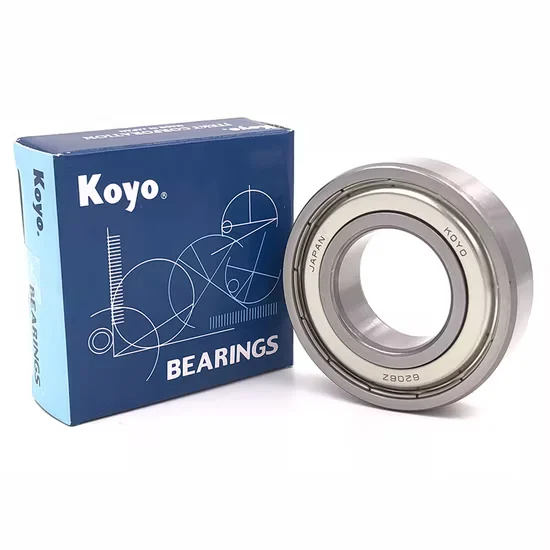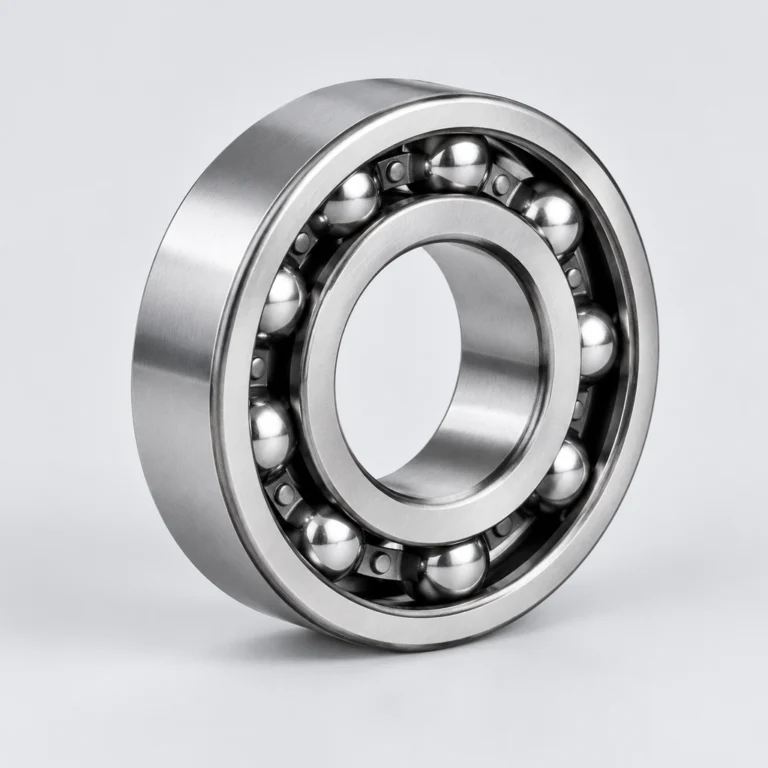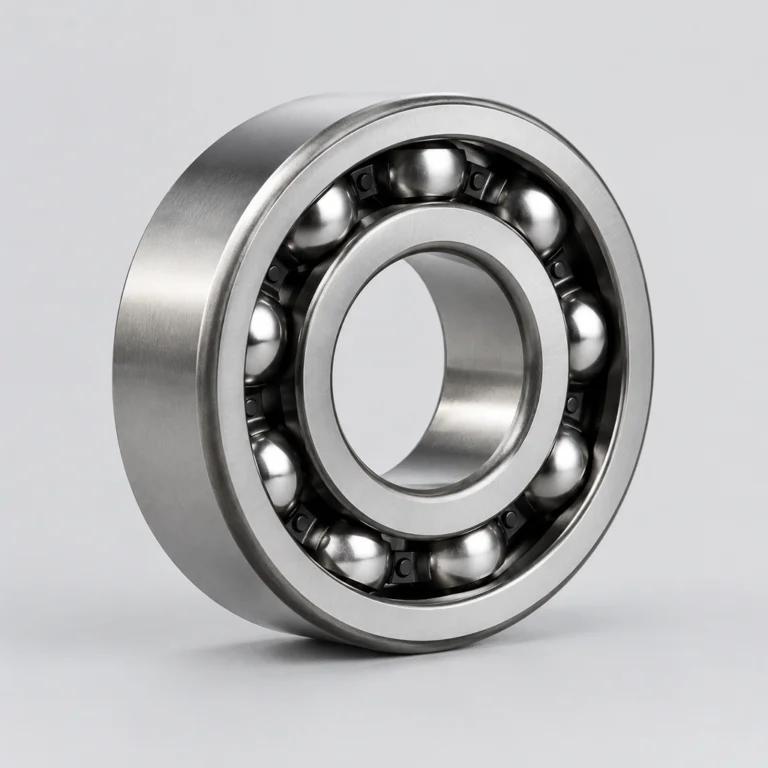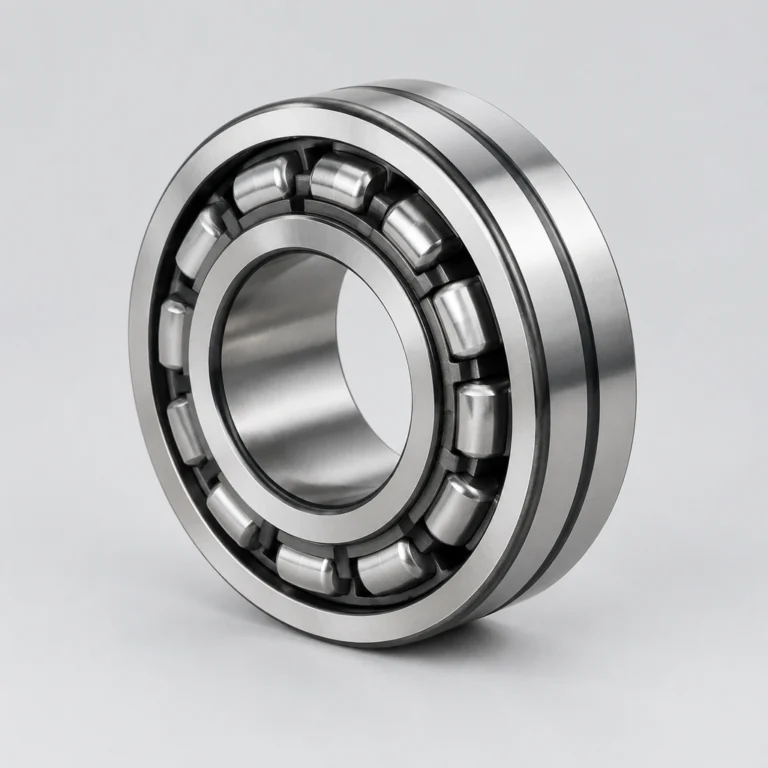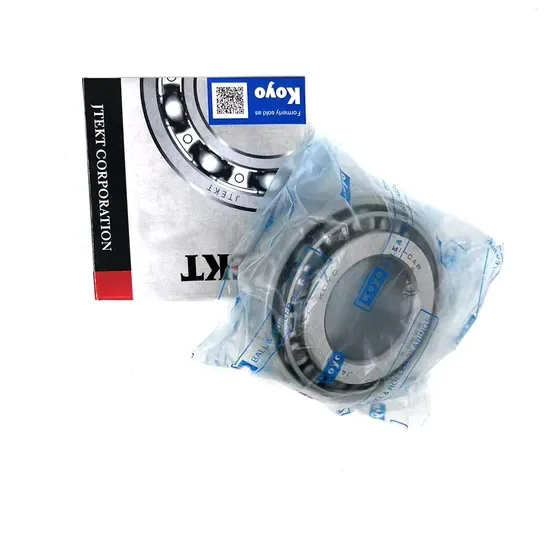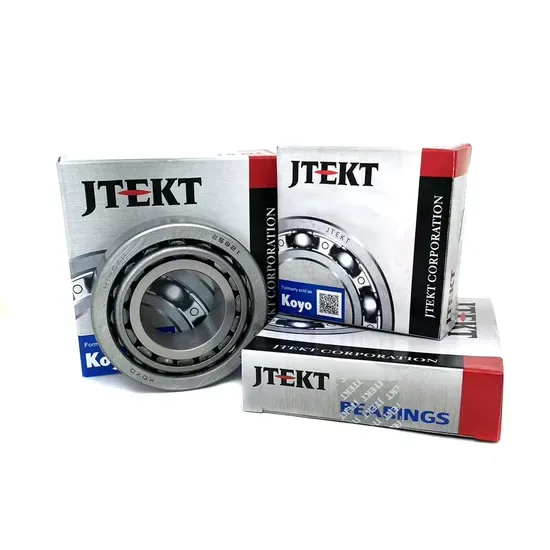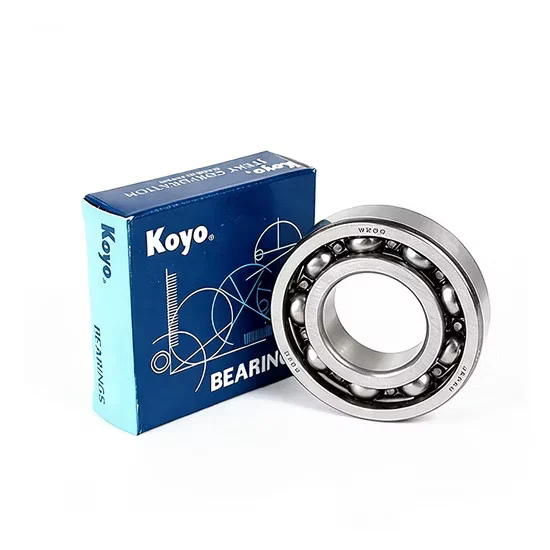
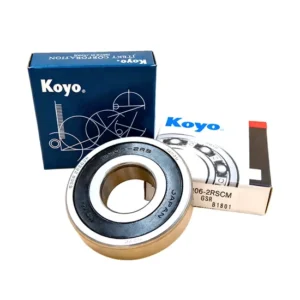
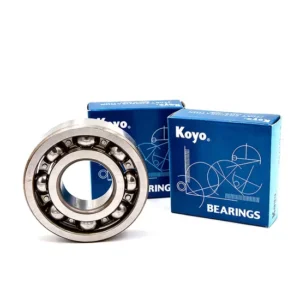

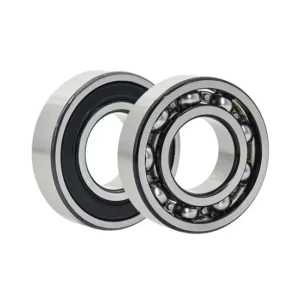
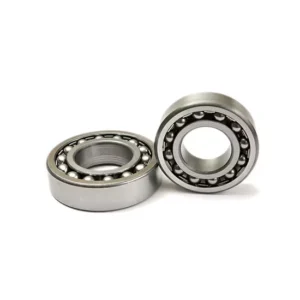
Original Batch Traceability — Every Koyo 6303 deep groove ball bearing ships with verifiable factory lot documentation to guarantee authentic Japanese manufacturing origin.
Technical Specifications
| Parameter | Value |
|---|---|
| Designation | Koyo 6303 |
| Bearing Type | Deep Groove Ball Bearing |
| Bore Diameter (d) | 17 mm |
| Outside Diameter (D) | 47 mm |
| Width (B) | 14 mm |
| Material | Available in premium Gcr15 chrome steel or stainless steel variants |
| Lubrication | Grease or Oil |
| Origin | Japan |
Application Suitability
| Industry | Typical Applications |
|---|---|
| Industrial Machinery | Belt-drive tensioners and transmission shafts |
| Electric Motors | Rotor support in small to medium AC/DC motors |
| Pumps & Conveyors | Impeller shafts and idler pulley assemblies |
| Gearboxes | High-speed input shafts and auxiliary drive mechanisms |
Why Unsealed Koyo 6303 Deep Groove Ball Bearings Seize in Dusty Transmission Housings
Contaminant ingress destroys the raceway long before fatigue limits are reached.
I learned this the hard way during my early days at a Hanover trade show. A client used shielded bearings instead of contact seals in a heavily contaminated environment, resulting in early jamming and severe production delays. When specifying a Koyo 6303 deep groove ball bearing for similar industrial machinery, ignoring the enclosure's dust concentration leads to catastrophic raceway scoring. The absence of integrated seals means the housing must provide absolute contamination defense. If abrasive particles bypass the housing seals, they act as a lapping compound, rapidly degrading the premium Gcr15 chrome steel or stainless steel surfaces. Maintenance teams must critically evaluate the external sealing arrangements before committing to an open design for dusty or wet environments.
Matching the 17x47x14mm Profile to Compact Drive Systems
In compact belt-drive equipment and auxiliary transmission modules, spatial constraints strictly dictate component selection. The Koyo 6303 deep groove ball bearing offers an optimized cross-section that handles combined radial and axial loads without requiring oversized, heavy housings. Our extensive sourcing network ensures these specific dimensions are consistently available in massive spot inventory, allowing maintenance teams to replace worn units immediately without redesigning the surrounding architecture. This precise 17x47x14mm footprint is a standard for small to medium electric motors and pump impeller shafts, providing reliable support while minimizing the overall weight and inertia of the rotating assembly.
Managing Radial Loads and Lubrication Intervals in Continuous Duty
Industrial conveyors, gearboxes, and agricultural machinery subject these components to steady radial loads combined with moderate axial forces from belt tension or helical gears. The available premium Gcr15 chrome steel or stainless steel variants provide the necessary structural integrity to resist deformation and spalling under continuous, heavy-duty operation. However, because this baseline designation lacks integrated seals, the external housing must provide adequate environmental protection, and lubrication intervals must be strictly maintained to prevent metal-to-metal contact. Selecting the correct grease or oil viscosity is critical to managing friction heat, especially in high-speed electric motor applications where thermal buildup can rapidly degrade the lubricant film. Neglecting these external sealing and lubrication requirements will inevitably compromise the operational lifespan of the component.
Decoding the Baseline Designation and Clearance Selection
The baseline designation indicates a standard internal geometry without specialized seals, shields, or snap rings, making it ideal for applications where the housing provides primary contamination defense and retains the lubricant. For high-speed electric motors or gearboxes operating at elevated temperatures, selecting the appropriate internal clearance class is absolutely vital for long-term reliability. A standard CN clearance suits normal operating conditions and standard interference fits, whereas a C3 clearance accommodates thermal expansion of the shaft and housing, preventing internal preload that could accelerate fatigue. The premium Gcr15 chrome steel or stainless steel options ensure consistent hardness and wear resistance across the rolling elements and rings, but the internal clearance must be matched to the specific thermal and mechanical profile of the application to avoid premature seizure.
The Downtime Penalty of Ignoring Housing Seal Compatibility
Specifying an open bearing in an inadequately sealed housing invites abrasive particle ingress, which rapidly accelerates surface distress and wear. This leads to premature failure and unplanned downtime that far exceeds the initial procurement cost of the component itself. According to established failure analysis frameworks, surface degradation from solid contamination is a primary root cause of early replacement in industrial machinery. Ensuring the housing seals, such as labyrinth or lip seals, perfectly match the operating environment is non-negotiable for maximizing service life. Furthermore, improper lubrication practices, such as mixing incompatible greases or overfilling the housing, can generate excessive churning heat, further compromising the structural integrity of the assembly.
Securing Authentic Components for Critical MRO Replacements
Sourcing genuine replacement parts requires more than just matching the alphanumeric part number on a purchase order. We verify the exact metallurgical composition and dimensional tolerances of every batch, ensuring the selected Gcr15 chrome steel or stainless steel variant strictly meets original equipment specifications. Our flexible consolidation shipping allows you to mix this specific model with other critical maintenance spares in a single container, optimizing your logistics costs. Furthermore, our technical team provides comprehensive cross-reference consultation to verify equivalents across major global brands if immediate local stock is required, ensuring your production line never waits for a missing component. We also maintain complete traceability documentation, giving your quality assurance team full confidence in the origin and authenticity of every unit deployed in your facility.
Documentation & Authenticity
- Original factory batch traceability documents verifying the Japanese manufacturing origin.
- Certificate of Conformity confirming ISO-compliant quality assurance for the specific lot.
- Dimensional inspection reports validating the 17x47x14mm tolerances before dispatch.
- Material test certificates guaranteeing the selected Gcr15 chrome steel or stainless steel composition.
- Official brand verification guidance using QR codes or authorized distribution channels.
Storage, Handling & Mounting
- Keep the original anti-corrosion packaging intact until installation to protect the unsealed Gcr15 chrome steel or stainless steel raceways from ambient moisture.
- Use clean, lint-free gloves during handling to prevent fingerprint acids from etching the precision-ground 17mm bore surface.
- Apply induction heating for mounting on shafts, strictly controlling the temperature to preserve the baseline internal clearance.
- Ensure the housing seals are fully functional before installation, as this open design relies entirely on external contamination defense.
- Fill the housing with the specified grease or oil immediately after mounting to prevent dry starts during initial commissioning.
Engineering Support for Application-Specific Validation
To ensure optimal performance and avoid premature failures, share your specific radial and axial load profiles, operating speeds, and detailed housing seal configurations. Our engineering team will rigorously review these parameters to confirm the suitability of the baseline clearance class or recommend an alternative sealed variant if your environment demands integrated contamination defense. Providing the original equipment manufacturer part numbers or detailed equipment drawings also allows us to perform precise cross-reference verification, ensuring smooth integration into your existing maintenance protocols without requiring mechanical modifications.
Frequently Asked Questions
Q: How can I verify the authenticity of the received components?
A: You can verify authenticity by checking the original factory batch traceability documentation and scanning the packaging QR codes through official brand applications. We also provide dimensional and material inspection reports that confirm the premium Gcr15 chrome steel composition, ensuring every unit matches the strict quality standards of authorized global distribution channels.
Q: What are the exact cross-reference equivalents across other major brands?
A: The baseline 6303 designation is a standardized dimension series, meaning it directly cross-references to equivalent models from SKF, FAG, and NSK. While the 17x47x14mm physical dimensions and basic load capacities remain identical, internal clearance defaults and cage materials may vary slightly. We provide detailed cross-reference consultation to ensure the selected alternative perfectly matches your specific operational requirements.
Q: How do I choose between grease and oil lubrication for this application?
A: Grease is typically preferred for moderate-speed applications like conveyors and belt-drive equipment due to its sealing properties and extended maintenance intervals. Oil lubrication is optimal for high-speed electric motors and gearboxes where rapid heat dissipation is critical. The final choice depends on your specific operating speed, ambient temperature, and the housing's ability to retain the chosen lubricant effectively.
Q: When should I select a C3 clearance instead of the standard CN class?
A: A C3 clearance is necessary when the inner ring operates at a significantly higher temperature than the outer ring, causing thermal expansion that reduces internal play. It is also recommended for applications with heavy interference fits on the shaft or housing. Selecting the correct clearance prevents internal preload, which can generate excessive friction heat and lead to premature fatigue failure in continuous duty cycles.
Q: What are the recommended mounting practices for this specific bore size?
A: For the 17mm cylindrical bore, induction heating is the preferred mounting method to expand the inner ring without applying mechanical force to the rolling elements. The heating temperature must be strictly controlled to avoid altering the metallurgical properties of the selected chrome steel or stainless steel variant. Never strike the bearing directly with a hammer, and always apply force exclusively to the ring being press-fitted.