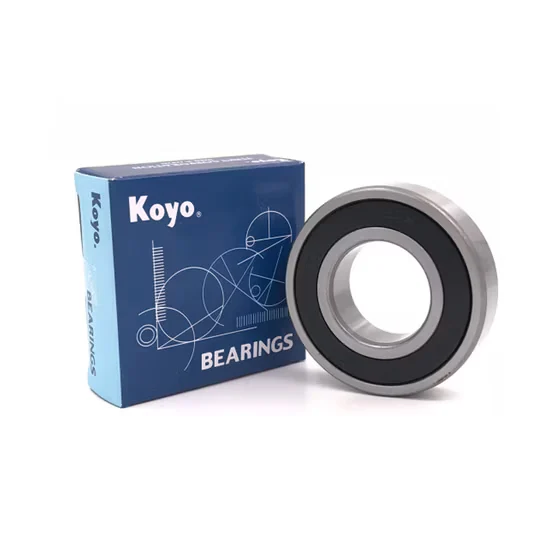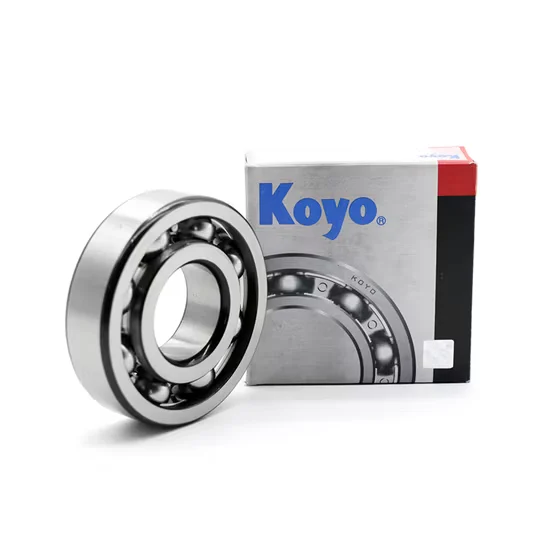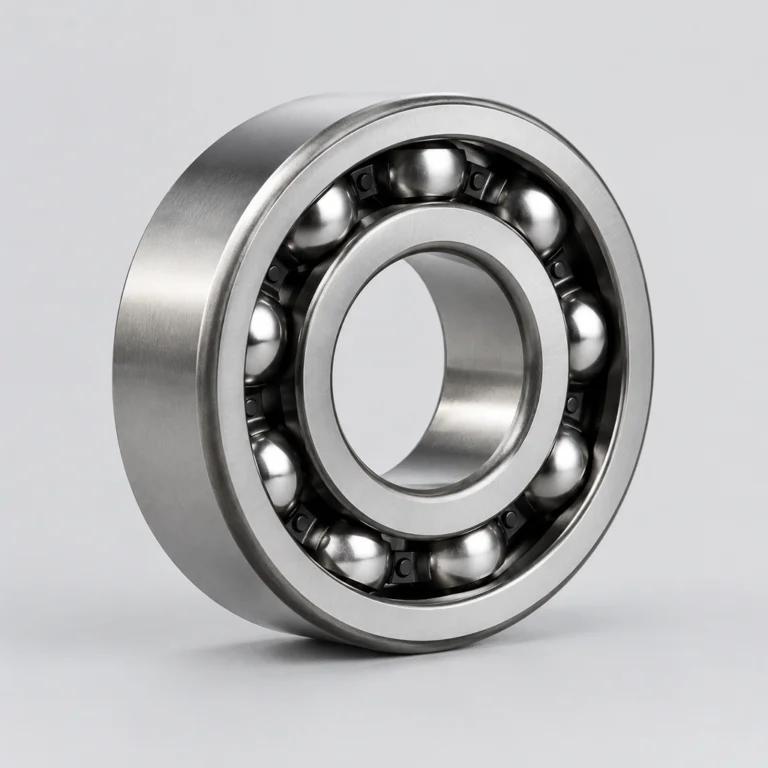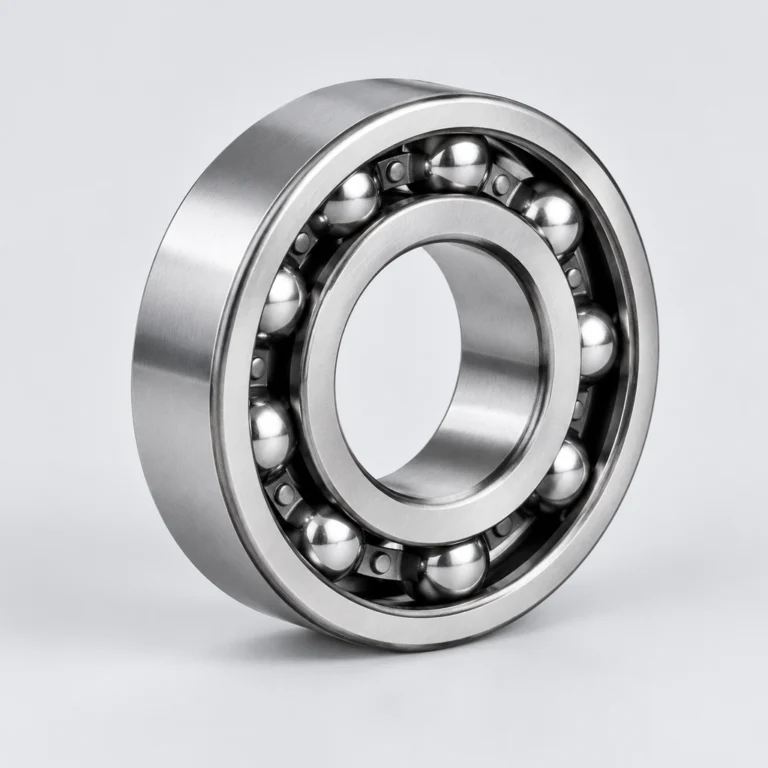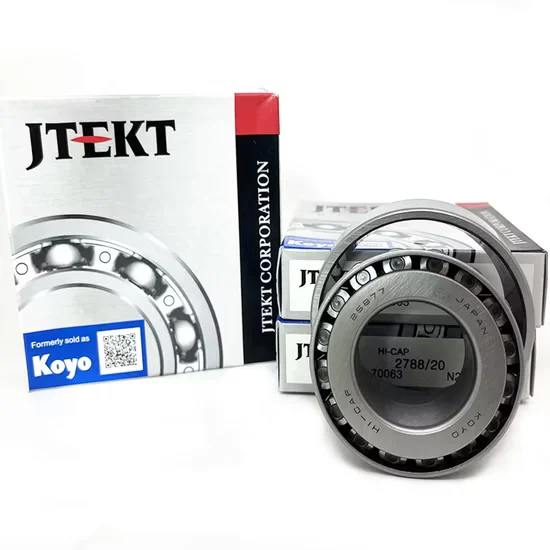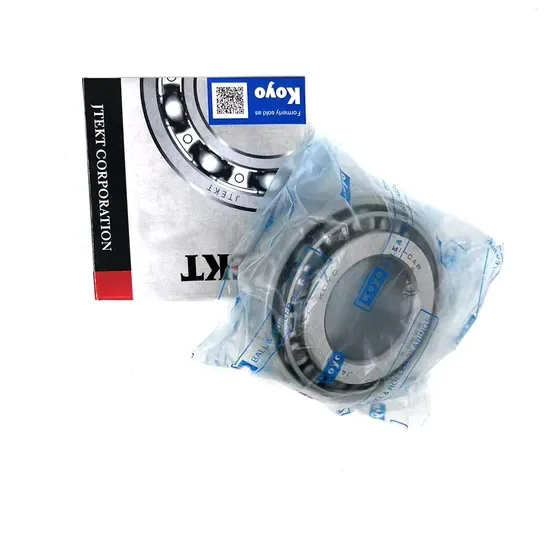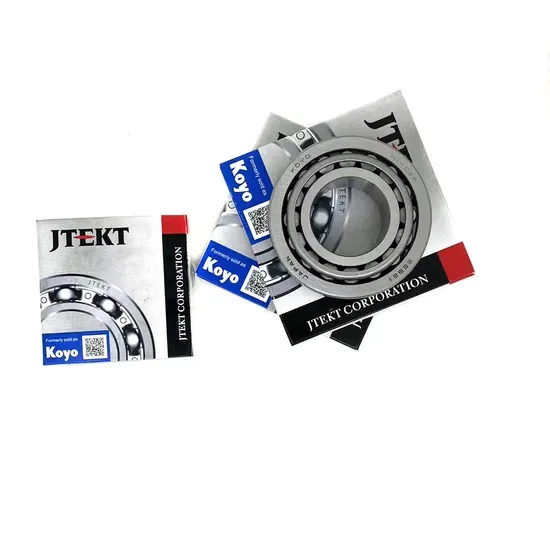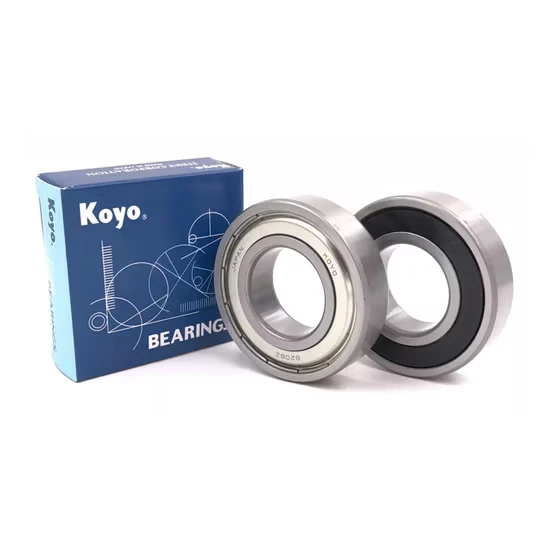


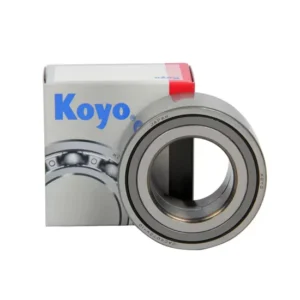

Mixed-Brand Sourcing — Consolidate KOYO miniature bearings with other global brands in a single shipment without juggling multiple vendors.
Technical Specifications
| Parameter | Value |
|---|---|
| Designation | KOYO 6800 |
| Bearing Type | Deep Groove Ball Bearing |
| Bore Diameter (d) | 10 mm |
| Outside Diameter (D) | 19 mm |
| Width (B) | 5 mm |
| Seal or Shield Type | Open, ZZ, 2RS |
| Precision Class | P0, P6, P5, P4 |
| Clearance Class | C0, C2, C3 |
| Vibration Level | Z1V1, Z2V2, Z3V3 |
| Lubrication | Grease or Oil |
| Number of Rows | Single |
| Contact Angle | 0° |
| Load Direction | Radial |
| Material | Bearing Steel |
| Origin | Japan |
Application Suitability
| Industry | Typical Applications |
|---|---|
| Small Electric Motors | Rotor shaft support in micro motors and servo drives |
| Precision Instruments | Spindle and pivot mechanisms in optical and measuring devices |
| Pumps and Gearboxes | Low-torque transmission shafts in miniature fluid and power systems |
| Household Appliances | High-speed spindle assemblies in small domestic appliances |
Why Moisture Destroys Micro Motors Before the KOYO 6800 deep groove ball bearing Reaches Its Fatigue Limit
Steel shields cannot stop vapor intrusion in humid environments.
Early in my career procuring components for a motor plant in Vietnam, I specified ZZ-shielded miniature bearings to cut costs. The workshop was dusty and highly humid. Within months, the iron shields failed to block moisture, seizing the rotors and scrapping the entire batch. That failure mode remains a hidden trap for MRO buyers who assume all sealed variants offer equal protection.
Aligning Seal Configurations with Operational Realities
When specifying a KOYO 6800 deep groove ball bearing for small electric motors, the operating environment dictates the sealing choice. Our procurement team frequently assists clients in transitioning from open or shielded variants to contact rubber seals when dust and humidity compromise equipment uptime. We provide cross-brand equivalent model consultation to ensure the selected seal type matches your specific contamination exposure without introducing excess friction.
Managing Friction and Contamination Trade-offs
Miniature applications demand a delicate balance between rotational speed and environmental protection. Open variants minimize friction for high-speed instrument spindles but leave the raceway vulnerable to particulate ingress. Steel shields offer non-contact protection suitable for moderate dust, yet they allow vapor penetration in damp conditions. Rubber contact seals provide the highest defense against moisture and fine particulates, though they generate slightly higher friction and thermal buildup. Selecting the optimal configuration requires evaluating the ambient humidity, expected maintenance intervals, and the thermal limits of the chosen grease.
Decoding Precision and Vibration Grades
The available precision classes, ranging from P0 up to P4, directly influence the running accuracy and acoustic signature of the assembly. Higher precision grades are essential for optical instruments where microscopic runout degrades performance. Vibration ratings from Z1V1 to Z3V3 further refine the acoustic profile, ensuring smooth operation in noise-sensitive household appliances. Additionally, radial internal clearance options like C2, C0, and C3 allow engineers to compensate for thermal expansion or tight interference fits on miniature shafts, preventing premature preload binding during operation.
The Hidden Toll of Incorrect Seal and Clearance Selection
Choosing an inappropriate seal or clearance class leads to cascading mechanical issues rather than immediate breakdowns. An overly tight clearance in a high-speed micro motor causes thermal binding, resulting in unplanned downtime and catastrophic damage to the adjacent windings. Conversely, using non-contact shields in a washdown environment accelerates corrosion, voiding warranties and driving up replacement frequencies. These premature failures align with established degradation patterns documented in standard reliability frameworks.
Securing Authentic Traceability for Critical Miniature Components
Sourcing genuine Japanese miniature bearings requires rigorous channel verification, as counterfeit variants frequently circulate in the global MRO market. We guarantee authentic products with complete factory batch traceability, protecting your equipment from substandard metallurgy. Our massive spot inventory covers thousands of standard part numbers, allowing flexible order quantities from single-unit emergency spares to full container consolidation. Furthermore, our technical team provides cross-reference support to verify dimensional alignment when replacing obsolete or alternative brand equivalents in legacy precision instruments.
Documentation & Authenticity
- Original factory batch traceability linking the KOYO 6800 deep groove ball bearing to its specific production run.
- Official app QR verification to confirm authenticity before installation in sensitive equipment.
- Running accuracy inspection reports confirming P4 or P5 tolerance grades prior to dispatch.
- Material certification verifying the metallurgical composition of the bearing steel rings and rolling elements.
- Dimensional inspection records validating the 10 mm bore and 19 mm outside diameter tolerances.
Storage, Handling & Mounting
- Retain the original moisture-barrier packaging until mounting to prevent ambient humidity from degrading the factory grease.
- Use clean, lint-free gloves when handling open or ZZ variants to avoid transferring corrosive skin oils to the raceways.
- Store 2RS sealed units away from direct UV exposure to prevent premature degradation of the rubber contact lips.
- Apply induction heating rather than mechanical force when pressing the 10 mm bore onto tight-tolerance miniature shafts.
- Avoid using carbon steel tools near the bearing to prevent cross-contamination and subsequent surface rusting.
Engineering Review for Optimal Selection
To ensure the selected variant meets your operational demands, please share your specific radial loads, rotational speeds, and ambient temperature profiles. Providing the OEM equipment model number allows our engineering team to perform cross-reference checks and verify dimensional compatibility. Detailing the environmental exposure, such as moisture levels or particulate types, helps us recommend the most appropriate seal configuration and lubrication strategy for your application.
Frequently Asked Questions
Q: How can I verify the authenticity of the purchased bearings?
A: We supply genuine products with complete traceability documentation. You can verify the authenticity by scanning the anti-counterfeit QR codes using the manufacturer's official mobile application. Additionally, we provide original factory batch numbers and material inspection reports to ensure full transparency and protect your equipment from substandard counterfeit alternatives in the MRO market.
Q: What is the friction difference between ZZ and 2RS variants?
A: The ZZ steel shields provide non-contact protection, resulting in lower friction and higher speed capabilities suitable for clean environments. The 2RS rubber contact seals generate slightly higher friction due to lip contact but offer superior defense against moisture and fine dust. Choosing between them depends on balancing your need for maximum rotational speed against the level of environmental contamination.
Q: How do I choose the right precision class for small motors?
A: Standard P0 or P6 classes are typically sufficient for general-purpose small electric motors and household appliances where cost-efficiency is prioritized. For high-speed servo drives, precision instruments, or noise-sensitive applications, upgrading to P5 or P4 ensures tighter dimensional tolerances and reduced vibration. We recommend evaluating the acceptable runout and acoustic limits of your specific assembly before selecting the precision grade.
Q: What cross-reference factors matter when replacing existing bearings?
A: When replacing alternative brands, it is crucial to verify not only the basic 10x19x5 mm dimensions but also the internal clearance and cage design. Different manufacturers may use varying cage materials or snap ring configurations that affect the fit and performance. Our technical team can review your current specifications and recommend the exact equivalent model to ensure reliable integration.