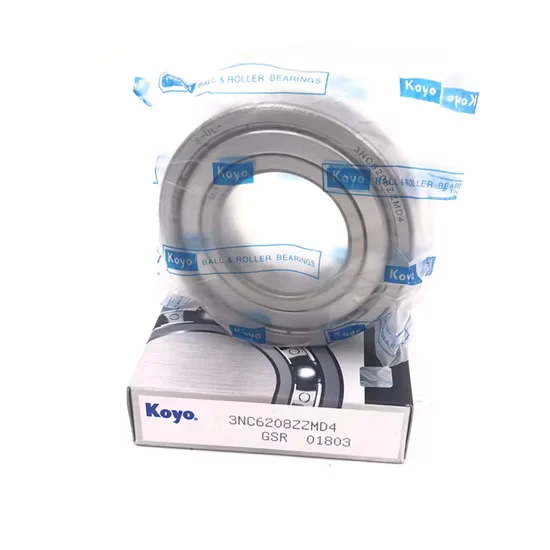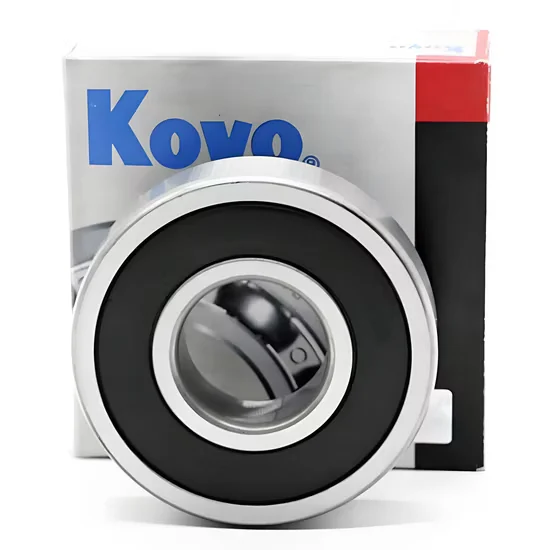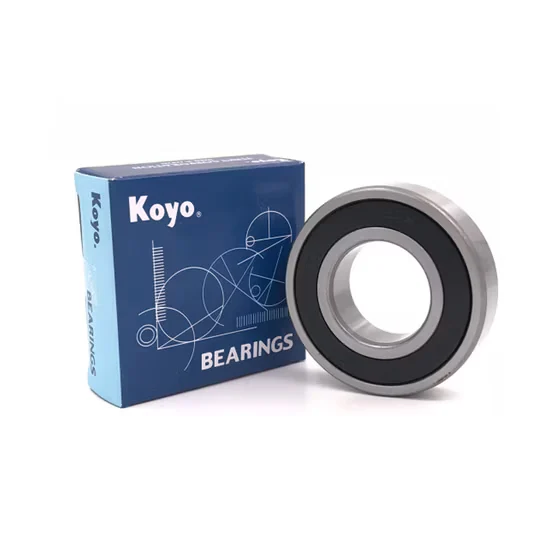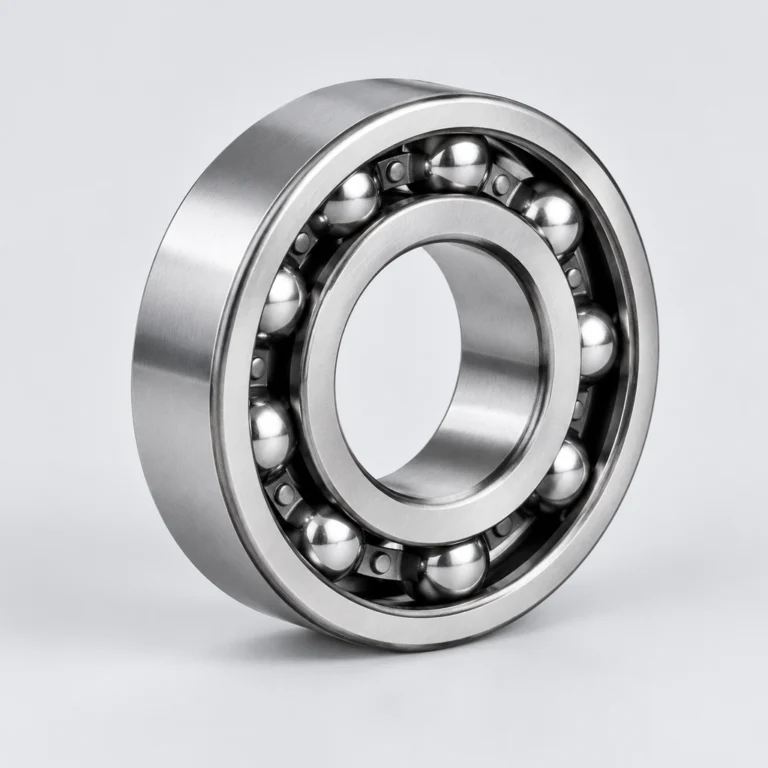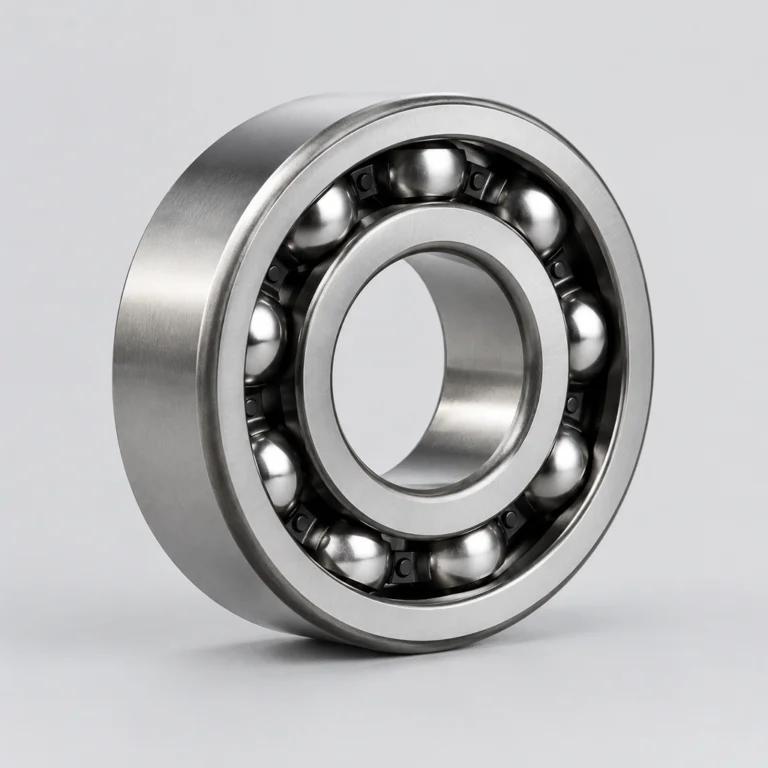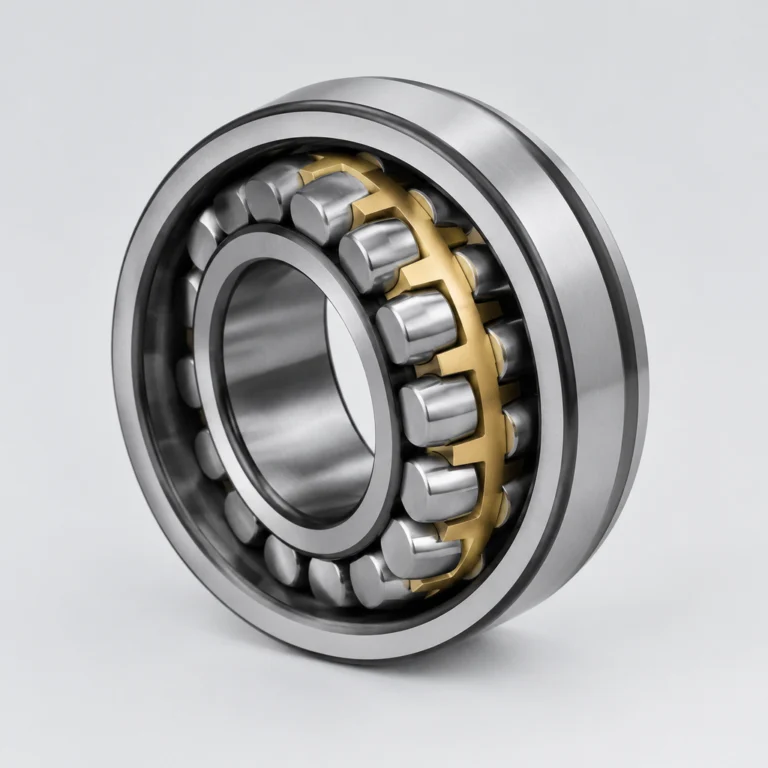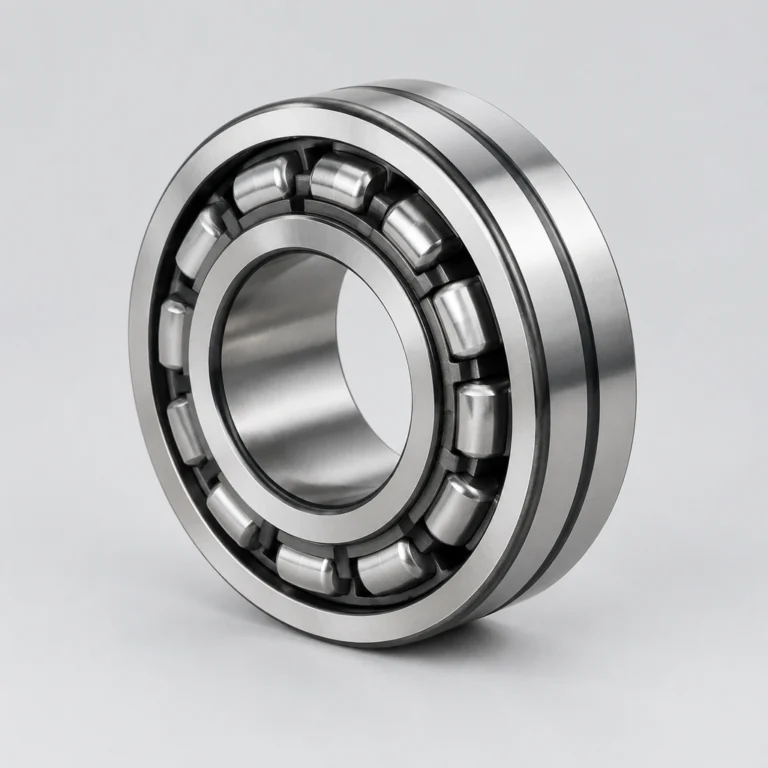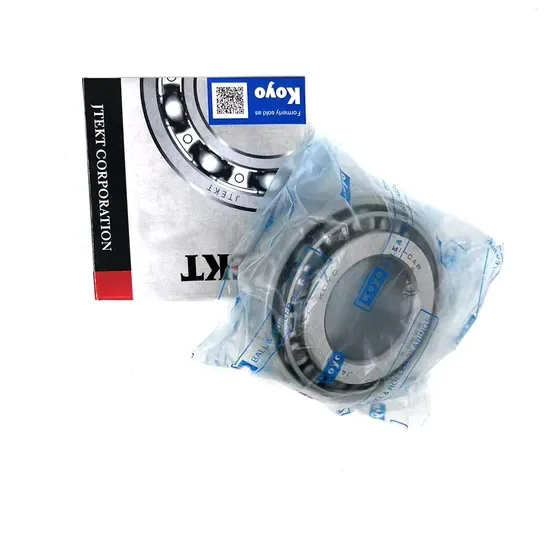
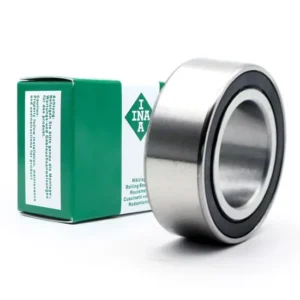
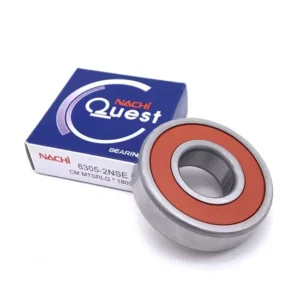
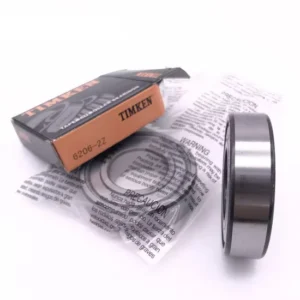
Official App QR Verification — Every NTN 6038 6038m deep groove ball bearing we dispatch includes a scannable QR code linked directly to the manufacturer's authentication database for immediate origin confirmation.
Technical Specifications
| Parameter | Value |
|---|---|
| Designation | 6038 6038m |
| Bearing Type | Deep Groove Ball Bearing |
| Bore Diameter (d) | 190 mm |
| Outside Diameter (D) | 290 mm |
| Width (B) | 46 mm |
| Number of Rows | Single |
| Load Direction | Radial Bearing |
| Material | Bearing Steel |
| Contact Angle | 0° |
| Aligning | Non-Aligning Bearing |
| Separated | Unseparated |
Note: The 'm' suffix in 6038m remains an unverified designation requiring confirmation against the official manufacturer catalog before finalizing procurement.
Application Suitability
| Industry | Typical Applications |
|---|---|
| Electric Motors | High-vibration motor shafts requiring rigid radial support |
| Pumps & Reducers | Impeller shafts and gear reduction assemblies |
| Machine Tools | Main spindle radial support and feed mechanisms |
| General Manufacturing | Heavy-duty conveyor rollers and MRO replacement scenarios |
Why Standard Cages Fail in High-Vibration Motor Shafts
Brass cages prevent catastrophic stator sweeping failures under continuous radial vibration.
When sourcing a NTN 6038 6038m deep groove ball bearing for heavy-duty electric motors, relying on standard stamped steel cages often leads to premature fatigue. I have investigated numerous field failures where basic cages fractured within months under high-vibration conditions, causing the rotor to sweep the stator and destroy the entire motor assembly. Upgrading to a machined brass cage design fundamentally alters the vibration damping characteristics, securing the rolling elements and preventing sudden structural collapse.
Matching Cage Material to Motor Vibration Profiles
Selecting the correct NTN 6038 6038m deep groove ball bearing hinges on understanding the specific vibration spectrum of your electric motor or pump. Our technical team cross-references your operational data to ensure the cage material and internal clearance align perfectly with the radial loads and rotational speeds, preventing the resonance issues that typically plague standard stamped variants in demanding industrial environments.
Managing Thermal Expansion and Lubrication in Heavy Pumps
In large pump and reducer applications, the 190 mm bore and 290 mm outer diameter generate significant thermal gradients during continuous operation. Standard internal clearances often close up as the shaft expands, leading to excessive friction and accelerated wear. Proper selection of the radial internal clearance, combined with an appropriate oil or grease lubrication regimen, ensures the bearing maintains its operational geometry without starving the contact zones.
Decoding the 190x290x46 Dimensions and Single-Row Geometry
The 190 mm bore, 290 mm outside diameter, and 46 mm width define a substantial single-row radial configuration designed to handle heavy radial loads with minimal friction. The non-aligning and unseparated construction provides a rigid structural foundation, which is critical for maintaining precise shaft alignment in machine tool spindles. Machined brass cages, often indicated by specific suffixes, offer superior guidance for the rolling elements at higher speeds compared to pressed steel, effectively reducing cage wear and vibration-induced noise.
The Hidden Downtime Costs of Incorrect Clearance Selection
Specifying the wrong internal clearance or cage type for a high-vibration application inevitably results in unplanned downtime and catastrophic equipment damage. When a bearing seizes due to thermal expansion or cage fracture, the collateral damage to the motor housing and shaft often exceeds the replacement cost of the component itself. Adhering to ISO 281 guidelines for dynamic load rating calculations helps mitigate these risks by ensuring the selected configuration matches the actual operational stresses.
Securing Authentic Traceability for Critical Motor Components
Procuring genuine components requires more than just matching the part number; it demands rigorous supply chain verification. We source our inventory through authorized channels, providing complete batch traceability for every unit. Our engineering team actively advises on suffix interpretation, ensuring you do not accidentally substitute a standard stamped-cage variant when a machined brass design is required for your specific vibration profile, thereby protecting your equipment from premature failure.
Documentation & Authenticity
- Certificate of Conformity verifying the exact 190x290x46 dimensions and bearing steel metallurgy.
- Original factory batch traceability documents linking the specific unit to its production date.
- Official app QR code validation confirming the authentic origin of the bearing.
- Dimensional and running accuracy inspection reports confirming tolerance compliance before dispatch.
Storage, Handling & Mounting
- Store the unopened packaging in a climate-controlled environment to prevent condensation inside the 190 mm bore.
- Use induction heating for mounting, ensuring the temperature does not exceed the thermal limits of the bearing steel.
- Keep the original anti-corrosion coating intact until the exact moment of installation to protect the precision-ground raceways.
- Utilize clean, lint-free gloves when handling the unseparated components to avoid transferring moisture to the rolling elements.
Engineering Review for Optimal Shaft Configuration
To ensure the selected configuration perfectly matches your machinery, please provide your operational parameters including radial and axial loads, rotational speed, and operating temperature. Sharing the original equipment manufacturer part numbers allows our technical team to perform a precise cross-reference check, verifying the correct cage material and internal clearance for your specific application.
Frequently Asked Questions
Q: How do I verify the authenticity of the received components?
A: Every unit we supply includes a scannable QR code linked to the manufacturer's official authentication database. You can scan this code using the official app to instantly verify the production batch, origin, and authenticity, ensuring complete traceability for your maintenance records.
Q: What installation tools are recommended for this bore size?
A: For a 190 mm bore, induction heating is the standard method to achieve the necessary interference fit without damaging the raceways. Ensure the heating temperature remains within the safe limits for bearing steel to prevent structural alteration.
Q: Which lubrication method is recommended for this size?
A: For large bore bearings in this dimension range, oil bath or circulating oil lubrication is typically preferred to manage heat dissipation effectively. The specific choice depends on your rotational speed and the thermal characteristics of your pump or motor housing.
Q: How should I handle cross-referencing for replacement?
A: When replacing an existing unit, provide the OEM equipment number and the exact operating conditions. Our team will cross-reference the dimensions, clearance class, and cage design to recommend an exact match or a superior equivalent that addresses any previous failure modes.