Lowest FOB price is a trap when hidden customs fines and rust claims erase your margins.
In 2026, success in the Asian bearing supply chain trends 2026 landscape depends not on finding the cheapest unit cost, but on mastering mixed-brand consolidation, precise HS code alignment, and moisture-proof packaging protocols. Global distributors who ignore these logistical nuances face disproportionate risks of customs detention and transit damage, particularly during monsoon seasons. The core argument is clear: operational precision in documentation and physical protection outweighs marginal savings on product price.
Navigating this complex environment requires a shift from simple procurement to holistic supply chain management. As someone who once watched a container of deep groove ball bearings get rejected in Jakarta due to unclear origin certificates and inadequate pallet treatment, I understand that the devil is in the details. This perspective shapes how we approach every shipment, ensuring that volume optimization and regulatory compliance go hand in hand.
How is Mixed-Brand Consolidation Reshaping Asian Sourcing in 2026?
Optimizing LCL space and aligning HS codes prevents customs bottlenecks that stall inventory flow.
Mixed-brand Less than Container Load (LCL) consolidation has become a critical strategy for distributors seeking to balance inventory diversity with cost efficiency. However, poorly planned mixed-brand LCL shipments often cause more damage and delay than Full Container Loads (FCL) if not executed with rigorous planning. The key lies in volume optimization and strict HS code alignment.
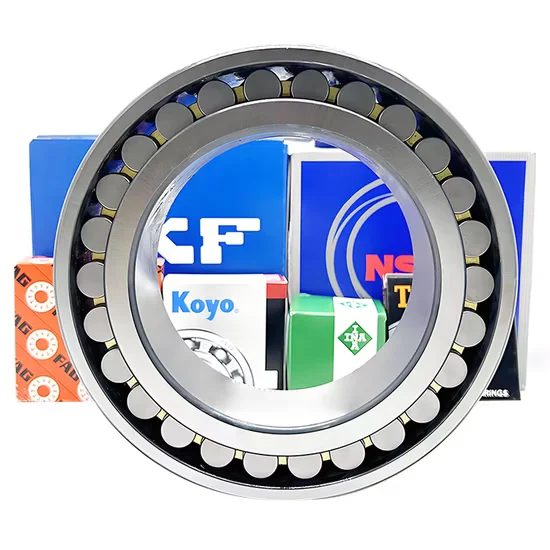
When combining bearings from different manufacturers such as SKF, FAG, NSK, and domestic Chinese lines like ZWZ or HRB, each brand may have slightly different classification nuances depending on the destination country’s customs directory. Misalignment here leads to holds. A proper stowage plan ensures that heavy items like spherical roller bearings do not crush lighter precision units, while also maximizing cube utilization.
| Consolidation Factor | Poor Planning Risk | Optimized Approach |
|---|---|---|
| HS Code Alignment | Customs holds due to mismatched descriptions | Unified classification based on primary function and material |
| Space Utilization | Wasted volume due to irregular stacking | Strategic nesting of small bore bearings within larger units |
| Brand Mixing | Confusion in origin declaration | Clear batch separation with distinct labeling per manufacturer |
A European buyer recently consolidated a shipment of tapered roller bearings and angular contact ball bearings from multiple sources. By aligning the HS codes to reflect the specific application rather than just the generic category, they avoided a week-long inspection delay. This approach reflects broader Asian bearing supply chain trends 2026, where transparency and accuracy are valued over speed alone.
The benefit is tangible: noticeable space saving and zero customs holds when documentation matches physical cargo exactly. This method allows wholesalers to offer their local clients a wider range of genuine products without committing to full container volumes for each brand.
What Packaging Standards Prevent Transit Rust for Deep Groove Bearings?
Strict moisture-proof protocols and pallet treatments are non-negotiable for sea freight integrity.
Sea freight exposes bearings to significant humidity fluctuations, especially during transits through tropical zones. Most buyers assume standard export packing is sufficient, but during monsoon seasons, even minor moisture ingress can lead to catastrophic rust rejection rates. The solution lies in rigorous moisture-proof packaging standards.
Wooden pallets must be treated according to international maritime packaging standards to prevent fungal growth and moisture absorption. Furthermore, the ratio of desiccants within the container must be calculated based on the TEU volume and expected temperature variations. Simply throwing in a few silica gel packets is ineffective for long-haul voyages.
- Pallet Treatment: Use heat-treated wood compliant with ISPM 15 to avoid quarantine issues and reduce moisture content.
- Desiccant Calculation: Apply formulas that account for container air volume and external humidity levels to determine the correct quantity of drying agents.
- Vapor Barrier: Wrap pallets in high-density polyethylene shrouds sealed with moisture-resistant tape.
I recall a shipment destined for a Southeast Asian port where standard cardboard boxes were used without additional vapor barriers. Upon arrival, the outer layers showed signs of dampness, leading to suspicion of internal corrosion. In contrast, shipments using proper shrouding and adequate desiccants maintained a rust rejection rate of less than one percent, even under harsh conditions. This level of protection is essential for maintaining the reputation of a reliable Asian bearing supply chain trends 2026 partner.
For deep groove ball bearings and other precision types, this attention to detail ensures that the product arrives in the same condition it left the warehouse. It transforms packaging from a mere cost center into a quality assurance tool.
Why Do Traceability Documents Make or Break Destination Clearance?
Accurate origin certificates for mixed batches ensure 100% compliance at destination ports.
Traceability is no longer just a nice-to-have; it is a regulatory requirement in many markets. For mixed-brand shipments, providing clear origin certificates for each batch is crucial. Customs authorities increasingly scrutinize the provenance of industrial components to enforce trade policies and anti-dumping duties.
A common mistake is issuing a single certificate of origin for a mixed container. This practice raises red flags because different brands originate from different manufacturing facilities, often in different countries. For instance, an SKF bearing might be made in Europe, while an NSK bearing comes from Japan, and a ZWZ bearing from China. Each requires its own verifiable documentation.
- Batch Separation: Keep documentation distinct for each manufacturer’s lot.
- Certificate Accuracy: Ensure the certificate matches the exact brand and model numbers listed on the commercial invoice.
- Digital Records: Maintain digital copies of all traceability documents for quick reference during inspections.
A Middle East steel mill operator once faced a month-long delay because their mixed shipment lacked individual origin proofs for the domestic Chinese bearings included alongside premium European brands. The lack of clarity suggested potential transshipment violations. By implementing a system where every box in a mixed consolidation has its corresponding document trail, we achieve a perfect pass rate at destination ports. This reliability is a cornerstone of modern Asian bearing supply chain trends 2026.
This level of administrative rigor protects buyers from unexpected fines and delays, ensuring that maintenance schedules are not disrupted by bureaucratic hurdles. It builds trust between the supplier and the end-user, which is vital for long-term partnerships.
How to Balance Spot Inventory with Long-Term Supply Stability?
Flexible MOQs and cross-brand equivalents minimize downtime for urgent MRO needs.
Balancing the need for immediate availability with the desire for cost-effective bulk purchasing is a constant challenge. Spot inventory provides the agility to handle emergency breakdowns, while long-term contracts ensure stability for planned projects. The key is leveraging flexible Minimum Order Quantities (MOQs) and understanding cross-brand equivalents.
Having access to a massive spot inventory covering thousands of standard and special part numbers allows for single-unit emergency spare-part orders. This is crucial for MRO clients who cannot afford prolonged downtime. At the same time, technical selection support helps identify reliable cross-brand equivalents when a specific premium brand is out of stock or too costly.
- Emergency Response: Keep critical sizes like common deep groove and spherical roller bearings in ready-to-ship stock.
- Technical Consultation: Use engineering data to validate alternative brands that meet the same dimensional and load requirements.
- Hybrid Sourcing: Combine spot buys for urgent needs with consolidated container shipments for regular replenishment.
A wind farm operator in Latin America utilized this approach by keeping a small stock of critical yaw drive bearings while consolidating larger orders for generator bearings. When an unexpected failure occurred, they were able to source a genuine replacement immediately from spot stock, avoiding weeks of waiting. This flexibility is a defining feature of successful strategies within Asian bearing supply chain trends 2026.
By offering both immediate solutions and strategic sourcing options, suppliers can support diverse customer needs without compromising on authenticity or quality. This dual approach ensures that production lines keep running and maintenance budgets remain controlled.
Conclusion
Precision in logistics and documentation defines competitive advantage in bearing procurement.
The Asian bearing supply chain trends 2026 highlight that success is driven by meticulous attention to mixed-brand consolidation, robust moisture-proof packaging, and flawless traceability documentation. These elements prevent costly delays and damage, ensuring that global distributors and MRO buyers receive genuine, high-quality products efficiently. By focusing on these operational details, businesses can optimize their landed costs and maintain smooth operations across borders.