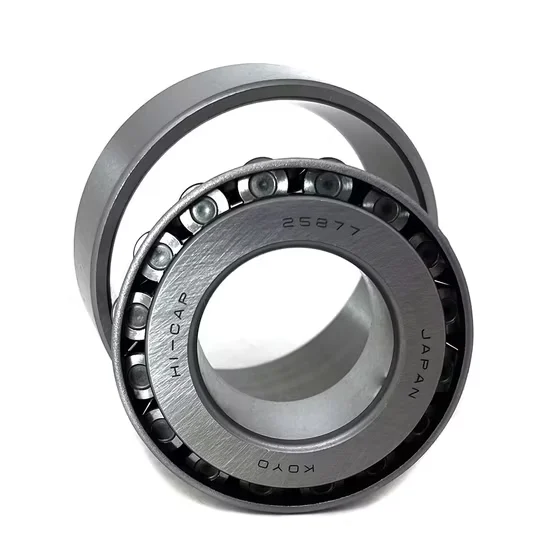
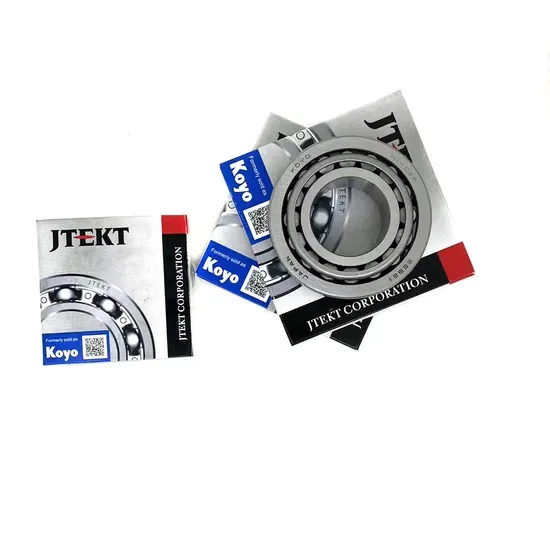
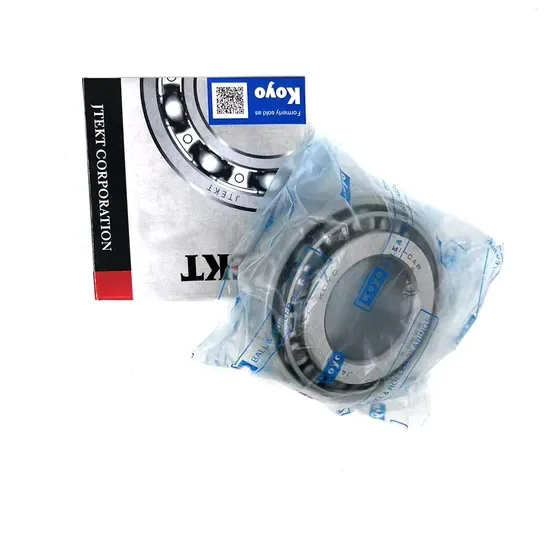
The cheapest bearing is the most expensive component you will ever buy.
Selecting the right KOYO bearings for construction machinery requires matching specific seals and clearances to harsh site conditions, not just comparing base prices. Standard off-the-shelf units often fail prematurely in mining and heavy equipment applications because they lack the necessary protection against mud ingress and thermal expansion. To ensure operational continuity, buyers must prioritize sealed suffixes and appropriate internal clearance codes over initial unit cost.
I still remember the humidity clinging to my skin in Sulawesi, standing next to a paralyzed wheel loader. The mine manager was furious, not because the machine broke, but because it broke again. The procurement team had saved a few dollars per unit by ordering standard open-type bearings instead of specifying the correct sealed variants. Within days, the nickel slurry had penetrated the raceways, causing rapid corrosion and seizure. That downtime cost the operation far more than the price difference of the bearings ever could. This guide distills those hard-learned lessons into a technical selection framework for MRO operators and OEMs.
Understanding why standard specifications fail is the first step toward reliable sourcing. When you engage with a Genuine Koyo Bearings for Construction Machinery Wholesale Supplier, you are not just buying steel rings; you are buying a specification that matches your environment.
Why Do Standard KOYO Bearings Fail in Construction?
Contaminant ingress and improper clearances are the primary drivers of premature rust and seizure in heavy equipment.
In construction and mining, the operating environment is hostile. Dust, mud, water, and high impact loads are constant threats. A standard deep-groove ball bearing or spherical roller bearing designed for a clean factory floor will not survive in an excavator bucket hinge or a crusher main shaft. The failure mechanism is usually straightforward: particles enter the rolling element path, act as abrasives, and destroy the polished surface finish. Once the surface is compromised, fatigue cracks initiate rapidly.
Another critical factor is thermal expansion. Heavy digging operations generate significant heat. If the bearing has standard internal clearance (C0), the inner ring expands faster than the outer ring due to direct contact with the heated shaft. This reduces the internal play until the rollers bind, leading to catastrophic overheating and seizure.
| Failure Mode | Standard Spec Behavior | Required Construction Spec |
|---|---|---|
| Contaminant Ingress | Open or light shield allows mud entry | Full contact rubber seals (e.g., RS, 2RS) |
| Thermal Binding | C0 clearance closes under heat | C3 or C4 clearance maintains play |
| Impact Load | Standard cage may fracture | Reinforced steel or brass cage design |
| Lubrication Loss | Grease leaks out under vibration | High-viscosity grease retention features |
A case from a Southeast Asian cement plant illustrates this clearly. They experienced repeated failures in their conveyor idlers. Upon inspection, we found that the standard shields were bent, allowing dust to mix with the grease, forming an abrasive paste. Switching to bearings with robust labyrinth seals and higher viscosity grease extended the replacement cycle significantly. The key is recognizing that the “standard” option is rarely the correct option for heavy industry.
When sourcing from a Genuine Koyo Bearings for Construction Machinery Wholesale Supplier, always request the full suffix code. The base number tells you the size, but the suffix tells you if it will survive your site.
How to Choose the Right Seal Suffix for Muddy Sites?
Specific seal suffixes provide mandatory protection against mud and water ingress, making them non-negotiable for wet environments.
Not all seals are created equal. In the KOYO nomenclature, the suffix indicates the type and material of the sealing mechanism. For construction machinery, especially excavators and loaders working in wet mines, a simple metal shield is insufficient. You need contact seals that physically block particulate matter.
The most common suffixes you will encounter include RS (single rubber seal) and 2RS (double rubber seal). For extreme conditions, such as submersible pumps or machinery operating in slurry, specialized suffixes indicating enhanced sealing materials are required. These seals are designed to maintain lip contact with the inner ring without generating excessive friction heat.
Consider the swing circle of an excavator. This component rotates slowly but carries immense load and is exposed to rain and dirt. Using a bearing with an open design here is a recipe for disaster. The mud acts as a grinding compound, wearing down the raceways within weeks. By specifying a Genuine Koyo Bearings for Construction Machinery Wholesale Supplier who understands these suffixes, you ensure that the part delivered matches the environmental demand.
| Seal Type | Suffix Example | Protection Level | Best Application |
|---|---|---|---|
| Metal Shield | ZZ | Low (Dust only) | Clean, high-speed motors |
| Rubber Contact | RS / 2RS | High (Mud/Water) | Excavators, Loaders |
| Labyrinth | Non-contact | Medium (Splash) | Gearboxes, Pumps |
| Enhanced | Special Suffix | Very High | Submersible, Slurry |
A distributor in Latin America once reported a high return rate on bearings for agricultural harvesters. The issue was not quality, but specification. They were supplying ZZ-shielded bearings where 2RS-sealed units were required. After correcting the suffix specification in their orders, the return rate dropped noticeably. This highlights the importance of technical verification during the sourcing process.
Always verify the seal material compatibility with any chemicals present on site, such as hydraulic oil or acidic mine water. A knowledgeable Genuine Koyo Bearings for Construction Machinery Wholesale Supplier will provide material data sheets to confirm compatibility.
What Clearance is Needed for High-Temperature Heavy Loads?
C3 and C4 clearances prevent thermal expansion binding in continuous heavy-load digging operations.
Internal clearance is the space between the rolling elements and the raceways. In standard applications, normal clearance (C0) is sufficient. However, in construction machinery, the combination of heavy loads and friction generates heat. As the bearing heats up, the inner ring expands. If there is no extra space (clearance) to accommodate this expansion, the bearing tightens up, increases friction, generates more heat, and eventually seizes.
For spherical roller bearings used in vibrating screens or crushers, C3 clearance is often the minimum requirement. For applications with significant temperature differentials between the inner and outer rings, such as kiln drives or high-speed fans, C4 clearance may be necessary.
Selecting the wrong clearance is a silent killer. It does not fail immediately but reduces the bearing’s life expectancy drastically. When you source from a Genuine Koyo Bearings for Construction Machinery Wholesale Supplier, specify the operating temperature range and load profile. This allows for precise clearance selection rather than guesswork.
| Clearance Code | Description | Typical Application |
|---|---|---|
| C0 (Normal) | Standard fit | Electric motors, general machinery |
| C2 | Reduced | Precision spindles, low noise |
| C3 | Greater than Normal | Construction machinery, pumps |
| C4 | Even Greater | High temperature, heavy loads |
In a recent project for a mining client in Africa, we analyzed the failure history of their crusher main bearings. All failed units had standard C0 clearance. After switching to C3 clearance bearings, the operating temperature stabilized, and the service life extended meaningfully. The change was minor in terms of cost but major in terms of reliability.
Do not assume that a larger clearance is always better. Excessive clearance can lead to vibration and noise. The goal is to match the clearance to the specific thermal and load conditions of your application. Technical support from your supplier is crucial here.
How to Verify Genuine KOYO Bearings for Heavy Equipment?
Traceability documentation and authorized supplier verification are essential to prevent counterfeit failures.
The market for industrial bearings is flooded with counterfeits. These fake products may look identical to the genuine article but lack the metallurgical quality and precision engineering required for heavy loads. Using a counterfeit bearing in a critical application like a tower crane or a mining shovel poses a severe safety risk.
To verify authenticity, look for several key indicators. First, check the packaging. Genuine KOYO bearings come in high-quality boxes with clear printing and holographic security labels. Second, inspect the bearing itself. The marking should be laser-etched or deeply stamped, not painted on. The surface finish should be smooth and uniform.
Most importantly, rely on the supply chain. A reputable Genuine Koyo Bearings for Construction Machinery Wholesale Supplier will provide full traceability documents. This includes the certificate of origin and material test reports. If a supplier cannot provide these documents, consider it a red flag.
| Verification Step | Genuine Product Indicator | Counterfeit Warning Sign |
|---|---|---|
| Packaging | High-quality box, hologram | Flimsy box, poor print quality |
| Marking | Laser-etched, deep stamp | Painted, shallow, misspelled |
| Surface Finish | Smooth, uniform polish | Rough spots, tool marks |
| Documentation | Full traceability, COO | No docs, vague origin |
We once assisted a buyer in the Middle East who received a shipment of bearings that failed within hours. Laboratory analysis revealed that the steel quality was substandard, with high inclusion levels. The supplier had no traceability paperwork. By switching to a verified channel with complete documentation, the buyer eliminated this risk.
Building a relationship with a trusted supplier is your best defense against counterfeits. They have the direct links to the manufacturer and the incentive to protect their reputation. Do not compromise on verification for the sake of a lower price.
Conclusion
Reliability in construction machinery starts with the right specification, not the lowest price tag.
Selecting KOYO bearings for harsh environments requires a deep understanding of seal suffixes, internal clearances, and load ratings. Ignoring these technical details leads to premature failures and costly downtime. By partnering with a knowledgeable Genuine Koyo Bearings for Construction Machinery Wholesale Supplier, you ensure that every bearing delivered is matched to your specific operational challenges. Prioritize traceability, verify specifications, and invest in quality to keep your equipment running.