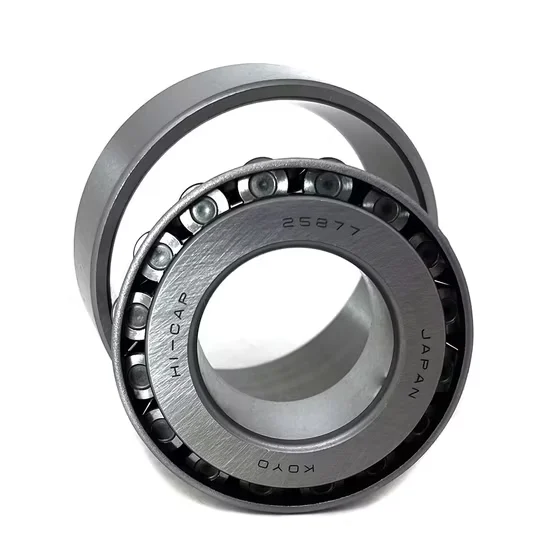
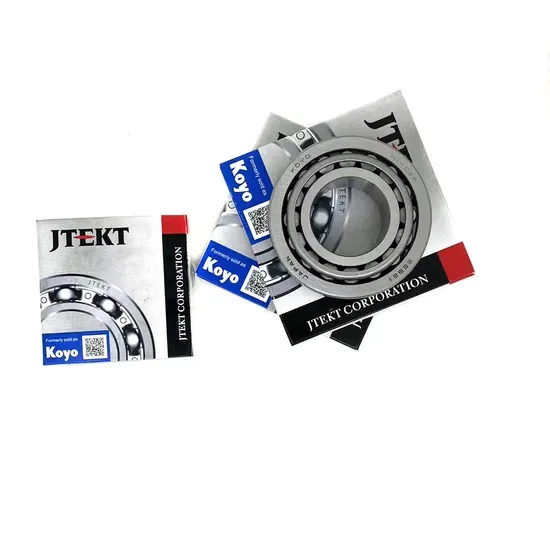
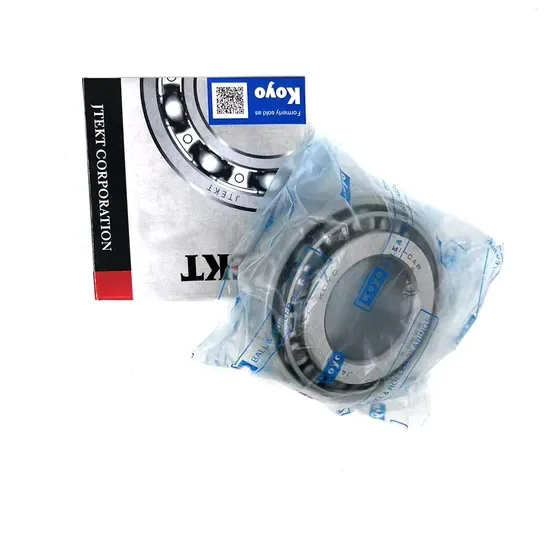
Original packaging does not guarantee authenticity.
Selecting genuine Koyo bearings for gearboxes requires strict verification of traceability, precise clearance matching to thermal conditions, and correct sealing specifications to prevent catastrophic failures in heavy-duty operations. Relying solely on box appearance or price is a direct path to unplanned downtime.
The smell of burnt oil in a palm oil mill reducer is distinct. It is the scent of financial loss. Years ago, I watched an entire production line halt because a batch of bearings, purchased for their attractive price tag and convincing outer boxes, failed within months. The internal raceways were scorched, and the rolling elements had disintegrated. The cost of the replacement bearings was negligible compared to the lost production days and the repair labor. That incident shifted my focus from simple procurement to rigorous technical verification. In the world of industrial power transmission, the difference between a reliable operation and a costly shutdown often lies in the microscopic details of bearing selection and sourcing.
Understanding how to navigate the market for Genuine Koyo Bearings for Gearboxes Wholesale Supplier options is critical for distributors and MRO managers who cannot afford the risk of counterfeit components. The following guide breaks down the technical and logistical steps required to secure authentic, high-performance bearings for demanding industrial environments.
How to Verify Genuine Koyo Bearings for Gearboxes?
Traceability documents are more valuable than the physical box.
Counterfeiters have become sophisticated in replicating packaging. Holograms can be copied, and laser etching can be mimicked. However, forging a complete chain of custody documentation is significantly harder. When evaluating a supplier, the first question should not be about price, but about the origin of the stock. Authentic Genuine Koyo Bearings for Gearboxes Wholesale Supplier channels provide full traceability, including Certificates of Origin (COO) and mill certificates that link the specific batch number to the manufacturing facility.
| Verification Aspect | High-Risk Source | Verified Authentic Source |
|---|---|---|
| Packaging Quality | Pristine, new-looking boxes | May show minor storage wear, consistent with bulk handling |
| Documentation | None or generic invoice | Full COO, Mill Certificate, Batch Traceability |
| Marking Clarity | Laser etching may appear shallow or uneven | Deep, crisp, and uniform laser marking or stamping |
| Price Point | Significantly below market average | Competitive but aligned with global wholesale tiers |
| Stock Consistency | Mixed batches with varying date codes | Consistent batch dates for large orders |
A European maintenance manager once received a container of bearings that looked perfect externally. Upon installation, several units exhibited rough rotation due to poor internal cleaning during the counterfeit manufacturing process. The lack of batch-specific documentation meant they could not claim warranty or identify the scope of the affected inventory. In contrast, working with a supplier who provides verifiable paperwork allows for precise tracking. If a quality issue arises, the specific production lot can be identified and isolated, protecting the rest of your inventory.
Which Koyo Bearing Types Suit Your Gearbox?
Match the bearing geometry to the specific load profile of your application.
Gearboxes are not monolithic; they operate under varying combinations of radial and axial loads. Selecting the wrong type of bearing, even if it is genuine, leads to premature failure. Spherical roller bearings are ideal for applications with heavy radial loads and potential misalignment, such as in mining crushers or large industrial reducers. Tapered roller bearings handle combined loads effectively but require precise adjustment of internal clearance.
For high-speed gearboxes, angular contact ball bearings offer the necessary precision and speed capability. However, in dirty or contaminated environments typical of cement plants or agricultural machinery, the sealing mechanism becomes as critical as the bearing type itself. A common mistake is selecting a standard open bearing when a sealed unit is required, or vice versa, leading to lubricant leakage or contaminant ingress.
| Application Environment | Recommended Bearing Type | Key Selection Parameter |
|---|---|---|
| Heavy Radial Load / Misalignment | Spherical Roller Bearing | Load rating, Cage material |
| Combined Radial/Axial Load | Tapered Roller Bearing | Clearance setting, Cup/cone match |
| High Speed / Precision | Angular Contact Ball Bearing | Precision grade, Lubrication type |
| Contaminated / Wet Environment | Sealed Spherical/Cylindrical | Seal type (RS/2RS), Lip material |
A case from a Southeast Asian sugar mill illustrates this point. The original equipment manufacturer specified open bearings for a gearbox exposed to high humidity and bagasse dust. The maintenance team switched to sealed variants during a retrofit, significantly extending the service life by preventing abrasive particles from entering the raceway. This change was not about buying a more expensive bearing, but about selecting the correct configuration for the operating environment.
Why Do Gearbox Bearings Fail Prematurely?
Incorrect internal clearance is a silent killer in high-temperature operations.
Many engineers default to standard internal clearance (C0 or CN) for all applications. This is a critical error in gearbox design. Gearboxes generate heat during operation, causing the shaft to expand more than the housing. If the bearing does not have sufficient internal clearance to accommodate this thermal expansion, it will preload itself during operation. This preloading generates excessive heat, which further expands the shaft, creating a vicious cycle that ends in seizure.
For most industrial gearbox applications, C3 or C4 clearance is required. C3 clearance provides additional space for thermal expansion, while C4 is used for extreme temperature differentials. Selecting the wrong clearance class is a frequent cause of early failure, often misdiagnosed as a lubrication issue.
Another major factor is sealing. In environments with water spray or fine dust, standard rubber seals may degrade quickly. Fluoroelastomer seals offer better chemical resistance but may have higher friction. The choice depends on the specific contaminants present. A mining conveyor operator reported that switching to bearings with enhanced sealing profiles reduced the frequency of regreasing and extended bearing life substantially, despite the harsh, dusty conditions.
| Failure Mode | Primary Cause | Preventive Action |
|---|---|---|
| Thermal Seizure | Insufficient Internal Clearance | Select C3 or C4 clearance based on operating temp |
| Contamination Wear | Poor Sealing | Use RS/2RS seals with appropriate lip material |
| Fatigue Spalling | Overload / Misalignment | Verify load ratings and housing alignment |
| Lubrication Breakdown | Wrong Grease / Overgreasing | Follow manufacturer lubrication guidelines |
How to Source Koyo Gearbox Bearings Efficiently?
Flexible consolidation balances cost and urgency for global buyers.
Sourcing bearings for multiple sites or diverse machinery types often leads to fragmented orders with high shipping costs and long lead times. A more efficient approach is mixed-brand consolidation. By combining orders for Genuine Koyo Bearings for Gearboxes Wholesale Supplier requirements with other necessary brands like SKF, FAG, or NSK, buyers can optimize container space and reduce per-unit logistics costs.
This strategy is particularly effective for MRO operators who need to maintain a broad inventory without tying up capital in single-brand minimum order quantities. A reliable supplier will offer flexible MOQs, allowing for single-unit emergency spares alongside bulk project orders. This flexibility ensures that urgent breakdowns can be addressed quickly without waiting for a full container to fill up.
Furthermore, technical support during the sourcing phase is invaluable. Instead of just processing part numbers, a knowledgeable supplier can verify cross-references and suggest equivalent models if a specific item is out of stock, ensuring minimal disruption to maintenance schedules. A distributor in Latin America utilized this approach to streamline their procurement, reducing lead times for critical spares and maintaining a leaner, more responsive inventory.
Conclusion
Authenticity and technical fit outweigh initial price savings.
Securing Genuine Koyo Bearings for Gearboxes Wholesale Supplier partnerships is not just about finding the lowest quote. It demands a rigorous approach to verification, a deep understanding of technical parameters like clearance and sealing, and a strategic sourcing model that prioritizes reliability and efficiency. By focusing on traceability and correct specification, industrial operators can avoid the hidden costs of premature failure and ensure continuous, productive operations.