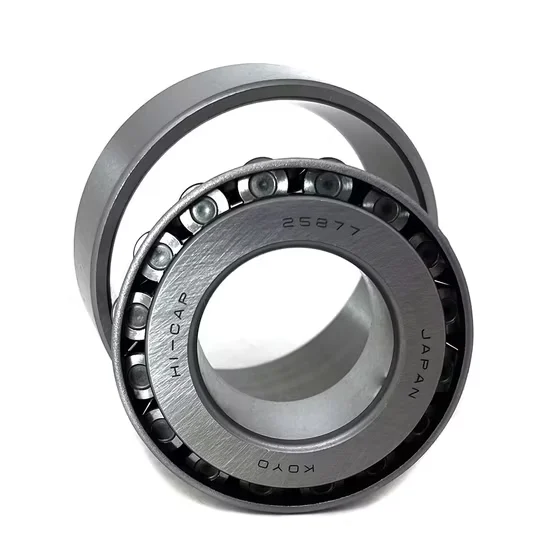
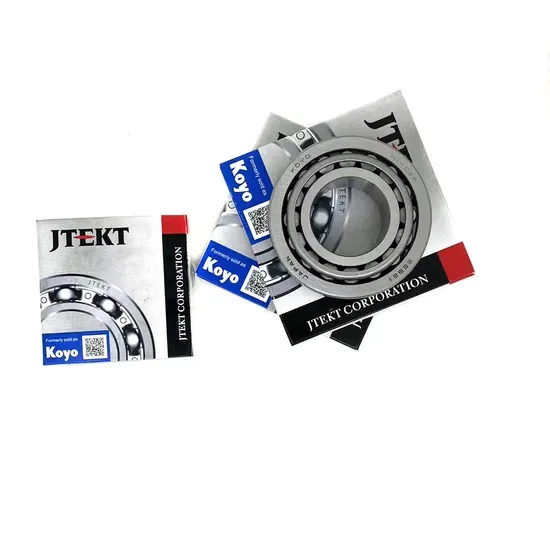
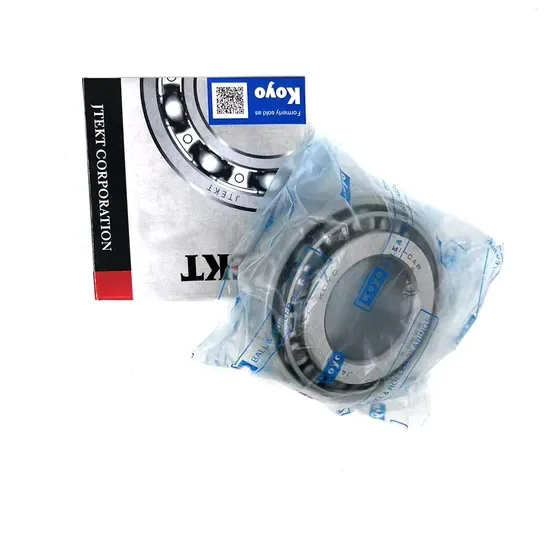
Buying the cheapest genuine bearing is often the most expensive mistake an MRO manager can make.
Equipping a maintenance storeroom with Koyo Bearings for Maintenance Storerooms requires matching exact operating conditions rather than merely copying part numbers from old manuals. The core strategy involves verifying load ratings, temperature limits, and clearance classes against current工况 to prevent premature failure, while sourcing from a supplier who offers traceability and flexible consolidation for mixed-SKU orders.
I still remember the silence in the office after the phone call from Jebel Ali Port. A full container of spherical roller bearings had arrived at a Middle East steel plant, only to seize up within weeks of installation. The issue was not counterfeit goods; the boxes were authentic, the seals were intact, and the paperwork was perfect. The problem was that the procurement team had ordered standard clearance bearings for a kiln application that demanded high-temperature stability and C4 clearance. The resulting demurrage fees and production downtime cost several times the value of the cargo. That incident shifted my focus from simply moving boxes to understanding the engineering behind every SKU. Now, when I review requests for Koyo Bearings for Maintenance Storerooms, I look at the environment before I look at the part number.
This approach transforms inventory management from a clerical task into a reliability strategy. By prioritizing technical fit over simple availability, facilities can avoid the hidden costs of mismatched components.
Why Do KOYO Bearings Fail in MRO Storerooms?
Premature bearing failure in maintenance environments is rarely due to manufacturing defects; it is almost always a result of specification mismatch.
Many storerooms operate on a “replace like-for-like” basis, assuming that if a bearing fits the shaft, it will perform the job. This assumption ignores the dynamic changes in equipment operation over time. A motor that has been rewound may run hotter. A crusher that processes harder ore may experience higher shock loads. If the replacement bearing does not account for these shifts, even a premium product will fail rapidly.
Consider the case of a cement plant in Southeast Asia that faced repeated failures in their conveyor idlers. The maintenance team kept ordering the same deep groove ball bearings listed in the original equipment manual. However, the plant had increased its throughput significantly, raising the operational temperature and radial load. The standard bearings were overheating, causing the grease to break down and the cages to deform. By switching to Koyo Bearings for Maintenance Storerooms with higher thermal stability and appropriate cage materials, the facility extended the service life meaningfully. The key was not just buying a bearing, but buying the right bearing for the current operating reality.
The lesson here is clear: a bearing is a system component, not an isolated part. Its performance depends on the interplay between load, speed, temperature, and lubrication. Ignoring any of these factors turns a genuine product into scrap metal.
How to Select the Right KOYO Bearing for Harsh Conditions?
Selection must be driven by a spec comparison matrix that evaluates load capacity, speed limits, and environmental resistance rather than brand loyalty alone.
When stocking Koyo Bearings for Maintenance Storerooms, it is essential to move beyond basic dimensions. A comprehensive selection process involves analyzing the specific stresses the bearing will endure. For heavy industrial applications, such as mining or metallurgy, spherical roller bearings are often preferred due to their ability to accommodate misalignment and heavy radial loads. However, not all spherical roller bearings are created equal. The internal geometry, cage design, and heat treatment play crucial roles in performance.
| Selection Factor | Standard Application | Harsh Environment (High Temp/Load) | Critical Checkpoint |
|---|---|---|---|
| Clearance Class | C3 (Standard) | C4 or Higher | Verify thermal expansion allowance |
| Cage Material | Steel Pressed | Machined Brass or Polyamide | Check for heat resistance and strength |
| Sealing Type | Open or Z Shield | RS or 2RS with High-Temp Grease | Ensure compatibility with operating temperature |
| Load Rating | Basic Dynamic Load | Adjusted for Shock Loads | Calculate equivalent dynamic load based on actual conditions |
A European mining operator once consolidated their spare parts order by switching to a mixed-batch shipment of Koyo Bearings for Maintenance Storerooms. Instead of ordering single SKUs from multiple distributors, they worked with a supplier who could provide a full container of diverse types, including tapered roller bearings for wheel hubs and cylindrical roller bearings for gearboxes. This consolidation reduced shipping costs and simplified customs clearance. More importantly, the supplier provided technical datasheets that helped the site engineers verify that each bearing met the specific demands of their harsh operating environment.
Using a structured matrix ensures that every bearing in the storeroom is fit for purpose. It prevents the common error of using a standard bearing in a high-stress application, which inevitably leads to unplanned downtime.
What Are the Risks of Copying Part Numbers Blindly?
Blindly copying part numbers ignores critical updates in sealing technology and clearance specifications, leading to catastrophic breakdowns.
Equipment manufacturers often update bearing specifications without changing the external dimensions. A bearing that looked identical five years ago may now feature improved sealing or a different internal clearance class. Ordering based solely on an old part number can result in receiving a component that is technically compatible but functionally inadequate.
For instance, a pump manufacturer in Latin America experienced frequent seal failures because their maintenance team continued to order open bearings for a wet environment. The original design had used open bearings with external labyrinth seals, but the equipment had been modified to use integrated sealed bearings. The mismatch allowed contaminants to enter the bearing raceway, causing rapid wear. By consulting with a knowledgeable supplier of Koyo Bearings for Maintenance Storerooms, the team identified the correct sealed variant, which resolved the issue permanently.
Another risk is ignoring the clearance class. In high-temperature applications, such as kilns or dryers, standard clearance bearings can lock up as the inner ring expands more than the outer ring. This phenomenon, known as thermal seizure, can destroy the shaft and housing. Specifying the correct clearance class, such as C3 or C4, is essential for preventing this type of failure.
The solution is to treat every part number as a starting point for investigation, not the final answer. Verifying the current technical requirements against the bearing specifications ensures that the replacement part will perform as expected.
How to Source Genuine KOYO Bearings Efficiently?
Efficient sourcing relies on verifying traceability documentation and leveraging mixed-batch consolidation to optimize inventory costs.
The market for industrial bearings is flooded with counterfeits that look convincing but lack the metallurgical quality of genuine products. Using a fake bearing in a critical application can lead to safety hazards and significant financial loss. Therefore, sourcing Koyo Bearings for Maintenance Storerooms requires a supplier who can provide complete traceability documentation. This includes certificates of origin, material test reports, and batch numbers that can be verified with the manufacturer.
A reliable supplier also offers flexibility in order quantities. MRO storerooms often need a mix of high-volume standard items and low-volume special sizes. Ordering these separately from different sources increases administrative burden and shipping costs. By consolidating orders into a single shipment, facilities can reduce logistics expenses and simplify inventory management. For example, a regional distributor in Africa streamlined their supply chain by partnering with a supplier who offered full container consolidation for mixed-brand and mixed-size orders. This approach allowed them to maintain a broad inventory of Koyo Bearings for Maintenance Storerooms without tying up excessive capital in slow-moving stock.
Additionally, technical support is a valuable resource during the sourcing process. A supplier who understands the application can help identify equivalent models from other brands if the primary choice is unavailable or too expensive. This cross-brand consultation can offer better cost-efficiency without compromising performance.
Sourcing is not just about buying parts; it is about building a resilient supply chain that supports operational continuity. By focusing on traceability, consolidation, and technical expertise, MRO managers can ensure their storerooms are stocked with reliable, high-quality components.
Conclusion
Stocking the right bearing is an engineering decision, not just a purchasing task.
Success in MRO management comes from matching specifications to real-world conditions and ensuring the authenticity of every component. By adopting a rigorous selection process and partnering with a transparent supplier, facilities can minimize downtime and maximize the value of their inventory.