Lower price often means hidden precision loss, not just material cost savings.
Sourcing genuine KOYO bearings for robots requires strict traceability and precise specification matching to prevent catastrophic precision loss in automated lines. Authenticity verification through laser marking checks and traceability certificates is non-negotiable for maintaining robotic joint integrity.
I still remember the silence on the assembly line in Qingdao. It was not the peaceful quiet of a well-oiled machine, but the heavy, expensive silence of a halted production schedule. A batch of robot joint bearings had failed within weeks, causing micro-vibrations that degraded positioning accuracy until the entire arm became unusable. The parts looked identical to the genuine articles, down to the packaging font. But under load, the internal geometry collapsed. That failure did not just cost money; it cost credibility with a major client. Since then, I have shifted my focus from simple procurement to rigorous verification. I now help global buyers navigate the complex landscape of industrial components, ensuring that every bearing sourced meets the exacting standards required for high-precision automation.
Understanding where to find reliable sources is critical. Many distributors claim authenticity, but few provide the documentation necessary to prove it. This guide breaks down how to identify true quality, select the right bearing types for specific robotic axes, and verify shipments upon delivery.
Why Do Robotic Joints Fail Prematurely?
Counterfeits cause micro-vibrations leading to rapid precision degradation.
Robotic joints operate under dynamic loads that demand consistent internal clearance and surface finish. When a bearing fails to meet these specifications, the result is not immediate catastrophic breakage, but a gradual, insidious loss of repeatability. In high-speed pick-and-place applications or welding arms, even micron-level deviations accumulate over thousands of cycles.
The primary culprit is often inconsistent heat treatment and material purity in counterfeit units. Genuine manufacturers use controlled processes to ensure steel homogeneity, which directly impacts fatigue life. Counterfeit producers may skip these steps to reduce costs, resulting in bearings that appear functional during initial testing but fail under sustained operational stress.
Consider a European automation integrator who sourced mixed-brand robot bearings for a distributor project. They opted for a lower-cost supplier without verifying traceability. Within months, the client reported increased noise and vibration in the third axis of their robotic arms. Upon disassembly, the bearings showed premature spalling and discoloration indicative of excessive heat generation due to improper internal clearance. The downtime required to replace these units across the entire fleet far exceeded the initial savings.
| Failure Indicator | Genuine KOYO Performance | Counterfeit Risk Profile |
|---|---|---|
| Surface Finish | Micron-level precision, uniform grind | Visible tool marks, inconsistent polish |
| Internal Clearance | Strictly controlled per ISO standards | Uncontrolled, often too loose or tight |
| Material Hardness | Consistent HRC range via certified heat treat | Variable hardness, prone to deformation |
| Noise Level | Low, consistent hum under load | Irregular grinding or clicking sounds |
The key takeaway is that precision is not just a feature; it is a baseline requirement. Sourcing Koyo Bearings for Robots Wholesale Supplier channels that prioritize documentation over lowest price protects your operation from these hidden risks.
Which KOYO Bearing Types Suit Specific Robot Joints?
Angular contact vs. cross roller bearings serve different mechanical roles.
Not all bearings are created equal, and using the wrong type for a specific robotic axis can lead to premature failure. Robotic arms typically utilize two main types of bearings for their joints: angular contact ball bearings and crossed roller bearings. Each has distinct advantages depending on the load profile and motion requirements.
Angular contact ball bearings are designed to handle combined radial and axial loads. They are commonly used in the smaller joints of robotic arms where space is limited and high-speed rotation is required. Their design allows for precise preload adjustment, which minimizes play and enhances stiffness.
Crossed roller bearings, on the other hand, are ideal for larger joints that require high rigidity and compact design. The rollers are arranged at 90-degree angles to each other, allowing a single bearing to support radial, axial, and moment loads simultaneously. This makes them perfect for the base and shoulder joints of heavy-load industrial robots.
A Middle East steel mill operator once faced issues with their palletizing robots. The original equipment manufacturer had specified standard deep groove ball bearings for the wrist joints, which were insufficient for the off-center loads generated during heavy lifting. By switching to high-precision angular contact bearings with appropriate preload, they achieved a noticeable extension in service life and improved positioning accuracy.
| Bearing Type | Primary Load Capacity | Typical Robot Joint Application | Key Advantage |
|---|---|---|---|
| Angular Contact Ball | Combined Radial/Axial | Wrist, Elbow, Small Joints | High speed, adjustable preload |
| Crossed Roller | Radial, Axial, Moment | Base, Shoulder, Large Joints | High rigidity, compact design |
| Deep Groove Ball | Primarily Radial | Light-duty auxiliary axes | Cost-effective, widely available |
Selecting the correct type requires a thorough understanding of the load dynamics. When sourcing Koyo Bearings for Robots Wholesale Supplier options, ensure that the supplier can provide technical datasheets confirming the load ratings and precision class suitable for your specific application.
How to Verify Genuine KOYO Bearings Upon Delivery?
Packaging, laser marking, and traceability certificate checks are essential.
Receiving a shipment is not the end of the procurement process; it is the beginning of the verification phase. Counterfeiters have become sophisticated, replicating packaging and even some external markings. However, there are specific indicators that can help distinguish genuine products from fakes.
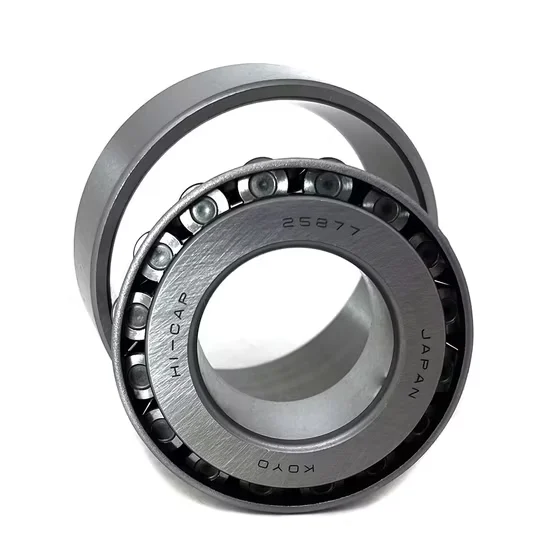
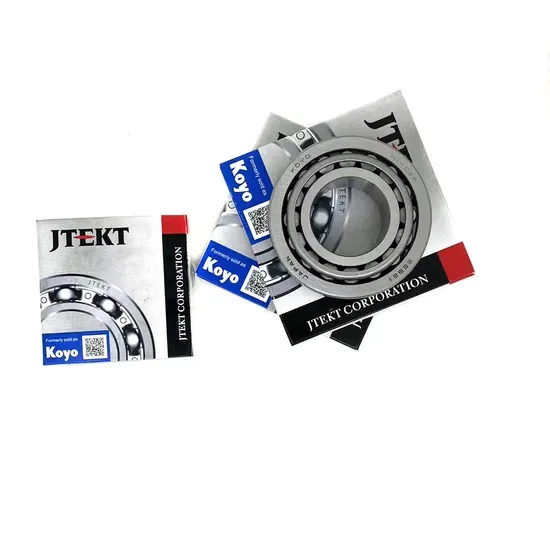
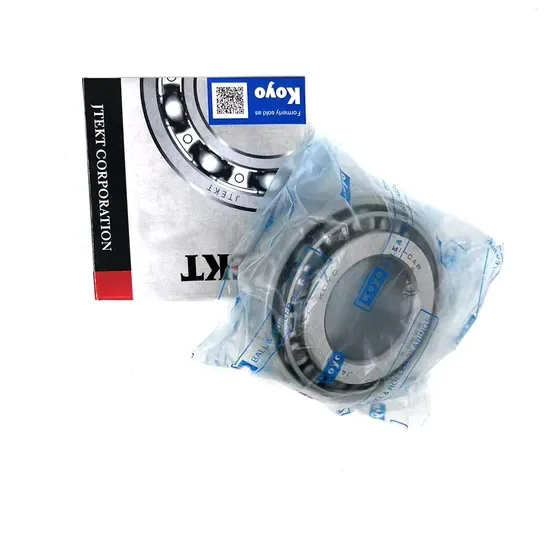
First, inspect the packaging. Genuine KOYO bearings come in high-quality boxes with clear, sharp printing. The part number, batch code, and origin should be legible and consistent. Look for security features such as holographic labels or specific QR codes that link to verification databases.
Second, examine the bearing itself. Laser markings on the outer ring should be crisp, evenly spaced, and resistant to rubbing. Counterfeit markings are often etched poorly or fade easily. The surface finish of the bearing should be smooth and uniform, with no visible tool marks or discoloration.
Third, request and verify traceability documents. A reputable supplier will provide a certificate of conformity or a test report that links the specific batch number to the manufacturing records. This document should include details such as the production date, factory location, and quality control inspection results.
A US buyer once received a container of mixed-brand bearings that included several boxes of suspected fake KOYO units. By cross-referencing the batch numbers on the packaging with the provided traceability certificates, they identified discrepancies in the production dates and factory codes. This allowed them to reject the non-compliant stock before it entered their inventory, saving them from potential liability issues.
Verification is a critical step in maintaining supply chain integrity. When working with a Koyo Bearings for Robots Wholesale Supplier, insist on full transparency and documentation for every order.
Wholesale Sourcing vs. Direct Brand Channels: Which is Better?
Comparing MOQ flexibility, lead times, and mixed-batch costs.
Choosing between wholesale distributors and direct brand channels depends on your specific operational needs. Direct channels offer brand assurance but often come with high minimum order quantities (MOQs) and longer lead times. Wholesale suppliers, particularly those with global reach, provide flexibility and speed that can be crucial for maintenance and urgent projects.
Wholesale suppliers often stock a wide variety of brands and sizes, allowing for mixed-batch orders. This is particularly beneficial for distributors who need to consolidate shipments for multiple clients or for MRO operations that require diverse spare parts. The ability to source small quantities of high-precision bearings without meeting large MOQs can significantly reduce inventory holding costs.
However, the risk of counterfeits is higher in the wholesale market if proper due diligence is not performed. It is essential to work with suppliers who have established reputations and provide verifiable traceability. Look for suppliers who offer technical support and can assist with model selection and equivalent cross-referencing.
Consider an automotive aftermarket supplier in Latin America who needed to source replacement bearings for a range of commercial vehicles. Direct brand channels could not meet their urgent timeline for mixed SKUs. By partnering with a reliable wholesale supplier who maintained a massive spot inventory, they were able to consolidate their order and receive the parts within days, minimizing vehicle downtime for their clients.
| Factor | Direct Brand Channel | Reliable Wholesale Supplier |
|---|---|---|
| MOQ Flexibility | Low (High volumes required) | High (Single unit to container) |
| Lead Time | Often longer, fixed schedules | Faster, spot inventory available |
| Product Variety | Limited to own brand | Multi-brand, mixed-batch options |
| Technical Support | General, product-specific | Application-focused, cross-brand |
For many businesses, the optimal strategy involves a hybrid approach. Use direct channels for large, predictable volume contracts and rely on trusted wholesale partners for urgent needs, mixed batches, and specialized precision components. When evaluating a Koyo Bearings for Robots Wholesale Supplier, prioritize those who demonstrate both logistical efficiency and rigorous quality control.
Conclusion
Authenticity and precision are non-negotiable in robotic automation.
Sourcing genuine components requires more than just finding the lowest price; it demands a partner who understands the technical nuances and risks involved. By focusing on traceability, correct specification matching, and verified supply chains, you can protect your operations from the costly consequences of counterfeit parts. Whether you are upgrading heavy-load joints or maintaining high-speed assembly lines, the right bearing choice ensures longevity and reliability. Trust in verified sources for your Koyo Bearings for Robots Wholesale Supplier needs to keep your automation running smoothly.