Most bearing failures in steel mills are not caused by poor lubrication, but by counterfeit materials failing under thermal stress.
Sourcing Koyo bearings for steel plants requires strict authenticity verification and precise specification matching for extreme loads and high temperatures to prevent catastrophic downtime. The core challenge is not just finding a part number, but ensuring the internal clearance and cage material can withstand the specific metallurgical environment of continuous casters and reheating furnaces. Without full traceability documentation and technical validation of these parameters, even genuine-looking parts will fail prematurely, leading to unplanned production stops that cost far more than the bearing itself.
I still remember the smell of burnt oil and the silence that fell over the production line in Rizhao. A procurement manager from a local steel plant called me in a panic. They had installed what they believed were high-quality spherical roller bearings on their continuous caster roll table. Within weeks, the inner rings showed severe spalling. When we dismantled the unit, the cause was obvious to anyone who has spent time in a workshop: the cage material was incorrect. It was a refurbished or counterfeit component that could not handle the thermal expansion and heavy load. The factory manager was furious, not just because of the replacement cost, but because the unplanned downtime had disrupted their entire production schedule. That incident reinforced a critical lesson: selecting Koyo bearings for steel plants is not about the lowest price per unit; it is about verifying the metallurgical integrity of every component.
This experience drives my approach to sourcing. It is not enough to simply order a part number. You must understand the operating conditions, verify the supply chain, and ensure that the specifications match the harsh reality of a steel plant. This guide breaks down how to select, verify, and source these critical components effectively.
Why Do KOYO Bearings Fail Prematurely in Steel Mills?
Counterfeit parts and incorrect clearance selection are responsible for the majority of early spalling and seizing incidents in heavy industry.
In the metallurgy sector, bearings operate under some of the most demanding conditions imaginable. High temperatures, heavy shock loads, and contamination from dust and water are standard. When a bearing fails quickly, the immediate assumption is often that the lubrication was inadequate or the installation was poor. While these are factors, the root cause is frequently more insidious: the use of non-genuine components or specifications that do not account for thermal expansion.
Consider the case of a reheating furnace fan. A maintenance team replaced a standard bearing with a visually identical unit. However, they did not adjust the internal clearance. As the temperature rose, the inner ring expanded more than the outer ring, reducing the clearance to zero. The bearing seized, causing the fan to stop and the furnace temperature to spike. This was not a manufacturing defect in the genuine sense, but a selection error. The correct approach involves calculating the thermal expansion and selecting a bearing with a higher clearance class, such as C3 or C4, depending on the operating temperature range.
Another common issue is the prevalence of counterfeit cages. In high-speed or high-temperature applications, the cage material is critical. Genuine Koyo bearings for steel plants use specific steel or brass alloys designed to maintain integrity under stress. Counterfeit versions often use inferior materials that deform or crack, leading to immediate failure. I have seen cases where the lifespan of a counterfeit bearing was less than ten percent of a genuine one. The visual difference is often negligible until it is too late.
To avoid these pitfalls, it is essential to look beyond the external markings. The failure mode analysis should include an examination of the cage material, the surface finish of the raceways, and the consistency of the rolling elements. If the spalling pattern is irregular or if there is evidence of material transfer from the cage to the rollers, it is a strong indicator of a counterfeit or improperly specified component. Understanding these failure mechanisms is the first step in selecting the right Koyo bearings for steel plants for your specific application.
How to Select the Right KOYO Bearing for Specific Mill Zones?
Continuous casters require high-temperature spherical rollers, while gearboxes demand high-precision cylindrical rollers.
Not all areas of a steel plant impose the same demands on bearings. A one-size-fits-all approach leads to inefficiency and premature failure. Selecting the correct type of Koyo bearings for steel plants requires a zone-by-zone analysis of the operational conditions.
| Mill Zone | Primary Load Type | Temperature Range | Recommended Bearing Type | Key Specification Focus |
|---|---|---|---|---|
| Continuous Caster Roll Table | Heavy Radial & Shock | High | Spherical Roller Bearing | Heat-resistant cage, C3/C4 clearance |
| Reheating Furnace Fan | Moderate Radial | Very High | Spherical Roller Bearing | High-temp stabilization, special lubricant |
| Main Drive Gearbox | High Radial & Axial | Moderate | Cylindrical Roller Bearing | High precision, low noise, rigid housing |
| Conveyor Systems | Moderate Radial | Ambient to Warm | Deep Groove Ball Bearing | Sealing effectiveness, contamination resistance |
| Slab Handler | Extreme Shock | Ambient | Spherical Roller Bearing | Robust cage design, high load capacity |
For continuous casters, the primary challenge is the combination of heavy radial loads and high temperatures. Spherical roller bearings are the standard choice here because they can accommodate misalignment and thermal expansion. However, the key is not just the type, but the specific features. The cage must be made of a material that can withstand the heat without losing strength. Additionally, the internal clearance must be selected to allow for expansion without causing preload.
In contrast, main drive gearboxes operate at lower temperatures but require high precision and rigidity. Cylindrical roller bearings are ideal for these applications because they can handle high radial loads with minimal friction. The focus here is on the precision grade and the quality of the raceway finish. Any deviation can lead to increased noise and vibration, which can damage the gearbox over time.
When sourcing Koyo bearings for steel plants, it is crucial to provide the supplier with detailed information about the specific zone and operating conditions. This allows for a more accurate recommendation and ensures that the bearing will perform as expected. A generic request for a “spherical roller bearing” may result in a unit that is technically correct in size but unsuitable for the environment.
By matching the bearing type to the specific demands of each zone, you can maximize reliability and minimize maintenance costs. This targeted approach is far more effective than simply replacing like-for-like without considering the underlying operational stresses.
How to Verify Genuine KOYO Bearings and Avoid Fakes?
Always demand original mill certificates, traceability codes, and physical cage material inspection.
The market for industrial bearings is flooded with counterfeits. These fake products often look identical to the genuine article, making visual inspection alone insufficient. To ensure you are receiving authentic Koyo bearings for steel plants, you must implement a rigorous verification process.
The first step is to request full traceability documentation. This includes the original mill certificate, which details the batch number, production date, and quality control checks performed by the manufacturer. A reputable supplier will be able to provide this documentation for every batch. If a supplier cannot or will not provide these documents, it is a major red flag.
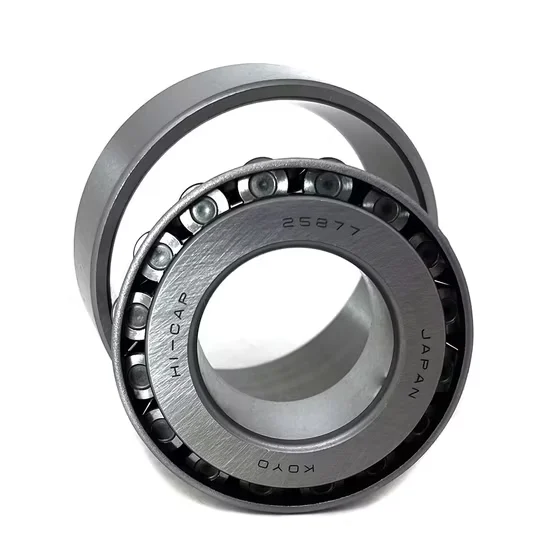
Next, examine the physical characteristics of the bearing. Genuine KOYO bearings have specific markings that are laser-etched or stamped with high precision. The font, spacing, and depth of the markings should be consistent. Counterfeit bearings often have markings that are blurred, uneven, or incorrectly spaced. Additionally, the surface finish of the raceways and rolling elements should be smooth and free of defects. Any roughness or discoloration could indicate poor manufacturing quality.
The cage material is another critical area for inspection. As mentioned earlier, the cage must be made of a specific alloy to withstand the operating conditions. You can verify this by requesting a material certification or by performing a simple hardness test if you have the equipment. The weight and feel of the cage can also provide clues; genuine cages are typically heavier and more robust than their counterfeit counterparts.
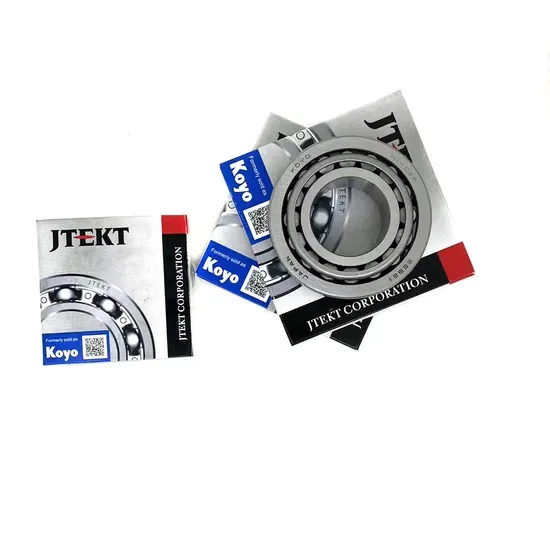
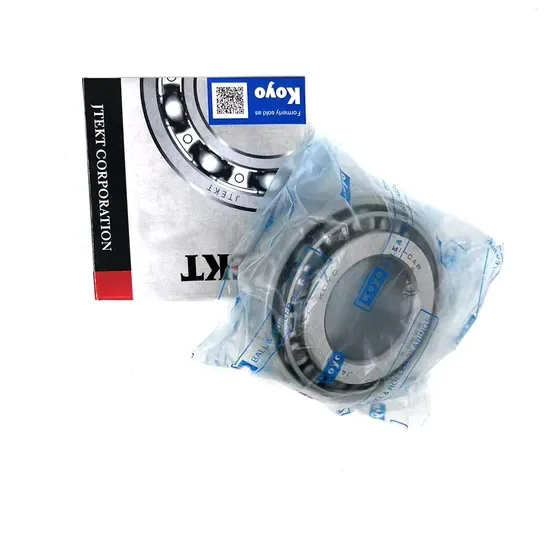
It is also important to consider the packaging. Genuine KOYO bearings come in high-quality packaging with specific security features, such as holograms or unique serial numbers. The packaging should be intact and free of signs of tampering. If the packaging looks cheap or damaged, it is worth investigating further.
By combining document verification with physical inspection, you can significantly reduce the risk of purchasing counterfeit Koyo bearings for steel plants. This due diligence is essential for protecting your operation from the costly consequences of bearing failure.
What Are the Sourcing Advantages of a Global Full-Range Supplier?
One-stop mixed-brand consolidation and flexible MOQ ensure faster emergency replacements than single-brand channels.
Sourcing bearings for a steel plant is not just about finding a single part. It is about managing a complex supply chain that includes multiple brands, sizes, and types. Working with a global full-range supplier offers several advantages over buying directly from individual brand channels or local distributors.
One of the key benefits is mixed-brand consolidation. Steel plants often use bearings from various manufacturers, such as SKF, FAG, NSK, and KOYO. A full-range supplier can consolidate these different brands into a single shipment, simplifying logistics and reducing shipping costs. This is particularly useful for MRO (Maintenance, Repair, and Operations) orders, where you may need a variety of parts for different machines.
Another advantage is flexible MOQ (Minimum Order Quantity). Large official channels often require high minimum orders, which can tie up capital and storage space. A global supplier can offer smaller quantities, allowing you to maintain a lean inventory while still having access to the parts you need. This flexibility is crucial for emergency replacements, where speed is more important than volume.
Additionally, a full-range supplier can provide technical support across multiple brands. Instead of contacting different manufacturers for each type of bearing, you can rely on a single point of contact for technical advice and selection support. This can save time and ensure that you are making the best choices for your application. For example, if a specific KOYO model is unavailable, a knowledgeable supplier can recommend a suitable equivalent from another brand, ensuring that your production does not stop.
When sourcing Koyo bearings for steel plants, partnering with a supplier who understands the complexities of the metallurgy industry can make a significant difference. They can help you navigate the challenges of authenticity, specification matching, and logistics, ensuring that you receive the right parts at the right time. This holistic approach to sourcing is essential for maintaining the reliability and efficiency of your steel plant operations.
Conclusion
Authenticity and precise specification matching are non-negotiable for reliable steel plant operations.
Sourcing Koyo bearings for steel plants is a critical task that requires careful attention to detail. By understanding the specific demands of different mill zones, verifying the authenticity of components, and leveraging the advantages of a global full-range supplier, you can minimize the risk of premature failure and unplanned downtime. The cost of a genuine bearing is far less than the cost of a production stoppage. Prioritize traceability, technical accuracy, and reliable supply chains to keep your operations running smoothly.