Low unit price is the most expensive mistake in textile manufacturing.
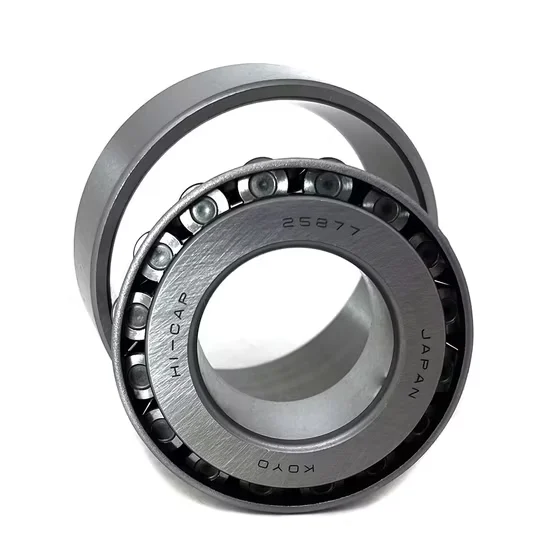
Purchasing Koyo bearings for textile machines requires strict authenticity verification and cross-brand equivalent consultation to prevent catastrophic downtime in extreme environments. The core of a successful procurement strategy lies not in finding the cheapest listing, but in validating internal clearance tolerances and ensuring traceability documentation before the container leaves the port.
Walking through the humid aisles of a spinning mill in Jeddah, the sound of a healthy production line is a consistent, low-frequency hum. When that hum turns into a rhythmic clicking or a high-pitched whine, it is usually too late. I have seen entire batches of spindle bearings fail within months because the buyer focused on the invoice total rather than the metallurgical integrity of the component. In desert climates where ambient temperatures soar and fine dust penetrates every seal, the difference between a genuine product and a counterfeit is measured in weeks of operational life. This guide breaks down how to verify authenticity on site, select appropriate cross-brand equivalents when stock is tight, and source mixed-brand packages efficiently without compromising quality.
Why Do Koyo Bearings Fail Prematurely in Textile Spindles?
The assumption that a branded bearing will automatically perform to specification is dangerous in the textile sector. High-speed spindles operate under unique stress profiles that combine high rotational speeds with significant thermal loads. When a bearing fails prematurely, it is rarely due to a manufacturing defect in a genuine unit, but rather due to environmental mismatch or counterfeit infiltration.
In one instance, a distributor in the Middle East sourced a large volume of cylindrical roller bearings at a price significantly below market average. The units looked identical to the genuine articles, with correct packaging and labeling. However, within three months, the failure rate spiked dramatically. The root cause was not just the material quality, but the grease formulation. Counterfeiters often use standard industrial grease that cannot withstand the high-temperature thresholds of modern textile machinery. As the temperature rises, the grease degrades, loses its viscosity, and allows metal-to-metal contact.
Genuine Koyo bearings for textile machines are engineered with specific heat treatments and cage designs that maintain stability under these conditions. A fake bearing might have the correct outer dimensions, but the internal geometry—specifically the raceway curvature and ball complement—is often off-tolerance. This leads to uneven load distribution, causing localized heating and rapid fatigue. For buyers, this means that the “savings” from a cheap batch are quickly erased by the cost of emergency replacements, labor for re-spinning broken yarns, and lost production time. The true cost is measured by lifespan under extreme dust and heat, not the initial purchase price.
How to Verify Genuine Koyo Bearings on Site?
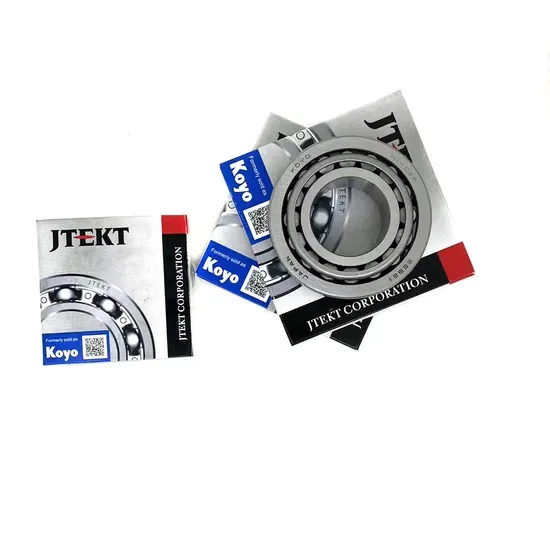
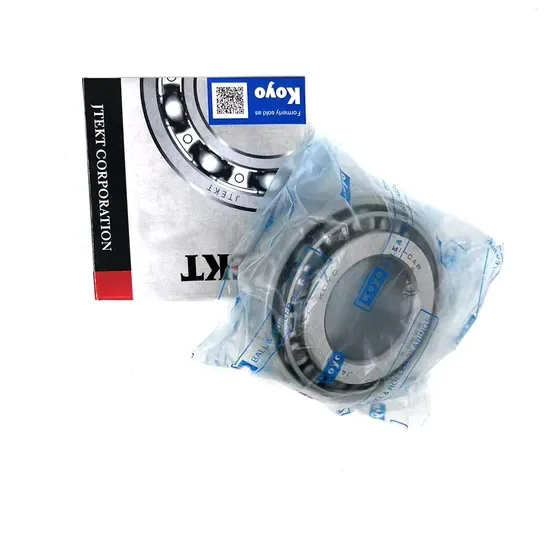
Relying on holographic labels or box quality is insufficient for verification. Sophisticated counterfeits now replicate packaging with high accuracy. The only reliable method involves physical inspection of the bearing itself, focusing on two key areas: internal clearance and cage acoustics.
When a container arrives at the port, random sampling must go beyond visual checks. Using a set of precision calipers and feeler gauges, inspectors should measure the internal radial clearance. Genuine bearings adhere to strict ISO standards for clearance classes, such as C3 or C4, which are critical for high-temperature operations. If the clearance feels loose or inconsistent across multiple samples from the same batch, it is a red flag.
Another effective field test is the acoustic check. By holding the bearing and rotating the inner ring slowly, one can listen to the sound of the cage and rolling elements. A genuine bearing produces a smooth, quiet rotation with no grinding or catching sensations. Counterfeit units often have poorly machined raceways or inferior cage materials, resulting in a rough, gritty feel or audible clicking. This simple tactile and auditory test can reject suspicious batches before they enter the warehouse.
Furthermore, traceability documentation is non-negotiable. Every genuine batch comes with a certificate of origin and material test reports that link back to the manufacturer’s production facilities. If a supplier cannot provide these documents or if the batch numbers on the certificates do not match the markings on the bearing rings, the shipment should be quarantined. This level of scrutiny ensures that only verified components reach the production floor.
What Are the Best Cross-Brand Equivalents for Koyo Textile Bearings?
Supply chain disruptions can make specific Koyo models unavailable, leading to prolonged downtime if buyers wait for restocks. In such cases, knowing the correct cross-brand equivalents is essential. However, substitution is not a simple matter of matching outer diameter and bore size. The critical factors are precision class, internal clearance, and cage material.
Many distributors hesitate to switch brands due to fear of compatibility issues. Yet, major manufacturers like SKF, NSK, and FAG produce bearings with dimensional tolerances that often exceed basic ISO requirements. For example, a discontinued Koyo model can often be replaced by an SKF or NSK equivalent if the clearance tolerance matching ratio is verified.
| Feature | Genuine Koyo Spec | Equivalent SKF/NSK Spec | Verification Method |
|---|---|---|---|
| Precision Class | P5 / P6 | P5 / P6 | Check marking on outer ring |
| Internal Clearance | C3 / C4 | C3 / C4 | Measure with feeler gauge |
| Cage Material | Steel / Polyamide | Steel / Polyamide | Visual and tactile inspection |
| Heat Treatment | Standard | Standard | Request material cert |
When selecting a substitute, always consult the technical datasheet for the specific application. A bearing that works in a low-speed conveyor may fail in a high-speed spindle if the cage design is not optimized for centrifugal forces. Our team provides cross-brand equivalent consultation to ensure that any substitution maintains the required performance levels. This service helps buyers avoid the trial-and-error approach that often leads to secondary failures.
By maintaining a flexible sourcing strategy that includes verified alternatives, operators can reduce lead times significantly. This approach is particularly valuable for MRO operators who need to keep critical machinery running without waiting for weeks for a specific brand to become available.
How to Source Mixed-Brand Textile Bearings Efficiently?
Sourcing bearings from multiple brands individually creates logistical nightmares and increases administrative overhead. Each supplier has different minimum order quantities, shipping terms, and documentation requirements. Consolidating these orders into a single shipment from a professional global full-range bearing supplier simplifies the process and reduces costs.
A one-stop sourcing solution allows buyers to mix genuine Koyo bearings with other premium brands like FAG, INA, or NTN in a single container. This consolidation is crucial for regional distributors who need to stock a wide variety of part numbers to serve diverse local clients. Instead of managing five different shipments and customs clearances, the buyer deals with one consolidated invoice and one set of traceability documents.
Flexibility in MOQ is another key advantage. While official brand channels often require large bulk orders for specific items, a consolidated supplier can accommodate smaller quantities for urgent maintenance needs alongside larger bulk orders for stock replenishment. This flexibility ensures that factories never run out of critical spares, even for low-turnover items.
Technical support is integral to this model. When sourcing mixed batches, having access to engineers who can verify specifications and recommend alternatives prevents costly errors. Whether it is selecting the right grease for a high-humidity environment or confirming the load rating for a new machine installation, expert guidance ensures that every bearing purchased is fit for purpose. This holistic approach transforms procurement from a transactional task into a strategic asset for operational reliability.
Conclusion
Authenticity and technical precision outweigh initial cost savings.
Sourcing genuine Koyo bearings for textile machines demands a rigorous approach to verification and a deep understanding of operational stresses. By focusing on physical inspection methods and leveraging cross-brand equivalents when necessary, buyers can secure their supply chains against counterfeits and disruptions. Efficient consolidation of mixed-brand orders further enhances reliability, ensuring that production lines remain operational in even the harshest conditions.