Price does not guarantee origin.
Genuine Japan-made Koyo bearings differ from other plants or counterfeits primarily in metallurgical consistency and traceability documentation, which are critical for high-speed applications. Verification requires checking inner ring laser markings, cage material integrity, and official origin certificates rather than relying on box labels or price points alone.
I still remember the heat radiating off a spindle housing in a Dongguan automation factory. The machine had stopped cold, halting an entire assembly line. The maintenance team swore they had installed genuine Japanese bearings. When I pulled the unit apart, the deep-groove ball bearing looked perfect on the outside. But the cage was brittle, snapping under slight pressure, and the raceways showed micro-spalling consistent with incorrect internal clearance. It was not a manufacturing defect from the original plant; it was a mismatched replacement from an unauthorized source, likely produced in a facility with different quality controls. That downtime cost far more than the price difference between a verified unit and a questionable substitute.
This experience is not unique. Many buyers assume that if the box says Koyo, the content is identical regardless of where it was sourced. In reality, the supply chain is fragmented. Understanding the distinction between genuine Japan-made products and those from other plants or fake sources is essential for anyone acting as a genuine Koyo bearings supplier to industrial clients.
Why Does the Origin of Koyo Bearings Matter for High-Speed Applications?
Metallurgical tolerances define performance limits.
The core argument for sourcing directly from Japan-made production lines lies in the strict control of steel purity and heat treatment processes. While Koyo operates multiple facilities globally, the Japanese plants maintain specific protocols for high-precision grades that are critical for high-speed stability.
In high-speed applications, such as CNC spindles or turbochargers, even minor variations in surface finish or internal clearance can lead to rapid thermal expansion and failure. Genuine Japan-made units undergo rigorous inspection for dimensional accuracy and noise levels. Bearings from other plants may meet basic ISO standards but often lack the refined super-finishing processes required for extreme RPMs.
Consider a case involving a Middle East wholesaler who supplied bearings to a local textile mill. The mill switched to a cheaper alternative labeled as Koyo. Within weeks, the main drive bearings began to overheat. Upon analysis, the steel composition showed higher inclusion levels, leading to premature fatigue. The original Japan-made specifications called for controlled nitrogen infusion and specific vacuum degassing, which reduced the risk of such inclusions.
When you act as a genuine Koyo bearings supplier, you are not just selling a part number; you are selling the assurance that the metallurgy matches the application’s stress profile. Buyers who ignore origin often face higher total costs due to unplanned downtime and repeated replacements.
Japan-Made Koyo vs. Other Plants: A Performance & Lifespan Matrix
Consistency is the key differentiator.
To understand the practical differences, we must look beyond marketing claims and examine physical attributes. The following matrix highlights the typical distinctions between verified Japan-made Koyo bearings and those from other plants or unauthorized sources. Note that “Other Plants” refers to legitimate non-Japan facilities, while “Counterfeit/Unverified” refers to fake or mislabeled products.
| Feature | Genuine Japan-Made Koyo | Other Plants (Legitimate) | Counterfeit/Unverified |
|---|---|---|---|
| Steel Purity | Controlled low-inclusion density | Standard industrial grade | Variable, often high inclusion |
| Cage Material | High-strength polyamide or machined brass | Standard pressed steel or plastic | Brittle plastic or thin steel |
| Surface Finish | Micron-level super-finishing | Standard grinding | Rough grinding marks visible |
| Clearance Consistency | Tight tolerance within C3/C4 classes | Wider tolerance range | Random, often incorrect |
| Traceability | Full batch-level documentation | Limited or plant-specific docs | None or forged papers |
| High-Speed Stability | Robust, low heat generation | Adequate for moderate speeds | Prone to thermal runaway |
A European wind farm operator once reported inconsistent vibration readings across a batch of generator bearings. Half the batch came from a verified genuine Koyo bearings supplier with full traceability, while the other half was sourced from a secondary market trader. The unverified units showed significant variance in radial play, causing uneven load distribution. The verified units maintained consistent performance, extending the maintenance interval substantially.
This matrix illustrates why price is a poor indicator of quality. A lower price often reflects reduced quality control or inferior materials, not efficiency. For MRO buyers and distributors, ensuring batch consistency is vital. Mixing sources can lead to unpredictable machinery behavior, making it difficult to diagnose issues when they arise.
How to Verify Authenticity: Laser Marks, Steel Stamps, and Packaging
Physical inspection reveals the truth.
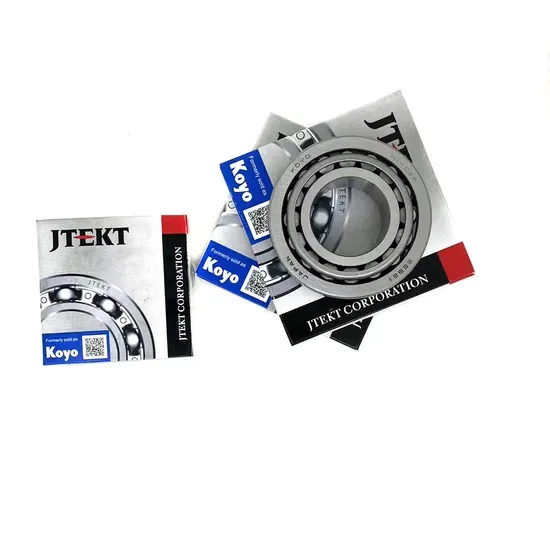
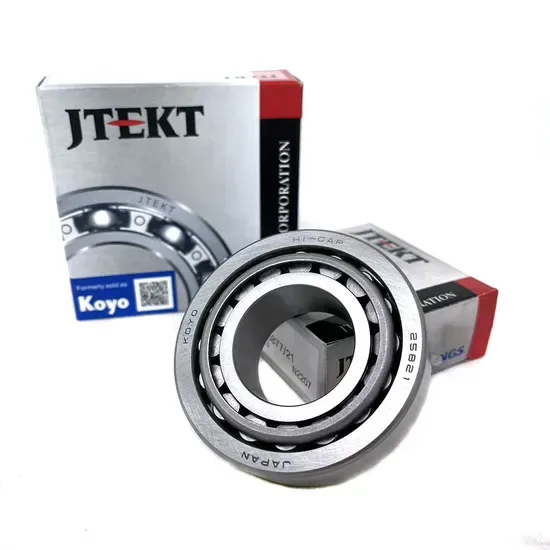
Most buyers check the box label. Experts check the bearing itself. Counterfeiters have become adept at replicating packaging, but they often struggle with the precision required for laser marking and steel stamping on the bearing rings.
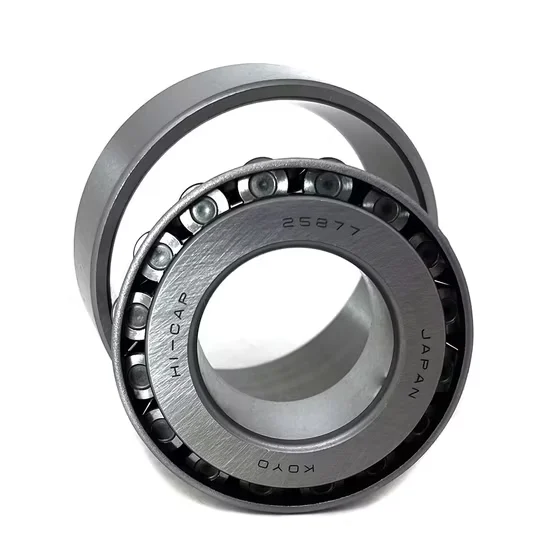
- Laser Marking: Genuine Japan-made Koyo bearings feature crisp, deeply etched laser markings on the outer or inner ring. These marks include the brand logo, part number, and origin code. Fake units often have shallow, fuzzy, or easily rubbed-off prints.
- Steel Stamps: Look for the country of origin stamped into the metal. Japan-made units will clearly indicate “JAPAN.” Be wary of units with no origin stamp or ambiguous markings.
- Cage Inspection: The cage material should feel robust. In genuine units, polymer cages are smooth and uniform, while steel cages are precisely formed. Brittle or poorly finished cages are a red flag.
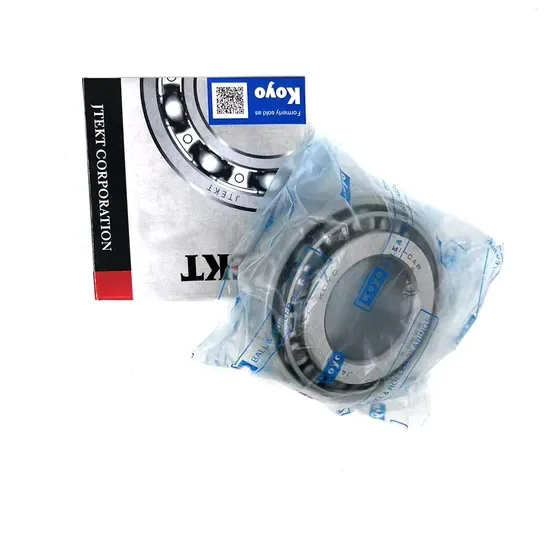
- Packaging Quality: Original packaging uses high-quality cardboard with precise printing. However, do not rely on this alone, as boxes are easily faked.
A buyer in Southeast Asia recently rejected a shipment after noticing that the laser markings on the inner ring could be scratched off with a fingernail. This simple test saved them from installing faulty bearings in a critical pump system. As a genuine Koyo bearings supplier, we emphasize these physical checks because they are immediate and require no special equipment.
The Ultimate Shield: Demanding Complete Traceability Documents
Paperwork protects your investment.
Physical checks are necessary but not sufficient. The ultimate verification lies in the documentation. For bulk buyers and distributors, demanding complete traceability documents is non-negotiable. This includes customs declarations, certificates of origin, and batch-specific quality reports.
In many regions, especially the Middle East and Africa, local authorities require proof of origin to clear goods and avoid brand infringement penalties. A wholesaler in Dubai once faced a customs hold because their supplier could not provide the original certificate of origin for a container of bearings. The delay cost them significant storage fees and damaged their reputation with end-users.
Traceability documents link the physical product to its manufacturing batch. They allow you to verify that the bearings were indeed produced in the claimed facility. Without these documents, you are buying blind. Even if the bearing looks real, without paper trail, you cannot prove it in case of a warranty claim or quality dispute.
When sourcing from a genuine Koyo bearings supplier, ensure they can provide these documents promptly. Hesitation or inability to produce them is a major warning sign. Real suppliers maintain rigorous records and can trace every unit back to the factory floor.
Conclusion
Verification prevents failure.
Distinguishing genuine Japan-made Koyo bearings from other plants or counterfeits requires a combination of physical inspection and documentary evidence. Price alone is a misleading metric. By focusing on laser markings, cage quality, and complete traceability documents, buyers can ensure they receive products that meet the high standards required for critical applications. Partnering with a reliable genuine Koyo bearings supplier who prioritizes transparency and authenticity is the most effective strategy to avoid costly downtime and maintain operational efficiency.