Identical part numbers do not guarantee identical performance.
The Koyo 1206 bearing is defined by its standard dimensions of 30mm bore, 62mm outer diameter, and 16mm width, but its operational success depends entirely on matching internal clearance groups like C3 to specific thermal conditions and verifying cage material integrity for heavy-load applications. Selecting a reliable Koyo 1206 deep groove ball bearing wholesale supplier for sale requires more than checking a datasheet; it demands an understanding of how ISO tolerance classes and radial internal clearance interact with real-world motor temperatures and conveyor stresses to prevent premature fatigue failure.
I still remember the metallic crunch that echoed through a repair workshop in Dongguan years ago. A client had sourced a batch of bearings based solely on the model number, ignoring the ambient heat of their transmission system. Within weeks, the keepers shattered, and the shafts seized. That incident was not a manufacturing defect in the traditional sense but a selection error. The bearings were genuine, yet they were standard clearance units installed in a high-temperature environment where thermal expansion eliminated the necessary running gap. This experience shaped my approach to sourcing: I no longer look at the bearing as a static component but as a dynamic interface between steel and stress.
Understanding these nuances is critical for distributors and MRO managers who need to ensure that every unit they procure can withstand the specific rigors of their local industrial landscape.
What Are the Core Dimensions of Koyo 1206?
Basic geometry forms the foundation, but tolerance dictates fit.
The Koyo 1206 is a self-aligning double-row ball bearing, though often confused with single-row deep groove types in casual conversation, its structural design allows for minor misalignment compensation. The fundamental specifications are fixed: a 30mm bore, 62mm outer diameter, and 16mm width. These dimensions adhere to ISO 492 standards for boundary dimensions of rolling bearings. However, merely knowing these measurements is insufficient for precise engineering applications. The critical differentiator lies in the dimensional tolerances, typically classified under normal class P0 or higher precision classes like P6 for specialized machinery.
When evaluating a Koyo 1206 deep groove ball bearing wholesale supplier for sale, buyers must verify that the supplied units meet these strict geometric tolerances. A deviation in the bore diameter, even within microns, can lead to improper fits on the shaft, causing fretting corrosion or slippage. In my early days handling returns, I observed that many “failed” bearings were actually victims of incorrect housing fits rather than material fatigue. The inner ring must maintain a tight interference fit with the shaft, while the outer ring often requires a slight clearance in the housing to allow for thermal growth.
| Parameter | Standard Value | Tolerance Class (Normal) | Application Impact |
|---|---|---|---|
| Bore Diameter | 30 mm | P0 (Normal) | Determines shaft fit and rotation stability |
| Outer Diameter | 62 mm | P0 (Normal) | Affects housing clearance and heat dissipation |
| Width | 16 mm | P0 (Normal) | Influences axial space and load distribution |
| Chamfer Dimension | Standard | ISO Compliant | Prevents edge stress during installation |
A European machine tool manufacturer once faced recurring vibration issues in their spindle assemblies. The root cause was traced to bearings with borderline tolerance values that, when combined with housing imperfections, created excessive play. By switching to a supplier who provided certified tolerance reports, they eliminated the vibration. This highlights why documentation is as vital as the physical product.
For wholesalers, ensuring that each batch comes with verifiable dimensional certification is a key value proposition to end-users who cannot afford trial-and-error installation.
How Do Load Ratings and Speed Limits Dictate Application?
Dynamic load capacity guides the choice between motor and conveyor usage.
The Koyo 1206 bearing features a dynamic load rating that determines its ability to withstand rotational forces without fatigue failure. While static load ratings matter for stationary components, the dynamic rating is the primary metric for rotating machinery such as electric motors and conveyor systems. The basic dynamic load rating is calculated based on a million revolutions of life under standard conditions. However, real-world applications rarely match these idealized test conditions.
In a heavy-duty conveyor system I inspected, the original equipment manufacturer had specified standard bearings. Yet, the application involved shock loads from irregular material feed. The standard dynamic rating was insufficient to handle these peak stresses, leading to early spalling on the raceways. Upgrading to a variant with a reinforced cage structure significantly reduced jamming incidents. The cage material plays a crucial role here; steel cages offer robustness for heavy loads, while polymer cages may provide quieter operation but less resistance to impact.
| Application Scenario | Load Type | Recommended Cage Material | Expected Outcome |
|---|---|---|---|
| Electric Motor | Constant, Moderate | Steel or Polyamide | Smooth operation, low noise |
| Conveyor System | Shock, Heavy | Steel | Enhanced durability, reduced jamming |
| Agricultural Machinery | Variable, Dirty | Sealed Steel | Protection against contaminants |
| Pump Assembly | Radial, Steady | Steel | Consistent performance, long life |
Speed limits also constrain application. The limiting speed of a Koyo 1206 depends on the lubrication method and cage design. Grease-lubricated units have lower speed limits compared to oil-lubricated ones due to heat generation within the grease matrix. Exceeding these limits causes the lubricant to break down, leading to metal-to-metal contact. A textile mill operator learned this the hard way when high-speed looms overheated because the selected bearings were pushed beyond their grease-lubricated speed threshold. Switching to an oil-mist lubrication system resolved the issue, but only after significant downtime.
Distributors must advise clients to cross-reference both load and speed requirements against the manufacturer’s catalog to avoid over-specifying or under-specifying the component.
Why Does Internal Clearance Make or Break Your Machinery?
Matching clearance to operating temperature prevents catastrophic seizure.
Internal clearance is the most misunderstood specification in bearing selection. Many buyers assume that tighter clearance equals better precision, but this is a dangerous misconception in high-temperature environments. The Koyo 1206 is available in various radial internal clearance groups, ranging from C2 (tighter than normal) to C5 (looser than normal). Standard clearance is often designated as CN or C0.
In a motor repair shop case, technicians replaced standard clearance bearings with C3 clearance units for motors operating in a foundry environment. The ambient temperature caused the shaft to expand more than the housing, effectively reducing the internal clearance during operation. With standard clearance, this thermal expansion would have eliminated the running gap, causing the balls to bind and the bearing to overheat. The switch to C3 clearance accommodated this expansion, extending service life noticeably. Conversely, using C3 clearance in a cold, high-precision spindle would result in excessive vibration and noise due to too much play.
| Clearance Group | Relative Fit | Typical Application | Thermal Suitability |
|---|---|---|---|
| C2 | Tighter than Normal | Precision instruments, low noise | Low temperature, stable conditions |
| CN (C0) | Normal | General industrial motors, pumps | Moderate temperature, standard duty |
| C3 | Looser than Normal | High-temperature motors, conveyors | High temperature, thermal expansion |
| C4 | Much Looser | Large electric machines, vibratory screens | Very high temperature, heavy load |
Selecting the wrong clearance group is a common error among procurement teams who rely solely on part numbers. A Middle East steel plant experienced repeated failures in their cooling fan motors. The investigation revealed that standard clearance bearings were being used despite the high ambient heat. Switching to C3 clearance bearings eliminated the overheating issues. This demonstrates that the environment dictates the specification, not just the machine type.
For a Koyo 1206 deep groove ball bearing wholesale supplier for sale, providing guidance on clearance selection based on client operating conditions adds significant technical value and reduces return rates.
How to Verify Authenticity and Avoid Counterfeits?
Traceability and physical inspection are the only defenses against fakes.
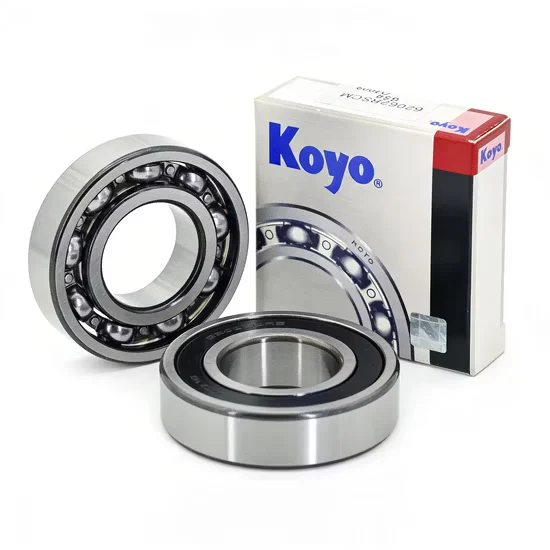
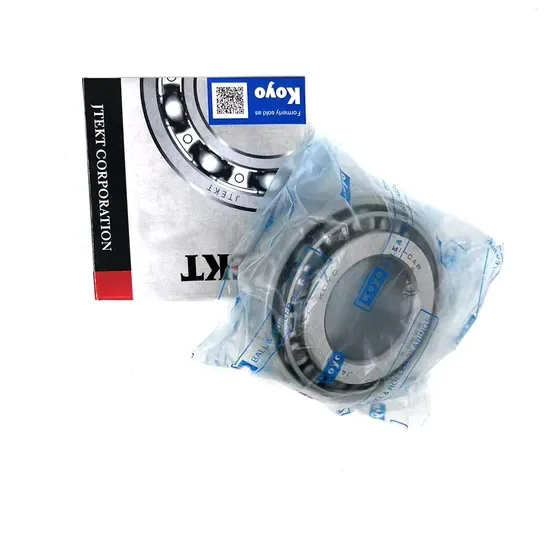
The market is flooded with counterfeit bearings that mimic the packaging and branding of reputable manufacturers like Koyo. These fakes often use inferior steel and poor-quality cages, leading to premature failure. Verifying authenticity requires a multi-layered approach. First, check the packaging for high-quality printing, correct spelling, and security labels. Genuine Koyo boxes feature specific holographic stickers and batch codes that can be traced back to the production facility.
Second, inspect the bearing itself. Genuine units have precise laser etching or stamping of the brand name, model number, and origin. The steel should have a uniform, clean finish without rough spots or discoloration. The cage should be securely riveted and free of burrs. In a procurement audit for a large distributor, we identified a batch of fake bearings by noticing inconsistent font depths in the laser marking. Further testing revealed substandard hardness levels, which would have led to rapid wear. Avoiding this batch prevented a potential recall and protected the distributor’s reputation.
| Inspection Point | Genuine Characteristic | Counterfeit Indicator | Risk Level |
|---|---|---|---|
| Packaging | High-quality print, hologram | Blurry text, missing security features | High |
| Markings | Clear, consistent laser etching | Shallow, uneven, or hand-stamped | High |
| Steel Finish | Uniform, smooth, clean | Rough, discolored, or pitted | Medium |
| Cage Quality | Securely riveted, no burrs | Loose, sharp edges, or deformed | High |
| Documentation | Full traceability, test certs | Missing or generic certificates | Critical |
Third, demand complete traceability documentation. A reliable supplier will provide mill certificates and test reports that link the specific batch of bearings to their production run. This documentation is essential for industries with strict quality control requirements, such as automotive and aerospace. Without it, you are buying blind.
Partnering with a verified Koyo 1206 deep groove ball bearing wholesale supplier for sale ensures that every unit is backed by authentic documentation and rigorous quality checks.
Conclusion
Precision sourcing prevents mechanical failure.
Selecting the right Koyo 1206 bearing involves more than matching dimensions; it requires aligning internal clearance with thermal conditions and verifying load capacity against operational stresses. Authenticity checks and proper documentation are non-negotiable for ensuring reliability. By focusing on these technical details, buyers can secure components that deliver consistent performance and longevity in demanding industrial applications.