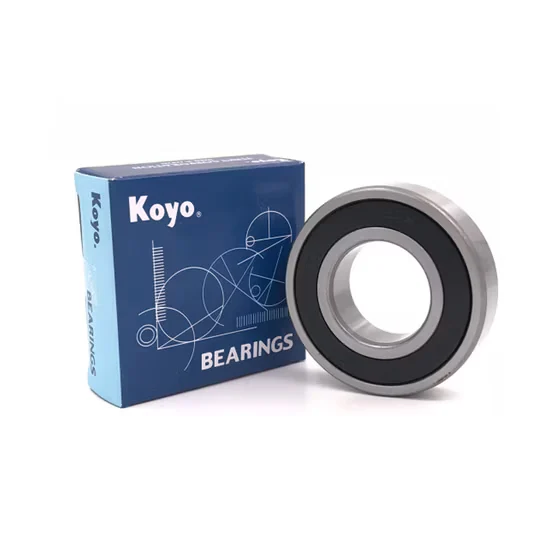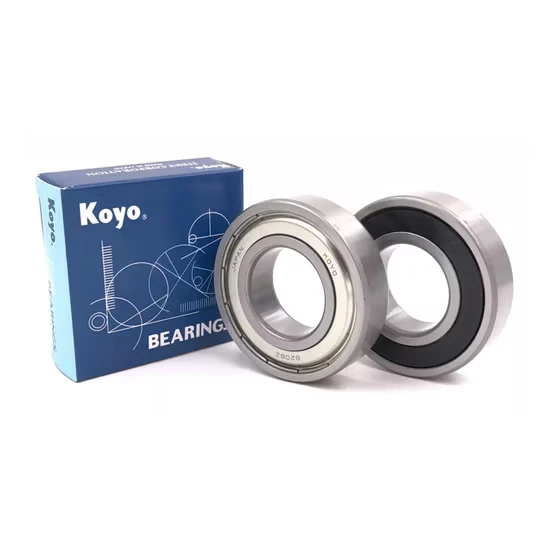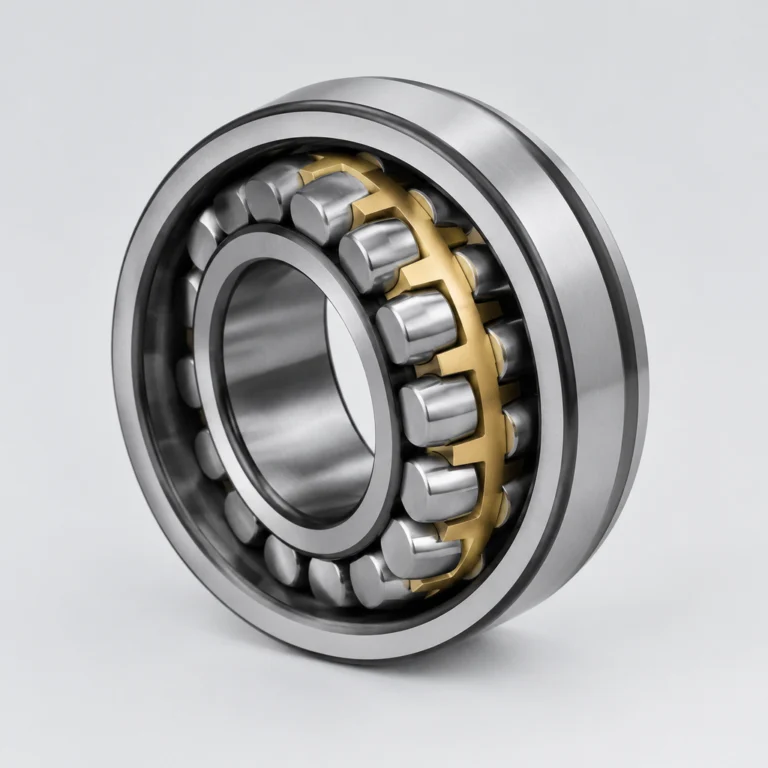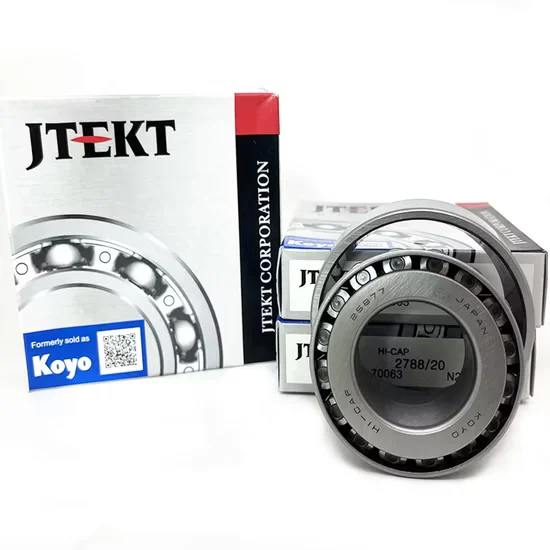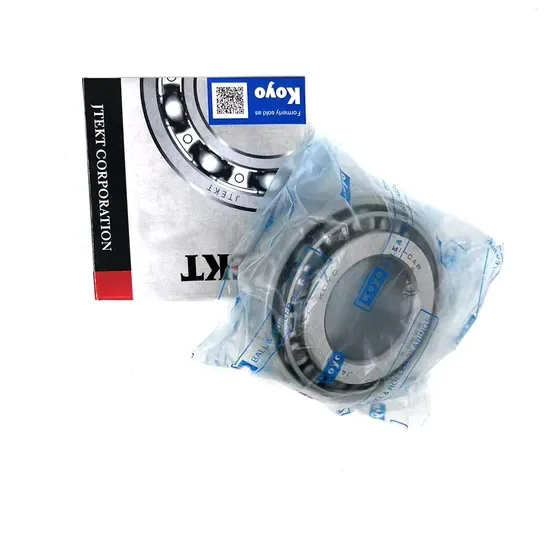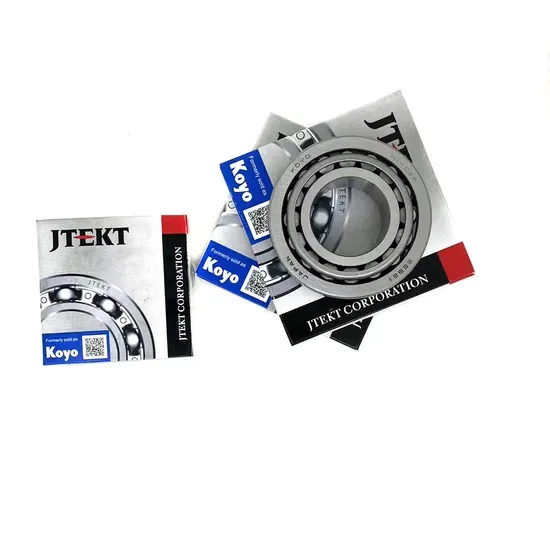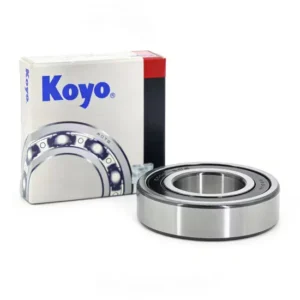
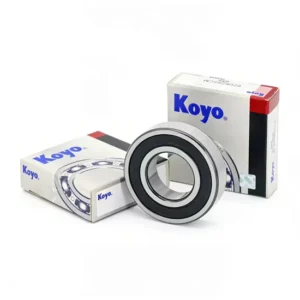
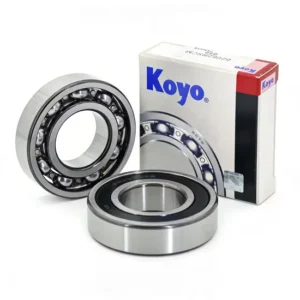
Consolidated Multi-Brand Sourcing — Procure this Koyo unit alongside SKF or FAG spindle components in a single mixed-brand shipment without juggling multiple vendors.
Technical Specifications
| Parameter | Value |
|---|---|
| Designation | Koyo 6001 |
| Bearing Type | Deep Groove Ball Bearing |
| Bore Diameter (d) | 12 mm |
| Outside Diameter (D) | 28 mm |
| Width (B) | 8 mm |
| Material | High-Purity Bearing Steel |
| Lubrication | Grease or Oil |
| Origin | Japan |
Application Suitability
| Industry | Typical Applications |
|---|---|
| Machine Tool Manufacturing | Industrial lathe headstocks and CNC lathe auxiliary drive shafts |
| Precision Engineering | Machine tool coolant pump motors and spindle cooling fan assemblies |
| General Manufacturing | Small gearboxes and conveyor drive rollers requiring low-noise operation |
Why Standard Tolerance Ruins Lathe Spindle Performance
Precision class and internal clearance dictate the actual machining accuracy of your equipment.
Selecting the right component for precision machining is rarely as simple as matching basic dimensions. Early in my career, I shipped standard P0 clearance units for an industrial lathe project, focusing only on the basic dimension match. The resulting spindle vibration exceeded acceptable limits, forcing a complete teardown on the shop floor. That painful on-site lesson proved that for machine tool environments, ignoring tight tolerance requirements leads to severe chatter marks on the workpiece. Sourcing a genuine Koyo 6001 deep groove ball bearing requires strict verification of these hidden geometric parameters to ensure the spindle maintains its rotational stability under heavy cutting forces.
Aligning Component Geometry with Machining Demands
Achieving consistent surface finishes in metalworking relies heavily on the rotational stability of every moving assembly. When outfitting CNC lathe auxiliary systems, this Koyo 6001 deep groove ball bearing must sustain continuous radial loads while minimizing radial runout. Our engineering team cross-references your specific spindle housing tolerances to ensure the selected clearance class prevents binding under thermal expansion. This proactive technical alignment prevents the premature wear often seen in high-speed auxiliary drives. By evaluating the exact kinematic requirements of your tool changers and coolant pumps, we ensure the component delivers the structural rigidity necessary for precision manufacturing operations.
Navigating Thermal and Kinematic Stresses in Lathes
The harsh reality of the shop floor introduces variables that standard catalog ratings rarely capture. Machine tool environments subject components to fluctuating thermal gradients and continuous high-speed rotation. Standard clearance often collapses when the inner ring expands against the shaft, generating excessive friction and heat. Selecting the appropriate lubrication—whether oil mist for high-speed spindles or grease for sealed auxiliary motors—is critical to managing these thermal dynamics. Furthermore, preventing coolant and metal swarf ingress demands careful consideration of shielding options to maintain raceway integrity. The continuous exposure to cutting fluids requires effective sealing strategies that do not introduce excessive frictional torque into the high-speed assembly.
Decoding the Engineering Behind Smooth Rotation
Understanding the underlying metallurgy and geometric tolerances separates adequate performance from exceptional machining results. The high-purity bearing steel used in this model provides the structural foundation necessary to resist spalling under continuous cyclic loading, though these units are also available in ceramic or stainless steel variants for specialized environments. For lathe applications, the internal geometry is optimized for low-noise and smooth rotation, which directly correlates to improved surface finish on machined parts. While the basic designation defines the 12x28x8mm envelope, the actual performance hinges on the unlisted precision and clearance grades. Upgrading from standard to tighter tolerance classes significantly reduces radial runout, a crucial factor for CNC lathe tailstocks and tool changers. Proper selection ensures the rolling elements maintain optimal contact stress distribution, preventing localized fatigue that could otherwise compromise the dimensional accuracy of your turned components over extended production runs.
The Financial Impact of Overlooking Precision Grades
Many maintenance teams focus solely on replacing failed parts without investigating the root cause of the breakdown. Installing a component with incorrect internal clearance or inadequate precision in a lathe spindle inevitably leads to unplanned downtime. According to failure analysis frameworks, improper selection is a primary root cause of premature fatigue and excessive vibration. This not only ruins the surface finish of expensive workpieces but can also cause catastrophic damage to the spindle housing and adjacent drive gears. The cost of replacing the damaged machinery and scrapping out-of-tolerance parts far outweighs the initial investment in correctly specified, high-precision units specified for demanding machine tool environments.
Securing Authenticity and Technical Accuracy
Managing the complex global supply chain for critical machine tool components demands rigorous quality control at every step. Sourcing genuine Japanese-manufactured components requires more than just matching the part number on a purchase order. We verify the exact precision class and internal clearance of every Koyo 6001 unit to prevent the common mismatch where standard industrial grades are accidentally shipped for precision machine tool applications. Our supply chain guarantees original factory batch traceability, eliminating the risk of counterfeit products that plague the MRO market. Additionally, our flexible consolidation allows you to mix this specific lathe component with heavy-equipment spherical roller bearings in a single shipment, optimizing your freight costs without compromising on authentic documentation or technical support.
Documentation & Authenticity
- Original factory batch traceability linking the Koyo 6001 to its specific Japanese production run.
- Official app QR verification confirming the authenticity of the high-purity bearing steel construction.
- Dimensional inspection reports validating the strict 12x28x8mm envelope and running accuracy.
- Certificate of Conformity detailing the exact precision class and internal clearance specifications.
Storage, Handling & Mounting
- Store the high-precision units in original packaging to prevent humidity from compromising the low-noise raceway finish.
- Use clean lint-free gloves when handling the 12mm bore to avoid transferring skin oils to the bearing steel.
- Apply induction heating for inner ring mounting on CNC lathe shafts to preserve the tight internal clearance.
- Maintain strict separation from heavy equipment parts to prevent physical shocks that could dent the high-precision raceways.
- Verify the specific grease or oil lubrication requirement before installation to match the lathe spindle speed.
Defining Your Technical Requirements
Effective technical collaboration begins with a clear understanding of your operational environment and performance expectations. To ensure the selected Koyo 6001 deep groove ball bearing perfectly matches your machine tool application, please provide the specific radial and axial loads, operating speeds, and spindle housing tolerances. Sharing the original OEM equipment manual or part number allows our engineering team to perform a precise cross-reference and verify the required precision class. This technical data enables us to recommend the optimal internal clearance and lubrication strategy for your specific CNC or industrial lathe setup.
Frequently Asked Questions
Q: How can I verify the authenticity of the Koyo 6001 upon delivery?
A: Every unit we supply includes original factory batch traceability documentation. You can verify the authenticity by scanning the QR code on the packaging using the manufacturer's official mobile application. This digital check confirms the high-purity bearing steel origin and ensures the component is a genuine Japanese-manufactured product, protecting your lathe from the risks associated with counterfeit MRO parts.
Q: Why do some supplier catalogs list the outside diameter as 25mm instead of 28mm?
A: The correct standard envelope dimensions for this designation are 12x28x8mm. Occasional catalog discrepancies listing a 25mm outside diameter are typographical errors from third-party aggregators. We strictly cross-reference all dimensional data against the official manufacturer catalog to ensure the 28mm outside diameter matches your industrial lathe housing bore, preventing costly installation failures caused by incorrect size assumptions.
Q: Should I choose grease or oil lubrication for my CNC lathe auxiliary drive?
A: The selection depends entirely on the operating speed and thermal environment of your application. Oil lubrication, such as oil mist, is preferred for high-speed spindles requiring superior heat dissipation. Conversely, grease is ideal for sealed auxiliary motors where maintenance intervals need extending. Provide your exact RPM and temperature data so we can advise on the optimal factory-fill option.
Q: What precision and clearance class is required for an industrial lathe headstock?
A: Standard P0 precision and normal clearance are generally insufficient for lathe headstocks, as they cause excessive spindle vibration and poor surface finishes. Machine tool applications typically demand higher precision classes, such as P6 or P5, combined with specific internal clearances to accommodate thermal expansion during continuous cutting. Share your machining tolerance requirements so we can source the exact geometric specification needed for your equipment.
Q: What is the recommended mounting method for the 12mm bore on a precision shaft?
A: For high-precision lathe shafts, induction heating is the recommended method for mounting the inner ring. This technique ensures uniform thermal expansion without damaging the high-purity bearing steel or altering the critical internal clearance. Avoid mechanical pressing or open flame heating, as these methods can introduce misalignment, dent the raceways, and destroy the low-noise characteristics essential for smooth machine tool operation.