Most distributors think the DJR suffix is just a regional code. It is not. It defines the internal clearance required for paired mounting in heavy loads.
The Koyo 30310DJR is a tapered roller bearing with specific internal clearance designed for back-to-back or face-to-face paired arrangements, distinct from the standard single-row 30310JR. Its core dimensions are 50mm bore, 110mm outer diameter, and 29.25mm total width, but its value lies in the controlled preload capability that prevents thermal seizure in crushers and gearboxes. Sourcing this exact variant requires verifying the suffix against ISO clearance standards, as substituting a standard JR model leads to premature failure under axial load.
I still remember the smell of burnt oil in a quarry near Monterrey. The owner was screaming at his maintenance chief because the primary crusher had stopped cold. The spindle was glowing red. When we pulled the housing apart, the inner ring of the 30310 bearing had shattered into pieces. The local mechanic had replaced a failed unit with a cheap substitute he found in a nearby bin. He matched the numbers 30310 but ignored the DJR suffix. He did not understand that in a tapered roller setup, the clearance is not just a gap; it is a calculated preload. That mistake cost them days of downtime and a new spindle. This is why I check every suffix before I let a box leave the warehouse.
What Are the Core Dimensions of Koyo 30310DJR?
Dimensions are the baseline, but load ratings define the limit.
When you request a quote for a Koyo 30310DJR Tapered Roller Bearing Wholesale Supplier for Sale, you must confirm more than just the size. The basic boundary dimensions are standardized across major manufacturers, which allows for interchangeability in housing design, but the internal geometry dictates performance. The bore diameter is 50mm, the outside diameter is 110mm, and the total width is 29.25mm. These numbers are fixed by international standards.
However, the dynamic and static load ratings are where the engineering reality hits. In a mining crusher, the bearing does not just spin; it absorbs shock loads from irregular rock feed. The 30310 series is designed for high radial and axial capacity. If you use a bearing with incorrect internal clearance, the load distribution across the rollers becomes uneven. Instead of sharing the load, a few rollers take the brunt, leading to spalling and early fatigue.
| Parameter | Specification | Note |
|---|---|---|
| Bore Diameter (d) | 50 mm | Standard metric size |
| Outside Diameter (D) | 110 mm | Fits standard housing |
| Total Width (T) | 29.25 mm | Includes cup and cone |
| Internal Clearance | Specific to DJR | Critical for paired mounting |
| Cage Type | Steel | Robust for heavy vibration |
A buyer once ordered a batch of 30310s for a steel mill conveyor. They saved money by buying the standard JR version instead of the DJR. Within months, the vibration levels spiked. The issue was not the size; it was the lack of proper preload control. The standard clearance allowed too much play under reverse axial loads, causing micro-movements that wore out the raceways.
How Does 30310DJR Differ from Standard 30310 Variants?
The suffix DJR is not a marketing label; it is a technical specification for clearance.
Many procurement officers assume that all 30310 bearings are identical if they come from a reputable brand. This is a dangerous assumption. The suffix JR typically denotes a standard internal clearance and a pressed steel cage. The DJR suffix, however, indicates a specific internal clearance group, often aligned with C3 or C4 standards depending on the manufacturer’s specific pairing logic, and is optimized for applications where two bearings are mounted in opposition.
In heavy-duty applications like mining crushers or large gearboxes, bearings are often paired to handle bidirectional axial loads. If you use a standard clearance bearing in a paired setup, the thermal expansion during operation can eliminate the necessary internal gap. This leads to excessive preload. The rollers get squeezed too tightly, generating heat faster than it can dissipate. The result is thermal runaway, where the bearing seizes and locks the shaft.
The DJR variant is engineered to maintain the correct operational clearance even when preloaded. It accounts for the elastic deformation of the rollers and rings under load. Using a standard 30310JR in place of a 30310DJR might work in a light-duty fan, but in a crusher, it is a ticking time bomb. The difference is microscopic in measurement but massive in consequence.
| Feature | Standard 30310JR | Koyo 30310DJR |
|---|---|---|
| Internal Clearance | Standard | Optimized for pairing |
| Preload Capability | Low | High |
| Application | Single row, light axial load | Paired, heavy axial load |
| Thermal Stability | Moderate | Enhanced |
| Risk in Crushers | High seizure risk | Low seizure risk |
I have seen distributors mix these up in their inventory lists. They see the same price and the same size, so they ship what they have. The end user pays the price when the machine fails. Verifying the suffix is the first step in ensuring reliability.
Why Do Paired 30310 Bearings Fail in Crushers?
Wrong clearance and improper preload are the silent killers of crusher spindles.
Crushers are brutal environments. The bearings face constant shock loads, vibration, and contamination. But the most common cause of failure is not dirt; it is installation error. When installing paired 30310 bearings, technicians must adjust the preload using shims or nuts. If the bearing has the wrong internal clearance, such as using a standard JR instead of a DJR, the preload calculation becomes invalid.
Excessive preload causes the bearing to run hot. I recall a case in a Latin American mining site where the maintenance team tightened the lock nut until they felt “rigidity.” They did not use a torque wrench or measure the starting torque. The bearing heated up to over 100 degrees Celsius within hours. The oil broke down, the cage deformed, and the rollers welded themselves to the raceway. This is called frictional seizure.
Insufficient preload is equally bad. It allows the inner ring to creep on the shaft or the outer ring to rotate in the housing. This movement causes fretting corrosion, which weakens the fit and leads to catastrophic fracture. The DJR designation helps mitigate these risks by providing a known baseline for clearance, allowing engineers to calculate the correct shim thickness accurately.
Another frequent error is mixing brands or batches. Even if two bearings are labeled 30310DJR, slight variations in manufacturing tolerances can affect the preload distribution. It is crucial to use matched sets from the same production batch whenever possible. This ensures that the load is shared evenly between the two bearings in the pair.
| Failure Mode | Cause | Consequence |
|---|---|---|
| Thermal Seizure | Excessive preload | Shaft lockup, cage failure |
| Fretting Corrosion | Insufficient preload | Ring rotation, fit loss |
| Spalling | Uneven load distribution | Surface fatigue, noise |
| Fracture | Shock load + wrong clearance | Inner ring breakage |
Proper installation requires clean tools, precise measurement, and the correct bearing type. Skipping any of these steps invites failure.
How to Verify Genuine Koyo 30310DJR Specs?
Traceability is your only defense against counterfeit parts.
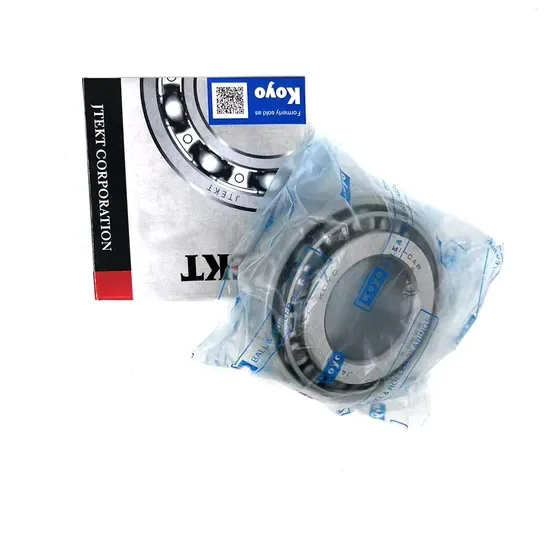
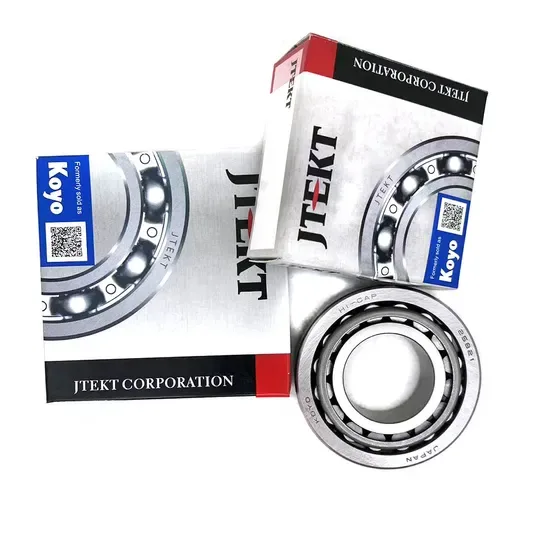
The market is flooded with fake bearings that look real but fail quickly. A genuine Koyo 30310DJR will have clear, laser-etched markings on the outer ring. The font should be sharp and uniform. Counterfeits often have stamped markings that are uneven or shallow. The packaging is also a key indicator. Authentic Koyo boxes have specific holographic seals and batch numbers that can be verified with the manufacturer.
But visual checks are not enough. You need documentation. A reliable Koyo 30310DJR Tapered Roller Bearing Wholesale Supplier for Sale will provide full traceability documents. These include the certificate of origin, material test reports, and inspection certificates. These documents prove that the bearing was made in an authorized facility and meets the specified standards. Without them, you are guessing.
Surface finish is another tell. Genuine bearings have a smooth, consistent finish on the raceways. Counterfeits often have rough spots or tool marks that increase friction and wear. If you have a microscope, check the roller ends. They should be polished and free of scratches. Any imperfection here can lead to stress concentrations and early failure.
We maintain a strict inventory system where every batch is tracked from the factory to the customer. This allows us to provide complete documentation for every order. For our clients in remote mining sites, this peace of mind is worth more than a small discount on a dubious part. We also offer technical support to help you select the right preload settings for your specific application.
Conclusion
Precision matters more than price in heavy-duty applications.
The Koyo 30310DJR is not just a number; it is a solution for high-load, paired mounting scenarios. Ignoring the DJR suffix and substituting a standard bearing invites thermal seizure and mechanical failure. Always verify the internal clearance, check the traceability documents, and ensure proper preload during installation. Sourcing from a trusted partner who understands these technical nuances protects your equipment and your uptime.