A higher load rating does not mean a bearing can handle radial forces.
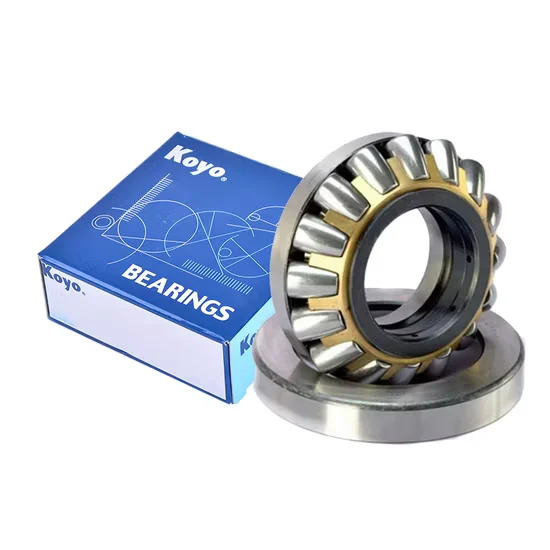
The Koyo 51107 is a single-direction thrust ball bearing with critical specifications of 35 mm inner diameter, 52 mm outer diameter, and 12 mm width. It supports significant axial loads but zero radial capacity, with a grease lubrication speed limit of 3900 RPM. Misapplying this component in mixed-load or high-speed environments without adequate oil cooling leads to immediate thermal failure and seizure.
I still remember the heat radiating from the mixer gearbox at a cement plant in Riyadh. The maintenance team had installed what they thought was a robust solution for their heavy-duty agitator. They chose the part based on its dynamic load rating, ignoring the direction of the force. Within forty-eight hours, the unit seized. When I pulled the housing apart, the balls were flattened, and the raceways showed deep gouges typical of radial stress. They had used a thrust bearing to support a shaft that wobbled under lateral pressure. That failure was not due to a defect in the metal but a fundamental misunderstanding of the Koyo 51107 specs. This component is designed for pure axial loading, such as in screw jacks or vertical pumps, where the force travels parallel to the shaft axis. Any deviation from this alignment compromises the entire assembly.
Understanding these parameters is essential for procurement specialists and maintenance engineers who need to avoid costly downtime. The following analysis breaks down the dimensional tolerances, load capacities, and lubrication thresholds that define the operational envelope of this bearing.
What Are the Core Dimensions of Koyo 51107?
Precise dimensional matching is the first line of defense against installation errors.
The physical footprint of the Koyo 51107 dictates its compatibility with existing machinery housings and shafts. Unlike deep groove ball bearings, thrust bearings do not locate the shaft radially. They require precise seating in a housing that can handle the axial reaction force. The standard dimensions for this series are consistent across major manufacturers adhering to ISO standards, but verifying the specific tolerances is crucial for high-precision applications.
| Parameter | Value | Tolerance Class (Standard) |
|---|---|---|
| Inner Diameter (d) | 35 mm | Normal (P0) |
| Outer Diameter (D) | 52 mm | Normal (P0) |
| Width (B) | 12 mm | Normal (P0) |
| Mass | Approx. 0.06 kg | N/A |
The bore diameter of 35 mm fits onto a standard metric shaft, while the 52 mm outer diameter requires a corresponding recess in the housing. The narrow width of 12 mm allows for compact design in spaces where radial bearings would be too bulky. However, this slim profile means the bearing has limited ability to misalign. If the shaft and housing are not perfectly perpendicular, edge loading occurs. This concentrates stress on a small section of the raceway, leading to premature fatigue.
In a recent project for a marine propulsion system, a client attempted to substitute a wider bearing to increase perceived stability. The result was interference with the adjacent seal, causing leakage and contamination. Sticking to the exact Koyo 51107 specs ensures that the bearing fits within the designed clearance zones. Weight is also a factor in rotating assemblies; at approximately 0.06 kg, it adds minimal inertia, which is beneficial for start-stop cycles in industrial mixers.
Procurement teams should always request dimensional certificates for batch consistency. While the nominal sizes are standard, variations in manufacturing can affect fitment in tight-tolerance assemblies. Verifying these measurements before installation prevents the frustration of trying to force a bearing into a housing that is slightly undersized.
How Much Load Can 51107 Handle?
Load capacity ratings are meaningless if the force direction is incorrect.
The Koyo 51107 is engineered to withstand substantial axial loads. Its performance is defined by two key metrics: the basic dynamic load rating (Cr) and the basic static load rating (C0r). The dynamic rating indicates the load the bearing can endure for one million revolutions under rotating conditions. The static rating represents the maximum load it can support when stationary or oscillating slowly without permanent deformation.
| Load Type | Rating Characteristic | Application Implication |
|---|---|---|
| Dynamic Axial (Cr) | High | Suitable for continuous rotation under thrust |
| Static Axial (C0r) | Very High | Ideal for holding loads in stationary positions |
| Radial Load | Zero | Must be supported by separate radial bearings |
It is a common misconception that a high static rating implies robustness against all types of stress. In reality, thrust ball bearings are highly vulnerable to radial forces. Even a small amount of radial load can cause the balls to skid rather than roll, generating excessive heat and wear. This is why the Koyo 51107 is almost always paired with a radial bearing, such as a deep groove ball bearing or a cylindrical roller bearing, which handles the lateral forces while the thrust bearing manages the axial component.
Consider the case of a heavy-duty press operator in Southeast Asia. The machine experienced frequent bearing failures despite using high-quality components. Investigation revealed that the shaft deflection under load was introducing radial forces into the thrust bearing. By adding a self-aligning radial bearing to take up the slack, the axial load was isolated correctly, and the service life extended significantly. This highlights the importance of system-level design rather than focusing solely on the individual Koyo 51107 specs.
When calculating the equivalent load, engineers must ensure that the applied axial force does not exceed the dynamic rating for the desired service life. For applications with shock loads, the static rating becomes the limiting factor. Exceeding this limit can cause brinelling, where indentations form on the raceways, leading to vibration and noise during operation.
Understanding these load limits helps in selecting the right bearing for the job. It also aids in troubleshooting existing failures. If a thrust bearing shows signs of radial wear, the issue lies not with the bearing quality but with the supporting structure of the machine.
What Are the Speed Limits for Grease vs. Oil?
Exceeding the grease lubrication limit is a primary cause of thermal failure.
Speed capability is a critical constraint for the Koyo 51107. Thrust ball bearings generally have lower speed limits compared to radial bearings due to the centrifugal forces acting on the balls and cage. The method of lubrication plays a decisive role in determining the maximum operational speed. Grease lubrication is simpler and requires less maintenance, but it generates more friction and heat at high speeds.
| Lubrication Method | Limiting Speed (RPM) | Thermal Performance | Maintenance Frequency |
|---|---|---|---|
| Grease | 3900 | Moderate heat generation | Low |
| Oil Bath/Circulation | Higher | Superior heat dissipation | High |
The specified grease lubrication limit for the Koyo 51107 is 3900 RPM. Operating above this threshold with grease leads to rapid temperature rise. The grease can break down, lose its viscosity, and eventually carbonize, causing the bearing to seize. In contrast, oil lubrication allows for better heat dissipation and can support higher speeds, but it requires a more complex housing design with seals to prevent leakage.
A conveyor system manufacturer in Europe faced repeated failures in their high-speed sorting units. They were using grease-lubricated thrust bearings at speeds approaching 4500 RPM. The bearings would overheat within hours of operation. Switching to an oil mist lubrication system resolved the issue, allowing the bearings to run cooler and last longer. However, this change required modifying the housing to accommodate oil lines and seals, increasing the initial cost but reducing long-term downtime.
For most general industrial applications, staying within the 3900 RPM grease limit is sufficient. It is essential to monitor the operating temperature during the initial run-in period. A sudden spike in temperature indicates that the speed limit is being exceeded or that the lubrication is inadequate. Using high-quality synthetic grease can sometimes extend the effective speed range slightly, but it does not change the fundamental physical limitations of the design.
When specifying the Koyo 51107 specs for a new design, engineers must carefully evaluate the operational speed. If the application requires higher speeds, alternative bearing types such as angular contact ball bearings or cylindrical roller thrust bearings may be more appropriate. These designs offer better high-speed performance but come with their own set of installation and maintenance requirements.
How to Avoid Common Misapplications?
Correct application requires strict adherence to axial-only load rules and housing alignment.
The majority of premature failures in thrust bearings are due to misapplication rather than material defects. Ensuring that the Koyo 51107 is used correctly involves several key steps. First, verify that the load is purely axial. If there is any radial component, a separate radial bearing must be used. Second, ensure that the shaft and housing are perpendicular to each other. Misalignment causes uneven load distribution, leading to early fatigue.
| Common Error | Consequence | Corrective Action |
|---|---|---|
| Applying radial load | Raceway gouging, seizure | Install separate radial bearing |
| Misaligned housing | Edge loading, vibration | Machine housing faces to be parallel |
| Exceeding speed limit | Overheating, grease breakdown | Use oil lubrication or lower speed |
| Incorrect fit | Slippage, fretting corrosion | Verify shaft/housing tolerances |
Installation technique is also critical. Thrust bearings should never be hammered into place. Use a press or a hydraulic tool to apply even force. Ensure that the bearing seats fully against the shoulder of the shaft and the housing. Any gap can lead to movement and wear. Additionally, check the clearance between the bearing and the housing. Too tight, and the bearing may distort; too loose, and it may shift under load.
In the cement plant case mentioned earlier, the root cause was not just the radial load but also poor housing alignment. The mixer shaft was bent, causing the thrust bearing to tilt. This created a point load that crushed the balls. Rectifying the shaft alignment and installing a proper radial support solved the problem. This experience underscores the need for a holistic approach to bearing selection and installation.
Regular inspection can catch issues before they lead to catastrophic failure. Listen for unusual noises and monitor vibration levels. A change in sound or an increase in vibration often indicates misalignment or lubrication problems. Keeping a log of maintenance activities helps in identifying patterns and preventing recurrence.
By following these guidelines, users can maximize the service life of the Koyo 51107. It is not just about buying the right part but ensuring it is integrated correctly into the machine. Technical support from suppliers can be invaluable in navigating these complexities, especially for non-standard applications.
Conclusion
Precision in specification prevents expensive operational failures.
The Koyo 51107 is a specialized component designed for pure axial loads within strict speed and lubrication limits. Its 35x52x12mm dimensions and 3900 RPM grease threshold define its operational boundary. Success lies in respecting these constraints and ensuring proper system integration. Sourcing genuine components with verified technical data supports reliable industrial performance.