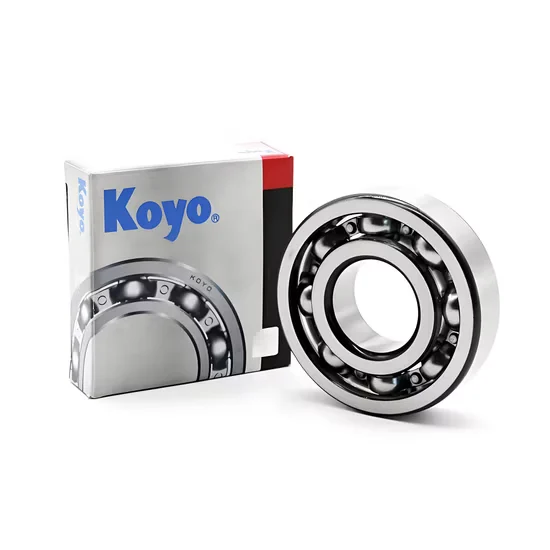
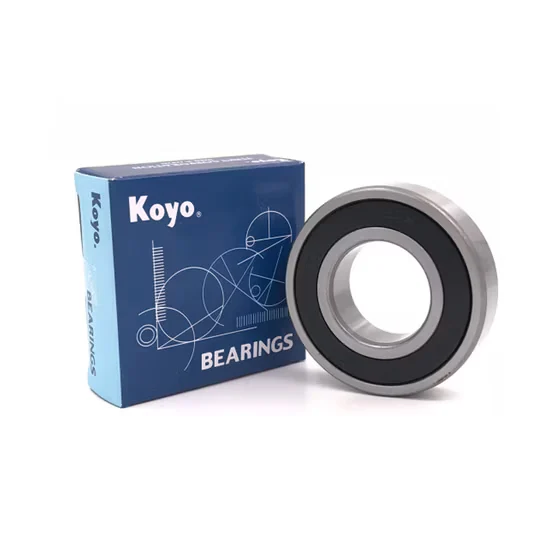
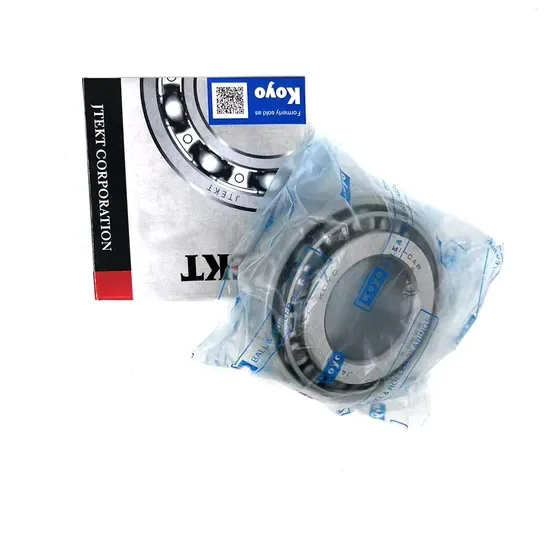
Most buyers assume the “2RS” suffix guarantees protection, but in high-temperature or saline environments, standard rubber compounds fail regardless of the dual-seal design.
The core specifications for a genuine Koyo 6205-2RS include a 25mm bore, 52mm outer diameter, and 15mm width, conforming to ISO 492 dimensional tolerances. However, critical performance relies on verifying the specific rubber seal material hardness and selecting the correct internal clearance (CN vs. C3) to prevent thermal seizure in harsh industrial applications.
Walking through a pump station in Jeddah, the heat hits you before the noise does. I watched a maintenance team pull a motor that had seized after only a few months of operation. The culprit was not the load or the alignment, but a batch of non-genuine 6205-2RS bearings. The rubber seals had cracked under the combined stress of high ambient temperature and saline air, allowing fine sand to ingress and destroy the raceways. This is not an isolated incident. Across the Middle East and other arid regions, the failure of deep groove ball bearings often stems from a misunderstanding of what the specifications actually protect against. Many distributors focus solely on the basic dimensions, ignoring the material science behind the seals and the physics of internal clearance. When sourcing for resale or MRO projects, verifying these technical details is the difference between a reliable supply chain and costly emergency replacements.
What Are the Core Dimensions of Koyo 6205-2RS?
Basic dimensional specs form the baseline, but load ratings define the operational limits for heavy-duty applications.
The Koyo 6205-2RS is a standard deep groove ball bearing, and its physical footprint is defined by international standards. The bore diameter is 25mm, the outer diameter is 52mm, and the width is 15mm. These dimensions are consistent across major manufacturers, which allows for interchangeability in many general applications. However, assuming all bearings with these dimensions perform identically is a critical error. The dynamic and static load ratings determine how much force the bearing can withstand before fatigue sets in. For the 6205 series, the basic dynamic load rating is typically around 14 kN, and the static load rating is approximately 6.55 kN.
| Parameter | Specification | Note |
|---|---|---|
| Bore Diameter | 25 mm | Standard metric size |
| Outer Diameter | 52 mm | Fits standard housing |
| Width | 15 mm | Compact profile |
| Dynamic Load Rating | ~14 kN | Varies by internal design |
| Static Load Rating | ~6.55 kN | Limit for stationary loads |
| Limiting Speed | High | Dependent on lubrication and clearance |
When I inspect batches for wholesale clients, I do not just measure the outer dimensions with calipers. I verify the geometric tolerances. A bearing might fit into the housing, but if the roundness or parallelism deviates from ISO 492 Class 0 or Normal tolerance, it will generate excessive vibration and heat. This is particularly important for electric motors and pumps where precision affects efficiency. A distributor selling generic alternatives often cannot provide traceability to these tolerance classes. In contrast, genuine Koyo products come with documentation that confirms adherence to these strict geometric standards. For buyers in the mining or construction sectors, where equipment runs continuously under heavy loads, this distinction is vital. A slight deviation in dimensional accuracy can lead to premature cage failure or ball skidding, which no amount of external lubrication can fix once the internal geometry is compromised.
Why Does the 2RS Seal Material Matter in Harsh Environments?
The rubber compound formula determines high-temperature resistance, not just the presence of dual seals.
The “2RS” designation indicates that the bearing is equipped with two rubber contact seals. Many buyers believe this automatically makes the bearing suitable for dirty or wet environments. While it provides better protection than open or shielded (ZZ) variants, the effectiveness depends entirely on the seal material. Standard nitrile rubber (NBR) is common, but its performance degrades rapidly above certain temperatures or when exposed to specific chemicals. In the Gulf region, where ambient temperatures frequently exceed 45°C and machinery operates at higher internal temperatures, standard seals can harden, crack, or lose their elasticity.
I recall a wholesale batch rejection case where a distributor compared genuine Koyo seals against a cheaper alternative. The visual difference was minimal, but the physical properties were stark. The genuine seals maintained a consistent Shore A hardness, ensuring a tight lip contact without excessive friction. The alternative seals showed a significant deviation in lip thickness and hardness, leading to inconsistent sealing pressure. In high-saline environments, such as near coastal desalination plants or marine applications, inferior rubber compounds permeate faster, allowing moisture to reach the grease and cause corrosion.
| Seal Characteristic | Genuine Koyo 2RS | Generic Alternative |
|---|---|---|
| Material Compound | Controlled NBR Formula | Unspecified/Variable |
| Hardness Consistency | Stable Shore A | Noticeable Deviation |
| Lip Thickness | Uniform | Irregular |
| Heat Resistance | Robust | Vulnerable |
| Chemical Resistance | Standard | Limited |
For MRO operators, this means that simply specifying a “2RS bearing” is insufficient. You must ensure the seal material is rated for your specific operating environment. If the application involves high temperatures or exposure to aggressive media, the standard seal may not suffice. In such cases, verifying the manufacturer’s data sheet for seal material specifications is crucial. Genuine Koyo bearings use controlled compounding processes that ensure batch-to-batch consistency. This reliability is why industrial end-users in steel mills and cement plants prefer documented brands over unbranded equivalents. The cost of a failed seal is not just the price of the bearing; it is the downtime, the contaminated grease, and the potential damage to the shaft and housing.
How to Choose the Right Internal Clearance for 6205-2RS?
Standard CN clearance is not always best; high-ambient environments require C3 to prevent thermal seizure.
Internal clearance refers to the space between the balls and the raceways when the bearing is unloaded. The most common clearance is CN (Normal), which is suitable for standard operating conditions with moderate temperatures. However, in environments with high ambient heat or where the bearing itself generates significant heat due to speed or load, the inner ring expands more than the outer ring. This thermal expansion reduces the internal clearance. If the clearance becomes negative, the bearing seizes, leading to catastrophic failure.
In my experience supporting MRO emergency replacements, I often see technicians default to CN clearance because it is the standard stock item. For a pump operating in a hot climate, this is a mistake. Selecting C3 clearance, which is greater than CN, provides the necessary room for thermal expansion. This ensures that even when the bearing heats up during operation, there is still sufficient space for the balls to roll freely. The difference between CN and C3 is small in terms of microns, but its impact on service life in harsh conditions is substantial.
| Clearance Code | Description | Application Suitability |
|---|---|---|
| CN | Normal | Standard temperatures, moderate loads |
| C3 | Greater than Normal | High temperatures, high speeds, thermal expansion risk |
| C4 | Greater than C3 | Extreme thermal conditions, very high speeds |
Choosing the wrong clearance is a silent killer. A bearing with insufficient clearance will run hot, degrade the grease faster, and eventually lock up. Conversely, excessive clearance can lead to vibration and noise. For the Koyo 6205-2RS, matching the clearance to the operating temperature is a critical engineering decision. Distributors who stock both CN and C3 variants offer a valuable service to their clients, allowing them to select the right specification for the job. Technical support in this area helps end-users avoid the trial-and-error approach that often leads to repeated failures. Understanding the relationship between temperature, expansion, and clearance is essential for anyone specifying bearings for industrial machinery in hot climates.
How to Verify Genuine Koyo 6205-2RS Specs on Site?
Checking traceability docs and physical seal inspection prevents counterfeit infiltration.
The market is flooded with bearings that look identical to genuine products but lack the quality control and material integrity. Verifying authenticity requires more than just checking the packaging. It involves examining the product itself and the accompanying documentation. Genuine Koyo bearings come with traceability documents that link the batch to the manufacturing facility. These documents confirm the material grade, heat treatment process, and final inspection results.
On site, I recommend a simple physical inspection of the seals. Genuine 2RS seals have a precise, uniform appearance with no flash or irregularities. The rubber should feel resilient, not brittle or overly soft. The marking on the bearing outer diameter should be clear, deep, and evenly spaced. Counterfeit products often have shallow, blurry, or uneven markings. Additionally, the rotation of the bearing should be smooth and quiet. Any roughness or noise indicates poor manufacturing quality or contamination.
For wholesale buyers, relying on a supplier who provides complete traceability is the best defense against counterfeits. This documentation is not just paperwork; it is proof of origin and quality. It allows you to verify that the bearings meet the specified ISO standards and Koyo internal quality requirements. In regions where counterfeit goods are prevalent, this level of verification is non-negotiable for maintaining operational reliability. Our approach involves maintaining strict inventory controls and providing full documentation for every batch, ensuring that our clients receive only genuine products. This transparency builds trust and reduces the risk of unexpected failures in critical applications.
Conclusion
Specs are more than numbers; they are the blueprint for reliability in harsh conditions.
Understanding the Koyo 6205-2RS specifications requires looking beyond basic dimensions to the seal material and internal clearance. These factors determine whether a bearing survives or fails in demanding environments. By prioritizing genuine products with verified traceability and selecting the correct technical parameters, distributors and end-users can ensure long-term performance and reduce unplanned downtime.