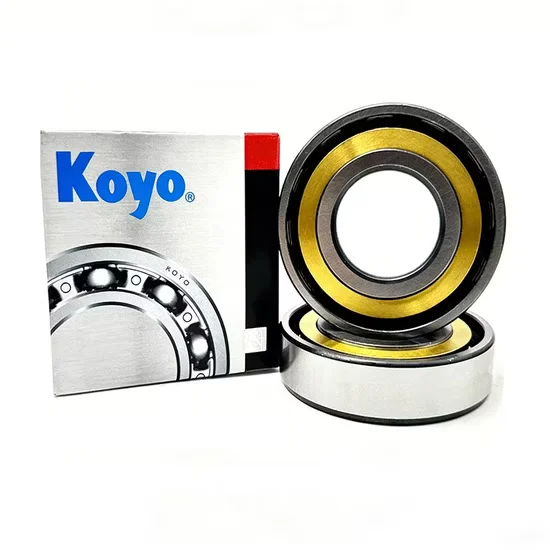
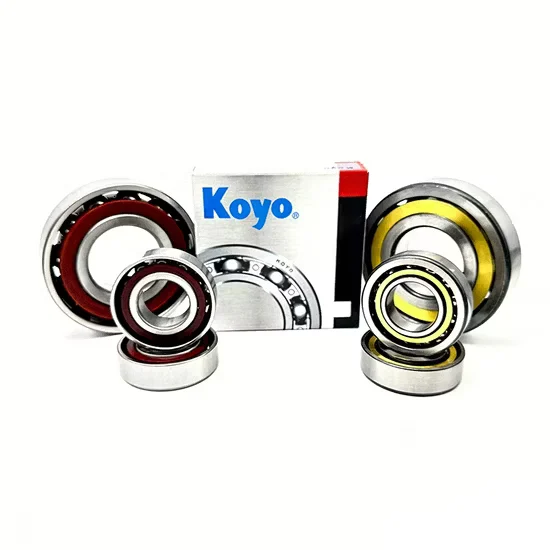
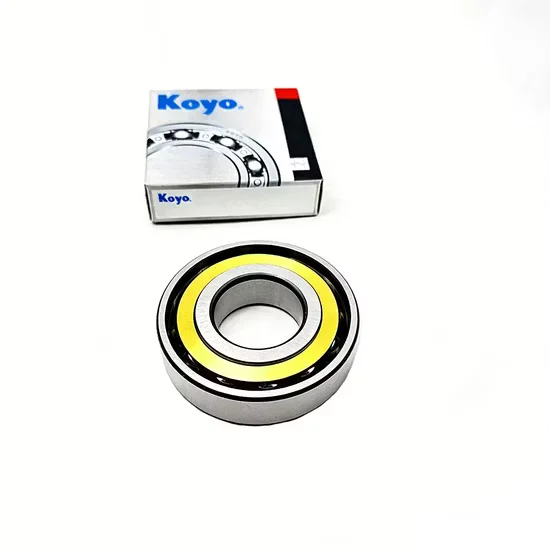
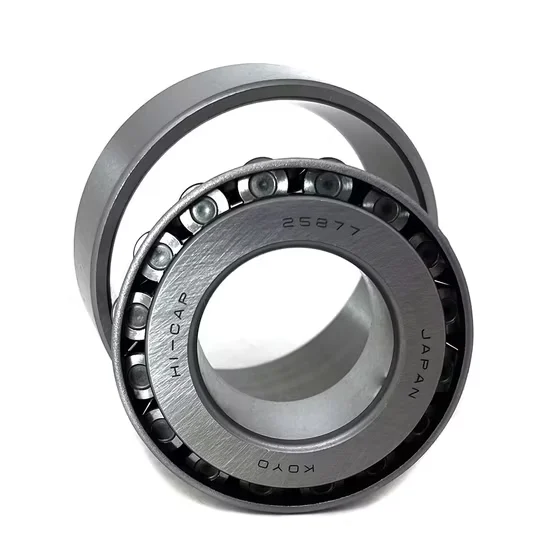
Copying the original part number does not guarantee performance.
Selecting Koyo angular contact bearings requires matching contact angles and preload to specific speeds and loads, not just replicating legacy part numbers. Misalignment in these parameters causes thermal runaway and premature failure, regardless of brand authenticity.
I still remember the smell of burnt oil in a Chicago workshop. A German client had insisted on replacing a failed spindle bearing with an exact replica of the original Koyo 7210C. On paper, it was a perfect match. In reality, the machine’s operating conditions had changed years prior, shifting toward higher axial loads that the original light-preload configuration could not handle. The new bearing seized within hours. This incident underscores a critical truth in industrial procurement: technical selection outweighs simple part number substitution. When sourcing Koyo angular contact bearings, one must evaluate the interplay between contact angle, preload class, and pairing configuration against current operational demands.
Understanding these nuances prevents costly downtime. The following guide breaks down the technical criteria necessary for informed purchasing decisions.
Why Do Koyo Angular Contact Bearings Fail in High-Speed Applications?
Thermal instability is rarely a material defect; it is usually a selection error.
High-speed applications generate significant heat due to friction and centrifugal forces. If the bearing’s internal geometry does not align with the rotational speed, heat builds up faster than it can dissipate. This leads to thermal expansion, which further increases preload, creating a vicious cycle known as thermal runaway.
A common mistake is assuming that a higher precision grade automatically solves overheating issues. While precision reduces vibration, it does not compensate for incorrect preload. In a case involving a European machine tool manufacturer, switching to P4 grade bearings without adjusting the preload setting resulted in no improvement. The root cause was the mismatch between the bearing’s contact angle and the spindle’s thermal growth characteristics.
When evaluating Koyo angular contact bearings for high-speed use, consider the following factors:
- Contact Angle: Smaller angles (e.g., 15 degrees) are better suited for high speeds as they generate less heat under radial loads. Larger angles handle heavier axial loads but produce more friction at high RPMs.
- Preload Class: Light preload minimizes heat generation but reduces rigidity. Heavy preload increases rigidity but raises operating temperature. The correct choice depends on the balance between required stiffness and allowable thermal rise.
- Lubrication: High-speed applications often require oil-air mist or jet lubrication rather than grease, which can churn and overheat.
Procurement teams must verify that the selected Koyo angular contact bearings are specified for the actual operating speed, not just the nominal rating. This often requires consulting with suppliers who understand the thermal dynamics of spindle systems.
How to Match Contact Angles and Preload to Your Application?
The contact angle determines the load capacity, while preload defines the rigidity.
Selecting the right combination is not intuitive. A 15-degree contact angle offers high-speed capability but limited axial load capacity. A 40-degree angle handles heavy axial loads but is unsuitable for very high speeds. The 25-degree angle serves as a versatile middle ground for many general-purpose applications.
Preload classes range from light to heavy. Light preload is ideal for high-speed, low-load scenarios where heat generation is a primary concern. Medium preload provides a balance for general machining. Heavy preload is reserved for applications requiring maximum rigidity, such as heavy cutting operations, where thermal management is handled through external cooling systems.
| Application Type | Recommended Contact Angle | Preload Class | Primary Benefit |
|---|---|---|---|
| High-Speed Spindles | 15 degrees | Light | Minimal heat generation |
| General Machining | 25 degrees | Medium | Balanced rigidity and speed |
| Heavy Axial Loads | 40 degrees | Heavy | Maximum axial load capacity |
A Middle East steel mill experienced repeated gearbox failures because they used single-row bearings with a 15-degree angle in a high-thrust environment. Switching to paired bearings with a 40-degree contact angle and appropriate preload resolved the issue. This highlights the importance of matching the bearing’s geometric properties to the specific load profile.
When sourcing Koyo angular contact bearings, ensure that the supplier provides detailed technical data on contact angles and preload options. Generic catalogs often lack this depth, leading to misapplication.
Single-Row vs. Paired Configurations: Which Matrix Fits Your Load?
Single bearings cannot manage combined loads effectively in precision applications.
While single-row bearings are simpler and cheaper, they are rarely sufficient for demanding industrial tasks. Paired configurations, such as back-to-back (DB), face-to-face (DF), or tandem (DT), offer superior performance by distributing loads and increasing rigidity.
- Back-to-Back (DB): Provides high rigidity against moment loads and is the most common arrangement for spindles. It allows for thermal expansion without inducing excessive preload.
- Face-to-Face (DF): Offers good rigidity but is less resistant to moment loads. It is easier to install but may require careful adjustment to avoid internal clearance issues.
- Tandem (DT): Used when high axial load capacity in one direction is required. Often combined with another pair in a back-to-back arrangement to handle bidirectional loads.
| Configuration | Axial Load Capacity | Rigidity | Thermal Sensitivity |
|---|---|---|---|
| Single Row | Low | Low | High |
| Back-to-Back (DB) | High (Bidirectional) | High | Moderate |
| Face-to-Face (DF) | Moderate (Bidirectional) | Moderate | Low |
| Tandem (DT) | Very High (Unidirectional) | High | Moderate |
A Latin American mining equipment distributor once supplied single-row bearings for a crusher application that required bidirectional axial support. The bearings failed prematurely due to inadequate load distribution. Switching to a DB paired configuration extended the service life meaningfully. This case illustrates that configuration selection is as critical as material quality.
When purchasing Koyo angular contact bearings, specify the desired pairing method clearly. Suppliers should provide matched sets with verified compatibility to ensure optimal performance.
How to Verify Genuine Koyo Bearings During Procurement?
Counterfeit bearings look identical but fail catastrophically under load.
The global market is flooded with counterfeit bearings that mimic the packaging and markings of genuine products. These fakes often use inferior steel and poor manufacturing processes, leading to early failure. Verifying authenticity is essential for maintaining equipment reliability.
Key verification steps include:
- Traceability Documentation: Genuine Koyo bearings come with batch-specific traceability documents. Request these from your supplier to confirm the origin.
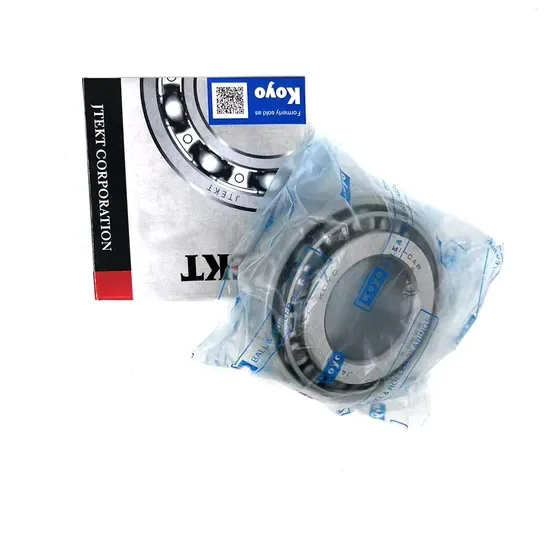
- Packaging Quality: Authentic packaging features high-quality printing, precise labeling, and security holograms. Counterfeit packages often have blurry text or misspelled words.
- Supplier Certification: Work with authorized distributors or suppliers with a proven track record. Ask for proof of their supply chain integrity.
A Southeast Asian manufacturing plant suffered significant downtime after installing counterfeit bearings that appeared genuine. The lack of proper traceability made it difficult to identify the source initially. Implementing a strict verification protocol prevented future occurrences.
When sourcing Koyo angular contact bearings, prioritize suppliers who offer complete traceability and transparent documentation. This ensures that you receive genuine products that meet the specified technical requirements.
Our approach to supplying Koyo angular contact bearings emphasizes technical accuracy and authenticity. We provide cross-brand consultation to help clients select the right specifications for their unique applications. By maintaining strict control over our supply chain, we ensure that every bearing meets the highest standards of quality and performance. This commitment to technical excellence helps our clients avoid the pitfalls of misselection and counterfeiting.
Conclusion
Correct selection prevents failure; authenticity ensures longevity.
Choosing the right Koyo angular contact bearings involves more than matching part numbers. It requires a deep understanding of contact angles, preload, and pairing configurations. Verifying authenticity through traceability and supplier certification protects against costly counterfeit failures. By focusing on these technical and procedural details, buyers can ensure reliable performance and extended equipment life.