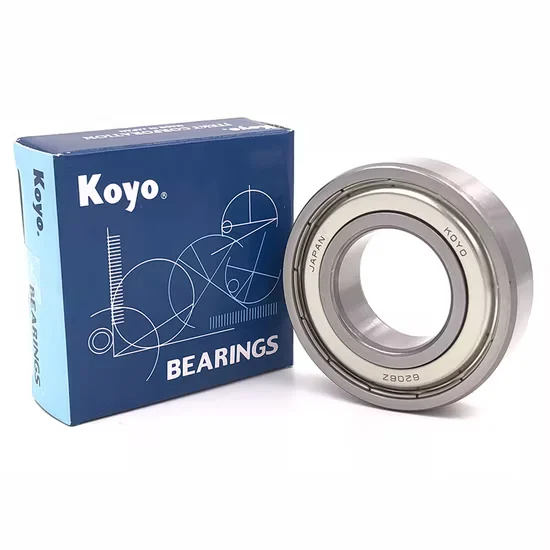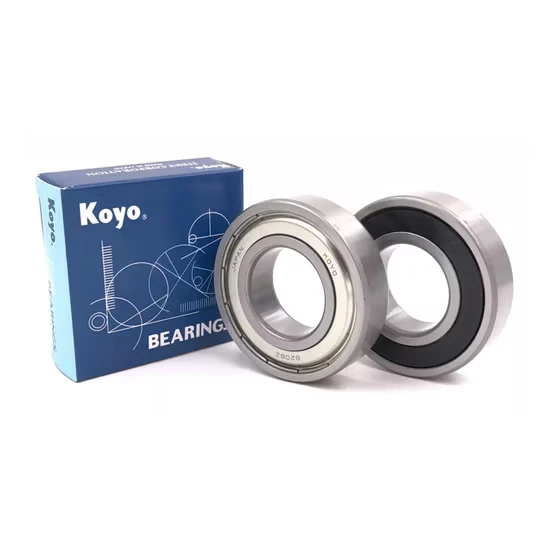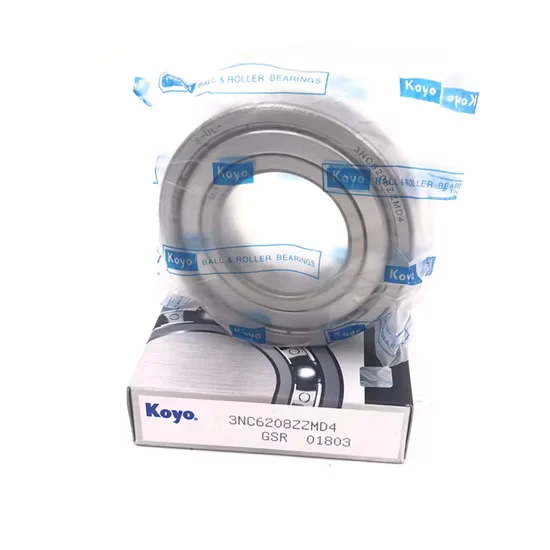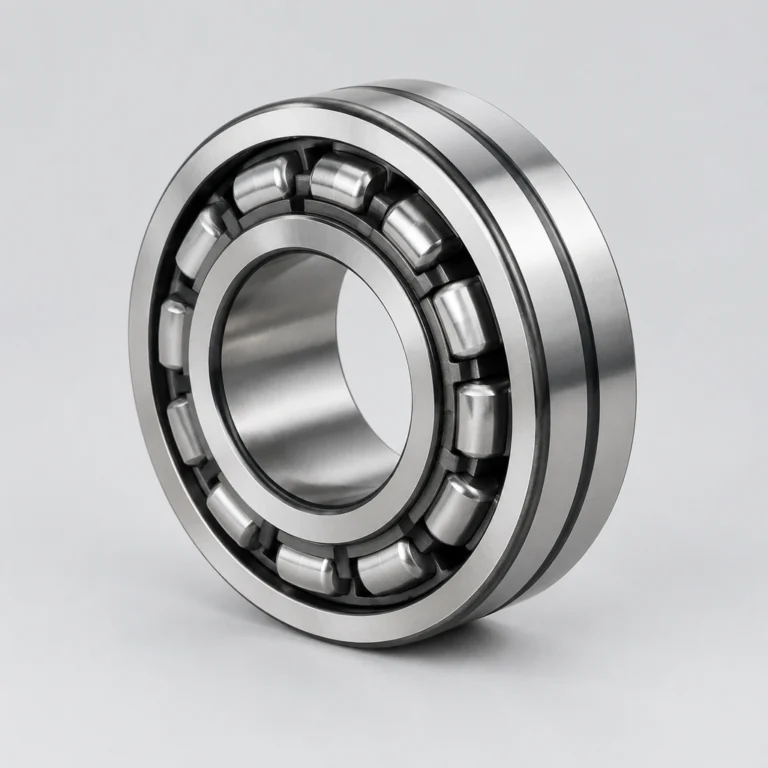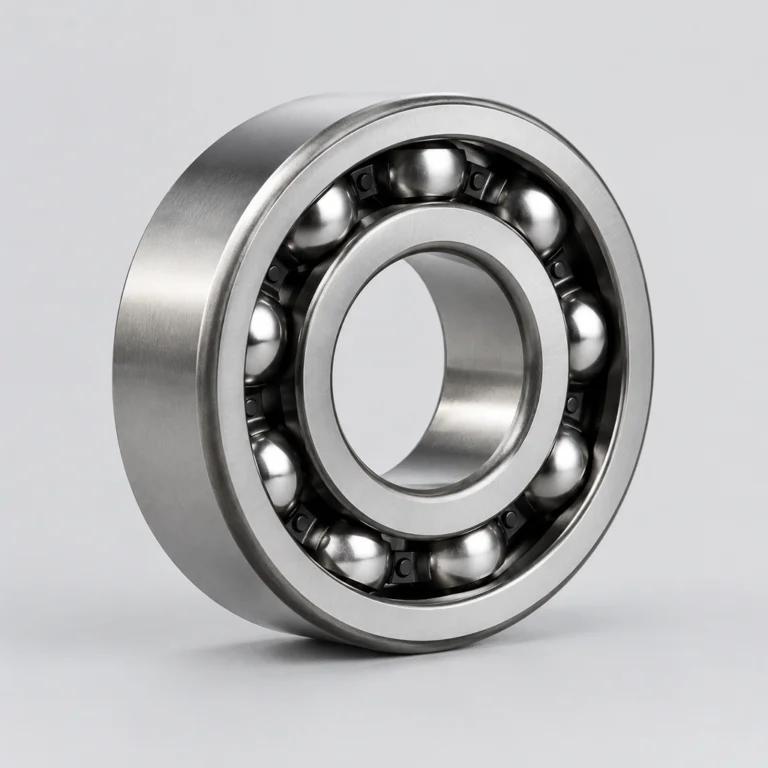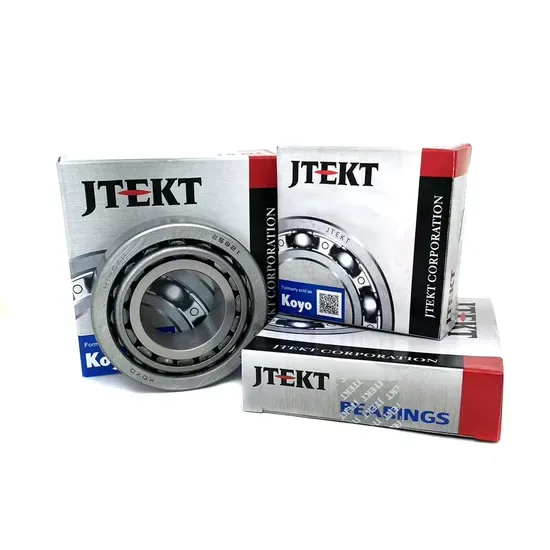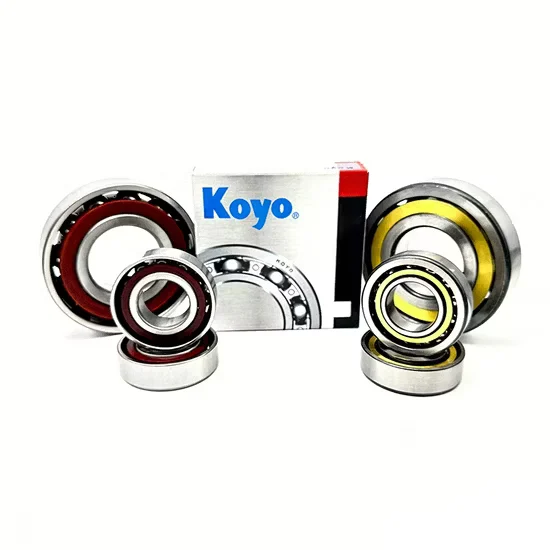
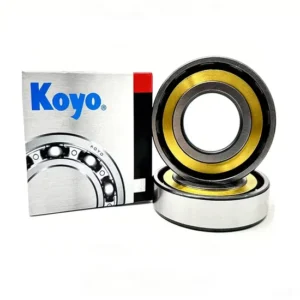
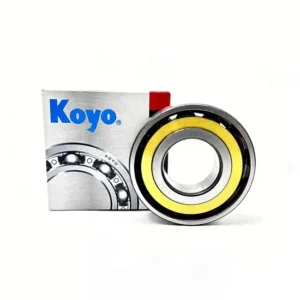
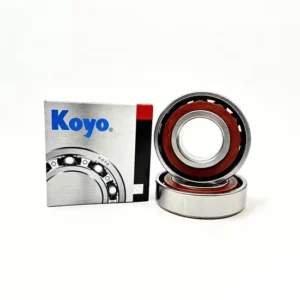
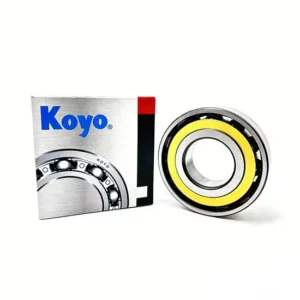
Original Factory Batch Traceability — Every Koyo 7000 unit ships with verifiable manufacturing lot records directly linked to the Japan production facility.
Technical Specifications
| Parameter | Value |
|---|---|
| Designation | Koyo 7000 |
| Product Type | Angular Contact Ball Bearing |
| Bore Diameter (d) | 10 mm |
| Outside Diameter (D) | 26 mm |
| Width (B) | 8 mm |
| Number of Rows | Single |
| Material | Bearing Steel |
| Seal or Shield Type | Open |
| Lubrication | Grease or Oil |
| Origin | Japan |
Application Suitability
| Industry | Typical Applications |
|---|---|
| Machine Tool Manufacturing | High-speed spindle front and rear support journals |
| Precision Robotics | Rotary joint actuators requiring minimal runout |
| Industrial Pump Systems | High-speed centrifugal pump impeller shaft supports |
Why Spindle Vibration Ruins Tolerances Before the Koyo 7000 angular contact ball bearing Fails
Precision loss precedes physical bearing failure in high-speed spindle assemblies.
Years ago at the Hanover trade fair, I sourced a spindle build using standard P0 tolerance bearings instead of high-precision variants. The result was excessive high-speed vibration and thermal seizure, destroying the machining tolerances long before the steel showed fatigue. When specifying a Koyo 7000 angular contact ball bearing for precision equipment, ignoring the strict relationship between running accuracy and thermal expansion guarantees scrap parts. The dynamic interaction between the rolling elements and the raceway generates localized heat that must be managed systematically.
Matching the Koyo 7000 angular contact ball bearing to Spindle Dynamics
Spindle environments demand components that handle combined radial and axial loads while maintaining strict dimensional stability. The single-row architecture of this Koyo 7000 angular contact ball bearing allows engineers to configure custom preload arrangements externally. Our technical team frequently assists clients in calculating the exact axial clamping force needed to prevent internal sliding under high-speed cutting loads, ensuring the open configuration receives optimal oil-air or grease lubrication.
Navigating Thermal and Lubrication Challenges at High RPMs
At elevated rotational speeds, friction heat generation becomes the primary enemy of dimensional accuracy. An open seal configuration eliminates the contact friction inherent in sealed variants, but it shifts the burden of contamination control to the machine housing. Engineers must balance oil-air lubrication flow rates carefully; too little causes starvation, while excessive oil churning generates parasitic heat. Furthermore, the bearing steel construction requires strict environmental controls to prevent micro-corrosion on the raceways during idle periods.
Decoding the Baseline Architecture and Open Configuration
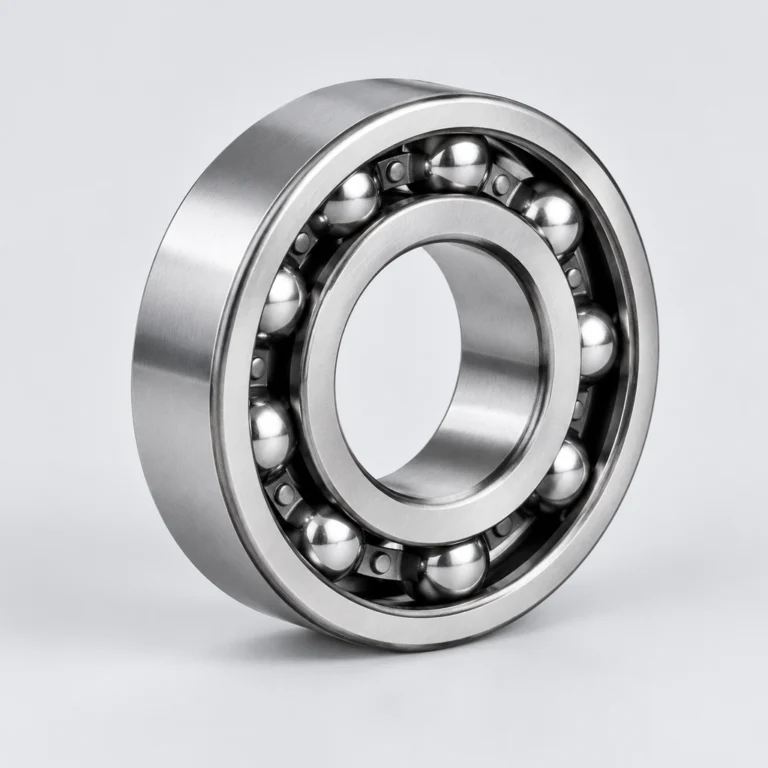
The 10x26x8 mm envelope defines a compact footprint suitable for multi-bearing spindle stacks where axial space is heavily constrained. Utilizing standard bearing steel, the rings and rolling elements achieve the necessary hardness for high-cycle fatigue resistance. The open seal type is deliberately chosen for precision spindles, allowing the integration of centralized oil-air lubrication systems that continuously flush away friction heat. Because there are no integrated seals, the single-row design relies entirely on the machine builder's housing seals to exclude coolant and metallic swarf from the rolling contact zones.
The Hidden Toll of Compromised Running Accuracy
Selecting a standard tolerance class for a high-speed spindle application inevitably leads to catastrophic geometric errors in the finished workpiece. According to failure analysis frameworks like ISO 15243, improper internal clearance or inadequate preload results in skidding, which rapidly degrades the raceway surface. This unplanned downtime not only halts production but often causes secondary damage to the spindle housing and adjacent drive components, voiding equipment warranties and escalating repair costs significantly.
Securing Authentic Precision Components for Critical Assemblies
Sourcing genuine precision bearings requires more than just matching the basic part number. Since the Koyo 7000 lacks specific suffix designations in this baseline form, verifying the exact precision class and internal clearance with the manufacturer's production facilities is critical to avoid receiving standard industrial grades. We cross-check every batch against original factory documentation, ensuring the open-type components meet the strict runout limits required for your spindle build. Our consolidation services allow you to mix these precision units with heavy-duty spherical roller bearings in a single shipment, optimizing your freight costs without sacrificing traceability or delaying your maintenance schedule.
Documentation & Authenticity
- Original factory batch traceability linking each Koyo 7000 unit to its Japan production date.
- Running accuracy inspection reports confirming dimensional tolerances before global dispatch.
- Material certification verifying the metallurgical grade of the bearing steel rings and rolling elements.
- Certificate of Conformity issued through authorized channels to guarantee authenticity.
Storage, Handling & Mounting
- Store the open-type Koyo 7000 in its original anti-corrosion packaging until the exact moment of spindle assembly.
- Use lint-free cleanroom gloves when handling the 10 mm bore to prevent skin acids from etching the bearing steel.
- Apply the specified spindle oil immediately after unpacking to protect the exposed raceways from ambient humidity.
- Maintain strict temperature control in the storage area to prevent thermal shock before precision mounting.
Engineering Review and Selection Support
To ensure this baseline designation meets your specific spindle requirements, please provide your target operating speed, expected axial and radial cutting loads, and the desired rigidity level. Our engineering team will review these parameters to recommend the appropriate precision class, internal clearance, and optimal preload configuration for your machine tool application.
Frequently Asked Questions
Q: How do I verify the authenticity of the Koyo 7000 angular contact ball bearing?
A: Authenticity verification requires checking the original factory batch traceability documentation and cross-referencing the lot number with the manufacturer's production records. We provide complete supply chain transparency, including Certificates of Conformity and dimensional inspection reports, ensuring every open-type unit originates directly from authorized Japan production facilities without intermediary tampering.
Q: What lubrication is recommended for this open-type bearing in high-speed spindles?
A: For high-speed machine tool spindles, oil-air or oil-mist lubrication is typically preferred over grease to effectively dissipate friction heat. Because the Koyo 7000 features an open seal configuration, it relies on the spindle housing's external lubrication system. The exact oil viscosity and flow rate must be calculated based on your specific rotational speed and cooling requirements.
Q: How does the single-row design handle combined loads compared to deep groove types?
A: The single-row angular contact architecture is specifically engineered to support significant axial loads in one direction alongside radial loads, unlike deep groove variants that primarily handle radial forces. In spindle applications, these bearings are usually mounted in opposing pairs or complex arrangements to manage bidirectional axial thrust and provide the necessary rigidity for precision cutting operations.
Q: What cross-reference equivalents exist for this baseline model from other brands?
A: While the Koyo 7000 serves as the baseline designation, equivalent models from other premium manufacturers like SKF, NSK, or FAG share the same 10x26x8 mm envelope and single-row angular contact geometry. When substituting brands, it is crucial to match not only the basic dimensions but also the specific precision class, internal clearance, and contact angle to maintain identical spindle performance and rigidity.
Q: What installation practices are critical for open-type spindle bearings?
A: Installing open-type bearings demands a meticulously clean environment to prevent microscopic contaminants from entering the exposed raceways. Technicians must use precision induction heaters for the inner ring fitting and apply the correct axial clamping force to establish the required preload. Any misalignment during the mounting process will induce uneven load distribution, drastically reducing the operational lifespan of the spindle assembly.