Tighter tolerances do not guarantee better performance in the field.
Selecting genuine Koyo bearings for agricultural machinery requires matching specific clearances and cage materials to extreme field conditions, not just matching basic dimensions. Standard industrial specifications often lead to premature thermal seizure or impact fracture when exposed to the high dust, shock loads, and temperature fluctuations typical of harvesters and tractors.
I still remember the humidity in that Brazilian warehouse. The air was thick with the smell of crushed sugarcane and diesel. A client stood there, holding a shattered bearing cage like it was evidence in a criminal trial. We had shipped what we thought were perfect Koyo tapered roller bearings, matched by dimension and standard precision. But in the relentless heat of the cane fields, the internal clearance vanished. The steel expanded, the lubricant broke down, and the brass cage disintegrated under stress. That failure taught me that a part number is not a specification. It is merely a starting point for a deeper engineering conversation.
The difference between a season-long harvest and a mid-season breakdown often lies in these invisible parameters. When you source components for heavy-duty farm equipment, you are not just buying steel rings and rolling elements. You are buying resistance to an environment that actively tries to destroy mechanical integrity. Understanding how to navigate these technical nuances is critical for distributors and OEMs who cannot afford field failures.
Why Do Standard Koyo Bearings Fail in Agricultural Machinery?
Extreme heat, dust, and shock loads exceed standard industrial tolerances.
Most catalog specifications assume a controlled environment. A factory floor has stable temperatures, filtered air, and predictable loads. An agricultural field has none of these. The primary cause of failure in agri-machinery is not material defect, but environmental mismatch.
Consider the combine harvester. It operates in a cloud of abrasive dust while subjecting its gearbox to violent vibrations from uneven terrain. If you install a standard sealed bearing designed for an electric motor, the seal will either fail due to pressure differentials or trap heat until the grease carbonizes. Once the grease turns to solid carbon, friction spikes, and the bearing locks up.
In my early years, I saw this happen repeatedly with clients who tried to save costs by using general-purpose deep groove ball bearings in PTO shafts. The radial load was manageable, but the axial shock from engaging the implement at speed created micro-spalling on the raceways. Within weeks, the noise level became unacceptable, and vibration destroyed adjacent seals.
| Failure Mode | Standard Industrial Spec | Agricultural Field Condition | Result |
|---|---|---|---|
| Thermal Management | Normal clearance (C0) | High ambient heat + friction | Thermal seizure |
| Contamination Control | Light sealing | Abrasive dust + mud | Seal lip wear & ingress |
| Load Profile | Steady state | Heavy shock & impact | Raceway spalling |
| Lubrication | Long-life grease | High shear stress | Grease breakdown |
This table highlights why a direct swap from industrial to agricultural applications is risky. The “Normal” clearance that works perfectly in a pump fails catastrophically in a tractor transmission because it does not account for the differential expansion between the inner ring, outer ring, and housing under high heat.
How to Choose the Right Koyo Bearing Types for Farm Equipment?
Match the bearing geometry to the dominant load vector.
Not all bearings are created equal, and not all Koyo series are suitable for every position on a harvester. The key is to identify whether the application is dominated by radial load, axial load, or a combination of both, and then select the corresponding architecture.
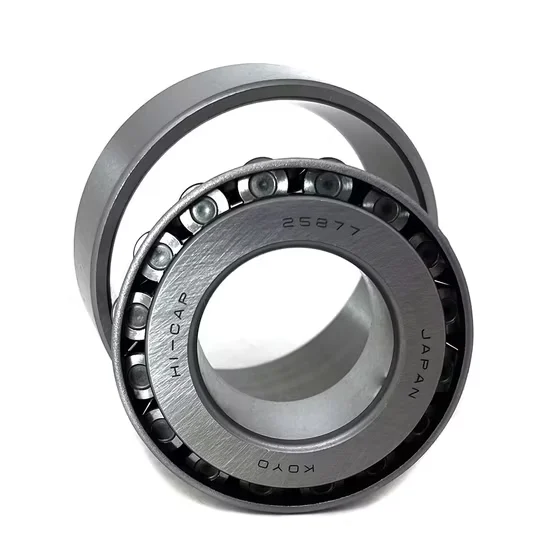
For heavy-load applications like wheel hubs and gearboxes, tapered roller bearings are the industry standard. They handle combined loads efficiently and can be adjusted for preload. However, the adjustment process is critical. Too loose, and you get play and impact damage. Too tight, and you generate excessive heat. I once consulted with a manufacturer in Southeast Asia who was experiencing premature failures in their tractor rear axles. The issue was not the bearing quality, but the assembly protocol. They were using a torque wrench setting intended for passenger cars, which was insufficient for the massive axial forces generated during plowing.
For high-speed applications like PTO shafts or fan drives, deep groove ball bearings are preferred due to their lower friction and ability to handle moderate misalignment. But here, the cage material becomes the limiting factor. Standard stamped steel cages can fatigue and crack under the continuous high-frequency vibration of a running engine. Switching to machined brass or polymer cages significantly extends service life in these dynamic environments.
When sourcing Koyo bearings for agricultural machinery, it is essential to verify the specific series designation. A standard 6205 series might look identical to a specialized agricultural variant, but the internal geometry and heat treatment could be vastly different. Always request the detailed technical datasheet that specifies the load ratings and limiting speeds for the exact operating conditions.
What Clearance and Cage Materials Suit Extreme Field Conditions?
C3/C4 clearances and brass cages prevent thermal seizure and impact fracture.
This is where the rubber meets the road, or rather, where the steel meets the soil. Clearance is the most misunderstood parameter in bearing selection. Many buyers believe that “tighter is better.” In agriculture, tighter is often deadly.
As the bearing operates, it generates heat. The inner ring, which is press-fitted onto a shaft, expands more than the outer ring, which is usually housed in a larger, cooler casting. If you start with a standard C0 clearance, this thermal expansion eliminates the internal gap. The rolling elements become pinched, friction skyrockets, and the bearing seizes. This is exactly what happened in that Brazilian sugarcane harvester. By switching to C3 or even C4 clearance, we allowed room for thermal expansion. The bearing ran hotter, yes, but it maintained its internal geometry and did not lock up.
Cage material is equally critical. In high-vibration environments like combine harvesters, stamped steel cages are prone to fretting and fracture. Machined brass cages offer superior strength and better heat dissipation. They can withstand the shock loads of harvesting rough terrain without deforming. For applications where weight and corrosion resistance are priorities, such as in sprayers or food-processing equipment, engineered polymer cages provide an excellent alternative. They are lighter, resist chemical attack, and have self-lubricating properties that help during startup.
| Component | Standard Option | Recommended for Agri-Machinery | Reason |
|---|---|---|---|
| Internal Clearance | C0 (Normal) | C3 or C4 | Accommodates thermal expansion |
| Cage Material | Stamped Steel | Machined Brass or Polymer | Resists vibration fatigue & shock |
| Sealing Type | Rubber Contact Seal | Labyrinth or Felt Seal | Balances protection with heat dissipation |
| Lubricant | General Purpose | High-Temperature EP Grease | Withstands shear and heat |
Selecting the right combination of clearance and cage material is not a guess. It is a calculation based on the expected operating temperature, load profile, and speed. Ignoring these factors leads to the kind of costly downtime that farmers and OEMs cannot afford.
How to Verify Genuine Koyo Bearings for Agricultural Use?
Traceability, packaging, and supplier technical support prevent counterfeit failures.
The market is flooded with counterfeit bearings that look identical to the genuine article but fail under a fraction of the load. For a distributor, selling a fake bearing is not just a financial loss; it is a reputation killer. One failed batch can destroy years of trust with local dealers and repair shops.
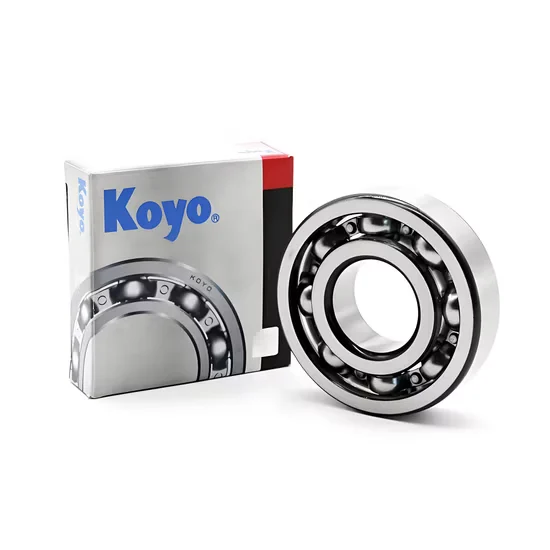
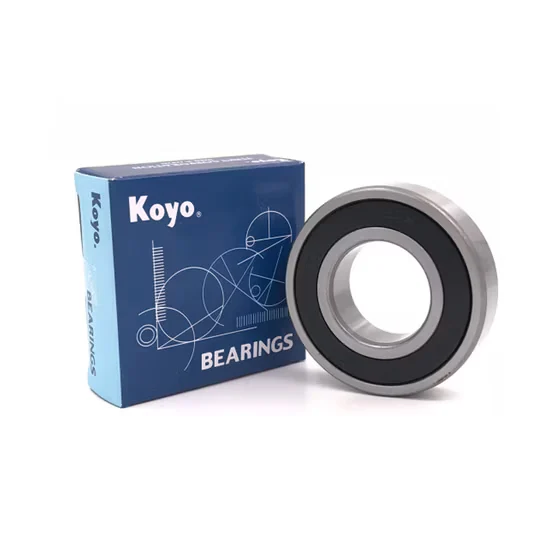
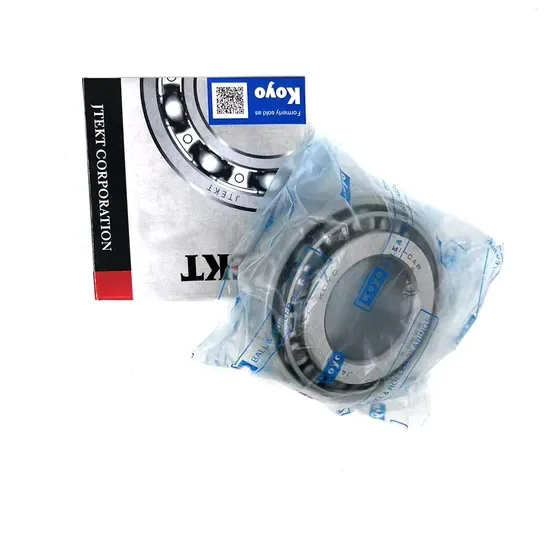
Verifying authenticity goes beyond checking the logo on the box. Genuine Koyo bearings come with specific traceability codes that can be verified with the manufacturer. The packaging itself is a clue. Counterfeit boxes often have poor print quality, misspelled words, or flimsy cardboard. But the most reliable indicator is the supplier. A reputable partner will provide full documentation, including material certificates and origin proofs. They will not hesitate to share technical data or assist with failure analysis.
I recall a case where a client in the Middle East received a shipment of bearings that looked perfect but failed within days. Upon inspection, we found that the steel quality was substandard, lacking the necessary purity for high-stress applications. The supplier had no technical support to offer and disappeared after the payment was made. In contrast, when working with a verified supply chain, we can trace every batch back to the production facility. This level of transparency is non-negotiable for critical agricultural applications.
When evaluating a supplier, ask for their process for handling mixed-brand orders. Can they provide consistent quality across different brands? Do they have the technical expertise to recommend equivalents when a specific Koyo model is out of stock? These questions reveal whether you are dealing with a box mover or a technical partner.
Conclusion
Precision without context is just a number.
Selecting the right components for heavy-duty farm equipment demands more than just matching part numbers. It requires a deep understanding of how heat, dust, and shock interact with mechanical design. By prioritizing appropriate clearances, robust cage materials, and verified authenticity, you ensure that your machinery survives the harsh realities of the field. Genuine Koyo bearings for agricultural machinery are engineered to withstand these challenges, but only if specified correctly. Trust in technical expertise and traceable supply chains to keep your operations running smoothly, season after season.