A single letter on a commercial invoice can trigger emergency air freight and line stoppages.
Correctly specifying seal types (2RS vs ZZ) and internal clearances (C3 vs CN) for KOYO deep groove ball bearings is critical to avoiding costly field failures. A wrong suffix does not just mean a return; it means dust ingress in washdown environments or thermal lock-up in high-speed applications, leading to downtime that costs far more than the bearing itself.
I still remember the humidity in the customs warehouse at Yantian Port, staring at a stack of bills of lading where a “Z” had been typed instead of an “S”. It was a small typo, but for the buyer in Southeast Asia, it meant a batch of motors arrived with metal shields instead of rubber seals. The fine powder in their production environment infiltrated the stators within days. The cost to replace the damaged motors and expedite the correct bearings via air freight was several times the value of the original order. That incident reinforced a hard truth: in industrial procurement, suffixes are not administrative details; they are technical specifications that define survival in the field.
Understanding these distinctions is the first step toward reliable sourcing. When you engage with a Koyo Deep Groove Ball Bearings Seals and Clearances wholesale supplier, the goal is not just to buy parts, but to secure the exact engineering configuration your machinery requires.
Why Suffix Errors Cost More Than the Bearings?
The assumption that any deep groove ball bearing will fit as long as the dimensions match is a dangerous oversimplification. The suffix code on a KOYO bearing dictates its internal geometry and protection level. A mismatch here does not result in a simple exchange; it results in operational failure.
Consider the logistics chain. A discrepancy between the technical drawing and the commercial invoice can cause customs rejection. I have seen shipments held at port for days because the declared suffix did not match the physical stamp on the bearing box. This delay forces buyers to choose between waiting and paying a premium for emergency air freight to keep production lines running. The financial impact of such delays often dwarfs the savings achieved through competitive sourcing.
Furthermore, field failures caused by incorrect specifications lead to unplanned downtime. In heavy industry, a single hour of stopped production can incur losses in the mid-six-figure range. When a bearing fails prematurely due to a wrong clearance or seal type, the root cause analysis often points back to the initial procurement error.
Working with a knowledgeable Koyo Deep Groove Ball Bearings Seals and Clearances wholesale supplier means having a partner who verifies these details before the goods leave the warehouse. This pre-shipment verification acts as a firewall against costly errors, ensuring that the documentation aligns perfectly with the technical requirements.
Seals Decoded: ZZ vs. 2RS vs. 2RZ
The choice of seal is determined by the operating environment, not just a preference for protection. Many buyers assume that metal shields are universally superior because they are robust. However, this is a misconception that leads to frequent failures in specific applications.
| Feature | ZZ (Metal Shields) | 2RS (Rubber Seals) | 2RZ (Non-contact Rubber) |
|---|---|---|---|
| Protection Level | Basic | High | Moderate |
| Friction | Low | Higher | Low |
| Best For | Large debris deflection | Fine dust and moisture | High speed with some protection |
| Contamination Risk | Vulnerable to fine powder | Robust against ingress | Resistant to moderate dust |
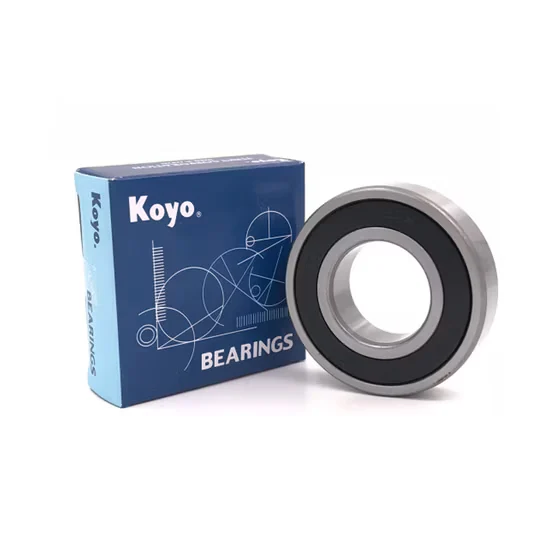
ZZ bearings use metal shields that do not contact the inner ring. They are effective at deflecting large debris and are suitable for clean, dry environments where low friction is prioritized. However, they offer little protection against fine dust or water spray. In a washdown environment or a facility with fine particulate matter, ZZ bearings will allow contaminants to enter, leading to rapid wear and failure.
In contrast, 2RS bearings feature contact rubber seals on both sides. These seals press against the inner ring, creating a barrier that is mandatory for environments with fine powder, moisture, or chemical exposure. While they generate slightly more friction and heat due to contact, they provide the necessary protection to ensure extended service life in harsh conditions.
2RZ bearings offer a middle ground with non-contact rubber seals. They provide better protection than ZZ shields against smaller particles while maintaining lower friction than 2RS seals. They are suitable for applications where speed is a concern but some level of environmental protection is required.
Selecting the right seal type requires a clear understanding of the operating environment. A Koyo Deep Groove Ball Bearings Seals and Clearances wholesale supplier should be able to guide this selection based on the specific contaminants present in your facility. Misidentifying the environment can lead to choosing ZZ seals for a dusty application, resulting in premature failure.
Internal Clearances: When to Specify C3
Internal clearance refers to the amount of play between the rolling elements and the raceways. The standard clearance, known as CN, is suitable for most general applications. However, assuming CN fits all scenarios is a common error that leads to thermal lock-up.
| Clearance Code | Description | Typical Application | Thermal Behavior |
|---|---|---|---|
| C2 | Less than Normal | Precision instruments | Minimal expansion room |
| CN | Normal | General motors, pumps | Standard expansion |
| C3 | Greater than Normal | High-temp, high-speed | Accommodates expansion |
| C4 | Greater than C3 | Extreme conditions | Maximum expansion room |
C3 clearance is designed to accommodate thermal expansion. In high-speed or high-temperature applications, the inner ring of the bearing heats up and expands. If the bearing has standard CN clearance, this expansion can eliminate the internal play, causing the rolling elements to bind against the raceways. This condition, known as thermal lock-up, generates excessive heat and leads to catastrophic failure.
A case involving a conveyor OEM illustrates this point. The client specified standard clearance for bearings operating in a high-temperature kiln environment. Within weeks, multiple bearings locked up due to thermal expansion. Switching to C3 clearance provided the necessary room for expansion, resolving the issue and ensuring stable operation.
Specifying C3 clearance is not about improving performance in normal conditions; it is about preventing failure in extreme conditions. For applications involving significant heat generation or high rotational speeds, C3 is often a requirement rather than an option.
When sourcing from a Koyo Deep Groove Ball Bearings Seals and Clearances wholesale supplier, it is essential to communicate the operating temperature and speed parameters. This information allows for the correct selection of clearance groups, preventing the risk of thermal lock-up and ensuring reliable performance.
How to Verify Your KOYO Order Before Shipping
Verification is the final safeguard against specification errors. Relying solely on part numbers without checking suffixes is insufficient, as different suffixes can share the same base number. A systematic approach to verification can prevent both customs delays and field failures.
- Cross-Check Technical Drawings: Compare the suffixes on the commercial invoice against the technical drawings provided by your engineering team. Ensure that seal types (2RS, ZZ) and clearance codes (C3, CN) match exactly.
- Verify Physical Stamps: Request photos of the bearing boxes and the bearings themselves before shipment. The suffix code is typically stamped on the bearing outer ring or printed on the box label. Visual confirmation ensures that the physical product matches the documentation.
- Confirm Traceability Documentation: Genuine KOYO bearings come with traceability documentation. Verify that the batch numbers on the certificates match those on the products. This step ensures authenticity and provides a record for quality assurance.
- Review Customs Declarations: Ensure that the description on the commercial invoice accurately reflects the suffixes. Discrepancies here can lead to customs holds, delaying delivery and increasing costs.
Implementing these verification steps requires attention to detail and a reliable supply chain partner. A professional Koyo Deep Groove Ball Bearings Seals and Clearances wholesale supplier will support this process by providing detailed documentation and facilitating pre-shipment inspections. This collaboration reduces the risk of errors and ensures that the bearings received are exactly what was ordered.
Conclusion
Precision in specification prevents expense in operation.
Selecting the correct seals and clearances for KOYO deep groove ball bearings is a technical necessity, not an administrative formality. Understanding the difference between 2RS and ZZ seals, and knowing when to specify C3 clearance, protects your machinery from preventable failures. Partnering with a supplier who prioritizes verification and technical accuracy ensures that your procurement process supports, rather than hinders, your operational goals.