Mixing brands to cut costs often inflates claim losses.
To safely source mixed Koyo and other brand bearing orders, you must enforce strict physical isolation between brands within every crate and submit brand-specific origin declarations for customs. Combining imported precision units with domestic general-purpose bearings in a single shipment optimizes freight efficiency, but it demands rigorous packaging protocols and precise documentation to prevent on-site misapplication and port delays.
I still recall the smell of burnt oil and metal shavings from a crusher in an African mine. Years ago, working out of a workshop in Dongguan, I packed an emergency MRO order into a single wooden crate. It contained high-precision Koyo tapered roller bearings alongside standard domestic spherical rollers. To save space and packing material, I stacked them together with only a thin layer of cardboard separating the boxes. There were no distinct inner partitions, and the outer markings were vague. When the crate arrived, the site storekeeper, under pressure to restart production, grabbed the wrong box. They installed a domestic bearing where a precision import was specified. The result was not just a premature failure; the main shaft seized, causing catastrophic damage to the crusher housing. The claim cost far exceeded the freight savings I had tried to achieve. That incident reshaped how I approach every consolidated shipment.
This lesson is not unique to me. Many buyers assume that mixing brands is purely a logistical convenience. In reality, it is a technical challenge that requires disciplined execution. Below, I break down the critical steps to manage these complex orders without risking your equipment or your reputation.
How should mixed Koyo and other brands be packed to avoid on-site errors?
Mandatory inner isolation and distinct labeling per brand are non-negotiable.
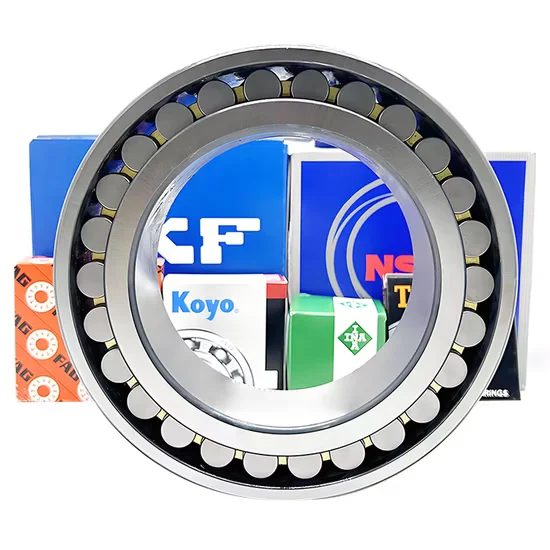
When you consolidate different brands, you are merging products with potentially different tolerances, lubrication types, and application contexts. A P5 precision angular contact ball bearing from a premium brand like NSK or FAG cannot share immediate space with a standard P0 deep-groove ball bearing without clear separation. The risk is not just physical damage during transit; it is human error at the point of use.
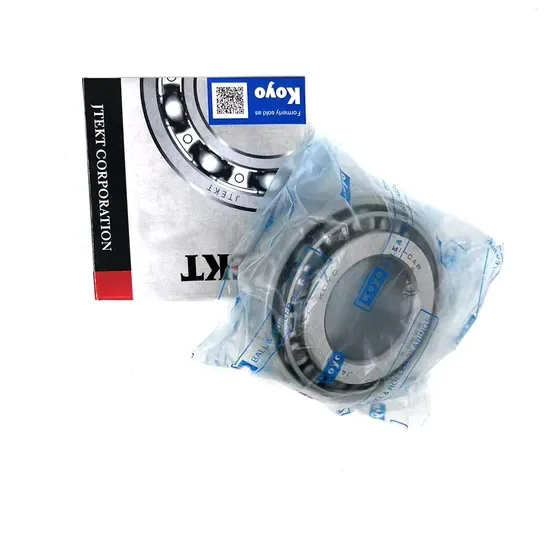
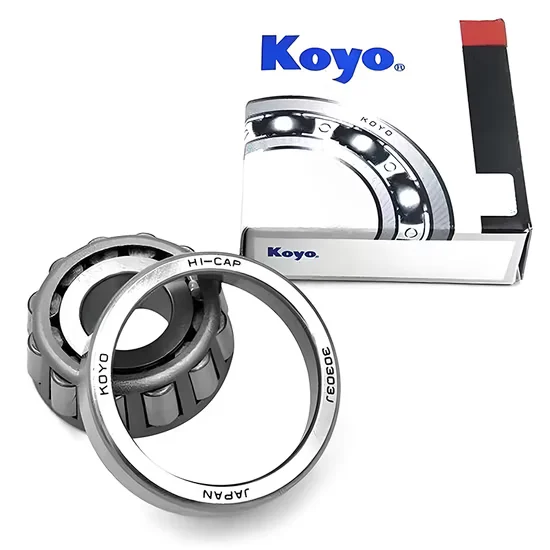
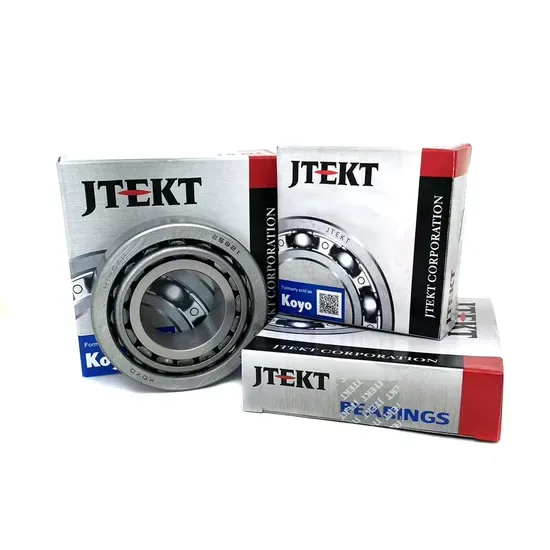
The core principle is “visual and physical segregation.” Every brand batch must be wrapped in its own protective layer, preferably shrink-wrapped pallets or distinct inner cartons, before being placed into the master container or crate. Using color-coded labels for different brands adds a second layer of safety. For instance, Koyo boxes might retain their original green branding, while domestic brands are marked with high-visibility tags indicating their specific grade and origin.
Consider the case of a distributor in Southeast Asia who ordered a mixed container for local resale. He requested Koyo bearings for heavy machinery clients and domestic brands for general agricultural repairs. By using rigid inner partitions and separate palletizing for each brand group, he ensured that his local warehouse staff could instantly identify the product tier. This reduced picking errors significantly. Without such measures, the similarity in box sizes across many bearing manufacturers makes misidentification almost inevitable in busy warehouses.
Furthermore, moisture protection must be consistent across all brands. Even if one brand has superior anti-corrosion packaging, the presence of another brand with weaker protection in the same enclosed space can raise the overall humidity risk. Desiccants should be distributed evenly, not just placed near the more sensitive items. This holistic approach ensures that the entire mixed Koyo and other brand bearing orders arrive in pristine condition, ready for immediate deployment or resale.
What customs documents are required for mixed-brand containers?
Detailed packing lists and separate origin declarations prevent clearance delays.
Customs authorities do not view a container as a single entity; they view it as a collection of individual line items, each with its own regulatory requirements. A common mistake is submitting a unified commercial invoice that lumps all bearings under a generic description. This vagueness triggers inspections, leading to days or even weeks of delay at the port.
For mixed shipments, the packing list must be granular. It should detail every SKU, specifying the brand, part number, quantity, and country of origin for each item. Koyo bearings, manufactured in Japan or other global facilities, have a different origin status compared to Chinese domestic brands. These differences affect duty rates and compliance with trade agreements. Failing to declare them separately can lead to accusations of misdeclaration, resulting in fines or seizure.
A European buyer once faced a significant delay because his invoice listed “bearings” without distinguishing between the Japanese-made Koyo units and the Chinese-made alternatives. Customs officials held the container for verification, requiring him to provide factory certificates and origin proofs for each brand. This process stalled his project timeline and incurred substantial demurrage charges. By contrast, providing a pre-cleared, detailed document set that explicitly separates the brands streamlines the release process.
Additionally, ensure that the HS codes are accurate for each type. While most rolling bearings fall under a similar heading, specific subheadings may apply based on size or application. Consistency between the physical goods, the packing list, and the invoice is paramount. Any discrepancy, no matter how minor, can halt the clearance of the entire mixed Koyo and other brand bearing orders. Professional procurement teams always cross-check these documents before shipment leaves the factory floor.
How to optimize MOQ and freight for mixed brand orders?
Consolidating high-turnover domestic with precision Koyo maximizes container space and cost-efficiency.
One of the primary drivers for mixing brands is economic. Premium brands often have higher minimum order quantities (MOQs) or longer lead times, while domestic suppliers offer flexibility and speed. By combining them, buyers can fill a container more efficiently, reducing the per-unit freight cost. However, this optimization requires strategic planning.
Start by analyzing your inventory turnover. High-volume, low-margin items like standard deep-groove ball bearings from domestic lines can form the base load. These fill the bulk of the space and provide steady cash flow. Then, integrate higher-value, lower-volume items like precision cylindrical roller bearings or specialized thrust bearings from Koyo or other global brands. This mix balances the financial risk and ensures that the container is fully utilized without overstocking slow-moving premium items.
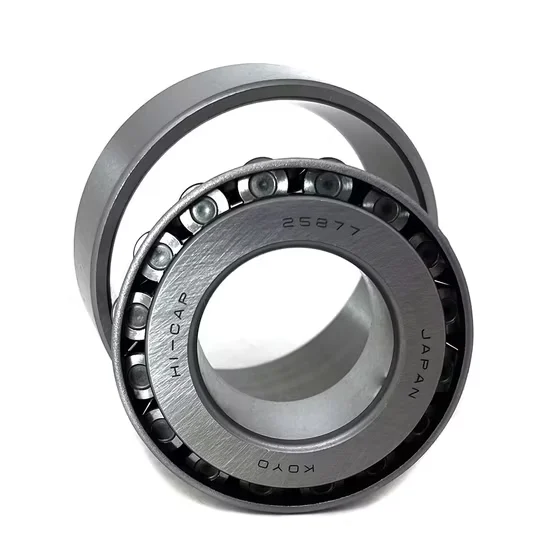
A mining operator in Latin America used this strategy to maintain his spare parts inventory. He stocked large quantities of domestic spherical roller bearings for routine maintenance of conveyor systems, which wear out frequently. For critical crusher applications, he kept a smaller, strategic stock of Koyo tapered roller bearings. By ordering them together in consolidated shipments, he reduced his total logistics spend while ensuring that critical spares were always available. This approach also simplified his procurement process, dealing with a single supplier for both tiers of quality.
It is crucial to communicate your volume ratios clearly to your supplier. A typical mix might involve a majority of domestic units by volume, with a smaller percentage of premium brands by value. This balance allows you to leverage the competitive pricing of local manufacturing while securing the reliability of global brands for critical applications. When executed correctly, mixed brand bearing wholesale becomes a powerful tool for cost control and supply chain resilience.
Conclusion
Strict isolation and precise documentation turn mixed shipments from a risk into an advantage.
Combining Koyo with other brands offers significant sourcing and freight benefits, but it demands rigorous attention to packaging and paperwork. Physical separation prevents on-site errors, while detailed customs declarations ensure smooth clearance. By mastering these elements, buyers can secure reliable, cost-effective supply chains for their industrial operations.