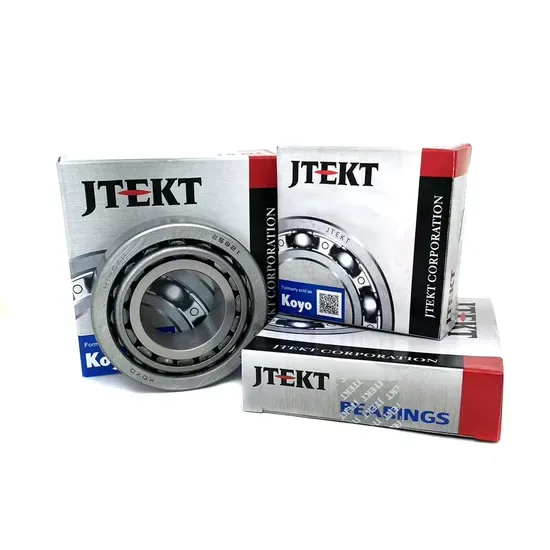
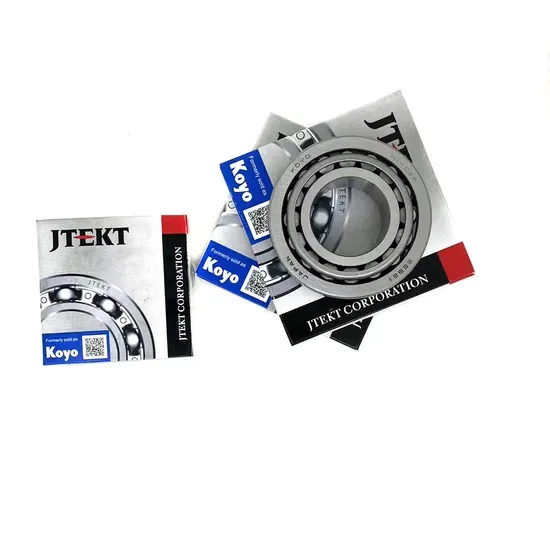
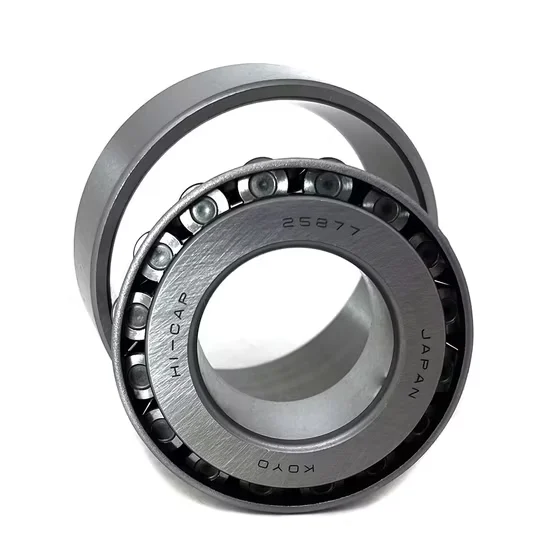
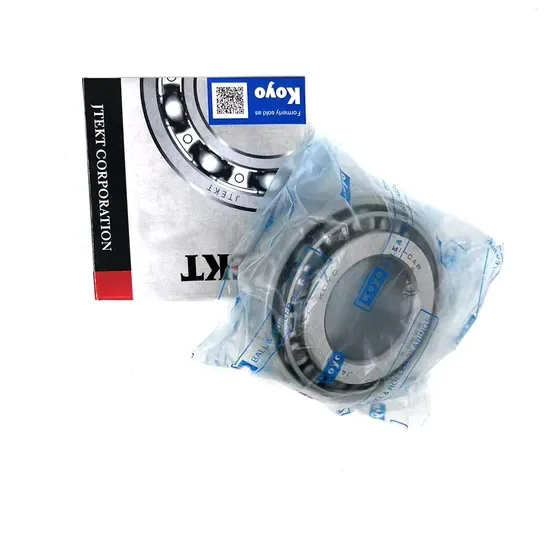
Thicker cartons do not guarantee safety in sea freight.
Proper OEM packaging for Koyo bearings balances transit safety and customs compliance, requiring strict control over carton strength, moisture protection, and labeling. For regional distributors and MRO buyers, the goal is not just protecting the metal, but ensuring the package survives humid port environments and clears customs without inspection delays. This means prioritizing corrugated flute structure over raw thickness, using verified VCI anti-rust materials, and applying waterproof labels that withstand condensation.
Having spent years handling outbound shipments from Dongguan, I learned the hard way that packaging is the first line of defense for brand reputation. A single collapsed box in a mixed-brand container can compromise an entire batch. The following details break down how to secure your supply chain through intelligent packaging choices, specifically when sourcing Koyo Bearings OEM Packaging Options Wholesale Supplier solutions for global distribution.
What Are the Standard OEM Packaging Options for Koyo Bearings?
Neutral packaging does not mean zero identification; it means compliant, unbranded exterior presentation.
When sourcing Koyo Bearings OEM Packaging Options Wholesale Supplier services, buyers typically encounter three main categories: neutral export cartons, custom-branded boxes, and mixed-batch consolidation packs. Each serves a different logistical purpose. Neutral packaging is the most common for distributors who wish to apply their own local branding or avoid direct brand comparison at the point of sale. However, “neutral” often confuses buyers into thinking no marks are required. In reality, customs regulations in many regions mandate clear country-of-origin labels and product descriptions, even if the manufacturer’s logo is absent.
Custom packaging involves printing the distributor’s logo and specific part numbers directly on the box. This requires higher minimum order quantities (MOQ) because printing plates must be created for each design. For smaller batches, this cost is prohibitive. Mixed-batch consolidation is where a supplier combines various bearing types and brands into a single shipment. Here, the packaging must be robust enough to handle uneven weight distribution and varying dimensions within the same container.
| Packaging Type | Best For | Labeling Requirement | Moisture Protection Level |
|---|---|---|---|
| Neutral Export Carton | Distributors rebranding locally | Generic origin label + barcode | Standard VCI paper |
| Custom Branded Box | Established local brands | Full custom print + legal text | Enhanced desiccant pack |
| Mixed-Batch Consolidation | MRO emergency orders | Individual item labels + master list | High-grade VCI + sealed wrap |
A Middle East steel mill operator once requested neutral boxes for a large order of spherical roller bearings. They assumed “neutral” meant blank boxes. When the shipment arrived, local customs held the cargo for days because there was no visible origin marking on the outer carton. The delay cost them significantly in demurrage fees. This highlights why understanding the nuance of Koyo Bearings OEM Packaging Options Wholesale Supplier standards is critical. The box must be clean of third-party logos but fully compliant with international trade documentation requirements.
How to Ensure Export Cartons Survive Long-Distance Sea Freight?
Corrugated flute type matters more than cardboard thickness for stacking strength.
Many buyers believe that ordering the thickest possible cardboard will solve all transit issues. This is a misconception. The structural integrity of a carton during sea freight depends largely on the Edge Crush Test (ECT) rating and the flute profile, not just the caliper of the board. Single-wall boards may suffice for light deep-groove ball bearings, but heavy tapered roller bearings require double-wall construction with specific flute combinations to resist vertical compression when palletized.
During the rainy season in South China ports, humidity levels spike dramatically. Cardboard absorbs moisture from the air, losing up to half its stacking strength within days if not properly protected. To counter this, export-grade cartons for Koyo Bearings OEM Packaging Options Wholesale Supplier shipments should use high-ECT rated board and be shrink-wrapped tightly on pallets to create a moisture barrier. Additionally, the palletizing pattern must distribute weight evenly. Stacking heavy boxes on top of lighter ones leads to bottom-layer collapse, a frequent cause of damaged goods upon arrival.
I recall a shipment destined for a tropical region where the buyer insisted on standard single-wall boxes to save costs. The containers sat on the dock for a week before loading due to port congestion. By the time they reached the destination, the bottom layer of boxes had buckled under the weight, crushing the bearings inside. The savings on packaging were negligible compared to the replacement costs. This experience underscores the need to prioritize ECT ratings and moisture resistance when evaluating Koyo Bearings OEM Packaging Options Wholesale Supplier proposals.
How to Avoid Customs Delays with OEM Labels and Barcodes?
Waterproof labels are non-negotiable for sea freight to prevent smudging and scanning failures.
Customs clearance relies heavily on accurate barcode scanning and legible text. Standard paper labels and inkjet printing are vulnerable to condensation inside shipping containers. When temperature fluctuations cause “container rain,” water droplets form on the interior surfaces and drip onto the cargo. If labels are not waterproof, the ink runs, barcodes become unreadable, and customs officials cannot verify the contents. This often triggers a manual inspection, leading to significant delays and potential fines for misdeclaration.
To avoid this, labels used in Koyo Bearings OEM Packaging Options Wholesale Supplier packages must be made of synthetic materials like polyester or polypropylene, which resist water and tearing. The adhesive should be strong enough to remain attached even if the box surface becomes damp. Furthermore, barcode placement is crucial. Placing barcodes near the edges or corners increases the risk of damage during handling. They should be centered on a flat surface, away from tape seams or folds.
A European distributor once faced a major setback when their entire container of bearings was held at the port because the barcodes on the outer boxes had smeared beyond recognition. The customs system could not match the physical goods to the digital manifest. It took weeks to resolve, involving manual counting and verification. Using durable, weather-resistant labeling is a small investment that prevents such logistical nightmares. When discussing Koyo Bearings OEM Packaging Options Wholesale Supplier specifications, always confirm the material grade of the labels and the printing method used.
What Are the MOQ and Cost Implications for Custom Packaging?
Volume thresholds dictate whether custom printing is cost-effective compared to neutral solutions.
Custom packaging offers brand visibility but comes with high upfront costs due to plate creation and minimum run requirements. For most regional distributors, the MOQ for custom-printed boxes is substantial, often requiring thousands of units per design. If your order volume does not meet this threshold, the per-unit cost skyrockets. In such cases, neutral packaging with high-quality adhesive labels is a more flexible and economical alternative. It allows for brand identification without the commitment of large print runs.
However, for large-scale projects or consistent high-volume imports, investing in custom packaging can enhance brand perception and reduce labor costs associated with applying individual labels. The key is to calculate the break-even point. If you import regularly, spreading the plate cost over multiple shipments makes custom boxes viable. For irregular or mixed-brand orders, sticking with neutral options provided by a reliable Koyo Bearings OEM Packaging Options Wholesale Supplier is smarter. It offers the flexibility to adjust order sizes without being locked into excessive inventory of empty boxes.
Additionally, some suppliers offer hybrid solutions, such as pre-printed generic boxes with space for custom stickers. This balances cost and branding needs. It is essential to discuss these options early in the procurement process. A transparent conversation about volume expectations and branding goals with your Koyo Bearings OEM Packaging Options Wholesale Supplier can lead to a tailored solution that optimizes both cost and market presence.
Conclusion
Packaging is not an afterthought; it is a critical component of product integrity and supply chain efficiency.
Selecting the right Koyo Bearings OEM Packaging Options Wholesale Supplier involves looking beyond the box itself to consider moisture control, structural strength, and regulatory compliance. By focusing on ECT-rated cartons, waterproof labeling, and appropriate VCI protection, buyers can ensure their bearings arrive in perfect condition, ready for immediate resale or installation. Avoid the pitfalls of assuming thicker is better or that neutral means unmarked. Instead, prioritize verified materials and clear communication with your supplier to tailor packaging to your specific logistical challenges.