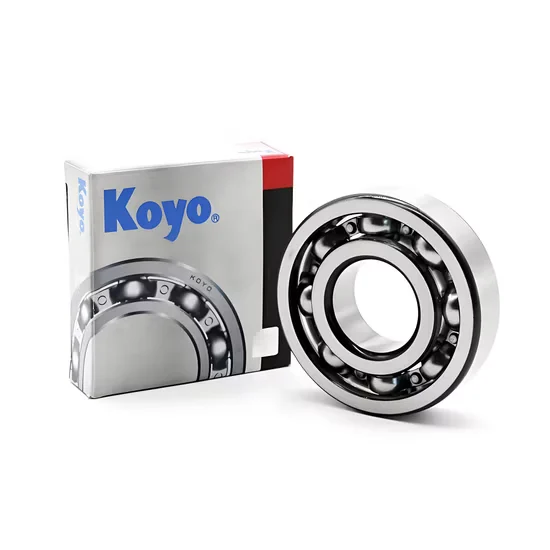
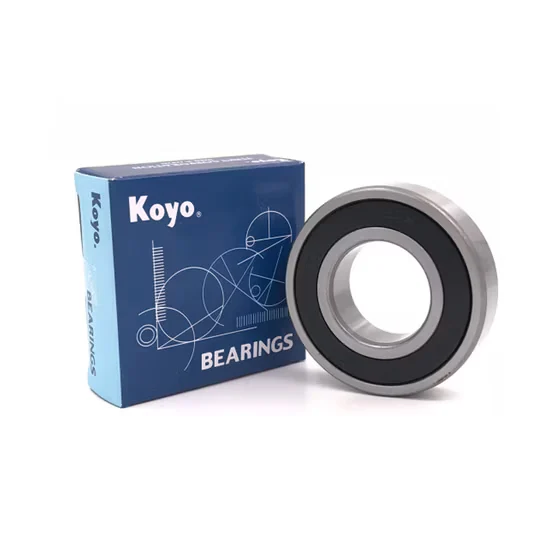
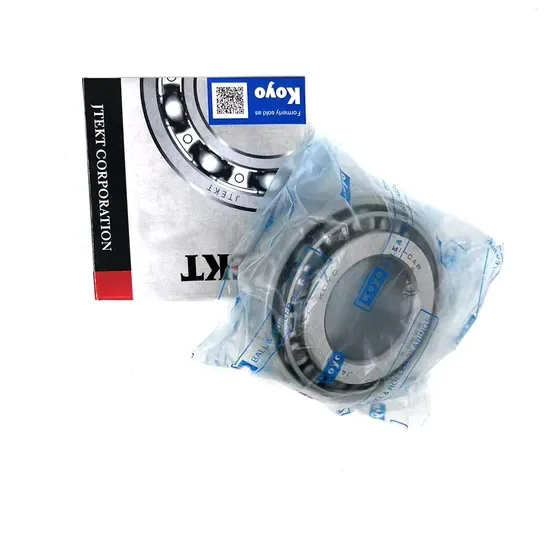
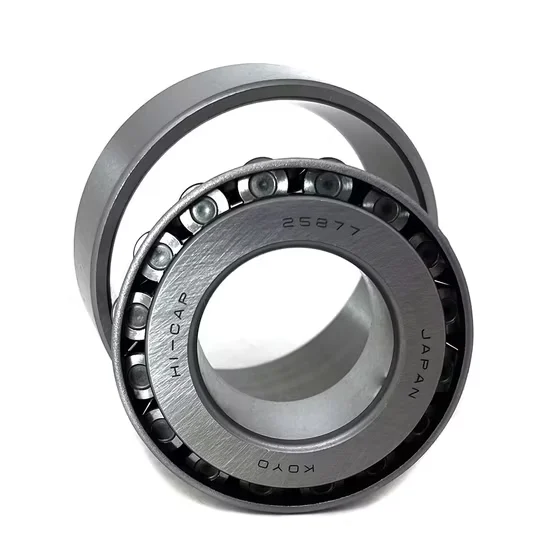
Matching old Koyo part numbers to current JTEKT equivalents is not a simple text swap.
Old Koyo designations do not directly match current JTEKT catalogs because the 2006 merger restructured naming conventions. You must cross-reference both the basic model number and the internal clearance suffix to avoid mismatched replacements that cause premature bearing failure.
I still remember the silence in the workshop after the main spindle seized. It was not the usual hum of production, but the heavy, expensive quiet of a stopped line. The maintenance team had replaced a failed unit using a drawing from five years prior. The paper said Koyo. The box said Koyo. But the machine refused to run. The issue was not counterfeit goods or poor installation. It was a suffix. The old designation implied a specific internal clearance that no longer existed in the new catalog under the same alphanumeric code. That downtime cost far more than the price of the correct bearing. Since then, I have learned that buying bearings is not about matching letters on a box. It is about understanding the engineering logic behind the label. When you search for an Old Koyo designations vs current JTEKT solution, you are not just looking for a part number. You are looking for continuity in performance.
The transition from Koyo to JTEKT was not merely a rebranding exercise. It was a structural integration of manufacturing standards and catalog systems. For buyers holding legacy drawings, this shift creates a hidden trap. The basic dimensions of a deep-groove ball bearing may remain identical, but the suffixes defining internal clearance, cage material, and lubrication have evolved. Ignoring these changes leads to what engineers call “functional mismatch.” The bearing fits the shaft, but it does not fit the operating conditions. This guide breaks down how to navigate this transition safely, ensuring your replacement parts meet the original engineering intent.
Why Did Koyo Change Its Designations?
The change stems from the formation of JTEKT Corporation. Before this consolidation, Koyo Seiko Co., Ltd. operated with its own distinct naming logic. Post-merger, the goal was to unify product lines across multiple legacy brands under a single global standard. This meant retiring older suffix codes that were ambiguous or redundant.
For a procurement manager in a steel plant or a distributor in Southeast Asia, this means that a part number printed on a blueprint from the early 2000s may not yield a direct hit in today’s digital catalog. The basic number, such as a 6205, remains stable because it defines the physical geometry. However, the suffixes tell the story of how that bearing behaves under load and heat. In the old system, certain clearance codes were implicit or used regional variations. The new JTEKT system aligns more closely with ISO standards but uses a different syntax to denote these features.
This is not a minor administrative update. It is a fundamental shift in how technical data is communicated. If you order based solely on the basic number, you risk receiving a bearing with standard clearance when your application requires C3 or C4. In high-speed or high-temperature environments, this error is catastrophic. The bearing will overheat, expand, and seize. Understanding the “why” helps you respect the “how.” It forces you to look beyond the primary identifier and scrutinize the secondary codes. When evaluating Old Koyo designations vs current JTEKT options, always assume the suffix has changed unless proven otherwise by a verified cross-reference table.
Old vs. Current: The Suffix Conversion Matrix
The most critical area of confusion lies in internal clearance. In legacy Koyo catalogs, clearance was often denoted by simple numeric or alphabetic suffixes that did not always map one-to-one with current ISO-based JTEKT codes. A direct substitution without checking this matrix is the most common cause of early failure in retrofits.
Consider the case of a mining crusher operator in Africa. They needed to replace spherical roller bearings that had failed due to heat. The old drawings specified a Koyo bearing with a legacy suffix indicating “greater than normal clearance.” The purchasing team ordered the current equivalent based on the basic number alone. The received units had standard internal clearance. Within weeks, the bearings failed again. The root cause was thermal expansion. The crusher generated more heat than the standard clearance could accommodate. The old suffix had been a specific instruction for a looser fit, which the new default did not provide.
To prevent this, you must use a conversion matrix. Below is a generalized comparison of how legacy clearance concepts map to current JTEKT standards. Note that this is a qualitative guide. Exact mapping depends on the bearing type and size series.
| Legacy Concept | Old Koyo Suffix Logic | Current JTEKT Equivalent | Risk of Direct Substitution |
|---|---|---|---|
| Standard Clearance | Often no suffix or basic code | C0 (Standard) | Low, if application is normal |
| Greater Than Normal | Specific legacy numeric/alpha codes | C3 | High, if omitted in hot environments |
| Even Greater Clearance | Rare legacy specialized codes | C4 | Critical, if used in high-vibration setups |
| Special Clearance | Custom factory codes | Consult Manufacturer | Very High, requires engineering review |
This table highlights why blind ordering fails. The “Risk” column is not hypothetical. It represents real-world downtime. When you are sourcing Old Koyo designations vs current JTEKT replacements, you must identify the original intent of the legacy suffix. Was it for heat? For vibration? For preload? Once you know the intent, you can select the correct current JTEKT suffix, such as C3 or C4, rather than guessing.
Hidden Risks of Direct Substitution
Many buyers believe that if the outer diameter, inner diameter, and width match, the bearing is interchangeable. This is a dangerous oversimplification. Bearings are precision components where microns matter. The internal clearance affects the load distribution, noise level, and service life.
A European wind farm operator once faced a series of gearbox failures. They had replaced legacy Koyo bearings with current models from the same brand family, assuming compatibility. The basic numbers matched. However, the old bearings had been manufactured with a specific cage material and lubrication variant denoted by an obsolete suffix. The new replacements used a standard polymer cage and generic grease. Under the variable loads and temperature swings of a wind turbine, the new cages degraded faster. The lubrication broke down under stress. The result was not immediate seizure, but a gradual decline in performance that led to unplanned maintenance windows.
This scenario illustrates the “hidden risk.” It is not always a dramatic explosion. Often, it is a slow bleed of efficiency and reliability. The cost of investigating these failures far exceeds the cost of verifying the suffixes upfront. When dealing with Old Koyo designations vs current JTEKT parts, you must consider:
- Internal Clearance: As discussed, this is the primary variable. Wrong clearance leads to overheating or excessive play.
- Cage Material: Old suffixes might indicate brass or steel cages, while new defaults might be polymer. Polymer cages have speed limits and chemical sensitivities.
- Lubrication: Legacy codes often included grease type. Modern equivalents may come dry or with a different standard grease. Mismatched grease can cause chemical incompatibility and sludge formation.
- Tolerance Class: Older drawings might specify ABMA classes, while new catalogs use ISO P0, P6, or P5. While often comparable, they are not identical in measurement methodology.
Ignoring these factors turns a simple replacement into a complex engineering problem. It is not enough to find a bearing that fits. You must find a bearing that performs.
How to Verify and Source Current Equivalents
So, how do you ensure you get the right part? The process requires diligence and access to accurate data. You cannot rely on memory or outdated PDFs. You need a dynamic cross-reference method.
First, gather all available data from the legacy part. This includes the full part number, any handwritten notes on the drawing, and the operating conditions of the application. If the suffix is illegible, look at the application context. Is it a high-temperature motor? Likely C3. Is it a precision spindle? Likely P5 or P4.
Second, use a verified cross-reference tool. Do not trust generic online converters that only match basic numbers. You need a system that maps suffixes. Many suppliers offer this as a value-added service. They maintain databases that link old legacy codes to current JTEKT equivalents. This is where professional expertise matters. A knowledgeable supplier can spot discrepancies that automated tools miss.
Third, request traceability documentation. When you receive the quote, ask for the full current part number including all suffixes. Verify this against the JTEKT official catalog. If the supplier cannot provide the full suffix breakdown, be cautious. Genuine Old Koyo designations vs current JTEKT cross-referencing requires transparency.
Finally, consider a sample order for critical applications. Before committing to a full container or a large batch, test a few units. Measure the internal clearance if possible. Run them in the machine under monitored conditions. This small step can save massive downtime later.
In my experience, the best approach is to treat every legacy replacement as a new engineering specification. Do not assume. Verify. Consult. And when in doubt, lean on suppliers who understand the history of the brand. They have seen the failures and know how to prevent them. Sourcing Old Koyo designations vs current JTEKT equivalents is not just about buying a product. It is about securing the reliability of your operations.
Conclusion
Legacy part numbers are clues, not commands.
The shift from Koyo to JTEKT changed the language of bearing specifications. Ignoring this change invites failure. By understanding the suffix conversion matrix and verifying internal clearance, you protect your machinery from hidden mismatches. Always prioritize technical verification over simple number matching.