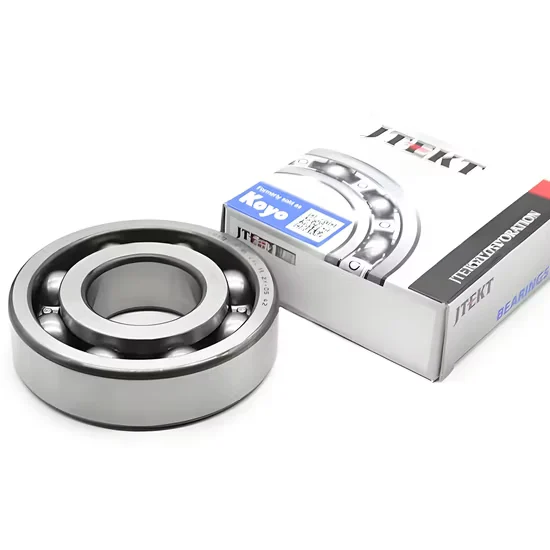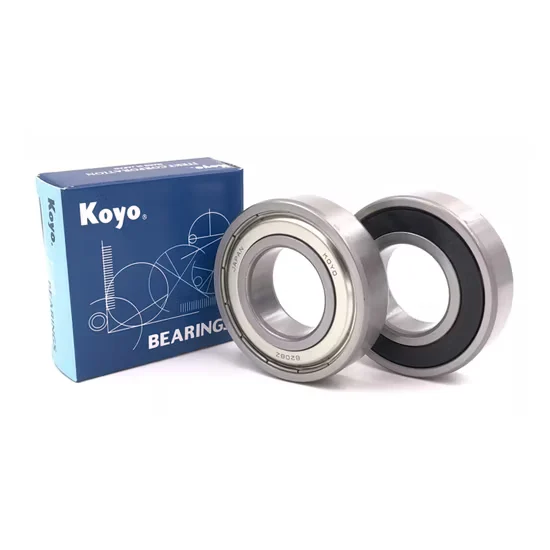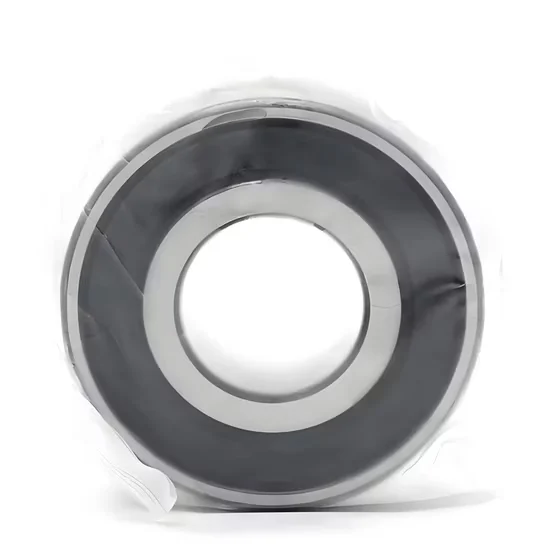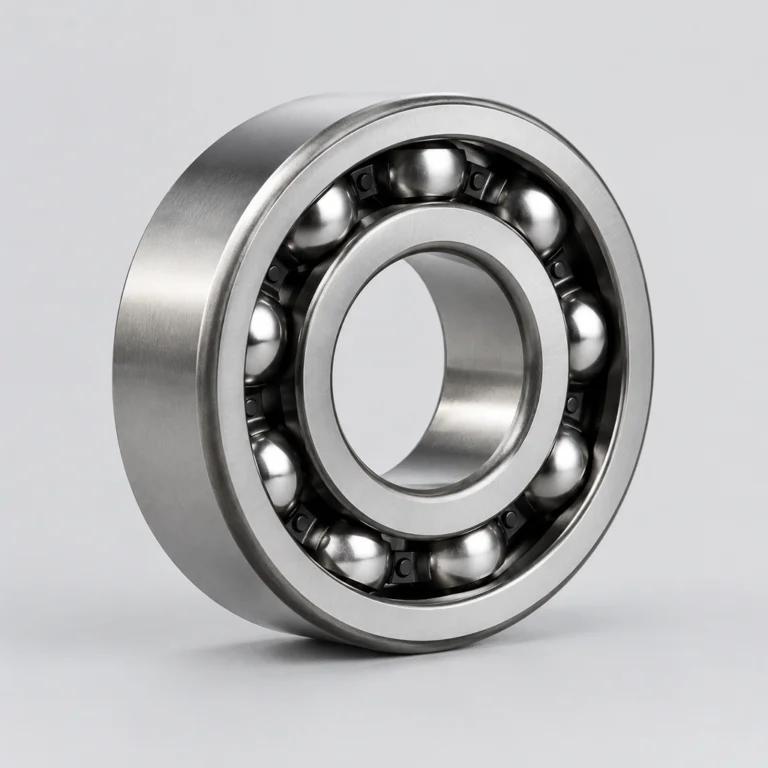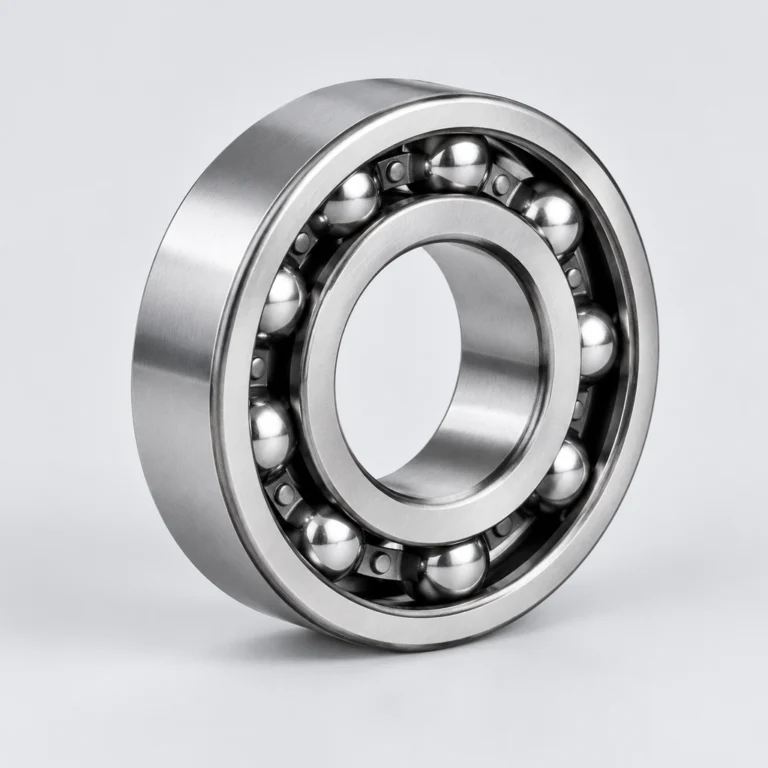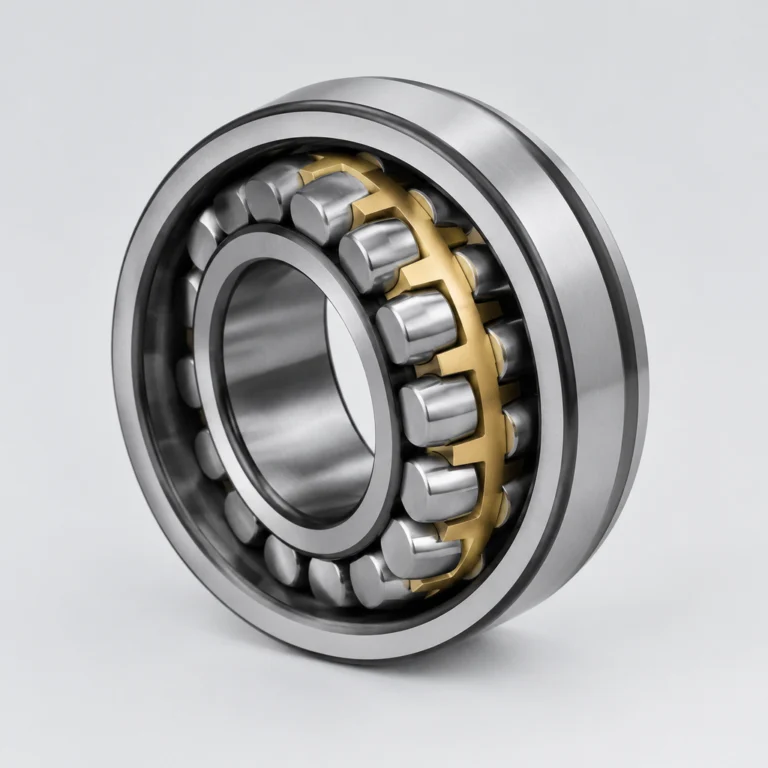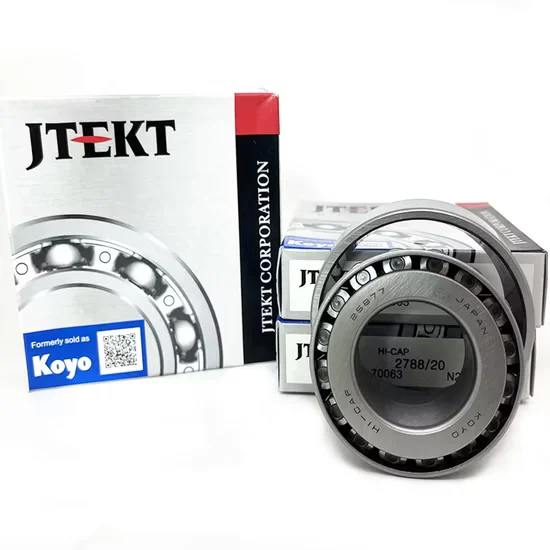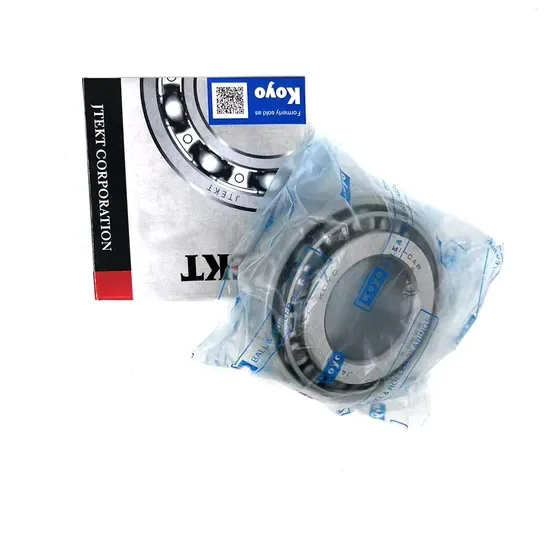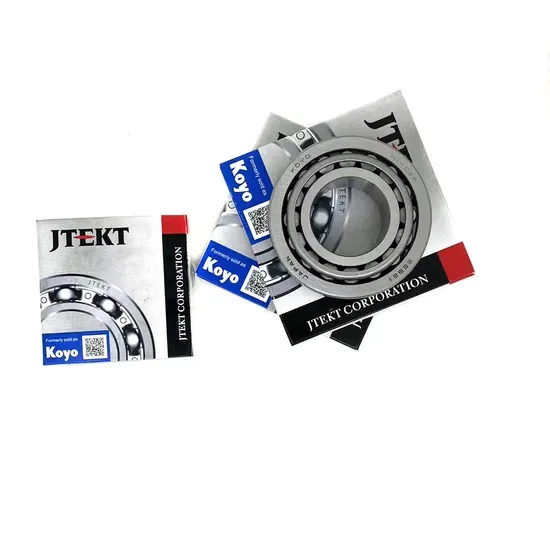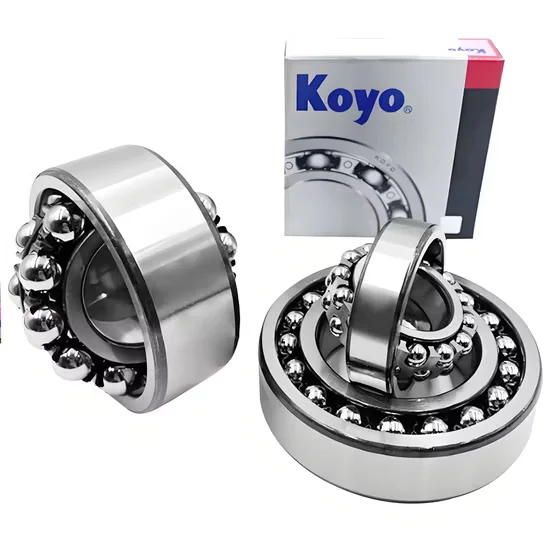
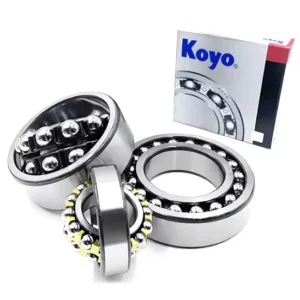
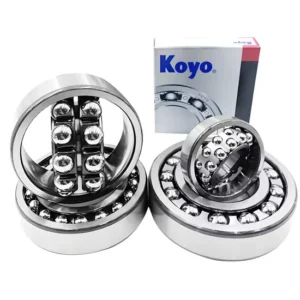
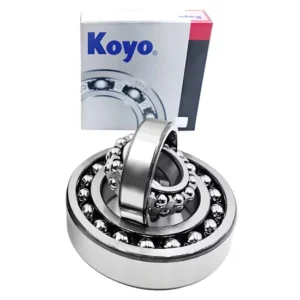
Cross-reference parameter alignment — We validate bore taper, seal friction, and radial clearance against equivalent models before dispatching your Koyo 2209K-2RS self aligning ball bearing.
Technical Specifications
| Parameter | Value |
|---|---|
| Designation | Koyo 2209K-2RS |
| Bearing Type | Self Aligning Ball Bearing |
| Bore Diameter (d) | 45 mm |
| Outside Diameter (D) | 85 mm |
| Width (B) | 23 mm |
| Rows Number | Double |
| Load Direction | Radial |
| Bore Type | Tapered 1:12 |
| Seal Type | Double contact seal |
| Material | Bearing Steel (stainless steel or ceramic options available for specific environments) |
| Origin | Japan |
Application Suitability
| Industry | Typical Applications |
|---|---|
| Agricultural Machinery | Harvester threshing drum shafts, tractor PTO drive supports |
| General Manufacturing | Conveyor belt idler rollers, vibrating screen exciters |
| Pumps & Reducers | Agitator shaft supports, gearmotor output stages |
Why Suffix Omissions Destroy the Koyo 2209K-2RS self aligning ball bearing in Dusty Environments
Missing a single seal designation turns a protected component into an immediate failure point.
Early in my career sourcing for European woodworking machinery, I specified the basic 2209K model but overlooked the seal suffix, accidentally shipping 2Z shielded variants instead of 2RS rubber seals. Fine wood dust bypassed the metal shields, packed into the internal clearance, and seized the entire batch. That costly return taught me to obsess over every suffix letter. Today, when supplying the Koyo 2209K-2RS self aligning ball bearing, we rigorously verify the seal configuration to prevent solid contamination, which remains a primary cause of premature failure.
Matching the Tapered Bore and Seals to Agricultural Loads
When specifying a Koyo 2209K-2RS self aligning ball bearing for agricultural conveyors, the 1:12 tapered bore ensures secure locking on adapter sleeves despite heavy radial shocks. Our engineering team cross-references your existing shaft tolerances to confirm the interference fit, preventing sleeve slippage during peak harvest operations.
Navigating Contamination and Misalignment in Heavy Machinery
Radial loads on pump shafts and agricultural conveyors often combine with slight housing misalignments, demanding the spherical outer raceway of this double-row design to prevent edge loading. However, the real operational challenge lies in particulate ingress; standard open bearings quickly degrade when exposed to abrasive dust or moisture. The double contact seals retain factory grease while actively blocking contaminants, though this increases friction slightly compared to non-contact shielded variants. Furthermore, proper adapter sleeve tightening on the tapered bore is absolutely critical to maintain the internal clearance after mounting, preventing excessive preload that accelerates fatigue.
Decoding the K Suffix and 2RS Seal Configuration
The "K" suffix indicates a 1:12 tapered bore, requiring precise drive-up measurements during installation to achieve the correct residual radial clearance. Unlike standard cylindrical bores, this taper allows for an adjustable interference fit on standard shafts using adapter sleeves, simplifying maintenance in the field. The "2RS" designation confirms double contact rubber seals, which provide superior exclusion of fine agricultural dust compared to metal shields. These seals operate effectively at moderate speeds, making them ideal for reducer output stages where thermal buildup is manageable. While standard bearing steel suits most general manufacturing tasks, stainless steel or ceramic rolling element options are available for highly corrosive or high-temperature environments. We always verify the exact seal lip material and clearance class against your operating temperature to prevent internal preload loss and ensure long-term reliability.
The Hidden Downtime Costs of Incorrect Seal Selection
Substituting a shielded variant for a fully sealed unit in dusty environments leads to rapid abrasive wear, categorized under surface fatigue and smearing in ISO 15243 frameworks. This unplanned downtime halts entire processing lines, far exceeding the initial component savings. Furthermore, improper clearance selection on a tapered bore causes excessive internal stress, resulting in premature cage failure. Correct specification eliminates these catastrophic damage risks and avoids warranty voidance due to misapplication.
Securing Authentic Japanese Bearings with Full Traceability
Sourcing genuine Japanese-manufactured bearings requires strict channel verification to eliminate counterfeit risks in your MRO supply chain. We procure this specific model directly from authorized channels, providing complete batch traceability for every Koyo 2209K-2RS self aligning ball bearing shipped to your facility. Our massive spot inventory covers thousands of standard part numbers, allowing flexible consolidation from single emergency spares to full container loads. When replacing legacy open bearings, our technical team guides the transition to sealed variants, ensuring the adapter sleeve dimensions remain fully compatible. We also supply detailed dimensional inspection reports to verify the 1:12 taper accuracy before global dispatch, guaranteeing exact fitment.
Documentation & Authenticity
- Certificate of Conformity confirming Japanese origin and authentic Koyo manufacturing batch.
- Original factory batch traceability documentation linking the specific 2RS seal production run.
- Dimensional inspection report verifying the 1:12 tapered bore tolerance before shipment.
- Material certification validating the bearing steel composition for radial load durability.
Storage, Handling & Mounting
- Keep the 2RS sealed units in original packaging until mounting to prevent rubber lip degradation from UV exposure.
- Use induction heating for adapter sleeves rather than open flames to preserve the factory grease inside the double contact seals.
- Measure the drive-up distance on the 1:12 tapered bore precisely to maintain the specified C3 or C4 residual clearance.
- Avoid using carbon steel wire brushes near the rubber seals during shaft preparation to prevent lip scoring.
- Store the tapered bore bearings horizontally in a climate-controlled environment to prevent uneven weight distribution on the cages.
Engineering Review for Tapered Bore Applications
To ensure optimal performance, please share your radial and axial load profiles, operating speeds, and ambient temperature ranges. Providing the exact shaft diameter and housing dimensions allows our team to calculate the required drive-up distance and verify the L10 life. If replacing an existing open bearing, supply the OEM equipment number so we can cross-reference the adapter sleeve compatibility.
Frequently Asked Questions
Q: How do I verify the authenticity of the Koyo 2209K-2RS upon delivery?
A: We provide a Certificate of Conformity and original factory batch traceability documents with every shipment. You can verify the manufacturing details and Japanese origin through official brand channels. Our quality team also includes a dimensional inspection report confirming the exact 1:12 tapered bore tolerances and 2RS seal specifications before dispatch.
Q: What are the cross-reference considerations for this tapered bore variant?
A: When cross-referencing to equivalent models, you must match the 1:12 taper ratio, the double contact seal configuration, and the specific radial clearance class. A mismatch in the seal type, such as using metal shields instead of rubber seals, will compromise dust exclusion. We validate all three parameters to ensure direct interchangeability.
Q: How does the double contact seal affect the limiting speed?
A: The 2RS rubber seals create slight friction against the inner ring compared to open or shielded designs, which reduces the maximum permissible operating speed. However, this trade-off provides essential protection against solid contamination in agricultural and manufacturing environments. We evaluate your specific RPM requirements to ensure the speed remains within the safe thermal limits.
Q: What mounting tools are recommended for the 1:12 tapered bore?
A: Installation requires a matching adapter sleeve, lock nut, and lock washer. We recommend using a feeler gauge to measure the internal clearance reduction during the drive-up process, ensuring the correct residual clearance is achieved. Hydraulic nuts can be used for larger assemblies to apply consistent axial force without damaging the seal lips.