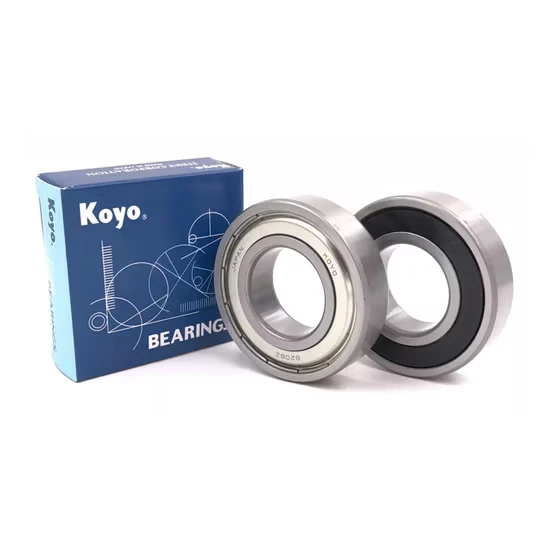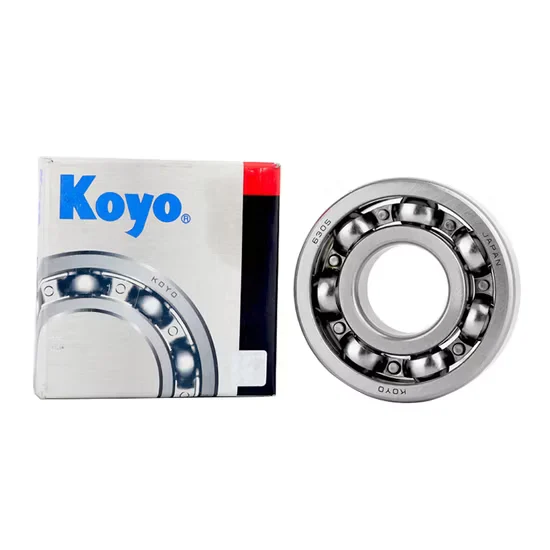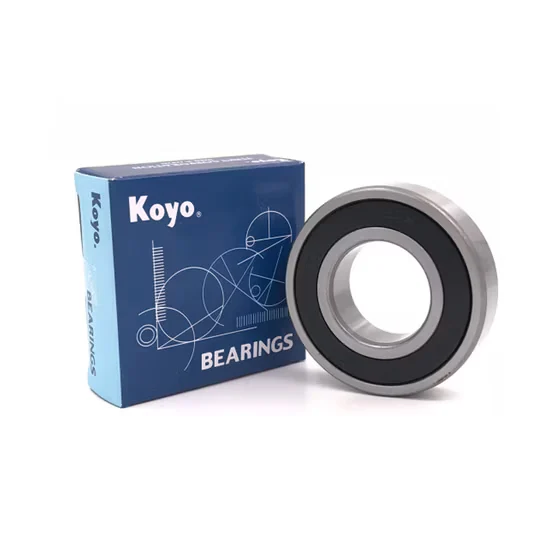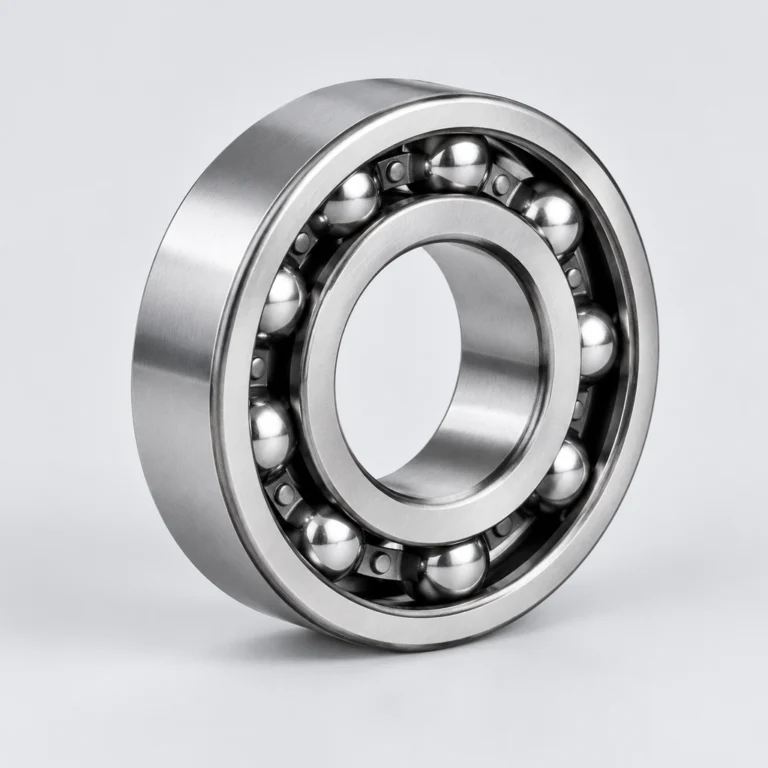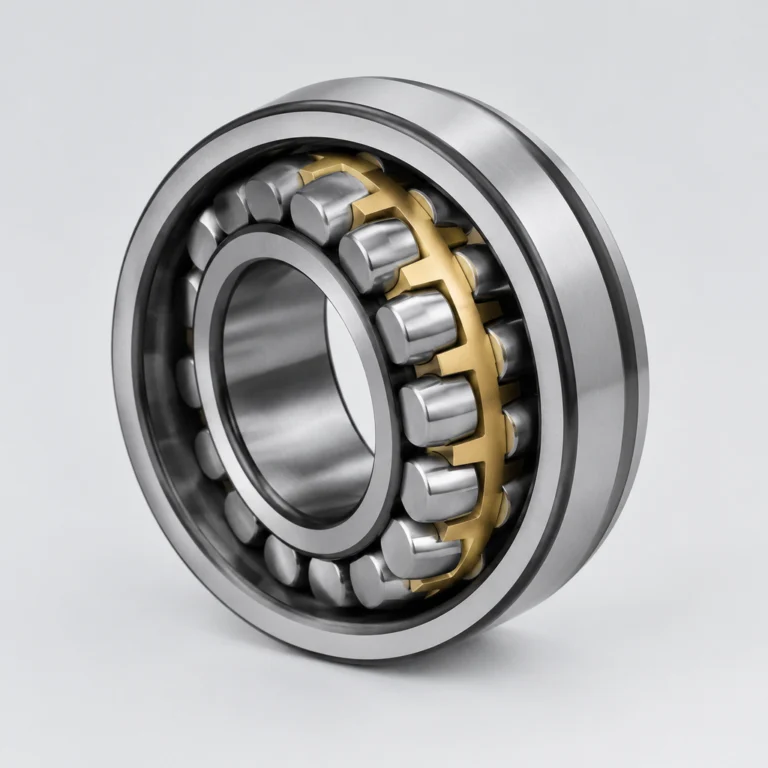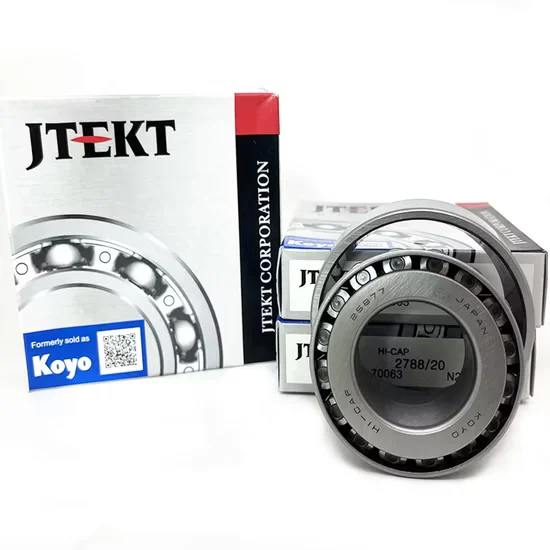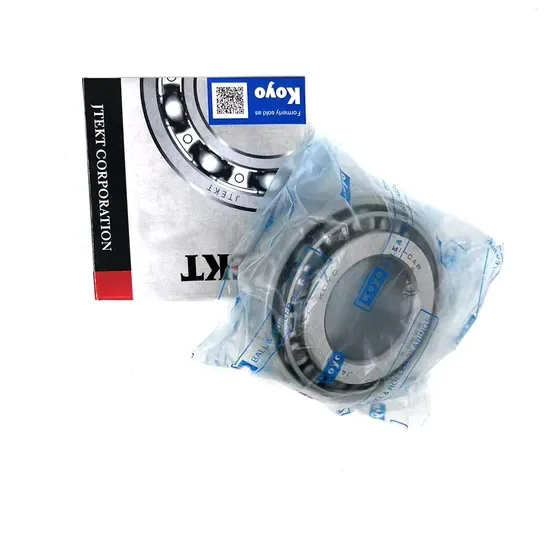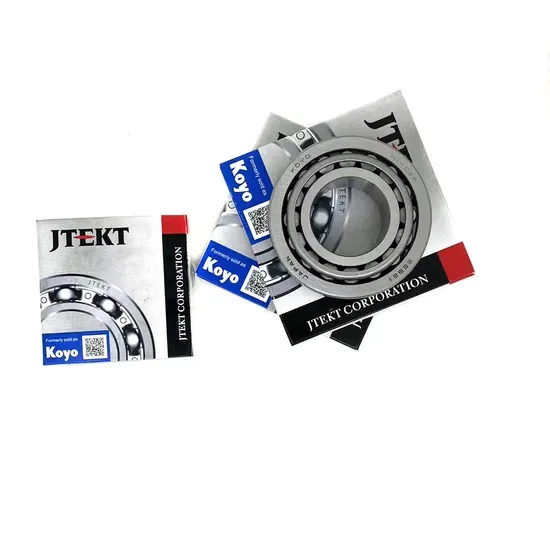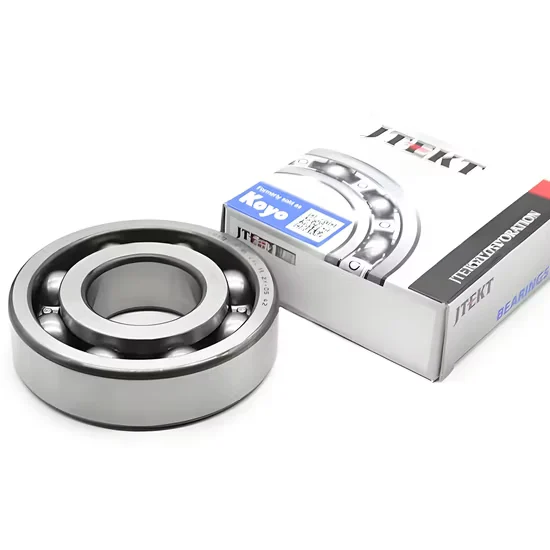
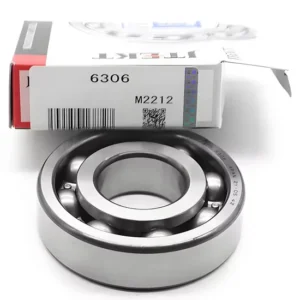
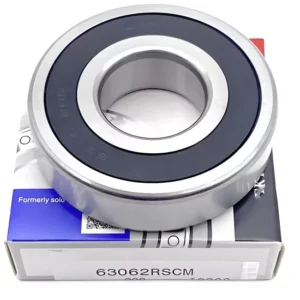
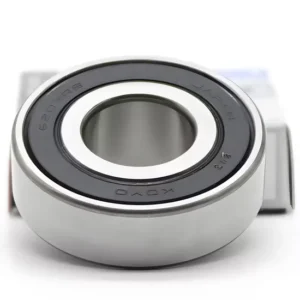
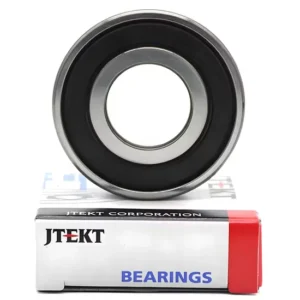
Original Batch Traceability — Every KOYO 6012 unit ships with verifiable Japanese factory lot documentation to guarantee authenticity.
Technical Specifications
| Parameter | Value |
|---|---|
| Designation | KOYO 6012 |
| Bearing Type | Deep Groove Ball Bearing |
| Bore Diameter (d) | 60 mm |
| Outside Diameter (D) | 95 mm |
| Width (B) | 18 mm |
| Seal or Shield Type | Open, ZZ, 2RS |
| Lubrication | Grease or Oil |
| Precision Class | P0, P6, P5, P4 |
| Vibration | Z1V1, Z2V2, Z3V3 |
| Material | Bearing Steel |
| Contact Angle | 0° |
| Arrangement | Non-Aligning Bearing |
| Separated | Unseparated |
| Number of Rows | Single |
| Load Direction | Radial Bearing |
| Origin | Japan |
Application Suitability
| Industry | Typical Applications |
|---|---|
| Electric Motors | Rotor shaft support in industrial AC/DC motors |
| Pumps | Centrifugal pump impeller shaft radial support |
| Conveyors | Drive pulley and tail roller bearing housings |
| Gearboxes | Intermediate and output shaft radial positioning |
Why Seal Selection Dictates the Survival of Your KOYO 6012 Deep Groove Ball Bearing
Matching the seal type to the specific contamination level prevents catastrophic internal abrasion.
Early in my career at an Indonesian palm oil mill, a conveyor mixer equipped with shielded bearings failed prematurely because fine organic dust bypassed the metal shields and jammed the cage. Since then, I have seen a significant share of premature failures traced back to ignoring environmental particulates. Choosing the correct sealing configuration for this KOYO 6012 deep groove ball bearing is not a minor detail; it is the primary defense against unplanned downtime in harsh processing plants. When fine abrasive powders infiltrate the raceway, they act like lapping compound, rapidly degrading the surface finish and initiating spalling. In contrast, heavy moisture ingress leads to hydrogen-induced cracking and severe corrosion pitting. Understanding these distinct failure mechanisms is crucial for maintenance engineers aiming to maximize the mean time between failures in continuous operation facilities.
Matching Radial Load Demands with Precision Grades
Selecting the right variant ensures optimal performance across diverse rotational speeds and load profiles. Our engineering team provides cross-brand equivalent model consultation to verify if your application requires a higher precision class or specific vibration limit. This technical selection support ensures the chosen configuration handles the exact radial loads of your machinery without over-engineering the procurement cost. Deep groove geometries inherently support moderate axial loads alongside primary radial forces, but the internal clearance must be carefully matched to the thermal expansion characteristics of the shaft and housing. When operating under heavy radial loads at elevated temperatures, a standard clearance might close up completely, causing excessive preload and rapid thermal runaway.
Managing Contamination and Lubrication Challenges
Radial loads in conveyors and gearboxes often combine with moderate shock, demanding reliable internal geometry and durable cage designs. High ambient temperatures in processing facilities can degrade standard grease, making the choice between oil and grease lubrication critical for thermal stability. Furthermore, exposed shafts in agricultural or mining equipment require contact seals to block moisture and abrasive particles, whereas clean-room electric motors benefit from non-contact shields to minimize friction heat. The interaction between the seal lip and the inner ring land generates localized friction, which must be accounted for when calculating the overall thermal equilibrium of the assembly. In applications where washdown procedures are mandatory, the sealing material must also resist chemical attack from aggressive cleaning agents.
Decoding the Core Configuration Options
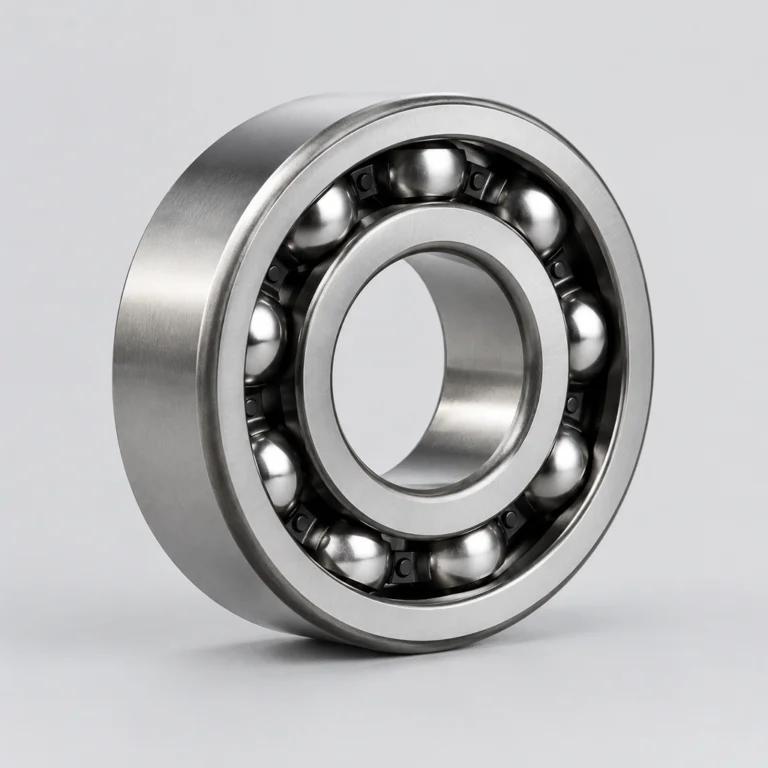
The available seal configurations define the operational boundaries of this KOYO 6012 deep groove ball bearing. Open variants allow for custom relubrication intervals and oil bath setups, while ZZ metal shields offer low-friction protection against coarse debris. The 2RS rubber contact seals provide superior exclusion of fine dust and moisture, albeit with a slight increase in rotational torque. Additionally, selecting between standard P0 and higher P5 or P4 precision classes directly influences the running accuracy and noise levels in high-speed electric motors. Vibration classes ranging from Z1V1 to Z3V3 further refine the smoothness required for sensitive household appliances or precision gearboxes. The bearing steel material provides excellent through-hardening characteristics, ensuring the raceways can withstand repeated Hertzian contact stresses without premature subsurface fatigue. Proper interpretation of these specification codes prevents the costly mistake of installing a high-friction sealed unit in a high-speed application where heat generation would rapidly destroy the lubricant.
The Hidden Costs of Incorrect Seal and Precision Selection
Specifying a non-contact shield in a heavily contaminated environment inevitably leads to abrasive wear and premature fatigue. According to ISO 281 framework principles, such contamination drastically reduces the calculated fatigue life, resulting in catastrophic damage to adjacent shaft components. Conversely, over-specifying precision and vibration classes for heavy-duty conveyors inflates procurement budgets without delivering measurable reliability gains. These misalignments frequently culminate in warranty voidance and extended production halts. Furthermore, ignoring the specific clearance requirements for interference fits can cause the internal geometry to bind, generating excessive heat that degrades the grease base oil. This thermal degradation accelerates cage wear and ultimately leads to sudden, unannounced mechanical seizure during peak production cycles.
Securing Genuine Components Through Verified Channels
Sourcing authentic Japanese-manufactured KOYO 6012 deep groove ball bearing units requires rigorous supply chain validation to avoid the severe consequences of counterfeit parts. We maintain massive spot inventory covering thousands of standard part numbers, ensuring rapid fulfillment for urgent maintenance requirements. Our cross-brand equivalent model consultation helps you identify exact replacements when original equipment manufacturer lead times are prohibitive. Furthermore, we provide complete traceability documentation for every shipment, eliminating the risk of fraudulent components entering your critical motors. Flexible consolidation shipments allow you to mix various seal types and precision grades in a single order, optimizing your global shipping logistics. When dealing with high-precision P4 variants, our specialized packaging and handling protocols ensure that the delicate raceway surfaces are not compromised during international transit.
Documentation & Authenticity
- Certificate of Conformity verifying genuine Japan origin for every batch.
- Original factory lot traceability documents matching the physical packaging.
- Official manufacturer app QR codes for instant field verification.
- Dimensional and running accuracy inspection reports confirming P4 tolerances.
- Material test certificates validating bearing steel composition.
Storage, Handling & Mounting
- Retain original factory packaging until installation to preserve the rust-preventative coating on open variants.
- Store 2RS sealed units away from direct UV exposure to prevent rubber seal degradation.
- Use induction heaters for mounting, ensuring even thermal expansion across the 60 mm bore.
- Avoid washing ZZ shielded bearings with aggressive solvents that could strip internal grease.
- Align the unseparated inner and outer rings carefully during press-fitting to prevent brinelling.
Engineering Review and Selection Guidance
To finalize the optimal configuration, please share your specific radial loads, operational speeds, and ambient temperature ranges. Providing the original equipment manufacturer part numbers allows our team to perform precise cross-reference verification. Detailing the environmental exposure helps us recommend the exact seal type and lubrication strategy for your application. Supplying the shaft and housing tolerance grades enables us to calculate the resulting internal clearance after mounting, ensuring the selected variant operates within its designed kinematic parameters.
Frequently Asked Questions
Q: How do the ZZ shields and 2RS contact seals differ for this model?
A: The ZZ metal shields provide non-contact protection against large particles with minimal friction, making them ideal for high-speed electric motors. The 2RS rubber contact seals create a physical barrier against fine dust and moisture, which is essential for conveyors and pumps in harsh environments, though they generate slightly more rotational heat.
Q: What precision class should I select for high-speed electric motor applications?
A: Standard P0 precision is sufficient for general industrial gearboxes and conveyors. However, for high-speed electric motors where vibration and noise must be minimized, upgrading to P6 or P5 precision ensures tighter dimensional tolerances. We also recommend specifying Z2V2 or Z3V3 vibration limits to guarantee smooth rotor operation.
Q: How can I verify the authenticity of the received components?
A: Every genuine unit features specific laser etching and packaging markers that can be scanned using the official manufacturer verification app. We also supply comprehensive traceability documentation, including the original factory batch number and Certificate of Conformity, allowing your quality assurance team to cross-check the physical markings against the shipping records.
Q: What is the recommended relubrication approach for the open variant?
A: The open variant requires external lubrication systems, such as oil baths or continuous grease purging, adjusted to your specific operating speeds and loads. Unlike sealed versions, open bearings allow maintenance teams to flush out contaminants and replenish lubricants periodically, which significantly extends service life in heavily loaded gearbox applications.