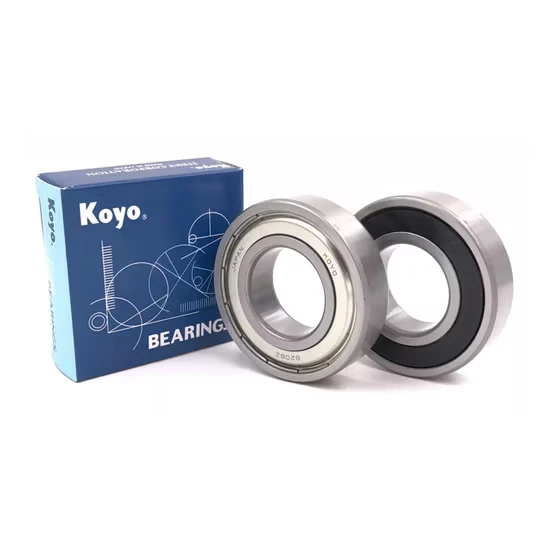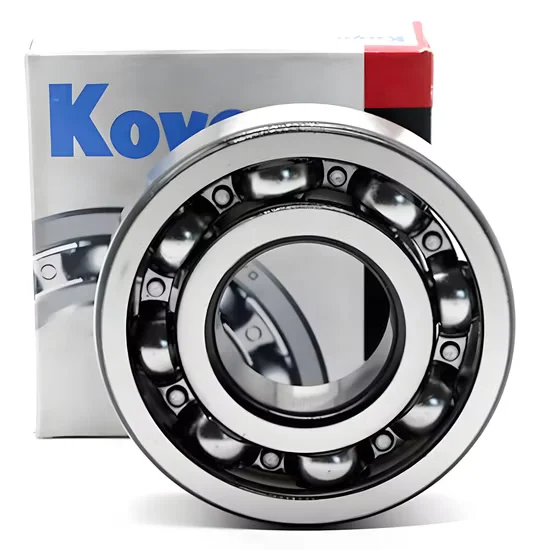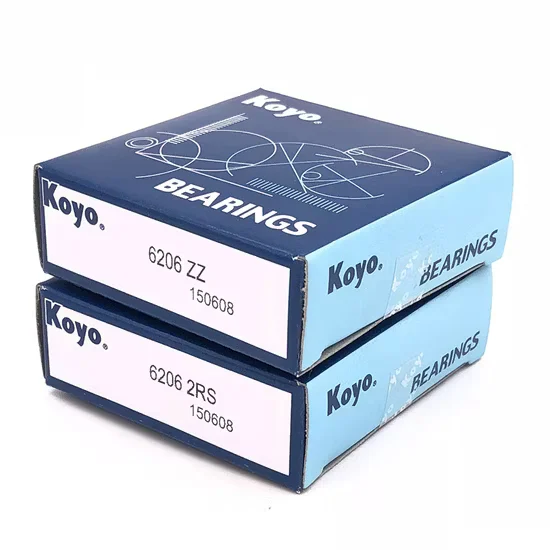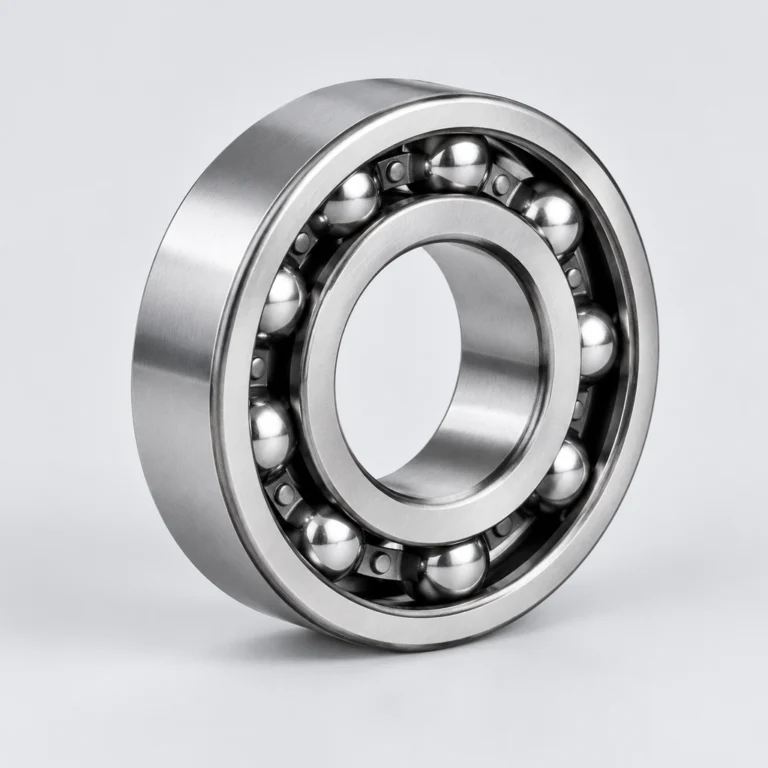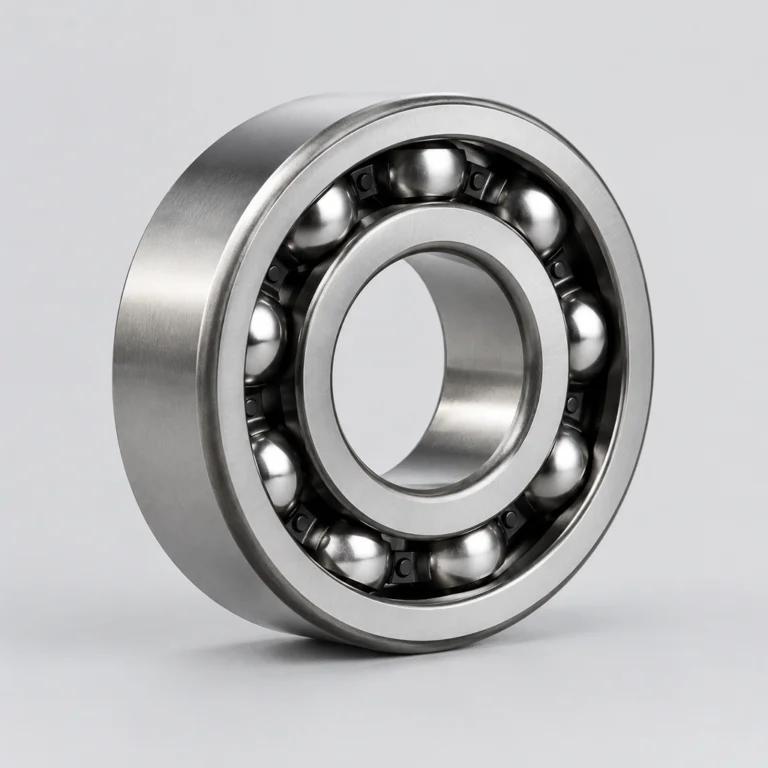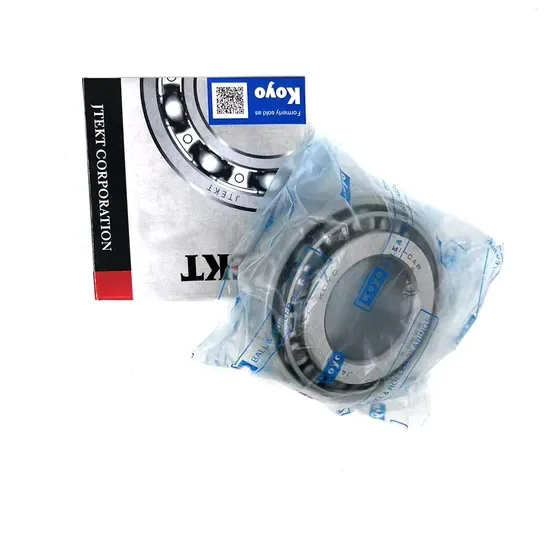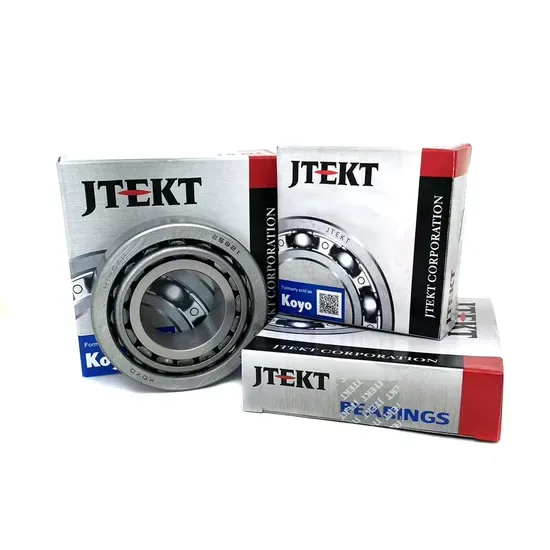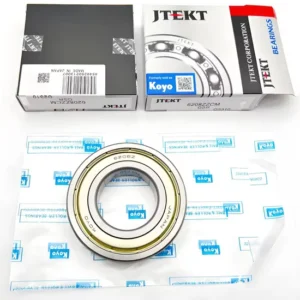
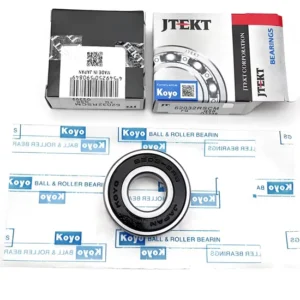
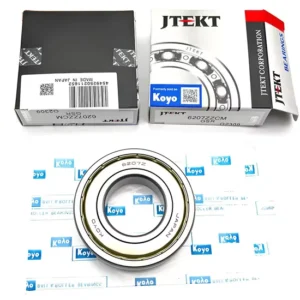
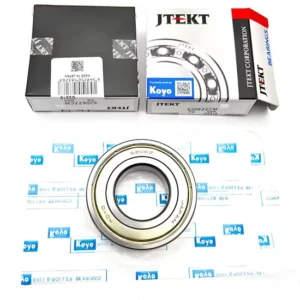
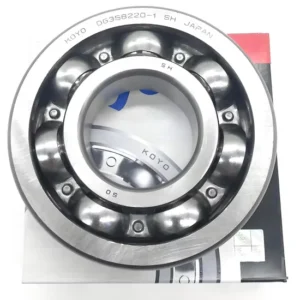
Traceable Japanese Origin — Every KOYO 6012 deep groove ball bearing ships with verifiable factory batch documentation to guarantee authentic material integrity and origin.
Technical Specifications
| Parameter | Value |
|---|---|
| Designation | KOYO 6012 |
| Bearing Type | Deep Groove Ball Bearing |
| Bore Diameter (d) | 60 mm |
| Outside Diameter (D) | 95 mm |
| Width (B) | 18 mm |
| Lubrication | Grease or Oil |
| Precision Class | P0, P6, P5, P4 |
| Clearance Class | C0, C2, C3 |
| Aligning | Non-Aligning Bearing |
| Separated | Unseparated |
| Number of Rows | Single |
| Load Direction | Radial Bearing |
| Material | Bearing Steel |
| Origin | Japan |
Application Suitability
| Industry | Typical Applications |
|---|---|
| Textile Manufacturing | Spinning machine drafting rollers and spindle drives |
| General Industrial | Electric motor rotors and pump shaft supports |
| Material Handling | Conveyor belt drive pulleys and gearbox input shafts |
Why Open or Shielded Bearings Fail in Textile Drafting Zones
Fibrous dust infiltrates metal shields and jams the rolling elements long before fatigue sets in.
Many maintenance teams assume standard metal shields suffice for spinning machine rollers, overlooking the aggressive nature of textile environments. Early in my career, I specified shielded variants for a similar textile application, only to see cotton fly and micro-dust bypass the metal gaps, completely seizing the cage and halting the line. When sourcing a KOYO 6012 deep groove ball bearing for these specific drafting zones, ignoring the airborne fiber contamination leads to sudden, catastrophic line stoppages. The absence of contact seals on standard variants means the housing design must compensate entirely for environmental exclusion.
Matching Radial Capacity to Spinning Machine Dynamics
The KOYO 6012 deep groove ball bearing delivers the reliable radial load support strictly required by high-speed drafting rollers and spindle drives. Our extensive inventory covers multiple precision and clearance variants, allowing efficient mixed-brand consolidation when upgrading entire spinning lines across different facilities. This logistical flexibility ensures you receive the exact internal geometry needed without waiting for rigid factory minimums. Additionally, our global shipping consolidation and long-term after-sales technical support provide continuous guidance for failure analysis and application optimization.
Navigating Fibrous Contamination and Thermal Shifts
Spinning frames subject bearings to continuous radial loads and moderate rotational speeds, generating localized heat that fundamentally alters internal clearances during prolonged shifts. Without proper external sealing on open variants, cotton micro-dust inevitably mixes with the lubricant to form a highly abrasive paste that scores the raceways. Selecting the correct initial clearance class is therefore critical to accommodate thermal expansion and prevent internal preload buildup. Establishing rigorous relubrication intervals is equally vital to flush out trapped fibers before they compromise the rolling contact zones.
Decoding Precision and Clearance Options for Textile Spindles
This specific designation lacks additional suffixes, indicating a standard open design that relies entirely on the surrounding housing for sealing and lubrication management. The availability of P0 through P4 precision ratings allows engineers to carefully balance procurement costs against the strict runout limits demanded by high-speed spindle applications. Choosing between C0, C2, and C3 clearance classes directly impacts how the bearing handles thermal growth and shaft interference fits during operation. While C0 suits general electric motors, C3 provides the necessary internal gap to prevent destructive preload when operating at elevated temperatures. The single-row, non-aligning configuration is optimized for pure radial loads, ensuring minimal friction and noise generation. Bearing steel construction ensures the raceways achieve the requisite hardness for enduring continuous radial stress without premature spalling.
The Operational Impact of Misaligned Internal Geometry
Specifying a standard clearance for a high-speed, thermally loaded spinning spindle often results in internal preload, drastically accelerating fatigue and causing premature seizure. Such unplanned downtime on a continuous textile line disrupts the entire production schedule, damages adjacent drive components, and voids critical equipment warranties. According to established failure analysis frameworks, improper clearance selection and inadequate contamination exclusion remain primary root causes of early operational breakdowns. Correcting these specification errors after installation requires complete machine teardowns, secondary part procurement, and extensive recalibration efforts.
Securing Authentic Japanese Bearings Without Supply Chain Friction
Sourcing genuine Japanese bearings often involves facing prohibitive direct-channel costs and rigid minimum order quantities that delay urgent maintenance. We maintain massive spot inventory of standard part numbers like this open deep groove variant, enabling single-unit emergency dispatches or full-container consolidation for planned overhauls. Our technical team provides cross-reference equivalent consultation if you need to interchange with other premium global brands during critical breakdowns. Every shipment includes complete traceability documentation to verify the original factory batch and material composition. Furthermore, our competitive sourcing cost structure protects your MRO budget while our inspection services guarantee dimensional accuracy before dispatch.
Documentation & Authenticity
- Certificate of Conformity confirming the Japanese origin and genuine manufacturing batch.
- Original factory batch traceability documents linking the physical inventory to the production date.
- Dimensional inspection reports verifying the 60x95x18 mm tolerances match the specified precision class.
- Official brand authentication guidance utilizing QR codes or proprietary verification applications.
- Material certification confirming the bearing steel composition meets international metallurgical standards.
Storage, Handling & Mounting
- Keep the open bearing in its original anti-corrosion packaging until immediately before mounting to prevent humidity ingress.
- Use clean, lint-free gloves during handling to avoid transferring skin oils onto the exposed bearing steel raceways.
- Apply induction heating for inner ring mounting to preserve the precise C0 or C3 internal clearance without mechanical damage.
- Ensure the housing seals are fully intact before installation, as this open design relies entirely on external contamination barriers.
- Store away from direct sunlight and temperature fluctuations to maintain the stability of the factory-applied rust preventive coating.
Preparing Your Technical Parameters for Selection Review
To ensure optimal performance in your specific spinning machine or gearbox application, please share the exact radial loads, operational speeds, and ambient temperature ranges. Providing the OEM equipment model number allows our engineering team to perform accurate cross-reference checks and L10 life recalculations. Detailing the housing sealing arrangement helps us confirm whether this open variant is suitable or if a sealed alternative must be sourced to handle the fibrous environment.
Frequently Asked Questions
Q: How do I verify the authenticity of this specific KOYO deep groove ball bearing?
A: Authenticity verification involves checking the laser-etched trademark on the outer ring against official catalogs and scanning the packaging QR code using the manufacturer's proprietary application. We also supply original factory batch traceability documentation and certificates of conformity, ensuring the Japanese origin and material integrity are fully transparent before installation.
Q: What are the differences between C0, C2, and C3 clearance classes for spinning machine spindles?
A: C0 represents standard internal clearance suitable for general applications, while C2 offers reduced clearance for high-precision, low-vibration setups. C3 provides greater internal gap, which is essential for spinning machine spindles where thermal expansion from high-speed operation could otherwise eliminate the clearance and cause premature seizure under radial loads.
Q: How should I manage lubrication for an open deep groove ball bearing in a textile environment?
A: Since this open variant lacks integrated seals, it relies on the housing for lubrication retention and contamination exclusion. You must establish strict relubrication intervals using high-quality grease or oil to flush out cotton micro-dust and fibrous particles. Proper external housing seals are mandatory to prevent abrasive paste formation inside the raceways.
Q: What cross-reference equivalents exist for this bearing in other premium global catalogs?
A: This standard 60x95x18 mm deep groove ball bearing has direct dimensional equivalents across major premium global brands. Our technical team can provide exact cross-reference model numbers from SKF, FAG, or NSK catalogs to facilitate urgent MRO replacements. We support mixed-brand consolidation shipments to keep your maintenance inventory organized and cost-effective.
Q: What precision rating is recommended for textile machinery drafting rollers?
A: Standard P0 precision is generally sufficient for basic conveyor or pump applications, but textile drafting rollers often require P6 or P5 to minimize vibration and ensure uniform yarn tension. For ultra-high-speed spindle drives, P4 precision guarantees the strict runout limits necessary to prevent yarn breakage and maintain consistent product quality.