Unified Multi-Brand Sourcing — Consolidate your KOYO NU303EM orders alongside SKF or FAG equivalents in a single shipment without juggling multiple vendor accounts.
Technical Specifications
| Parameter | Value |
|---|---|
| Designation | KOYO NU303EM |
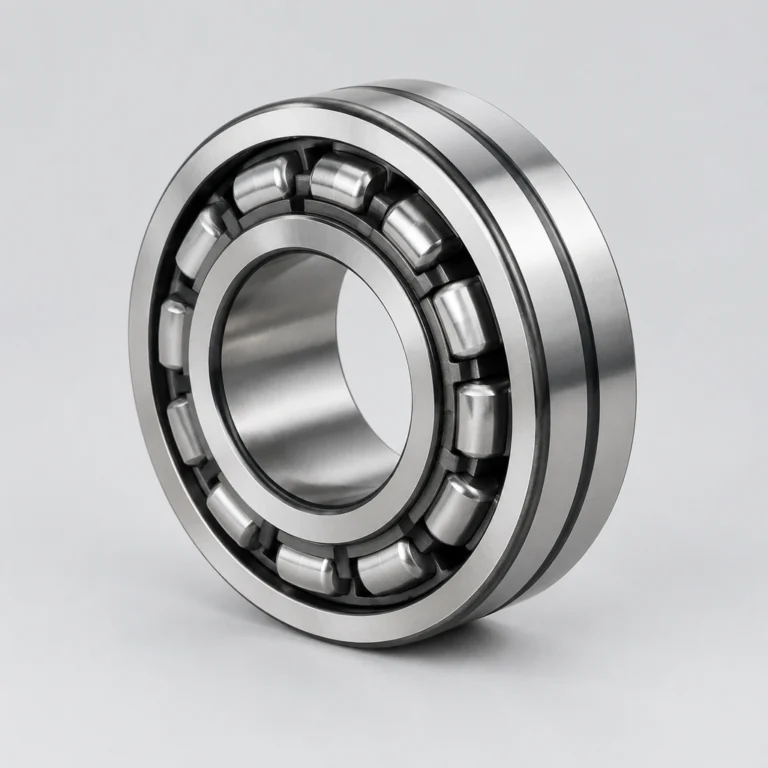
| Bearing Type | Cylindrical Roller Bearing |
| Bore Diameter (d) | 17 mm |
| Outside Diameter (D) | 47 mm |
| Width (B) | 14 mm |
| Material | Bearing Steel |
| Number of Rows | Single Row |
| Seal or Shield Type | Open |
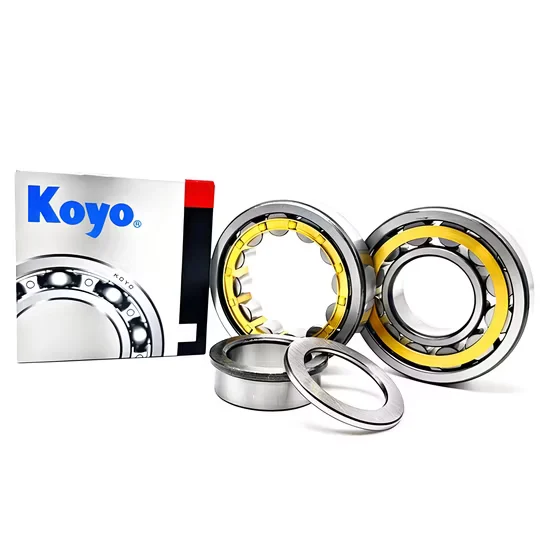
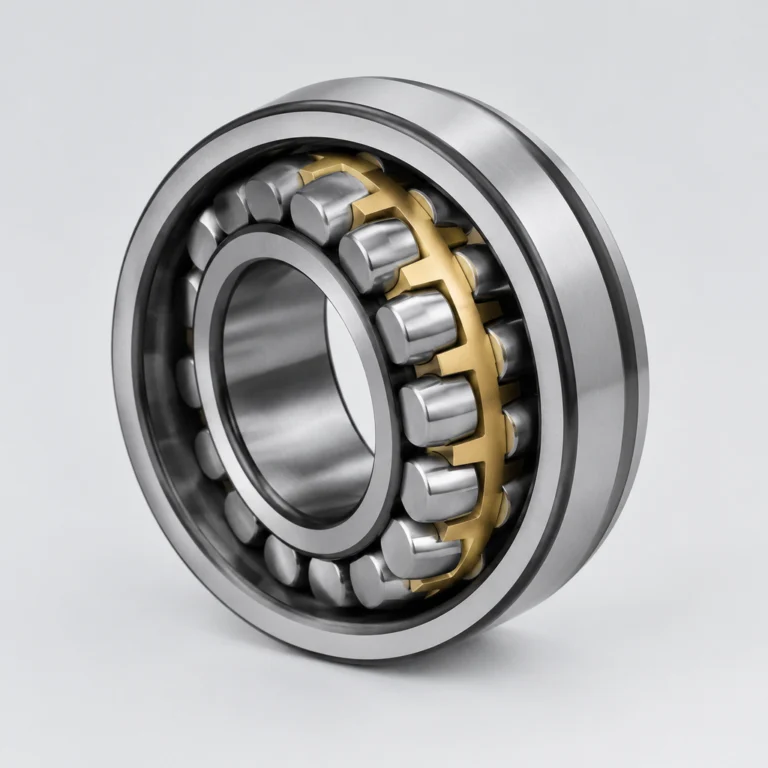
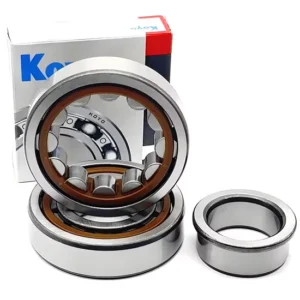
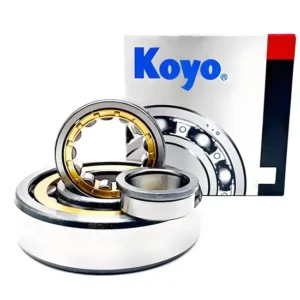
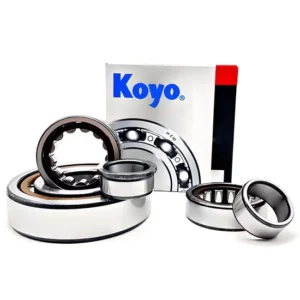
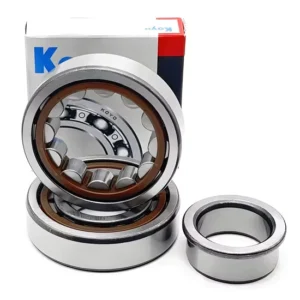
| Cage Material | Machined Brass |
| Internal Design | Enhanced |
| Arrangement | Separable |
| Origin | Japan |
Application Suitability
| Industry | Typical Applications |
|---|---|
| Heavy Machinery | Heavy-duty gearbox shaft support |
| Metallurgy | Rolling mill guide roller assemblies |
Why Gearbox Shafts Fail When the KOYO NU303EM Cylindrical Roller Bearing Cage Yields
Brass cage fragmentation under severe vibration is the silent killer of industrial gearboxes.
When specifying radial supports for high-load transmission systems, procurement teams often overlook the dynamic interaction between cage material and shock loads. A pressed steel cage might survive static tests but shatter under continuous torsional vibrations inherent in heavy-duty gearboxes. Selecting the correct internal geometry prevents catastrophic cage disintegration and subsequent roller skewing. Furthermore, cage deformation introduces localized stress concentrations on the inner ring rib, accelerating surface fatigue. Maintenance crews frequently misdiagnose these early-stage failures as lubrication issues. By prioritizing the structural integrity of the cage, engineers can effectively eliminate these hidden vibration-induced failure modes.
Matching the KOYO NU303EM Cylindrical Roller Bearing to Heavy-Duty Drives
The KOYO NU303EM cylindrical roller bearing excels in environments demanding high radial capacity and precise roller guidance. Its enhanced internal profile distributes contact stresses evenly across the roller raceway interface, minimizing edge loading during shaft deflection. This configuration allows our engineering team to supply matched sets that maintain dimensional stability in complex gearbox housings. In traction motors, the ability to accommodate slight misalignments without sacrificing load distribution is critical. The optimized roller geometry ensures smooth power transmission, reducing operational noise and vibration signatures that plague standard cylindrical designs.
Managing Thermal Expansion and Lubrication in Rolling Mills
Radial bearings in rolling mill guide assemblies face intense thermal gradients and heavy particulate contamination. The open seal type necessitates a comprehensive external lubrication strategy, allowing crews to flush out metallic debris with fresh oil. Without adequate clearance compensation for thermal expansion, rollers bind against the ribs, leading to rapid temperature spikes. In hot rolling environments, ambient heat alters the internal geometry dynamically. If the initial clearance selection ignores this thermal growth, the bearing transitions into a destructive preload condition. A centralized lubrication system continuously supplies clean lubricant, managing the thermal load and forming a protective barrier against scale ingress.
Decoding the E and M Suffixes for Optimal Load Distribution
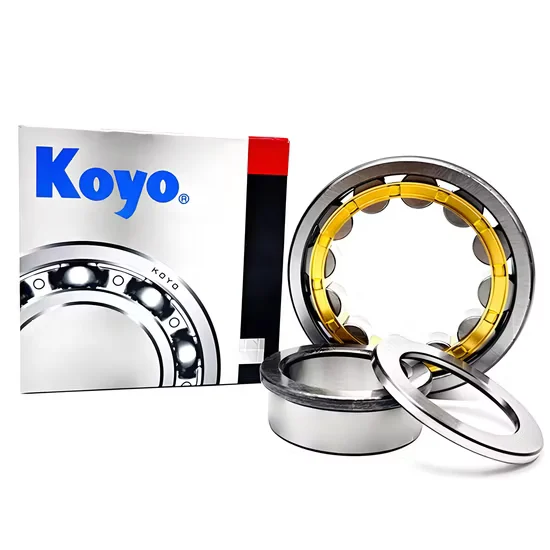
The "E" suffix indicates an enhanced internal design, maximizing the roller count and optimizing the contact profile for higher radial load capacity. Paired with the "M" suffix, the machined brass cage provides superior structural integrity compared to stamped alternatives. This brass construction maintains precise roller spacing under severe vibration, preventing skewing. The separable design simplifies maintenance, allowing the inner ring to be mounted independently. This modularity is advantageous in blind-end gearbox housings where access is restricted. Technicians can press-fit the inner ring without transmitting mounting stresses to the outer ring. The combination of the enhanced roller complement and robust brass cage ensures consistent performance under fluctuating loads.
The Hidden Toll of Incorrect Clearance and Cage Selection
Specifying a standard clearance when the operating temperature demands a C3 equivalent leads to internal preload during thermal expansion. This mistake causes excessive friction, rapid lubricant degradation, and eventual roller seizure. According to industry failure analysis frameworks, a significant share of premature failures stems from ignoring the thermal operating envelope. Such oversights result in unplanned downtime and catastrophic damage to adjacent shaft components. When a bearing seizes due to thermal binding, the kinetic energy converts into extreme localized heat, often welding the inner ring to the journal. Rigorously evaluating the thermal boundaries before finalizing the clearance class avoids these devastating secondary damages.
Securing Genuine Components Through Verified Supply Chains
Sourcing the authentic KOYO NU303EM cylindrical roller bearing requires strict verification of the machined brass cage, as counterfeit parts often substitute inferior stamped cages. We provide complete batch traceability directly from the manufacturer's production facilities in Japan. Our technical team cross-references your exact application requirements to ensure the supplied units match the necessary specifications, eliminating the risk of mechanically inadequate substitutes. Furthermore, we consolidate multi-brand orders, allowing you to source this specific designation alongside European equivalents in a single shipment. By relying on verified documentation and physical inspection of the cage construction, we guarantee that every unit meets the exacting standards required for uninterrupted industrial operation.
Documentation & Authenticity
- Certificate of Conformity confirming Japan origin for the specific batch.
- Official app QR verification validating the machined brass cage authenticity.
- Material inspection reports verifying bearing steel composition and heat treatment.
- Dimensional inspection records confirming P-class tolerances for bore and outside diameter.
- Factory batch traceability linking the enhanced design units to original production logs.
Storage, Handling & Mounting
- Retain original anti-corrosion packaging until mounting to protect the open bearing steel raceways.
- Use induction heating for the inner ring to preserve the separable design alignment during assembly.
- Apply clean gloves when handling the machined brass cage to prevent acidic sweat corrosion.
- Flush the open seal type with compatible lubricant immediately before installation to remove storage preservatives.
- Verify shaft and housing tolerances to prevent altering the internal clearance of the enhanced design.
Engineering Review and Procurement Next Steps
To ensure the selected KOYO NU303EM cylindrical roller bearing meets your exact operational demands, please provide the specific radial loads, operating speeds, and thermal profiles of your gearbox or rolling mill application. Supplying the OEM equipment designation allows our team to perform a comprehensive cross-reference check and verify the required clearance class. This technical review guarantees that the supplied components align perfectly with your maintenance schedules and load expectations.
Frequently Asked Questions
Q: How to verify the authenticity of KOYO NU303EM bearings using official apps?
A: You can scan the QR code on the packaging using the manufacturer's official verification application. This process confirms the Japan origin, validates the specific batch number, and ensures the internal enhanced design and machined brass cage match the factory records, protecting your equipment from counterfeit components.
Q: What are the cross-reference equivalents for NU303EM, and do they match the EM suffix specifications?
A: While equivalent models from other premium brands exist, they must be carefully evaluated to ensure they feature the identical enhanced internal geometry and machined brass cage. Our engineering team cross-references the exact dimensional and suffix requirements to guarantee functional interchangeability without compromising load capacity or vibration resistance.
Q: When to choose a machined brass cage over a pressed steel cage for cylindrical roller bearings?
A: A machined brass cage is essential for applications involving heavy shock loads, high speeds, or severe vibrations, such as in heavy-duty gearboxes. It provides superior structural stability, prevents roller skewing, and maintains precise guidance under dynamic stress, whereas pressed steel cages may deform or fragment under similar operating conditions.
Q: What is the recommended lubrication method for open-type NU303EM bearings in steel mill equipment?
A: For open-type units in contaminated environments like rolling mills, a continuous or frequent external lubrication system is recommended. This approach flushes out metallic particulates and provides a fresh film of oil or grease, compensating for the lack of integrated seals and ensuring the enhanced internal geometry remains protected from abrasive wear.
Q: How does the enhanced design improve the radial load rating compared to standard designs?
A: The enhanced design optimizes the internal geometry, allowing for a larger roller count and improved contact profiles between the rollers and raceways. This structural refinement distributes radial forces more evenly, significantly increasing the dynamic load capacity and extending the operational lifespan under heavy-load conditions.