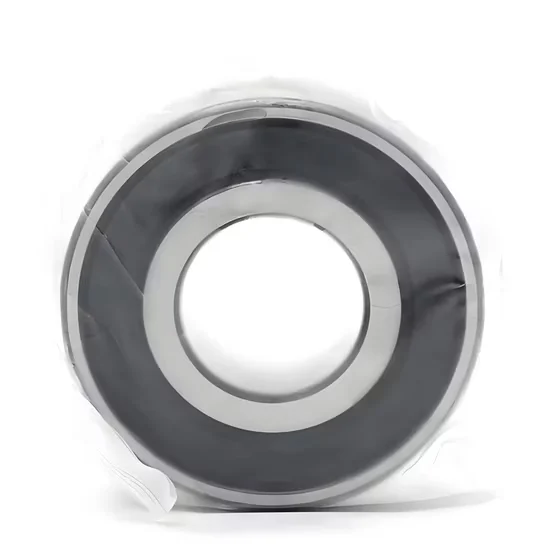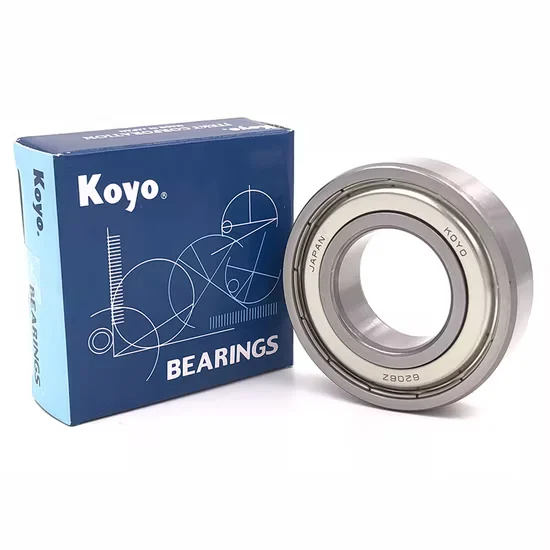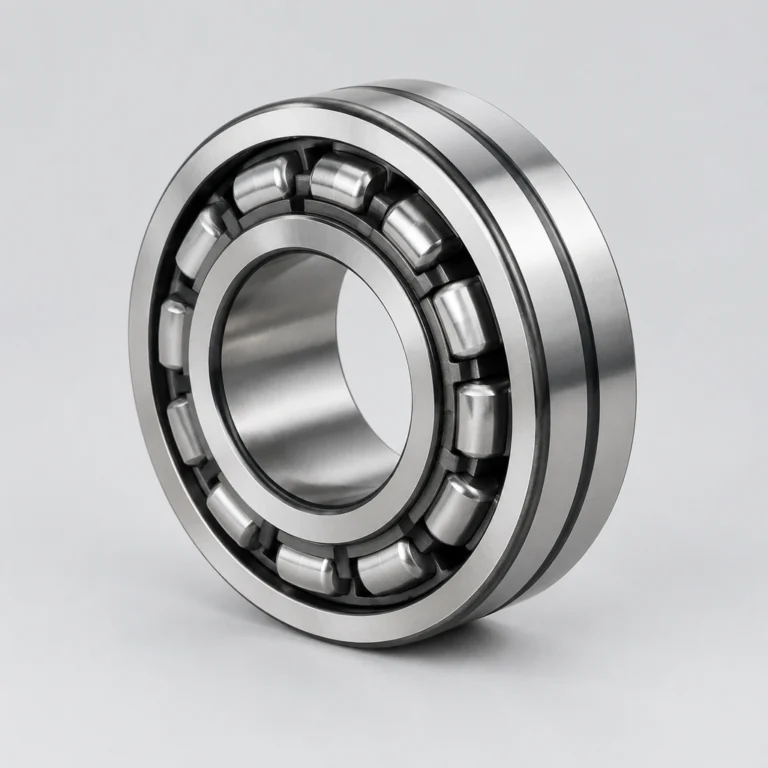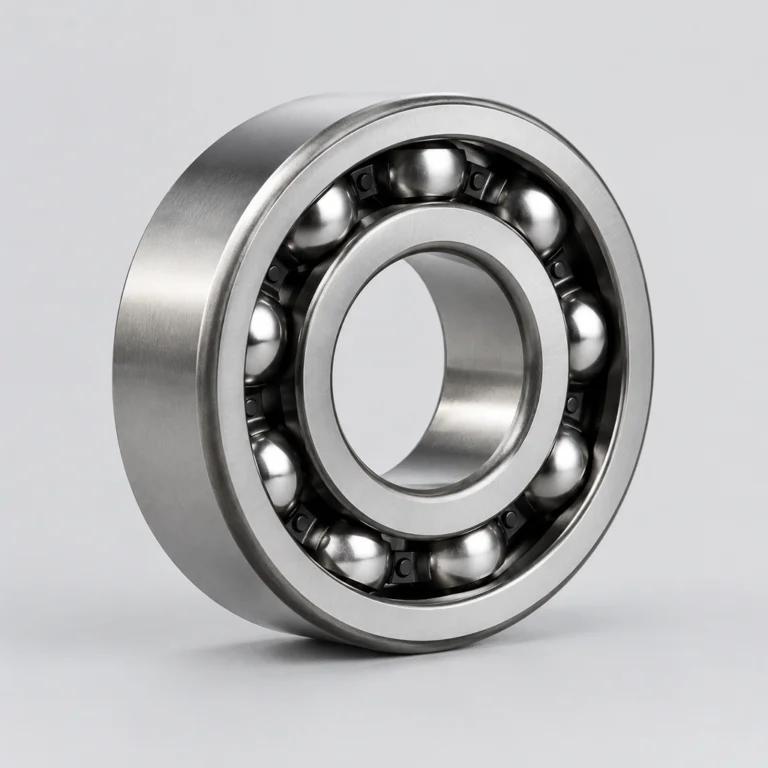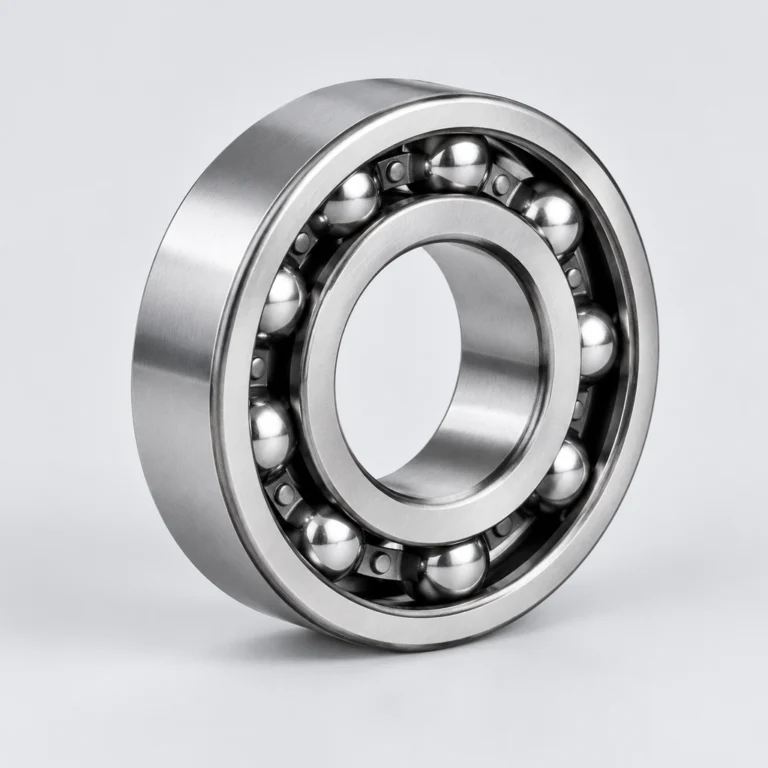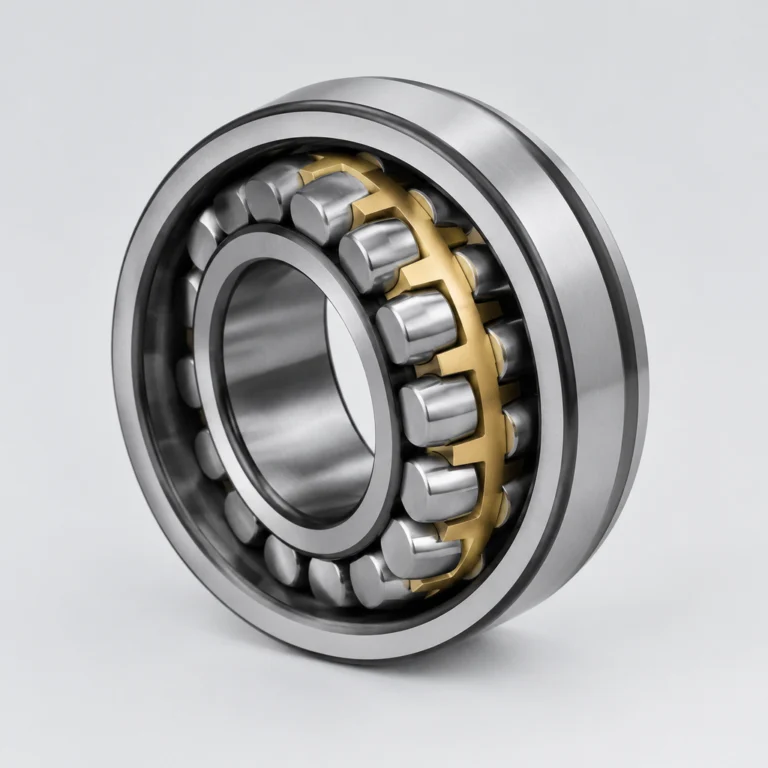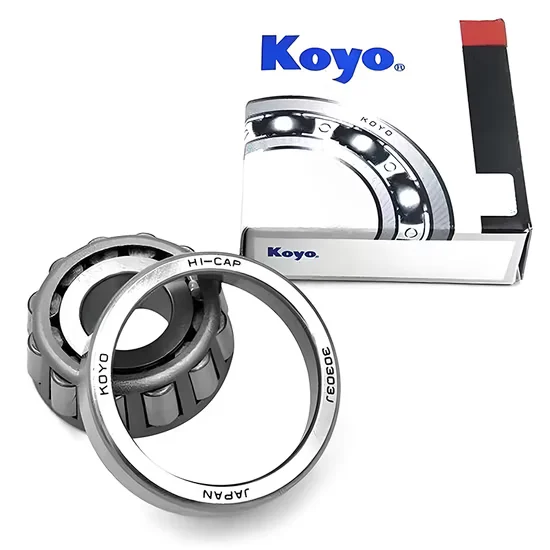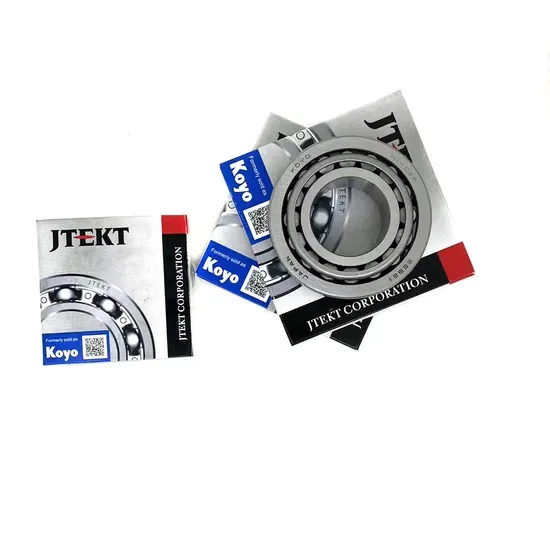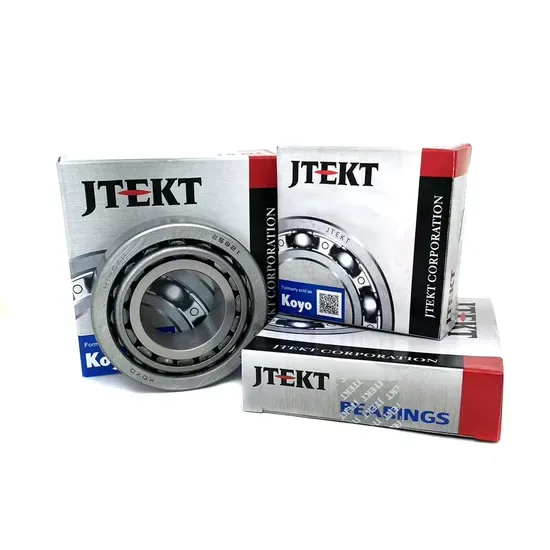



Cross-Reference Alignment — We verify dimensional, load, and clearance equivalence when cross-referencing the KOYO NUP207 to alternative premium brands.
Technical Specifications
| Parameter | Value |
|---|---|
| Designation | KOYO NUP207 |
| Bearing Type | Cylindrical Roller Bearing |
| Bore Diameter (d) | 35mm |
| Outside Diameter (D) | 72mm |
| Width (B) | 17mm |
| Number of Rows | Single |
| Material | Chrome Steel / Bearing Steel |
| Load Direction | Radial |
| Precision Rating | P0, P6, P5, P4, P2 |
| Origin | Japan |
Application Suitability
| Industry | Typical Applications |
|---|---|
| Machine Tool Manufacturing | Lathe spindle supports and precision indexing mechanisms |
| Heavy Machinery | Heavy-duty gearboxes and traction motor shaft supports |
| Metallurgical Processing | Rolling mill guide rollers and auxiliary drive shafts |
Why Spindle Vibration Ruins More Than Just Surface Finish
Micro-vibrations from inadequate radial rigidity compound into catastrophic chatter marks across the entire workpiece.
In my years outfitting machine tools across Vietnam, I watched countless lathe spindles fail not from excessive load, but from unchecked resonance. Sourcing a genuine KOYO NUP207 cylindrical roller bearing solves the immediate dimensional fitment issue, yet ignoring the precision class and internal clearance often leads to premature spindle seizure. When procurement teams focus solely on the base model number, they inadvertently install standard tolerance components into high-speed environments, triggering harmonic vibrations that destroy both the cutting tool and the final part quality.
Matching Radial Rigidity to Lathe Spindle Demands
When configuring high-speed lathe spindles, the single-row radial design of the KOYO NUP207 cylindrical roller bearing delivers the necessary shaft support without introducing axial binding. Our engineering team cross-references your exact spindle housing tolerances to ensure the selected precision grade aligns perfectly with your operational speeds, preventing the micro-deflections that ruin tight-tolerance turning operations. By evaluating the specific radial loads and rotational velocities, we help you avoid the common pitfall of over-engineering the bearing size while under-specifying the internal geometry. This targeted approach ensures that the internal geometry directly supports the cutting forces, maintaining dimensional stability throughout extended production runs.
Managing Thermal Expansion and Lubrication Starvation
High rotational speeds in traction motors and lathe spindles generate substantial friction heat, directly impacting internal clearance and lubricant viscosity. Without adequate oil flow or correct grease intervals, the standard bearing steel rolling elements experience localized thermal expansion that accelerates fatigue and raceway degradation. Furthermore, contaminated lubricant in heavy-duty gearboxes introduces abrasive particles that score the precision ground surfaces. Proper installation practices, strict environmental sealing, and matching the lubrication method to the operational RPM are mandatory to sustain longevity. Selecting the appropriate sealing arrangement or external lubrication protocol is equally vital to keep contaminants out of the rolling contact zone.
Decoding Precision Classes and Cage Selection
The designation KOYO NUP207 lacks explicit suffixes in its basic form, making the selection of precision ratings and internal cage designs critical for specific applications. For high-speed lathe spindles, upgrading to P4 or P2 precision ensures minimal radial runout, while heavy-duty gearboxes might prioritize high load capacity over ultra-high precision. The choice of cage material—whether machined brass for high-vibration environments or pressed steel for standard speeds—dictates the thermal limits and operational lifespan. Since no specific cage or clearance suffix is present in the base identifier, buyers must explicitly specify these parameters during procurement. Failing to do so risks receiving a standard P0 open cage variant entirely unsuited for high-RPM spindle duties, leading to rapid cage disintegration under centrifugal forces.
The Cascading Financial Impact of Specification Mismatches
Installing a standard precision bearing in a high-speed spindle application inevitably triggers unplanned downtime and catastrophic damage to adjacent shaft components. When internal clearance fails to accommodate thermal growth, the resulting preload spikes cause rapid raceway spalling and premature failure. This violates the fundamental fatigue life calculations outlined in ISO 281, voiding equipment warranties and forcing complete spindle rebuilds. The financial drain from halted production lines, scrapped workpieces, and emergency replacement logistics far exceeds the initial procurement savings of an incorrectly specified component. Ultimately, treating bearing selection as a mere commodity purchase rather than a critical engineering decision exposes the entire manufacturing facility to compounding operational risks.
Securing Authentic Components for Critical Machine Tools
Procuring the correct KOYO NUP207 cylindrical roller bearing requires more than just matching the base number; the exact cage type, clearance, and precision class must align with your spindle design. We provide complete original batch traceability for every unit, ensuring you receive the precise high-rigidity variant required rather than a generic substitute. Our massive spot inventory covers thousands of standard and special part numbers, allowing us to fulfill both single-unit emergency MRO orders and full-container project shipments without delay. Additionally, our technical team offers cross-brand equivalent model consultation if you need to interchange with other premium global brands while maintaining strict dimensional compatibility and performance standards.
Documentation & Authenticity
- Original batch traceability documents verifying the Japanese origin of every KOYO NUP207 unit.
- Official anti-counterfeit QR labels applied to packaging for immediate digital authentication.
- Dimensional inspection reports confirming P4 or P2 running accuracy before dispatch.
- Material certificates validating the bearing steel composition and heat treatment hardness.
- Certificate of Conformity matching the specific precision class and internal clearance requested.
Storage, Handling & Mounting
- Store the high-precision P4/P2 variants in climate-controlled environments to prevent raceway corrosion before spindle assembly.
- Use induction heating for mounting the inner ring onto the lathe spindle shaft to preserve exact bore tolerances.
- Keep the original packaging sealed until installation to protect the bearing steel surfaces from ambient humidity.
- Apply clean, lint-free gloves when handling P2 precision rollers to avoid skin acid etching on the raceways.
- Verify the specific internal clearance class matches the spindle's thermal expansion profile before pressing the outer ring.
Engineering Review for Spindle and Gearbox Integration
To ensure the selected variant meets your exact operational demands, please share your radial and axial load profiles, operational speeds, and thermal conditions. Providing the OEM machine tool model number or housing drawings allows our engineering team to perform a comprehensive cross-reference and L10 life verification. This technical review guarantees the precision class and internal clearance perfectly match your specific lathe or gearbox application.
Frequently Asked Questions
Q: How do I verify the authenticity of the KOYO NUP207 cylindrical roller bearing upon delivery?
A1: Every unit ships with official anti-counterfeit QR codes on the packaging, which you can scan using the manufacturer's official application for immediate digital verification. We also provide original batch traceability documents and a Certificate of Conformity that explicitly detail the production facility, manufacturing date, and exact precision class to guarantee genuine origin.
Q: What is the difference between NUP, NJ, and NU cylindrical roller bearings for lathe spindles?
A2: NU types lack inner ring ribs and only handle radial loads, while NJ types have one inner rib to support limited axial loads in one direction. The NUP design features ribs on both sides of the inner ring, allowing it to locate the shaft axially in both directions, making it highly suitable for fixed-end spindle supports requiring strict axial positioning.
Q: Which precision class should I select for a high-speed lathe spindle application?
A3: Standard P0 or P6 classes are generally sufficient for heavy-duty gearboxes and traction motors where extreme rotational accuracy is not critical. For high-speed lathe spindles demanding minimal radial runout and low vibration, upgrading to P4 or P2 precision is mandatory to maintain tight machining tolerances and prevent surface finish defects on the workpiece.
Q: Why is it critical to specify the cage material and internal clearance during procurement?
A4: Since the base identifier lacks explicit suffixes, ordering without specifying these parameters might result in receiving a standard pressed steel cage with normal clearance. High-speed spindles typically require machined brass or polyamide cages for better high-RPM stability, alongside C3 or C4 clearance to accommodate thermal expansion, preventing catastrophic spindle seizure under operational temperatures.
Q: What installation tools are recommended for mounting this bearing onto a machine tool spindle?
A5: Induction heaters are strongly recommended for mounting the inner ring onto the spindle shaft, ensuring uniform thermal expansion without damaging the bearing steel raceways. For the outer ring, use precision ground installation sleeves to apply force strictly to the outer ring face, avoiding any load transfer through the rolling elements that could cause permanent brinelling.