A single typo in a customs declaration can cost more than the cargo itself.
Successful global shipping of genuine KOYO bearings relies less on the physical quality of the steel and more on the flawless alignment of customs documentation, precise HS code classification, and strategic consolidation methods. Buyers who prioritize only product authenticity while neglecting paperwork often face port seizures, whereas those who integrate traceability documents with flexible mixed-container solutions ensure smooth clearance and protected margins.
I still remember the humidity and the smell of stale coffee in the document office at Yantian Port years ago. A full container of bearings was stuck, not because they were counterfeit, but because the country of origin on the certificate did not match the spelling on the commercial invoice by a single letter. The goods sat in Jebel Ali for weeks, accruing demurrage charges that wiped out the entire profit margin of the shipment. That silence on the phone when the buyer realized the delay was not due to logistics but to administrative negligence taught me that in international trade, paper is as heavy as steel.
This reality drives how we approach every order. When you look for a global KOYO bearing supplier, you are not just buying metal rings; you are buying the certainty that the goods will cross borders without incident. The following sections break down the critical elements that separate a smooth delivery from a logistical nightmare.
What documents are mandatory for shipping genuine KOYO bearings?
Origin certificates and traceability documents are the primary defense against customs holds.
Many buyers assume that a commercial invoice and packing list are sufficient. This is a dangerous misconception. For branded industrial components like KOYO bearings, customs authorities in many regions require proof that the goods are genuine and not gray-market imports or counterfeits. Without a certified Certificate of Origin and a manufacturer’s authorization or traceability chain, your shipment is vulnerable to inspection delays or outright rejection.
The core issue is verification. Customs officers need to link the physical goods to a legal entity responsible for their production. If you are importing into strict regulatory environments, the absence of a specific origin cert can trigger a request for additional testing, which takes time and money.
Consider a case where a distributor in South America received a batch of deep-groove ball bearings. The goods were genuine, sourced directly from authorized channels. However, the packaging lacked the specific batch numbers that matched the accompanying quality test reports. The local customs authority flagged the shipment as potentially non-compliant with anti-dumping regulations. The delay lasted several weeks, during which the buyer had to pay storage fees and hire a local broker to rectify the paperwork. This could have been avoided if the global KOYO bearing supplier had provided a complete, pre-verified documentation pack that included batch-specific traceability.
To prevent this, ensure your supplier provides:
- A legalized Certificate of Origin matching the invoice details exactly.
- Manufacturer’s test certificates or quality assurance documents with visible batch codes.
- A clear chain of custody if the goods are consolidated from multiple sources.
When evaluating a global KOYO bearing supplier, ask specifically about their document preparation process. Do they cross-check spelling and codes before the goods leave the warehouse? This simple step is often the difference between a cleared shipment and a detained one.
How to handle mixed-brand container consolidation safely?
Proper palletization and weight distribution are critical to avoiding damage and delays in mixed loads.
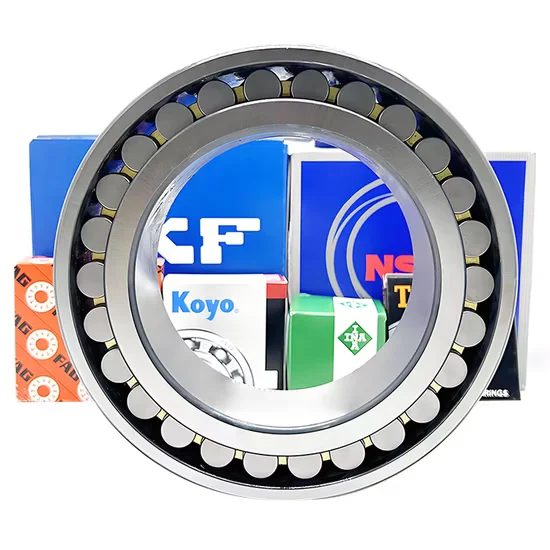
Wholesalers often need to stock multiple brands to meet diverse customer demands. Ordering full containers for each brand is capital-intensive and inefficient. Mixed-container consolidation allows you to combine KOYO bearings with other premium brands like SKF, NSK, or FAG in a single shipment. However, this introduces complexity in handling. Different brands have different packaging standards, and improper loading can lead to crushed boxes or shifted pallets.
The risk here is physical damage and customs confusion. If a container is poorly packed, bearings can shift during transit, leading to brinelling or race deformation. Furthermore, if mixed brands are not clearly separated and documented, customs inspectors may suspect misdeclaration.
A European wind farm operator once ordered a mixed container of spherical roller bearings and tapered roller bearings for a major maintenance shutdown. The supplier failed to secure the lighter pallets properly. During a storm at sea, the load shifted, damaging several boxes of precision angular contact bearings. The replacement parts had to be air-freighted at a significant cost, delaying the project. This highlights why KOYO bearings wholesale export strategies must include robust internal packaging protocols.
Key considerations for safe consolidation include:
- Using standardized, reinforced pallets that can withstand stacking.
- Ensuring heavier items are placed at the bottom and secured with strapping.
- Providing a detailed packing list that maps each SKU to its physical location in the container.
When working with a global KOYO bearing supplier for mixed orders, verify their experience in mixed container bearing shipping. Do they use dunnage and blocking to prevent movement? Do they provide photos of the loaded container before sealing? These details matter. A supplier who treats consolidation as a mere logistical afterthought is a risk to your inventory.
What are the common HS code traps for bearing imports?
Precise classification by type and size avoids heavy fines and reclassification delays.
Harmonized System (HS) codes are the language of international trade. For bearings, the general heading is 8482. However, subheadings vary based on the type of bearing (ball, roller, needle) and sometimes even by size or application. Misclassifying a tapered roller bearing as a generic ball bearing can lead to incorrect duty rates and potential penalties.
Customs authorities are increasingly using automated systems to flag discrepancies. If your declared HS code does not match the physical description or the technical specifications on the invoice, the shipment may be held for manual review. This process can take days or weeks.
A buyer in Southeast Asia once declared a shipment of large-size spherical roller bearings under a code intended for small instrument bearings. The duty rate was lower, but the discrepancy was caught during a random audit. The buyer faced a fine and had to pay the back duties with interest. The total cost exceeded the initial savings by a wide margin. This error could have been prevented by consulting with a global KOYO bearing supplier who understands the nuances of bearing classification.
Common pitfalls include:
- Using a generic code for all bearing types instead of specific subheadings.
- Failing to update codes when new tariff schedules are released.
- Ignoring local country-specific extensions to the HS code system.
To avoid these traps, work with suppliers who provide accurate HS codes for each SKU. Ask them to verify the codes against the latest tariff schedules of your destination country. A reliable global KOYO bearing supplier will treat HS code accuracy as part of their service, not an extra burden.
How to balance air freight costs for urgent MRO orders?
Prioritizing high-value precision parts optimizes shipping budgets for emergency replacements.
Maintenance, Repair, and Operations (MRO) scenarios often require urgent parts. When a machine goes down, every hour of downtime costs money. Air freight is the fastest solution, but it is expensive. The key is to balance speed and cost by selecting which parts to air freight and which to ship via sea.
Not all bearings are equal in value or urgency. High-precision angular contact bearings for spindle applications are often smaller, lighter, and more critical than large, heavy spherical roller bearings for slow-moving crushers. Air freighting the high-value, low-weight items makes sense, while heavier, less critical items can wait for sea freight.
A mining company in Africa faced a breakdown in their primary crusher. They needed both large spherical roller bearings and smaller precision pilot bearings. By air freighting only the critical precision parts and shipping the larger units via expedited sea freight, they reduced their total logistics cost significantly while still getting the machine running quickly. This strategy requires a supplier who can split orders and manage genuine KOYO bearings customs documents for multiple shipments efficiently.
Strategies for cost-effective urgent shipping include:
- Identifying critical path components that must arrive immediately.
- Consolidating small, high-value items into a single air freight package.
- Using sea-air combined services for medium-urgency items.
When sourcing from a global KOYO bearing supplier, discuss their flexibility in order splitting. Can they handle partial shipments with separate documentation? Do they have partnerships with express carriers for better rates? These capabilities are essential for managing MRO budgets effectively.
Conclusion
Documentation and logistics are as vital as the bearings themselves.
Shipping genuine KOYO bearings globally requires a holistic approach that integrates product authenticity with rigorous administrative precision. By securing proper origin certificates, optimizing mixed-container consolidation, classifying HS codes accurately, and balancing freight modes for MRO needs, buyers can avoid costly delays and ensure operational continuity. Choosing a global KOYO bearing supplier who understands these complexities is the first step toward a resilient supply chain.