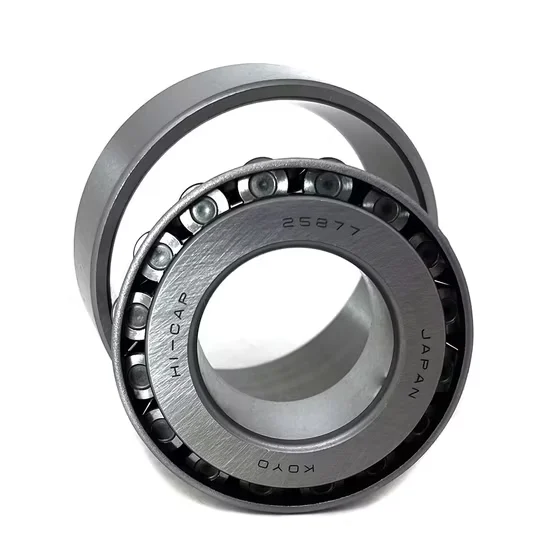
Cheaper bearings do not save money; the real cost is measured in unplanned downtime hours.
Selecting Koyo bearings for industrial fans requires balancing initial unit price against total downtime costs, especially in high-temperature or heavy-load exhaust scenarios. The most reliable approach involves verifying thermal limits of standard grease, selecting appropriate C3 or C4 internal clearances for thermal expansion, and cross-referencing dimensions with NSK or FAG equivalents to secure stock without altering housing tolerances. This strategy minimizes retainer fractures and ensures continuous operation in critical ventilation systems.
I still remember the smell of burnt metal in a Dongguan fan assembly workshop years ago. A batch of high-temperature smoke exhaust fans had been fitted with what appeared to be standard deep groove ball bearings. Within three months, the keepers fractured. The entire production line stopped. The owner paid a mid-six-figure loss because he focused on the purchase price rather than the operating environment. That incident shifted my focus from simple procurement to technical failure analysis. I learned that bearing selection is not just about matching a part number; it is about understanding the physics of heat, load, and material fatigue.
This guide breaks down why standard selections fail, how to choose the right specifications, and how to calculate the true cost of ownership. Whether you are an MRO operator or an OEM designer, these insights will help you avoid costly mistakes when sourcing Koyo bearings for industrial fans.
Why Do Standard Koyo Bearings Fail in High-Temp Exhaust Fans?
Thermal limits and grease degradation, not just radial load, cause premature retainer fractures.
Most engineers assume that bearing failure in exhaust fans is due to excessive mechanical load. In reality, the primary culprit in high-temperature environments is the thermal degradation of standard lubricants. When grease breaks down, it loses its viscosity and film strength. This leads to metal-to-metal contact, rapid heat generation, and eventual cage failure.
In a recent case involving a Middle East steel mill, their induced draft fans experienced repeated failures every few months. The ambient temperature was high, and the exhaust gas exceeded standard operating ranges. The maintenance team had been using standard industrial grease. Upon inspection, we found that the grease had carbonized, turning into a hard, abrasive paste. This increased friction and caused the nylon retainers to become brittle and shatter.
Standard Koyo bearings for industrial fans are engineered for general-purpose use. However, when applied to exhaust systems where temperatures fluctuate wildly, standard specifications are insufficient. The internal clearance must accommodate thermal expansion of the inner ring relative to the outer ring. If the clearance is too tight, the bearing seizes. If the grease cannot withstand the heat, the bearing starves.
To prevent this, one must look beyond the brand name. It is crucial to verify the temperature rating of the lubricant and the material compatibility of the cage. For high-temp applications, switching to a high-temperature synthetic grease and ensuring the bearing has sufficient internal clearance can extend service life meaningfully. This is not about buying a more expensive brand; it is about buying the right specification for the environment.
How to Select the Right Clearance and Seal for Fan Applications?
C3/C4 clearances and proper sealing are critical to accommodate thermal expansion and prevent dust ingress.
Selecting the correct internal clearance is arguably the most technical aspect of fan bearing selection. Standard bearings usually come with C0 (normal) clearance. However, in fan applications, the shaft heats up faster than the housing. This causes the inner ring to expand more than the outer ring, effectively reducing the internal clearance. If the initial clearance is not large enough, the bearing will operate with negative clearance, leading to overheating and premature failure.
For industrial fans, especially those handling hot air or gases, C3 or C4 clearance is often required. C3 provides a moderate increase in clearance, suitable for most elevated temperature applications. C4 offers even greater clearance, reserved for extreme thermal conditions.
| Application Condition | Recommended Clearance | Sealing Type | Reason |
|---|---|---|---|
| Standard Ambient Temp | C0 (Normal) | Rubber Contact Seal | Prevents dust, retains standard grease |
| Elevated Temp (<80°C rise) | C3 | Non-contact Shield or Labyrinth | Allows thermal expansion, reduces friction heat |
| High Temp (>80°C rise) | C4 | High-Temp Resistant Seal | Accommodates significant expansion, protects against degraded grease |
Sealing is equally important. Fans operate in dusty environments. Standard rubber seals provide good protection but generate friction heat. In high-speed or high-temp fans, non-contact shields or labyrinth seals are preferable. They allow for better heat dissipation while keeping out large particulates. However, they may require more frequent regreasing if the system allows.
I once consulted for a European cement plant where their kiln exhaust fans kept failing. The issue was not the bearing quality but the seal type. They were using contact seals on a high-speed fan, which generated excessive heat, compounding the thermal expansion issue. Switching to a C3 clearance bearing with a non-contact shield resolved the issue. The bearings ran substantially longer without overheating.
When sourcing Koyo bearings for industrial fans, always specify the clearance class. Do not assume standard clearance is adequate. Verify the operating temperature range and select C3 or C4 accordingly. This small detail can prevent catastrophic failures.
Can NSK or FAG Serve as Direct Koyo Alternatives for Fans?
Yes, strict dimensional cross-referencing ensures seamless substitution while maintaining supply chain flexibility.
Supply chain disruptions are a reality for global MRO operators. Relying on a single brand can lead to long lead times and production delays. Fortunately, major bearing manufacturers like NSK, FAG, SKF, and Koyo adhere to strict ISO dimensional standards. This means that a 6310 C3 bearing from Koyo is dimensionally interchangeable with a 6310 C3 from NSK or FAG.
Cross-brand substitution is not just a backup plan; it is a strategic advantage. By qualifying multiple brands for the same application, you can secure stock from whichever supplier has availability. This reduces lead times without altering housing tolerances or requiring redesigns.
However, caution is needed. While dimensions are standard, internal designs such as cage material, grease type, and precision grade may vary. When substituting, ensure that the alternative brand meets the same performance criteria. For example, if the original Koyo bearing used a polyamide cage for high-speed stability, the NSK equivalent should also feature a similar cage design.
| Feature | Koyo | NSK | FAG | Substitution Viability |
|---|---|---|---|---|
| Boundary Dimensions | ISO Standard | ISO Standard | ISO Standard | High |
| Internal Clearance (C3) | Standard Option | Standard Option | Standard Option | High |
| Cage Material | Varies by Series | Varies by Series | Varies by Series | Check Specific Series |
| Grease Type | Standard/Custom | Standard/Custom | Standard/Custom | Verify Temp Rating |
A US buyer once faced a six-week delay for a specific Koyo series needed for their HVAC fans. We sourced the exact dimensional equivalent from FAG, which was available in stock. The client verified the cage material and grease specification, confirmed it matched their requirements, and installed them. The fans operated without any issues. This flexibility saved them from a prolonged shutdown.
When looking for Koyo bearings for industrial fans, consider having NSK or FAG equivalents qualified in your system. This approach ensures that you are never held hostage by supply chain bottlenecks. Our technical team can assist in verifying these cross-references to ensure seamless integration.
How to Calculate the True Cost of Bearing Selection?
Total Cost of Ownership must factor in unplanned downtime, far outweighing the initial unit price difference.
Procurement teams often focus on the unit price of bearings. A difference of a few dollars per unit seems significant when buying in bulk. However, this perspective ignores the massive costs associated with unplanned downtime. In industrial settings, a single fan failure can halt an entire production line. The cost of lost production, emergency labor, and expedited shipping dwarfs the savings from cheaper bearings.
Consider a mining operation where a primary ventilation fan failed. The bearing cost was negligible compared to the cost of evacuating miners and stopping extraction. The downtime lasted several days. The total loss was several times the annual budget for bearings.
To calculate the true cost, use the Total Cost of Ownership (TCO) model:
- Initial Purchase Price: The cost of the bearing itself.
- Installation Cost: Labor and tools required for replacement.
- Downtime Cost: Lost production revenue per hour multiplied by downtime duration.
- Secondary Damage Cost: Repair or replacement of other components damaged by the failure.
In most cases, investing in higher-quality bearings with appropriate specifications reduces the frequency of failures. This lowers installation and downtime costs significantly. Even if the initial price is higher, the TCO is lower.
When evaluating Koyo bearings for industrial fans, look beyond the price tag. Consider the reliability and the support available for failure analysis. A supplier who offers technical guidance and genuine products helps you minimize the risk of costly failures. This is where the value of a professional global supplier becomes evident. They provide not just parts, but peace of mind.
Conclusion
Selecting the right bearing is an investment in operational continuity, not just a purchase of a component.
Balancing unit price with downtime risk is essential for industrial fan maintenance. By understanding thermal limits, selecting proper clearances like C3 or C4, and leveraging cross-brand alternatives such as NSK or FAG, operators can ensure reliable performance. The true cost of bearing selection is defined by the stability of your production line, not the invoice amount. Prioritize technical suitability and supply chain flexibility to protect your operations from unexpected failures.