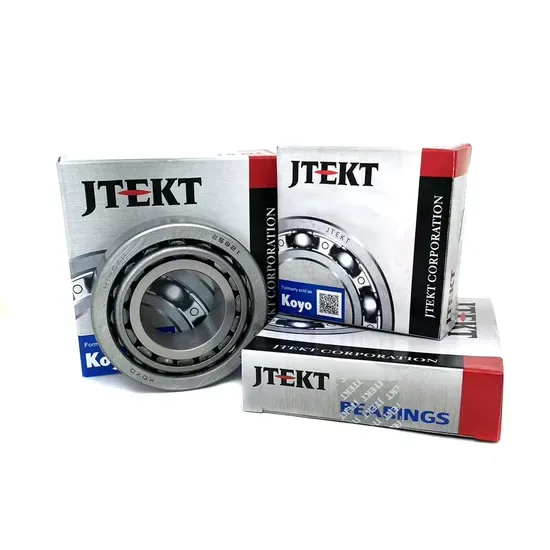
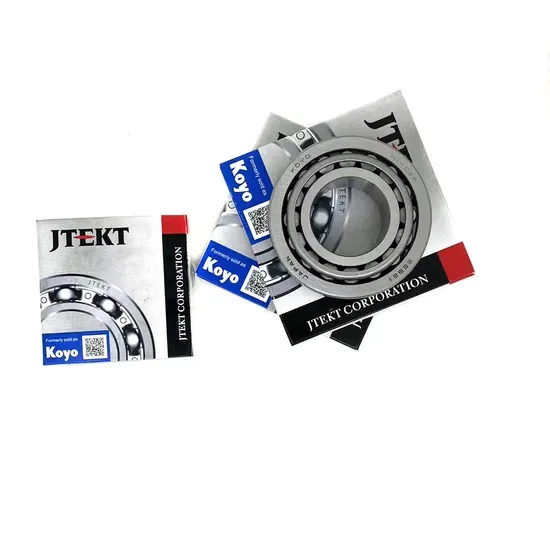
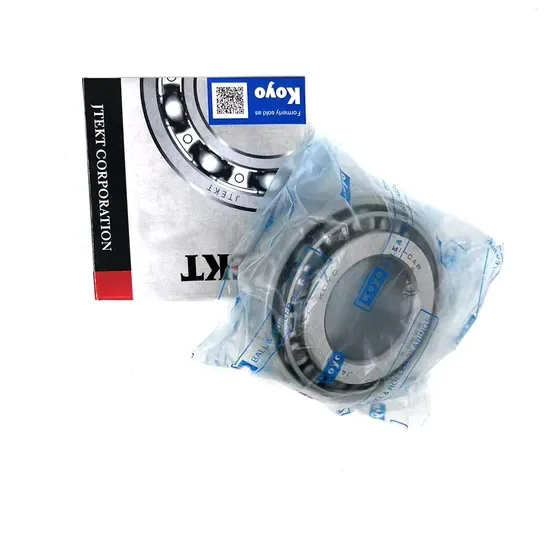
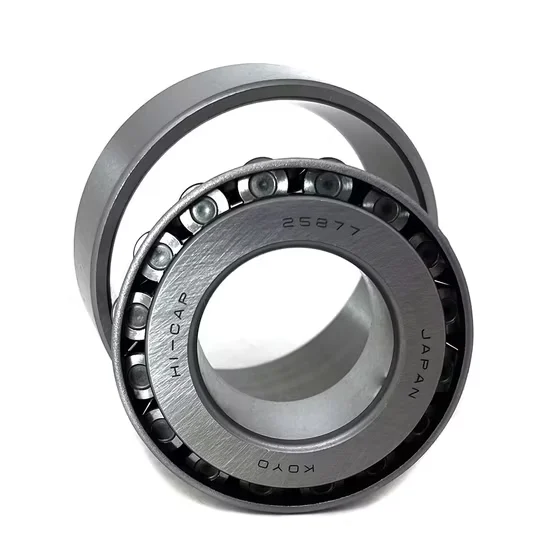
Laser-etched logos do not guarantee authenticity.
Sourcing genuine Koyo bearings for electric motors requires strict verification of internal clearances, cage rivets, and traceability documentation rather than relying solely on surface markings. Counterfeit units often mimic external branding perfectly but fail under thermal load due to improper heat treatment and incorrect radial internal clearance. Buyers must prioritize physical inspection of internal components and demand verifiable batch tracking from suppliers to avoid costly motor downtime.
I still remember the acrid smell of burnt insulation in a Riyadh industrial workshop. A large induction motor had seized, sending black smoke billowing into the facility. The maintenance team pointed angrily at the scattered KOYO packaging, convinced they had installed premium components. But when I picked up the failed bearing and measured the radial play with a feeler gauge, the truth was obvious. The clearance was far outside the standard C3 range, and the cage rivets were rough, inconsistent, and poorly formed. It was a refurbished unit disguised as new. In regions where supply chains are complex, the temptation to cut costs often leads to such failures. Understanding the technical nuances of Koyo bearings for electric motors is not just about procurement; it is about protecting operational continuity.
The market is flooded with replicas that look identical to the naked eye. However, the difference lies in the metallurgy and precision engineering that cannot be faked without advanced manufacturing capabilities. This guide details how to distinguish authentic products from counterfeits and optimize your wholesale procurement strategy.
What Are the Key Specifications of Koyo Bearings for Electric Motors?
Electric motor applications demand specific balance between speed capability and load capacity.
Not all bearings are suitable for every motor type. The choice between deep groove ball bearings and cylindrical roller bearings depends on the operational profile of the machinery. Deep groove ball bearings are the most common choice for general-purpose electric motors due to their ability to handle both radial and axial loads at high speeds. In contrast, cylindrical roller bearings are preferred for heavy-duty applications where high radial load capacity is critical, such as in large mining crushers or industrial gearboxes coupled to motors.
| Bearing Type | Load Capacity | Speed Capability | Typical Motor Application | Cage Material Stability |
|---|---|---|---|---|
| Deep Groove Ball | Moderate Radial/Axial | High | General purpose, pumps, fans | Standard steel or polyamide |
| Cylindrical Roller | High Radial Only | Moderate to High | Heavy industry, conveyors, crushers | Reinforced brass or steel |
| Angular Contact Ball | High Axial/Radial | Very High | Spindle motors, high-speed tools | Precision phenolic or steel |
Selecting the wrong type can lead to premature failure. For instance, using a standard deep groove bearing in a high-vibration environment without proper cage reinforcement can cause cage fracture. Authentic Koyo bearings for electric motors utilize specific cage designs optimized for rotational stability.
A European wind farm operator once reported intermittent noise issues in their generator drive trains. Upon inspection, we found that the previous supplier had substituted standard ball bearings for applications requiring higher precision angular contact types. The mismatch led to excessive axial play, causing misalignment and eventual seal failure. By switching to the correct specification with verified internal clearance, the noise vanished, and the service life extended significantly.
Understanding these specifications helps buyers avoid generic substitutions that may fit physically but fail functionally. Always cross-reference the motor manufacturer’s original equipment specifications with the bearing supplier’s technical data sheets.
How to Identify Genuine Koyo Motor Bearings vs. Counterfeits?
Visual inspection of the exterior is insufficient for verifying authenticity.
Counterfeiters have become sophisticated in replicating laser etching and packaging. However, they often cut corners on internal components that are harder to fake. The most reliable method for identification involves checking the radial internal clearance and examining the cage rivets. Genuine bearings adhere to strict ISO standards for clearance classes, such as C3 or C4, which are essential for accommodating thermal expansion in electric motors.
To verify authenticity on-site, follow these steps:
- Measure Radial Internal Clearance: Use a feeler gauge or dial indicator to measure the play between the inner and outer rings. Compare the result with the standard values for the specific clearance class. Counterfeit bearings often have inconsistent or excessive clearance due to poor grinding precision.
- Inspect Cage Rivets: Examine the rivets holding the cage together. Authentic Koyo bearings for electric motors feature smooth, uniformly formed rivets. Counterfeits often show rough edges, uneven spacing, or signs of manual assembly.
- Check Surface Finish: Run a finger along the raceway. Genuine bearings have a mirror-like finish. Roughness or visible tool marks indicate substandard manufacturing.
- Verify Lubrication: Authentic bearings come with high-quality, consistent grease. Counterfeits may use low-grade lubricants that degrade quickly under heat, leading to increased friction and wear.
A Middle East steel mill experienced repeated motor failures after switching to a cheaper supplier. The bearings looked perfect in the box, but within weeks, they overheated. Our inspection revealed that the internal clearance was nearly double the specified limit, and the cage rivets were brittle. The “savings” from the cheaper purchase were wiped out by the cost of unplanned downtime and motor rewinding.
Relying on price alone is a risky strategy. The cost of a genuine bearing is negligible compared to the expense of production stoppages. Verification must be part of the receiving process, not an afterthought.
What Traceability Documents Should Wholesale Buyers Request?
Paperwork is as critical as the physical product for ensuring genuineness.
In the global bearing market, traceability is the primary defense against counterfeits. Without proper documentation, there is no way to prove the origin of the components. Wholesale buyers must request a complete set of documents that link the physical batch to the manufacturer’s production records.
Key documents include:
- Original Certificate of Conformity: This document confirms that the bearings meet the specified ISO and JIS standards. It should include the batch number, production date, and test results.
- Customs Declaration: For imported goods, the customs declaration provides proof of legal entry and origin. Discrepancies between the declared value and the market price can be a red flag.
- Batch Tracking Records: Authentic suppliers can provide detailed tracking information that links the bearing to the specific production line and quality control checks.
A distributor in Southeast Asia once received a container of bearings that lacked batch-specific certificates. When questioned, the supplier could only provide generic templates. Upon further investigation, it was discovered that the goods were mixed lots from various unknown sources. By insisting on full traceability, buyers can filter out unreliable suppliers who cannot provide verifiable proof of origin.
Demanding these documents does not just protect against fakes; it also ensures compliance with industrial safety standards. In sectors like mining and energy, audit trails are mandatory. Suppliers who hesitate to provide full documentation should be avoided.
How to Optimize Wholesale Procurement for Motor Bearings?
Flexible sourcing strategies reduce inventory costs and lead times.
Procuring Koyo bearings for electric motors in bulk does not mean sticking to rigid single-brand orders. Modern industrial operations benefit from mixed-brand consolidation and flexible minimum order quantities. This approach allows buyers to maintain optimal stock levels while reducing shipping and handling costs.
One-stop sourcing solutions enable distributors to combine different brands and sizes in a single shipment. For example, a regional distributor can order high-volume standard deep groove bearings alongside specialized cylindrical roller bearings for specific heavy-duty motors. This consolidation simplifies logistics and reduces the administrative burden of managing multiple suppliers.
Additionally, cross-brand equivalent selection can offer cost-effective alternatives without compromising quality. While Koyo is a premium choice, there are scenarios where other reputable brands meet the technical requirements at a lower cost. Professional suppliers can provide technical consultation to identify these equivalents, ensuring that performance standards are maintained.
A Latin American mining company reduced its spare parts inventory by thirty percent by adopting a mixed-brand strategy. Instead of stocking only one premium brand, they worked with a supplier who could provide verified equivalents for non-critical applications while keeping premium Koyo bearings for electric motors for high-load drives. This balanced approach improved cash flow and ensured availability for critical repairs.
Optimization is not just about price; it is about reliability and efficiency. Working with a supplier who understands the technical nuances of motor applications allows for smarter inventory management and faster response to emergency needs.
Conclusion
Authenticity verification protects your operational bottom line.
Sourcing genuine Koyo bearings for electric motors requires a disciplined approach that goes beyond surface inspections. By focusing on internal clearance, cage integrity, and rigorous traceability documentation, buyers can avoid the hidden costs of counterfeit components. Strategic procurement through flexible, mixed-brand consolidation further enhances supply chain resilience. Prioritize verified quality over initial price savings to ensure long-term motor reliability and minimize unplanned downtime.