Precision grade is irrelevant if the internal clearance ignores thermal expansion.
Choosing between KOYO R series standard cylindrical roller bearings and FY series flanged units depends entirely on matching internal clearance codes like C3 or C4 to operating temperatures and verifying flange dimensional tolerances for axial location. The R type suits general heavy-load applications with separate housing constraints, while the FY type integrates a flange for compact mounting in split-housing designs where axial positioning is critical. Misidentifying these structural differences leads to premature seizure or misalignment, regardless of brand authenticity.
I still remember the email from a procurement manager at a copper mine in Chile. He was furious, claiming the KOYO cylindrical roller bearings we shipped were counterfeit because the spindle seized after only a few weeks. I flew out to inspect the site. The ambient temperature near the conveyor drive head regularly exceeded eighty degrees Celsius, yet the maintenance team had installed standard clearance R series bearings instead of the required C3 clearance variants. They had also forced an FY series flanged bearing into a housing without verifying the flange face dimensions, causing immediate misalignment. It was not a quality issue; it was a selection error. In heavy industry, using the wrong specification turns genuine components into scrap metal.
Understanding these distinctions is vital for distributors and MRO buyers who need to ensure equipment reliability. This guide breaks down the structural differences, clearance selection logic, and installation pitfalls for Koyo cylindrical roller bearings R and FY types.
What are the core structural differences between R and FY series?
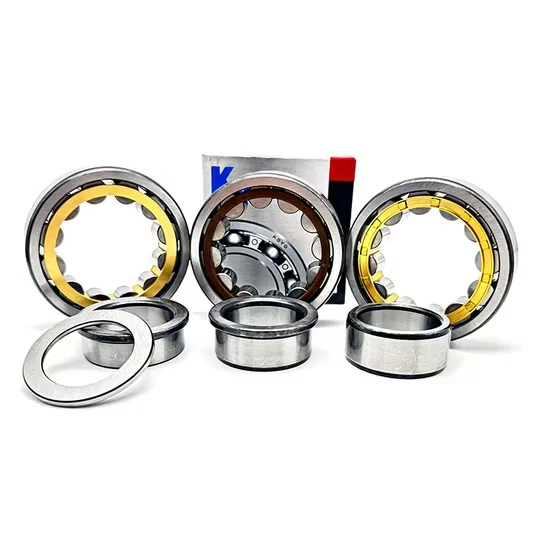
The R series provides basic radial load support, while the FY series adds integral axial locating capability through a built-in flange.
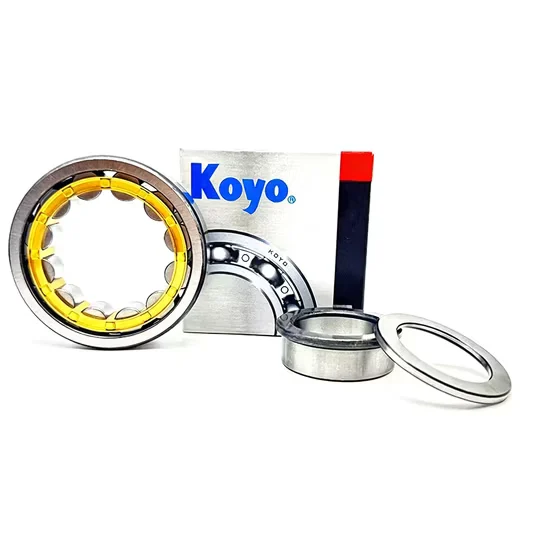
Structurally, the R series represents the standard cylindrical roller bearing design. It features inner and outer rings with raceways for cylindrical rollers, guided by ribs on one of the rings. These bearings are designed primarily to handle heavy radial loads but cannot sustain significant axial loads unless paired with another bearing for axial location. They require precise housing shoulders or locking mechanisms to position them axially within the assembly.
In contrast, the FY type integrates a flange directly onto the outer ring. This flange serves as a built-in axial stop, allowing the bearing to be located precisely within a split housing or a compact bore without additional external locking devices. This design simplifies the housing structure and reduces the overall footprint of the bearing arrangement. For applications where space is limited or where the housing design makes it difficult to machine precise shoulders, the FY series offers a practical solution.
| Feature | R Series (Standard) | FY Series (Flanged) |
|---|---|---|
| Axial Location | Requires external housing shoulders or locking nuts | Integral flange provides built-in axial location |
| Housing Complexity | Higher precision machining required for shoulders | Simplified housing design, suitable for split housings |
| Mounting Space | Requires more axial space for locking mechanisms | Compact axial footprint due to integrated flange |
| Primary Application | General heavy radial load applications | Applications requiring compact axial positioning |
A European gearbox manufacturer once faced repeated failures when they substituted R series bearings with FY types without redesigning the housing. The flange interfered with the existing shoulder, creating a gap that allowed micro-movement under load. This vibration accelerated fatigue failure. The lesson is clear: the FY series is not just a space-saver; it demands a housing design that accommodates its specific flange geometry. When sourcing Koyo cylindrical roller bearings R and FY types, always cross-reference the flange dimensions against the housing drawing.
How to select the right internal clearance for your operating temperature?
Standard clearance is sufficient for normal temperatures, but high-heat environments mandate C3 or C4 clearance to prevent thermal seizure.
Internal clearance refers to the total distance one ring can be displaced relative to the other in a radial direction. Selecting the correct clearance is critical because bearings generate heat during operation, and the surrounding environment may also contribute to temperature rise. As temperature increases, the inner ring, outer ring, and rolling elements expand. If the initial clearance is too small, this thermal expansion can eliminate the running clearance, leading to preload, excessive friction, and eventual seizure.
For most general industrial applications operating at moderate temperatures, standard clearance (C0) is adequate. However, in industries like mining, steelmaking, or cement production, where ambient temperatures are high or where friction generates significant heat, standard clearance is risky. In these cases, selecting a bearing with greater internal clearance, such as C3 or C4, is necessary. The larger initial clearance accommodates the differential expansion between the shaft and housing, ensuring that a positive running clearance remains even at peak operating temperatures.
Consider the case of a steel mill in Southeast Asia. Their conveyor rollers were failing frequently due to seizure. The investigation revealed that they were using standard clearance bearings in zones where surface temperatures regularly exceeded eighty degrees Celsius. Switching to C3 clearance bearings resolved the issue, extending the service life significantly. The key is to match the clearance code to the expected temperature rise. Ignoring this factor negates the benefits of using high-quality components.
When evaluating Koyo cylindrical roller bearings R and FY types, always check the clearance designation on the packaging and the bearing marking. Our inventory includes extensive stocks of both R and FY series with C3 and C4 clearance options, ready for immediate dispatch to regions with harsh operating conditions. Technical support is available to help verify the appropriate clearance based on your specific thermal profile.
When should you choose the flanged FY type over the standard R type?
Choose the FY type when axial positioning is required within limited housing spaces or for split-housing assemblies.
The decision to use an FY series bearing over an R series unit often comes down to housing design constraints and assembly requirements. In many heavy machinery applications, such as gearboxes or pump assemblies, the housing is split into two halves for ease of maintenance and installation. In such designs, machining precise axial locating shoulders on both halves can be challenging and costly. The FY series, with its integral flange, simplifies this process. The flange rests against the housing face, providing accurate axial location without the need for complex machining or additional locking components.
Furthermore, in applications where axial space is at a premium, the FY series offers a more compact solution. The integrated flange eliminates the need for separate locking nuts or end caps, reducing the overall axial length of the bearing arrangement. This is particularly beneficial in dense mechanical layouts where every millimeter counts. However, it is crucial to ensure that the housing design can accommodate the flange diameter and thickness.
A common mistake is assuming that the FY type is merely a convenience feature. In reality, it plays a critical role in maintaining alignment in split-housing designs. If the flange is not properly seated or if the housing face is not perpendicular to the bore axis, misalignment occurs. This misalignment induces edge loading on the rollers, leading to premature fatigue failure. Therefore, when selecting Koyo cylindrical roller bearings R and FY types, evaluate the housing design carefully. If the housing allows for simple shoulder machining and has ample axial space, the R series may be more cost-effective. If the design involves split housings or space constraints, the FY series is the superior choice.
What are the common installation mistakes leading to early failure?
Ignoring thermal expansion in clearance selection and forcing flange misalignment during press-fitting are primary causes of premature failure.
Even with the correct bearing selection, improper installation can lead to rapid failure. One of the most frequent errors is neglecting the impact of thermal expansion on internal clearance. As discussed earlier, installing a standard clearance bearing in a high-temperature environment without accounting for expansion will result in seizure. Maintenance teams must verify the operating temperature range and select the appropriate clearance code before installation.
Another critical error involves the installation of FY series flanged bearings. The flange must sit flush against the housing face. If the housing face is dirty, damaged, or not perpendicular to the bore, the bearing will be misaligned. Forcing the bearing into place without correcting these issues creates internal stress. This stress distorts the raceways, causing uneven load distribution across the rollers. Over time, this leads to spalling and fatigue failure.
Additionally, using incorrect tools or methods during press-fitting can damage the bearing. Applying force directly to the rollers or cages instead of the rings can cause immediate deformation. Always use proper mounting tools that apply force evenly to the inner or outer ring, depending on the fit. For FY series bearings, ensure that the pressing force is applied to the outer ring face, avoiding direct contact with the flange if possible, to prevent distortion.
We have seen numerous cases where distributors received complaints about bearing quality, only to find that the installation process was flawed. Providing technical guidance on proper mounting procedures is as important as supplying the correct product. Our team offers cross-brand equivalent consultation and technical support to help distributors and end-users avoid these common pitfalls. When sourcing Koyo cylindrical roller bearings R and FY types, ensure that your maintenance teams are trained in proper installation techniques.
Conclusion
Correct selection of clearance and housing compatibility matters more than precision grade in heavy-load applications.
Choosing between R and FY series requires analyzing thermal conditions for clearance needs and housing design for axial location requirements. Distributors and buyers must prioritize technical fit over generic specifications to ensure reliability. Proper selection and installation prevent premature failures and maximize equipment uptime.