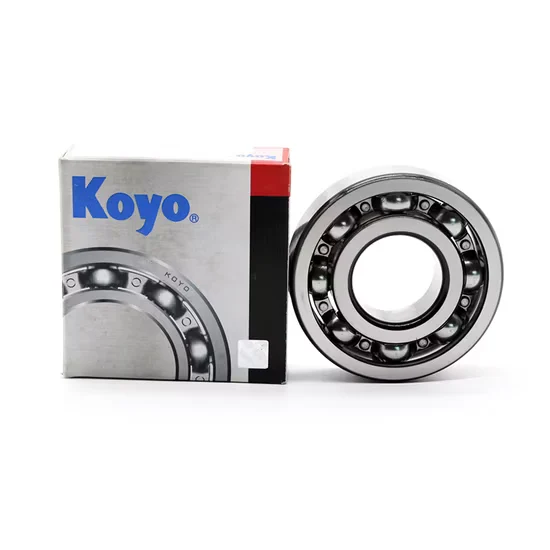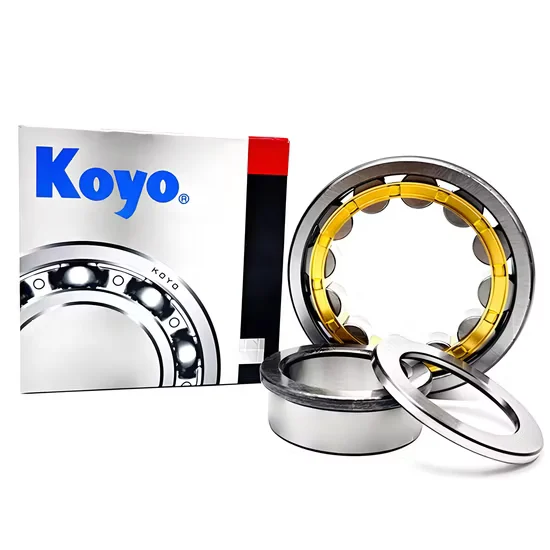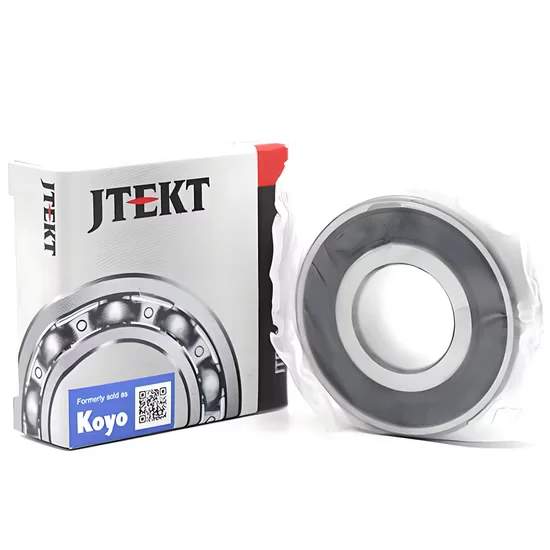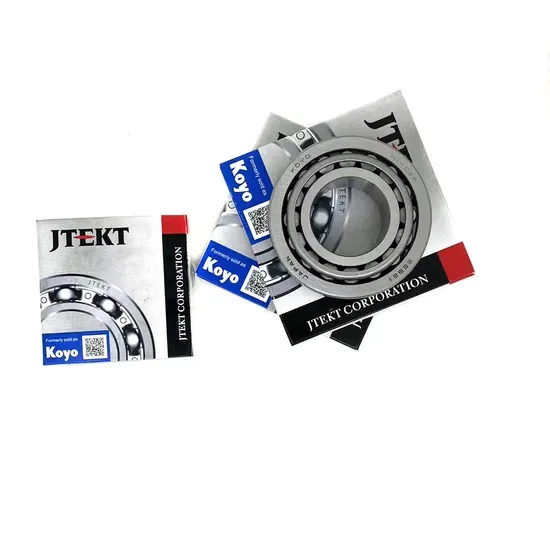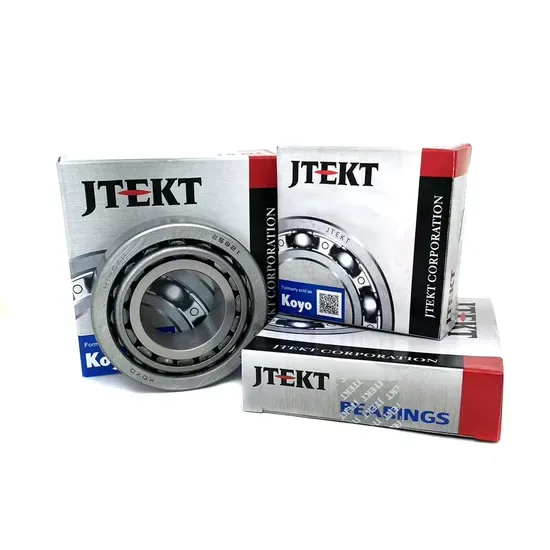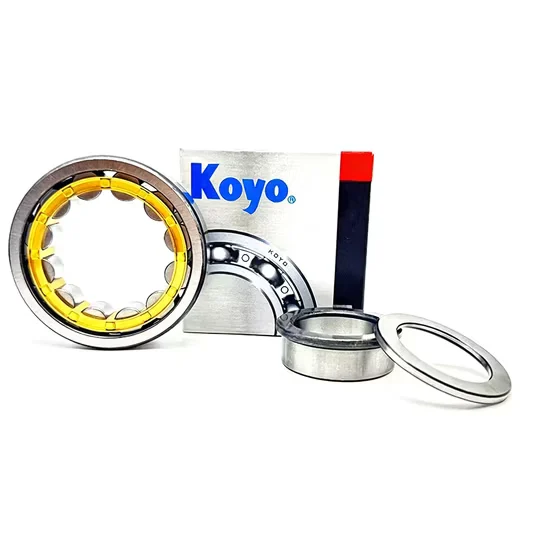
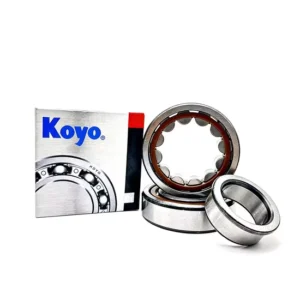
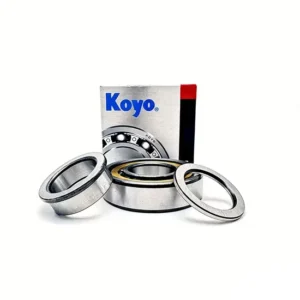
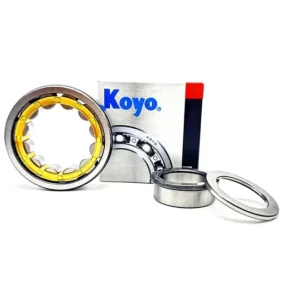
Official App Verification — Every KOYO NJ206 cylindrical roller bearing shipped includes a scannable QR code linked directly to the manufacturer's authenticity database.
Technical Specifications
| Parameter | Value |
|---|---|
| Designation | KOYO NJ206 |
| Bearing Type | Cylindrical Roller Bearing |
| Bore Diameter (d) | 30 mm |
| Outside Diameter (D) | 62 mm |
| Width (B) | 16 mm |
| Number of Rows | Single |
| Material | Bearing steel / Chrome steel options |
| Load Direction | Radial |
| Origin | Japan |
Application Suitability
| Industry | Typical Applications |
|---|---|
| Material Handling | Conveyor system drive pulleys and tail shafts |
| Heavy Machinery | Heavy-duty gearbox intermediate shafts |
| Industrial Motors | Traction motor armature supports |
Why Conveyor Drive Shafts Fail Before the KOYO NJ206 cylindrical roller bearing Does
Misaligned housing bores and improper cage selection cause premature spalling long before the rolling elements reach their fatigue limit.
Early in my failure analysis career, I dismantled a conveyor drive utilizing a similar Koyo cylindrical roller bearing and discovered severe inner ring spalling. The root cause was not the bearing itself, but the specification of a pressed steel cage in a high-vibration environment where a machined brass cage was mandatory. This exact misapplication leads to early cage fracture and catastrophic downtime in continuous material handling operations. When dealing with this specific 30x62x16mm profile, ignoring the dynamic interaction between housing deflection and internal geometry guarantees premature failure. Procurement teams often focus solely on the part number, overlooking the critical internal design variations that dictate survival in heavy-duty gearboxes.
Matching Radial Capacity to Continuous Material Handling
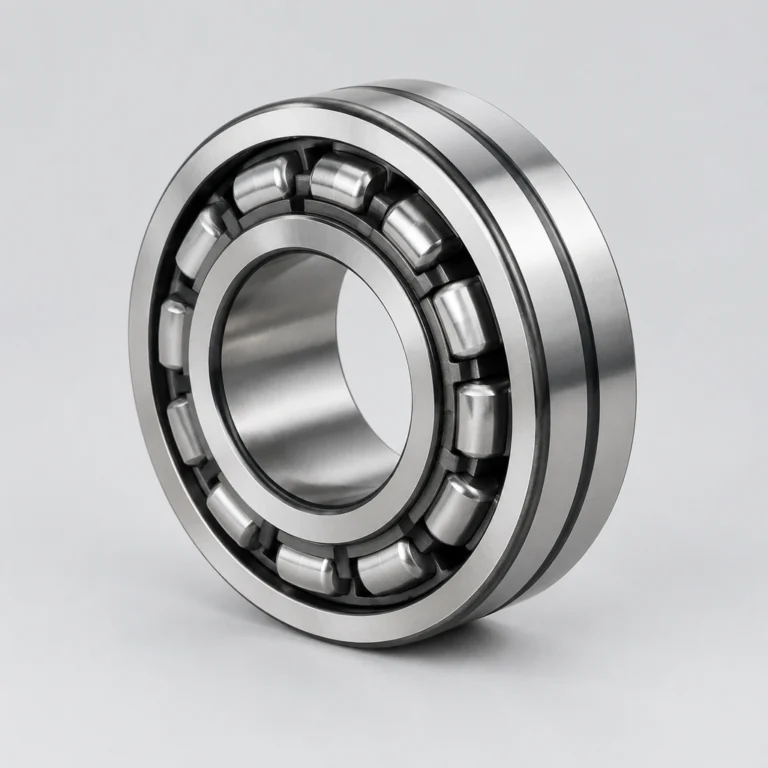
The KOYO NJ206 cylindrical roller bearing excels in environments demanding high radial load support without excessive axial constraints. Its single-row configuration with an inner ring single rib allows for precise axial location in one direction while accommodating thermal shaft expansion. This structural design directly addresses the misalignment and deflection challenges typical in heavy-duty conveyor systems. By utilizing line contact between the rollers and raceways, the load distribution is significantly optimized compared to point contact alternatives. This makes it particularly effective for drive pulleys and tail shafts where continuous radial forces dominate the operational profile.
Managing Vibration and Contamination in Bulk Transport
Conveyor environments subject mechanical components to relentless vibration and airborne particulate contamination. Standard lubrication intervals often fall short when abrasive dust infiltrates the housing, accelerating wear and degrading the lubricant film. Selecting the appropriate cage material and internal clearance becomes critical to prevent roller skidding under fluctuating radial loads and transient shock conditions. Proper sealing arrangements at the housing level are equally vital to protect the internal geometry from moisture and debris. Furthermore, thermal expansion from continuous operation necessitates careful clearance selection to prevent internal preload buildup, which can rapidly elevate operating temperatures and compromise the structural integrity of the bearing steel.
Decoding the NJ Design and Internal Geometry
The "NJ" prefix indicates an outer ring with two integral ribs and an inner ring with a single rib, enabling the component to locate the shaft axially in one direction. This specific 30x62x16mm dimension profile provides a solid cross-section for heavy radial loads while maintaining a compact footprint. While standard variants utilize pressed steel cages for general purposes, high-vibration applications demand machined brass cages to withstand structural resonance and prevent roller skewing. The line-to-line contact between the cylindrical rollers and raceways maximizes load distribution, though it requires precise housing alignment to avoid edge loading. Understanding these internal geometric nuances ensures that the selected component aligns perfectly with the mechanical demands of traction motors and rolling mills.
The Financial Drain of Cage and Clearance Mismatches
Specifying a standard clearance and pressed steel cage for a high-vibration conveyor drive leads to rapid cage fracture and roller skidding. This results in unplanned downtime, secondary damage to adjacent gearbox components, and lost production revenue. According to established failure analysis frameworks, such misapplications void warranty claims and multiply long-term maintenance expenses. The true cost extends far beyond the replacement part, encompassing the labor required for emergency teardowns and the logistical delays in sourcing correct spares. Engineering oversight during the initial specification phase eliminates these hidden financial drains.
Engineering Oversight Beyond the Part Number
We do not merely ship boxes; we verify that the internal clearance and cage material match your specific conveyor vibration profile. Our cross-reference consultation ensures that when replacing obsolete or alternative brands, the dimensional and dynamic equivalents align perfectly without compromising performance. Every unit is sourced through authorized channels with complete batch traceability, eliminating the risk of counterfeit steel that plagues the industrial aftermarket. We consolidate mixed-brand orders, allowing you to procure this specific model alongside other critical maintenance spares in a single, optimized shipment. This comprehensive approach bridges the gap between simple parts supply and reliable engineering support.
Documentation & Authenticity
- Certificate of Conformity confirming Japanese origin and manufacturing standards.
- Original factory batch traceability linking the outer ring laser mark to production records.
- Official app QR verification for instant authenticity validation upon delivery.
- Material inspection reports validating the high-carbon chrome steel metallurgical composition.
- Dimensional and running accuracy inspection reports confirming tolerance compliance before dispatch.
Storage, Handling & Mounting
- Retain the original vapor-phase inhibitor packaging until mounting to prevent humidity-induced corrosion on the 30mm bore.
- Utilize induction heating for the inner ring installation, strictly monitoring temperature to preserve the bearing steel hardness.
- Verify housing bore roundness before pressing the 62mm outer ring to avoid distorting the raceway and causing edge loading.
- Apply clean lint-free gloves during handling to prevent acidic skin oils from initiating microscopic pitting on the polished rollers.
- Ensure the single inner rib faces the correct axial direction during mounting to maintain proper shaft location.
Technical Data Required for Selection Verification
To ensure optimal service life, please share your specific radial and axial load profiles, operational speeds, and ambient temperature ranges. Providing the OEM equipment number or existing housing dimensions allows our engineering team to perform a precise L10 life calculation and cross-reference validation. Detail any exposure to abrasive dust, moisture, or chemical agents so we can recommend the most suitable housing sealing configuration. Supplying these operational parameters enables us to confirm whether the standard configuration is sufficient or if specialized internal clearances are required for your specific material handling application.
Frequently Asked Questions
Q: How can I verify the authenticity of the received units?
A: Every unit features a laser-marked QR code on the outer ring or packaging. You can scan this code using the manufacturer's official mobile application to instantly verify the production batch and origin. This digital traceability ensures you receive genuine components, protecting your conveyor systems from the catastrophic failures associated with counterfeit steel.
Q: What cross-reference considerations apply when replacing alternative brands?
A: When substituting other brands, it is crucial to verify not just the 30x62x16mm dimensions, but also the internal clearance, cage material, and rib configuration. A standard NJ design must match exactly to maintain axial location. Our engineering team reviews these parameters against your application data to ensure complete functional equivalence.
Q: How do precision ratings affect conveyor system performance?
A: Standard precision classes are typically sufficient for general material handling conveyors operating at moderate speeds. However, if the application involves high-speed traction motors or requires minimal vibration, higher precision classes may be necessary to reduce noise and heat generation. We help you select the appropriate tolerance class based on your specific operational requirements.
Q: What are the recommended mounting practices for this configuration?
A: The inner ring should be mounted using controlled induction heating to expand the 30mm bore without damaging the raceway. It is critical to support the outer ring properly during installation and avoid transmitting mounting forces through the rollers. Correct alignment of the single inner rib is essential to ensure accurate axial shaft location.