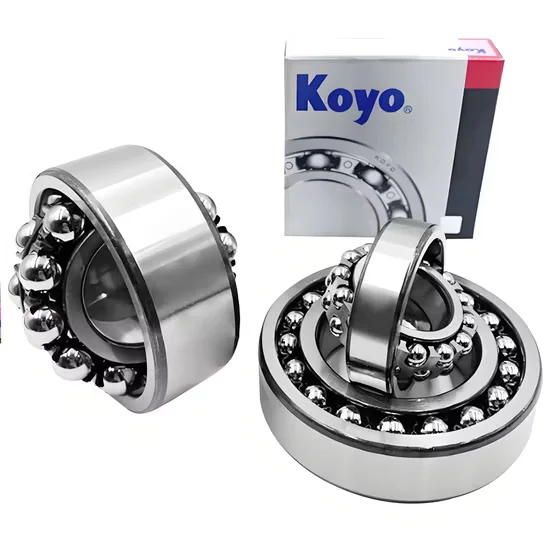
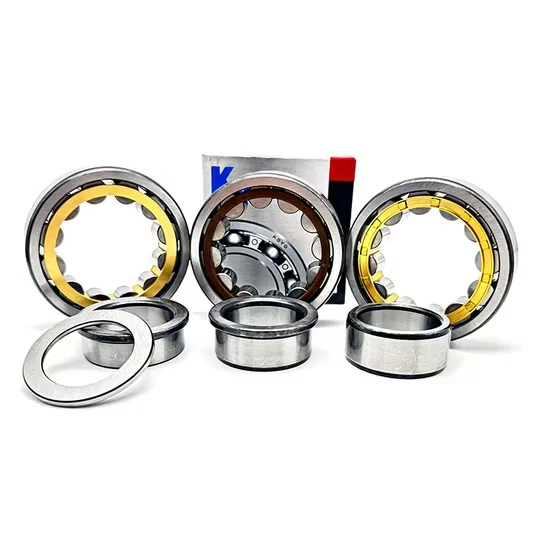
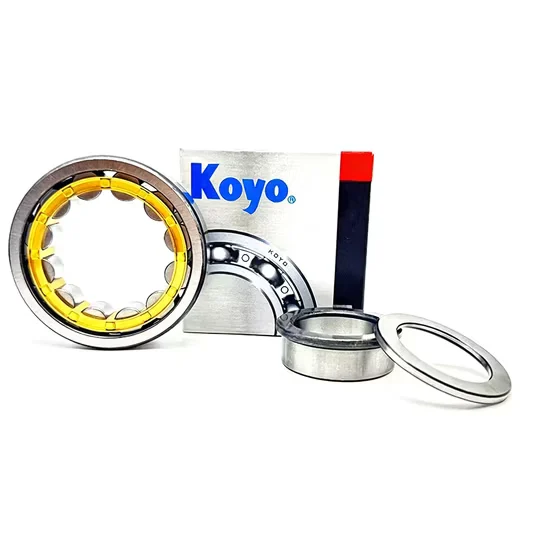
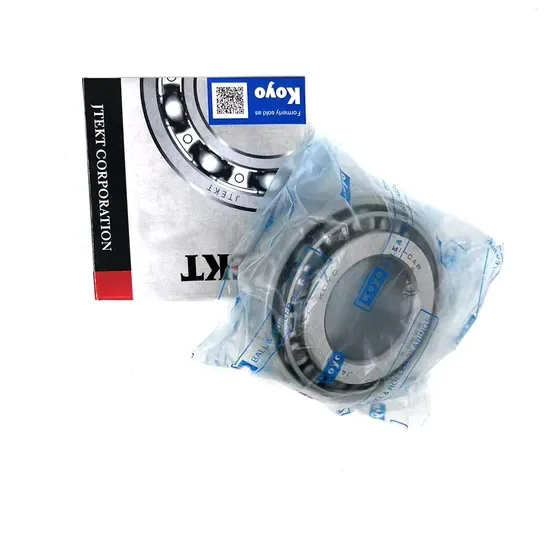
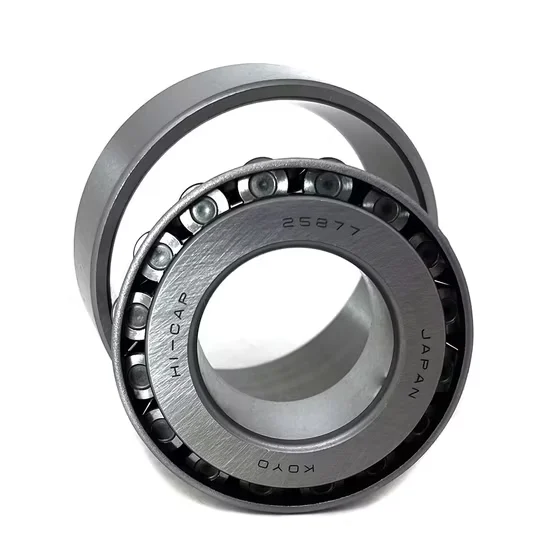
Matching dimensions is not enough. If you swap a Koyo NU bearing with an NJ type from another brand without checking the rib structure, you are inviting axial displacement.
The core answer for sourcing Koyo equivalents is strict structural verification, not just dimensional matching. A true Koyo equivalent for the NU series must have zero inner ring ribs to allow free axial movement, while an NJ equivalent requires exactly one inner rib to handle single-direction axial loads. Substituting these based solely on outer diameter and bore size leads to cage disintegration in heavy machinery. Reliable cross-brand alternatives require verifying rib height, axial clearance tolerances, and cage material stress limits against ISO 15 dimensional standards.
I learned this the hard way in a dusty warehouse in Mexico. I was trying to consolidate a mixed order for a mining client, short on stock for a specific cylindrical roller bearing. I saw a box of bearings with the exact same outer diameter and bore as the required Koyo NU2210. The brand was different, but the dimensions matched perfectly on the caliper. I shipped them. Two weeks later, the client called. The crusher had stopped. The bearing had not just failed; it had exploded. The inner ring had shifted axially because the replacement was actually an NJ type with a hidden rib, or worse, a poorly machined NU that lacked the necessary guidance. The cage shattered, sending metal shards through the gearbox housing. The cost was not just the bearing. It was the entire container of freight claims and the lost trust of a key distributor. That failure reshaped how I view every request for Koyo equivalents for NU and NJ series.
This experience is not unique. Many buyers assume that if the part number looks similar or the dimensions align, the bearing will work. In the world of heavy equipment, this assumption is fatal. Understanding the precise mechanical differences between these series is the only way to ensure operational continuity.
What Are the Structural Differences Between NU and NJ Series?
The presence or absence of inner ring ribs defines the function. This is not a minor design choice; it is the fundamental difference between allowing axial float and locking axial position.
The Koyo NU series features an inner ring with no ribs. This design allows the inner ring to move axially relative to the outer ring. It is ideal for applications where thermal expansion causes the shaft to lengthen, such as in long conveyor systems or large electric motors. The rollers are guided by the outer ring ribs.
In contrast, the Koyo NJ series has one rib on the inner ring. This rib acts as a shoulder, preventing the inner ring from moving in one direction. It can support single-direction axial loads. This is critical in gearboxes where gears generate thrust forces that must be contained. If you replace an NJ with an NU, the inner ring will slide uncontrollably under load, leading to misalignment and premature wear. If you replace an NU with an NJ, you restrict necessary thermal expansion, causing excessive preload and heat generation.
| Feature | Koyo NU Series | Koyo NJ Series |
|---|---|---|
| Inner Ring Ribs | None | One |
| Axial Movement | Free in both directions | Restricted in one direction |
| Axial Load Capacity | None (radial only) | Single-direction |
| Primary Application | Thermal expansion accommodation | Axial location requirements |
A common mistake I see in procurement requests is ignoring the suffix. A buyer asks for a “2210” bearing. Without the NU or NJ prefix, the supplier might guess. In heavy machinery, guessing is not an option. The rib height must also match across brands. Even if two brands both produce an NJ bearing, if the rib height differs, the contact angle changes, altering the load distribution.
When sourcing Koyo equivalents for NU and NJ series, you must request detailed drawings that show the rib geometry. Do not rely on catalog summaries. The devil is in the microns of the rib chamfer and height.
How to Match Koyo NU/NJ with SKF, FAG, and NTN Equivalents?
Cross-referencing requires more than a part number lookup table. It demands a understanding of how different manufacturers denote their structural variations.
While SKF, FAG, and NTN produce bearings that are dimensionally compliant with ISO standards, their naming conventions and internal designs can vary. For example, an SKF NU2210 is a direct dimensional equivalent to a Koyo NU2210. However, some manufacturers offer split designs or modified cages that may not be compatible with your existing housing or shaft fits.
Consider the case of a European gearbox manufacturer who wanted to switch from Koyo to SKF to reduce lead times. They ordered SKF NU bearings as equivalents. However, they did not account for the cage material. The original Koyo bearings used a brass cage suited for high-speed, high-temperature operation. The standard SKF equivalent came with a steel cage. Under the same operating conditions, the steel cage generated more friction and heat, leading to early lubrication breakdown. They had to switch to a specific SKF variant with a brass cage, which was not the default “equivalent” listed in basic cross-reference tools.
| Brand | Equivalent Prefix for NU | Equivalent Prefix for NJ | Notes on Compatibility |
|---|---|---|---|
| Koyo | NU | NJ | Baseline reference |
| SKF | NU | NJ | Check cage material suffix |
| FAG | NU | NJ | Verify internal clearance class |
| NTN | NU | NJ | Confirm rib height tolerance |
Another critical aspect is the use of separate locating rings. Some manufacturers, like SKF, offer RNU bearings (inner ring missing) that require a separate HJ locating ring to create an NJ-like function. This is not a direct drop-in replacement for a solid Koyo NJ bearing. If you order an RNU thinking it is an NJ equivalent, you will receive a bearing without an inner ring. You must then source the HJ ring separately, ensuring it fits the shaft correctly. This adds complexity and potential points of failure.
When evaluating Koyo equivalents for NU and NJ series, always ask for the full technical datasheet, not just the commercial cross-reference. Look for notes on cage type, internal clearance, and whether the bearing is supplied with or without locating rings.
Why Do Substituted Bearings Fail in Heavy Machinery?
Failure usually stems from ignored axial constraints. In heavy machinery, the forces are not just radial. They are complex, dynamic, and often include significant axial components.
I recall a project involving a vibrating screen in a quarry. The operator replaced a failed Koyo NJ bearing with a cheaper alternative from a lesser-known brand. The dimensions were correct. The price was right. But the alternative bearing had a lower rib height tolerance. Under the intense vibration and axial shocks of the screen, the inner ring began to creep. The rib could not hold the axial load effectively. Within months, the cage started to fracture. The vibration increased, causing damage to the screen deck and halting production. The downtime cost far exceeded the savings on the bearing.
This is a classic case of false economy. The cheaper alternative did not match the structural integrity of the original Koyo design. The rib design is crucial for maintaining the correct contact pattern between the rollers and the raceways. If the rib is too low, the rollers can skew. If it is too high, it can interfere with the cage.
In mining crushers, the issue is often axial play. If an NU bearing is substituted with an NJ, or if an NJ is substituted with an NU in a location requiring axial location, the result is catastrophic. The shaft moves axially, misaligning the gears or couplings. This misalignment creates uneven load distribution on the rollers, leading to spalling and eventual seizure.
| Failure Mode | Cause | Consequence |
|---|---|---|
| Cage Disintegration | Axial play due to wrong series (NU vs NJ) | Metal contamination, seized shaft |
| Overheating | Restricted thermal expansion (NJ used instead of NU) | Lubrication breakdown, weld seizure |
| Rib Wear | Incorrect axial load handling | Loss of axial location, vibration |
These failures are preventable. They require a deep understanding of the application, not just the part number. When sourcing Koyo equivalents for NU and NJ series, you must consider the operating environment. Is there thermal expansion? Are there axial loads? What is the speed? These factors dictate whether an NU or NJ is appropriate, and which brand’s equivalent will perform reliably.
How to Verify Cross-Brand Equivalents Before Ordering?
Verification starts with the drawing, not the catalog. Catalogs are marketing tools. Drawings are engineering contracts.
Before placing an order for any Koyo equivalent, request the dimensional drawing from the supplier. Compare the rib height, rib width, and chamfer dimensions with the original Koyo specification. Even small deviations can affect performance.
Next, verify the material certification. Ensure the steel grade meets the required standards for hardness and cleanliness. Poor quality steel will fail under heavy loads, regardless of the design. Ask for the mill certificate. If the supplier cannot provide it, walk away.
Finally, consult with a technical expert. Do not rely solely on online cross-reference tools. These tools often miss nuances like cage material, internal clearance, and special coatings. A qualified engineer can review your application and recommend the most suitable equivalent. They can identify potential issues before they become costly failures.
For example, when replacing a Koyo NU bearing in a high-temperature fan application, an expert might recommend an equivalent with a higher internal clearance (C3 or C4) to accommodate thermal expansion. A basic cross-reference tool might only suggest a standard clearance bearing, which would fail prematurely.
By following these steps, you can minimize the risk of failure. You can ensure that the Koyo equivalents for NU and NJ series you purchase are truly equivalent in performance, not just in dimension. This approach protects your equipment, your production schedule, and your reputation.
Conclusion
Precision matters more than price. Substituting Koyo NU and NJ bearings requires a rigorous check of structural details, not just outer dimensions. Ignoring rib designs leads to axial displacement and cage failure. Always verify drawings, materials, and application needs before ordering. Proper selection ensures reliability and prevents costly downtime.